“A couple of years ago a young friend of mine was diagnosed with breast cancer, people think it’s older people who develop this disease, so I wanted to raise awareness of this”.
Alison Stanley
‘Hard’, ‘Life of Reilly’ and ‘You Need To Say Sorry’ writer & actor Alison Stanley has tackled diverse subjects such as autism, sex workers and domestic violence. Her new play ‘Tits Up’ examines the strength of maternal love and the choices women face.
“Last year I found a lump and experienced the process of going to the breast clinic. Fortunately, my lump wasn’t anything of concern but it did make me think”.
“Even though I was fine I began questioning my own mortality and spent nights wondering what would happen if I had cancer? What would’ve happened to my son who is autistic”.
Alison threw herself into an intensive period of research, she spoke to people who had lived through cancer and heard real stories including from the LGBTQ community who had another perspective.
“I went along to Live Well with Cancer in North Shields where the ladies were kind enough to share their stories with me”.
From here, Alison created a piece that looked at life choices for three different women with different lives united together in their fight against breast cancer.
Alison explains“Tina, Rachel and Rosie are unlikely friends. Tina is a devoted Mam, she can’t understand why ‘bonny bairn’ Rosie wants to put rings through her nose, and Rachel, who lives to work, can’t understand why Tina is content at home and why Rosie doesn’t iron her jeans”.
Alison added “The three characters are very different and would never have met if they hadn’t found themselves having treatment at an oncology ward.The play hasn’t been cast yet, but will be soon.”
Alison’s last play ‘You Need to Say Sorry’ received good reviews and is now used by Northumberland/North Tyneside social services as a training tool.
“I’m in discussions with Northumberland Police to do the same with them. A lot of police and social services staff came to see the play”.
Alison also finds time to be Director of Participation at the Whitley Bay venue, Laurels, where her new project is called ‘Pasty, Play & a Pint’. People buy a drink and a pasty and a ticket to see a reading of a script of produced plays and new writing.
“It’s an attempt to open up the theatre during the day and encourage older visitors” added Alison.
‘Tit’s Up’ runs from October 8-17 at Laurels, Whitley Bay. There are some matinee performances and tickets are on sale now via Laurels official website.
Hard working Bill spent 34 years as a railway driver and 20 years on Newcastle City Council. Being a keen cyclist, he is one of the few people to have completed an around the world bike ride.
“The highlight had to be the scenery in the Rocky Mountains, USA, the geysers, hot pools and volcanic activity in Yellowstone Park. I followed the Rockies for over 1,000 miles through Colorado, Wyoming, Montana, Idaho and Oregon with much of this being wilderness area”.
When the pandemic hit in 2020 Bill took solace in the music he loved. He attended songwriting workshops with artists he had been a fan of such as Beth Nielsen Chapman, Mary Gauthier, Gretchen Peters and Dan Whitehouse. When folk clubs opened back up after lockdown Bill stepped out to perform.
“I really enjoy playing local folk clubs where audiences are always attentive and often sing along. My favourite folk club is The Bridge Hotel in Newcastle which is the longest running folk club in England on the same premises. They’re a great crowd”.
Encouraged by this warm welcome, he spent 2023 honing his work with producer Dan Whitehouse and then recorded his debut album. ‘Closer’ is a delicate collection of heartwarming folk songs that tell political and historical stories as well as tales of love and loss.
“We recorded all the foundation tracks of vocals and guitars live in my living room in Gosforth”.
As well as producing Bill’s debut album, Dan also played lead guitar and added backing vocals plus several of Bill’s friends and family contributed to this intimate collection of songs.
French speaking Christine Durand reads poetry, Kathy Wesolowsk lends operatic vocals, Bill’s grand-daughter Chloe Weston is the lead voice on a song written by Bill on a songwriting retreat lead by Gretchen Peters and Mary Gauthier.
The recordings were shared with Gustaf Lljunggren (John Grant/Eddi Reader) who added Pedal Steel, Accordion and Rhodes Electric Piano from his Copenhagen studio.
“Dan Whitehouse had worked with Gustaf before. He introduced me to Gustaf’s music and once I heard him, I knew that he was the musician I wanted to have playing on a number of my songs”.
“Gustaf is experienced in working remotely – adding delicate overdubs, without overcrowding the musical landscape of my record”.
Cover art by Ruth Bond.
Next stop on the album’s journey was London…
“I’d a longing to add strings to ‘Fools and Princes’ – with it being based on Romeo and Juliet, I had a vision of a romantic string arrangement being effective, Dan suggested Alison D’Souza (The Little Unsaid) in London as he’d worked with her previously and what she played really brought my dream into reality”.
“Harriet Harkcom’s voice I knew from Dan’s own releases as she has sung on most of his albums, I was pleased when she accepted my invitation to sing on ‘Goodnight Vin’. I’d like to think if Vin was around he would love her voice on this song too”.
With recording completed, final mixing and mastering of the album was by John Elliott.
“My hopes for the album are that it will allow me to reach a wider audience, commercial success has never been my main aim. Like any other singer-songwriter I just love sharing my songs with people”.
For the near future Bill has no plans to tour the album…
“I sing in local folk clubs twice a week and I’m happy being involved in this local musical community. I prefer small intimate venues packed with friends and other singers”.
The album is available to order now on CD and digital via bandcamp >
“This play looks at domestic violence, coercive relationships and the perils of on-line dating in older people. When computers are relatively new to you it can be difficult to negotiate the etiquette of ‘facey’ (Facebook) and ‘the gram’ (Instagram)”explained Alison.
Alison Stanley
“We live in a digital age where meeting and talking on-line is the norm. Everyone seems to have an on-line presence due to the explosion of social media. We talk to people virtually every day and this can be good in combatting social isolation but do we really know who we are talking to on-line and should we be taking information on social media as gospel?”
Alison got the idea to write the play after listening to a group of older ladies…
“They were talking about chatting to people they had never spoke to for donkey’s years – maybe there’s actually a good reason for that! I found it fascinating how they took everything at face value. This produced some great comedic results but also got me thinking about how dangerous this could actually be”.
More research revealed that older people will put up with unacceptable behaviour much longer than their younger counterparts….
“Sometimes they never complain as they have come from a ‘you make your bed, you lie in it’ era and don’t want to be seen as a failure. The production has comedic moments and that sounds quite odd given the subject matter”.
“The play starts where two main characters are having their first meeting after a spell of on-line flirtation. Their chat revolving around family and virtual situations is funny and relatable. This is in direct contrast to the darker moments we see as their relationship develops”.
Rod Glen
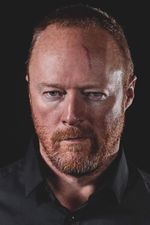
”The roles are being played by myself and Rod Glenn (American Assassin, Emmerdale). I’m really excited about it and Rod will do an amazing job of bringing his character to life”.
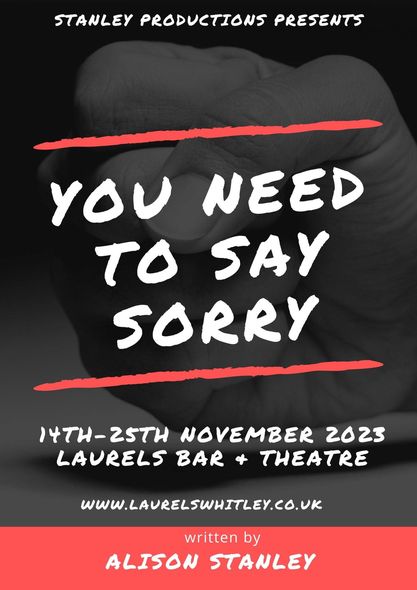
‘You Need to Say Sorry’ is on at Laurels, Whitley Bay 7.30pm 14-25 November 2023.
“Laurels is a fantastic little gem of a theatre. It’s an amazing fringe venue that brings theatre into the heart of the community and gives a platform to underrepresented voices”.
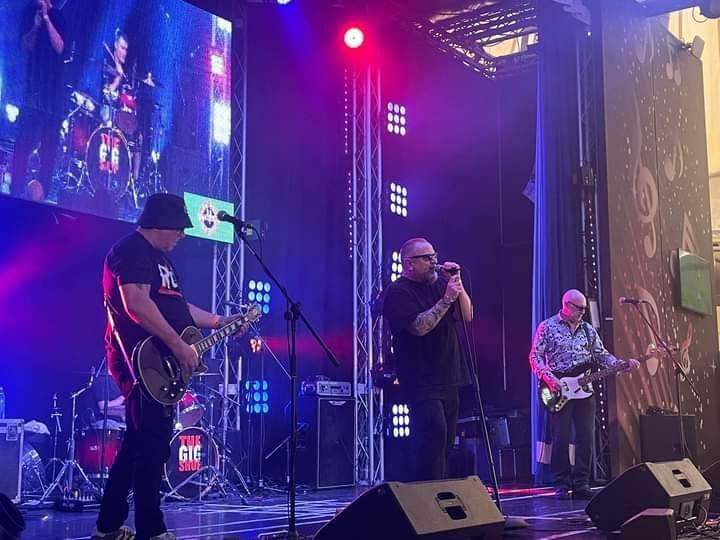
The Fauves are fronted by vocalist Mick Smith, Allen Hughes on guitar, drummer Bob Rowland & bassist Bri Smith.
Their new album is not exactly a snoozefest. Throughout are overtones of French alt. rock band Trust and twisty riffs alike to New York’s King of the punks, Ramones – make no mistake The Fauves are on the hunt.
We’re quite busy at the moment. This is our fourth album really, but we count it as our third because most of the songs on the second album Back Off World were redone with Micks vocals, he gave the songs a bit more aggression than the original version explained bassist Bri Smith.
Universal themes of money, war, drugs and love are delivered with seething anger and frustration.
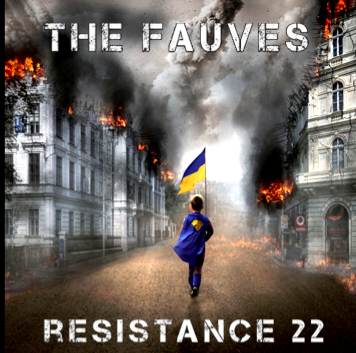
Resistance 22 is obviously a pro-Ukrainian song, No Escape describes the first stages of war in the Ukrainian city of Mariupol, while Sanctuary is about wanting to retreat to a quieter world explained frontman Mick Smith.
Who else is in the firing line?
We have a track about the so called social warriors, the compassionate narcissistic types in Shower of Fanatics – while the track Tax me when I’m Dead is about the lazy work shy being financed at the expense of the workers.
Mental health and the darker side of life is examined on Looking in the Mirror and Inject the Poison… That’s about someone overcoming drug addiction while Chemical Curfew is about the overuse of medication and alcohol to keep us in line.
Poverty of Thought is a song about judging and being judged and Sleeping Rough is someone who seeks love on the street because there’s no love at home.
‘You cannot sleep tonight, there’s a face right up close, try to close your eyes again, want to shake off this old ghost’
Among the chaos and debris of life The Fauves retain a sense of humour in the track Where’s Bob.
That’s about a man who will go to any lengths to get the right sound for his band – even killing several soundmen!
For Resistance 22 the band entered Garage Studios in South Shields and again employed the services of Kyle Martin.
Kyle is great, he engineered the album, we’ve recorded all our albums there and it’s also a great place to rehearse. Kyle knows our style of music and knows what sound we like.
He also throws a few ideas in as well. It’s a great little studio, ideal for us and it’s got all the facilities we need added Bri Smith.
We also did a gig at the Bunker in Sunderland in March where it was recorded live. The recording was that good we decided to release it as a live album which will be released soon. It also has a bonus track on, a new version of Slightest Push an old song from years back.
This summer The Fauves are looking to get back on the road to promote their new album.
We are going to break the new songs in gently, maybe introduce three or four songs at a time, we’ve already played a few of them live explained Bri.
We have a few gigs lined up over the coming months, The Black Bull punk festival 30th June, The Underground in Bradford 8th July, Angels Place Sunderland 22nd July, Trillians Newcastle 23rd July then we’ve got the big one on August 6th at The Rebellion four day festival in Blackpool. Really looking forward to that one.
The Winter Gardens stage Rebellion from 3-6 August, bands include The Damned, New Model Army, Big Country, UK Subs, Exploited, The Only Ones and many more. The literary stage features an interview with South Shields born Wildheart, Danny McCormack.
That’s followed by The Punk and Ska Festival in Redcar 7th September, other gigs are being lined up for later in the year at Manchester and other Northern areas.
The new album on CD released on 1st July 2023 costs £10.00 + £2.00 postage in UK and a free exclusive badge until stocks last.
The CD will be available at all gigs from 30th June.
For details including merchandise, contact Phil on thunderbirdsport885@hotmail.co.uk or
Phil Rowland on Facebook Messenger.
From July 1st 2023 the album will be available on all usual online platforms including BandCamp, Spotify, iTunes, Amazon Music, Deezer and many others.
Alikivi June 2023
Check out Ground Zero for more about The Fauves via South Shields punks Angelic Upstarts.
In between YOP schemes and signing on the dole in the 1980s I remember queuing outside Newcastle’s Tyne Tees TV Studio to get free audience ticket’s for live music show The Tube.
The ground breaking programme was broadcast by Channel Four from 1982 to 1987.The 90 glorious minutes had a massive impact on my life.
Talk about pushing boundaries of what live TV can do, this show was run by a Geordie Wrecking Crew creating a bigger blast than anything coming out of London.
TV bigwigs in the South made envious glances towards the North as every Friday Newcastle Airport was chocka block full of top musiciansand celebrities.
You want exciting car crash box office TV ? it’s all here, the Geordie crew really were the ducks nuts. With the launch show planned, Sunderland punks Toy Dolls were brought in to light the fuse – tune in, turn on, blast off.
Over the past couple of years some of the production team have talked on this site about how the North East gained a reputation to produce good music shows, and how influential and important the show would become.
Chris Cowey: ‘The Tube was a real blend of old school Tyne-Tees TV expertise and young whippersnappers like me who was obsessed with music and bitten by the live music thing. I was into DJ’ing, Drama, Theatre which led to my TV break’.
‘My mentor was Producer Malcolm Gerrie, who a lot of people will remember from his Tyne-Tees days. A lot of the same gang of music fans were the nucleus of the production teams for Check It Out, Alright Now, TX45, The Tube and Razzmatazz’.
‘Tyne-Tees already did some good old entertainment shows before my time, like Geordie Scene or What Fettle, but they were obsessed about their ‘Geordieness’. The Tube wasn’t, it was all about good music because we were music obsessed.
It also had a great mix of time served TV people blended together with new people with fresh ideas, and a kind of irreverence which came out in those shows’.
Chris Phipps: ‘I was at the Tube from the start in ’82 till it’s full run to ’87. I joined as a booker and became Assistant Producer from 1985 to 1987′.
‘A band on the first show that I booked didn’t happen. The Who didn’t do it because their pa system got stuck in Mexico or somewhere. Producer Malcolm Gerrie knew Paul Weller’s father and got The Jam to do it.
In a way I’m glad that he did because The Jam playing their last TV gig ever, really said this is what The Tube is all about – that was then, this is now and off we go’.
‘After appearing Fine Young Cannibals got signed, The Proclaimers got signed and there was a time when the Tube crew went to Liverpool to film Dead or Alive. But they weren’t around, someone in a pub told them to go round the corner to another pub where there is a band rehearsing ‘You might be interested in them’. It was Frankie Goes to Hollywood’.
‘The Tube filmed the original version of their single Relax and Trevor Horn saw it. He did the deal and re-recorded and produced the single. Frankie epitomised The Tube and the ‘80s – they got what it was all about’.
Gary talks to Radio One DJ, John Peel.
Gary James: ‘I was one of the original co-presenters on The Tube from Series One, which started on Friday November 5th 1982. I applied along with 5,000 other herberts who all thought they were cool, hip and groovy enough to be TV presenters’.
‘To give the programme a bit of extra thrill they wanted to put some unknown faces alongside the two main presenters Jools Holland and Paula Yates. They certainly achieved that as few of us really knew what we were doing.
It was all live, pre-watershed national networked TV and no second chances’.
‘None of us on the presenter side, perhaps with the exception of Jools and Paula who breezed through it all without a care in the world, could have had any idea that the show would be as seminal as it was.
We certainly knew we were part of the ‘new wave’ and that we didn’t want to be all BBC and Top of the Pops-ish’.
‘The chaos on it was quite genuine and the edginess a result of the fact that for most of the time we were left to get on with what we were doing without any strict direction or guidance to be pros.
I had a good time interviewing Ringo Starr, Eartha Kitt, Tony Visconti, Mickey Finn of T.Rex, John Peel, Kajagoogoo and loads more interesting people who had a part to play in the industry’.
Colin Rowell, Chris Phipps, Michael Metcalf.
Colin Rowell: ‘It was just five years of sheer magic. There was Geoff Brown, Chris Phipps and me sharing an office in Newcastle. They, as producers, had applied for this music television show and asked me if I was interested in joining the team as stage manager’.
‘From years working at Newcastle City Hall I knew the acts, the crews, the managers and they were all glad when they knew a familiar face and voice was going to be there running the stages in the studio’.
‘First off started with two stages, ended up with four and I did the deal with ENTEC who were a big sound company. They ran Reading Festival and owned The Marquee. It was a smooth operation with them providing all the sound and crew.
The PA was flown in (hung from ceiling) off the stage making it easier for cameramen to have floor space and no big speakers in their way’.
‘One time me and Geoff Brown were sent to London to check out Grandmaster Flash. It was the first time The Tube were going to have on stage a set-up of a band playing all the scratchy stuff’.
‘We got to the venue and there was a support band on so we went to a Steak house but it was dreadful and we didn’t eat it so we went back to the venue. The support act were still on and we listened in this time. This was good stuff. It was Paul Young and the Royal Family.’
‘We got back to Newcastle and in a meeting with one of the head guy’s at The Tube, Malcolm Gerrie, I banged the table and said ‘let’s get him on’. And we did. But Malcolm and I felt Paul didn’t get a good crack of the whip first time so we invited him back on again and the rest is history’.
Michael Metcalf: ‘I worked as Personal Assistant to a lot of freelance directors, one of which was Geoff Wonfor who was the husband of Andrea Wonfor, Executive Producer on the Tube’.
‘When the Tube began I continued working with Geoff for the first few years then applied for a vacancy to become a Director and got the job for most of Series Four.
It’s important to remember that at that time we were a bunch of Geordie guys who were working with some amazing people and having the time of our lives’.
‘I remember one trip to New York we hired a helicopter to fly around the Statue of Liberty. I sat in the helicopter alongside the pilot, Geoff was in the row behind and the cameraman was strapped in but hanging out of the side of the helicopter, the door had been taken off’.
‘I had the headset to communicate with the pilot, going down the Hudson, he asked if we wanted to go under or over the bridges, I asked if we could do both, which we ended up doing.
It is hard to imagine getting away with that now but we had the time of our life. Every day the job was an adventure’.
Gary James: ‘Because it was live I only ever saw the programmes I didn’t work on. My parents told me they had recorded shows on VHS tape and did I want them? I stuck them in a box and put them in the attic’.
‘There they stayed for years until I watched them from behind the sofa for the first time. The performances blew me away. I can now finally see what everyone was going on about – but until then I genuinely had no idea’.
Chris Cowey: ‘It was really important that it came from the North-East because of the passion the swagger and total commitment. It’s not just that Geordies like showing off – although they undoubtedly do! – it’s because the history and attitude of the region can be really inspiring, creative and hugely fun. That’s how it worked so well’.
Chris Phipps: ‘You can never bring The Tube back. It’s of its time. Chris Evans on TFI Friday in the ‘90s near enough had it, the set was just like The Tube. So yeah it’s had an incredible influence’.
To read the full interviews type in the name in the white search box.
Mark Fleming is based in Edinburgh, his work has appeared in a number of published books and magazines including the Big Issue.
He’s run workshops across Scotland and given talks on creative writing and mental health in schools and prisons.
After spending time in a Psychiatric Care Unit, Mark rediscovered his love for creative writing and music.
As well as documenting my experiences of mental illness in my 20s, my story focuses on the cathartic power of music – said Mark.
I write regular blogs about the revitalising impact of nature and music, the blog promotes positivity through writing about mental health, wellbeing and popular culture.
What is your experience of being in bands?
My first band The Seduced, were formed in 1979 at the tail end of the first wave of punk.
We mustered about three songs, including a passable version of X-Ray-Spex’s ‘Art-I-Ficial’ – chosen because we had a female singer called Pauline, just like Penetration. We never played live but did get as far as spray painting our name on our local launderette!
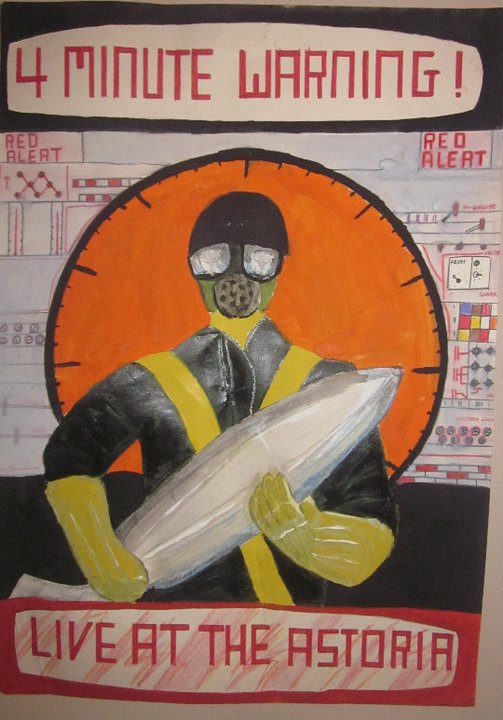
I joined my first ‘serious’ band a year later – 4 Minute Warning, named after a lyric by our biggest inspiration, Killing Joke, and outlining our anti-nuclear/pro-CND political stance.
4 Minute Warning
At the turn of the decade a far more interesting post-punk scene began emerging.
Many bands were breaking free of the three-chord, shout-along template – The Slits, Siouxsie and the Banshees, Wire, PiL, Punishment of Luxury, Gang of Four, Joy Division/New Order, Scars, A Certain Ratio, The Fall, et al – and using punk as a springboard into a whole new sonic universe.
As our music became more funk than punk we evolved into Desperation AM – named after a Gang of Four lyric. By the mid ‘80s my next band was Little Big Dig, melding post-punk, pop and Can, making it as far as a session on BBC Radio 1.
We never gigged beyond Edinburgh – and once in Glasgow, but did get a residency during the ‘85 Edinburgh Festival, in an ‘open until the wee small hours’ bar, La Sorbonne.
Gig poster for 4 Minute Warning
Mental health issues, recovery, marriage, and starting a family brought a lengthy hiatus until around 2002 when I reunited with mates from an old Edinburgh punk band, The Axidents.
We covered everyone from The Ruts to Magazine then started writing our own stuff, supporting UK Subs, 999, Eddie and the Hot Rods and Tenpole Tudor.
Desperation AM reformed and were joined by Paul Research (ex-Scars) on violin, leading to another post-punk band, Noniconic. Then Covid struck.
I’m currently mucking about with more ambient soundtracks under the moniker Giant Household Names – overheard in an interview with Wire.
Where did you grow up and what type of kid where you – playing football/in a gang/a member of a youth club ?
I grew up in Shandon on Edinburgh’s west side – traditionally the Hearts side of the capital although my dad was from Monaghan in Ireland, so I chose Hibernian. But I was always more into music than football.
In the late ‘70s uptown Edinburgh was a no-go zone, we were too young for pubs, and spiky hair/badges/ripped jeans were a red rag for ‘punk bashing’ by the far more prevalent ‘trendies’ who preferred disco music.
We’d stick to hanging around youth clubs where you could take your own records to pogo to. Youth was much more tribal back then, so if you were into punk, it was like being in a gang.
But nothing like the Edinburgh street gangs, with names like Young Leith Team and Gorgie Jungle, where the emphasis was on violent ‘turf wars’ – it was always about the music for us.
North East band Punishment of Luxury.
By the ‘80s the stubborn punks who refused to embrace post-punk did become much more aggressive. Sporting cockatoo hairstyles and studded biker jacket uniforms, the bands they were now listening to, typified by local exponents The Exploited, resembled heavy metal being played at 78 rpm.
By that time we were into Punishment of Luxury, the North East’s finest sons since Penetration, Angelic Upstarts and The Carpettes!
Check out the interviews with these bands on the Alikivi blog.
What does music mean to you?
Music means everything to me. In my 20s, I struggled with bipolar disorder, and was sectioned in 1987 spending time in intensive psychiatric care.
My wee sister Anne, bringing in cassettes of my John Peel recordings during visiting hours, was a pivotal moment in my recovery. I’ve only recently come off long-term medication (lithium) and music remains crucial to my wellbeing.
BBC Radio 6 presenters.
I’m an avid listener of BBC Radio 6 whose DJ’s include many long-standing musical heroes of mine – Iggy Pop, Marc Riley and Tom Robinson, along with a host of enthusiastic presenters like Craig Charles, Elbow’s Guy Garvey, Steve Lamacq, Mary Ann Hobbs, Stuart Maconie and others.
Although post-punk remains a major influence and I still love playing my now increasingly scratchy/jumpy 45s from 45 years ago, I prefer constructing playlists based on brand new songs introduced across the board on Radio 6.
Listening to these on headphones while strolling along the Firth of Forth on my doorstep, is wonderfully therapeutic.
Book cover for ‘1976 – Growing Up Bipolar‘.
What have you got planned for the Autumn ?
I’ve just completed a memoir that takes in my bipolar experiences of low manic depression to the high of mania and psych wards set against the backdrop of electrifying post-punk scene of the ‘80s that coaxed me back towards stable mental health.
‘1976 – Growing Up Bipolar’ is based on a novel I wrote a while back called BrainBomb. The title is a homage to the massively underrated and still out there being creative and inspirational – Punishment of Luxury.
I’m being interviewed about my book at the Portobello Book Festival on October 1st. Gig-wise, I’ve got tickets booked for Public Service Broadcasting and Pale Blue Eyes at Edinburgh’s Usher Hall in September.
I’m also making the trip down to Middlesborough to catch Punishment of Luxury in December. I never saw Punilux first time round so immensely looking forward to that.
Paperback copies of ‘1976 – Growing Up Bipolar’ are available to buy from Waterstones and most retailers. The ebook can be downloaded from Kobo, Nook, Scribd and Hoopla.