BILLY’S STORY -The artist formerly known as Meths.

A few weeks ago a story was sent in from a South Shields resident who signed out as Tinwhistler. After initial contact they didn’t offer anymore clues about their identity. Was this Shields version of the X-Files Deep Throat ? A big exclusive or just a wind-up.

But after reading the story I remember the old guy in the article – Billy Meths. I often saw Billy, real name Billy Roberts, in South Shields Town Centre during late ‘70s early ‘80s, most times sitting on a bench comforting a bottle of cider.

The story also brought back a reminder of another couple of characters that hung around Shields. During the ‘80s I often saw a guy known locally as ‘Cowboy’ cos of his boots. I wasn’t sure if he was homeless or staying in a hostel.

Then during the noughties hanging around the Mill Dam and river area of the town was ‘Wavey Davey’, he got that label from waving at passing ships.

Where are they now ? There will be many Shields folk that can offer stories about characters from the town like Billy Meths – this is Tinwhistlers…..

    Billy Meths cracking pic.

Billy’s home was South Shields. Most of us exist in a finite amount of square feet on one or two floors that come with restraints known as mortgage, freehold or tenancy and all the rules and regulations that go with them.

That is what we call our home. Billy viewed the town as his home, picking random points that could serve as a base when it suited.

Back in the early ‘70s society enjoyed virtual full employment and homelessness was not a national issue. But there was always going to be those in society that seemed displaced and show a preference for living outside the parameters of a normal existence, preferring a much harsher alternative.

Constantly battling the elements, hunger, alcohol – or lack of it – and the occasional assistance of passers-by. Billy Roberts was one of them. But I want to go back in time to the era where I first heard of and met Billy Roberts, the artist formerly known as Meths.

He was one of several who sought cover in the Town Centre particularly in the Market Place. Someone your parents might tell you to avoid, someone that was barred from every public house in the town yet with his singing, dancing and playing of music either with harmonica or his ‘bones’, would entertain the pub’s punters on the streets.

He had a nickname ‘Billy Meths’ a name that was maybe bestowed in the previous decade by cruel kids that saw a loner drinking from a bottle in the street. His demeanour and mood would fluctuate depending on alcohol intake.

Some of the older workers in the licensing business referred to him as ‘Gypsy Roberts’, perhaps because of his nomadic lifestyle and no set official residence.

Nor would he likely have had his lobes pierced though I came across him once wearing a clipped-on hoop that was so big a dolphin could’ve jumped through it.

Perhaps Billy considered the whole of South Shields his home, setting down at various locations depending upon the season. As I grew a bit older, I’d venture into town and would often see him around as I’d be visiting record shops.

Sheltering from the elements he’d sometimes be in a bus stop with a bottle of cider, causing anxiety to those waiting for a bus. He might not be seen for a while but then when least expected, he’d appear pushing a barrow of scrap and rags that he’s moving on to turn into cash for cider in order to attain his preferred state of consciousness.

Leaving school and entering a life of work afforded me the dubious pleasure of sampling the weekend night life and I’d see Billy more often. At the junction of Mile End Road, Ocean Road and King Street there would be stationed a police vehicle and officers with dogs to attend any possible outbreaks of Saturday night violence.

Billy would be drawn to the Ship & Royal pub, peering in through large windows, the pub had floor to ceiling glass windows that gave the customer a great view of the outside world. He would be weighing up the paying customers, also wondering what mischief might be achieved.

He might begin with a knock on the glass then maybe lewd hand gestures, face pulling, a sparring routine. Of course, if you knew him, you’d maybe laugh, smile and wave him on.

But there was always one who was not aware of this growing legend in our midst who would remonstrate, return the hand jiving and on Billy pushing his face right up to the glass his target would then bolt for the door in order to deal with Billy in a pugilistic fashion.

Billy’s timing was impeccable and his walk away followed by his collaring by a drunken assailant takes place in full view of the police. Those watching through the big windows see a police response to an older gentleman being harassed by a young drunken bully. They’d spring into action and Billy had another ‘kill’.

Summer ‘76 I was working in the family’s retail business and my father was a beer drinker. I suppose out of family loyalty I would accompany him for a sup.

Again, in the Ship & Royal, as usual the bar was busy with workers and shoppers relaxing before returning home. On this occasion Billy entered the pub resplendent in a three piece navy suit that looked a remarkable fit, he had an open necked white shirt and a cigar in one hand, the other hand behind his back.

A barmaid was fulfilling a large order and loaded drinks onto a tray ready to carry them over. ‘Large brandy please’ was Billy’s request. ‘Out Billy, you know you’re not served in here’. She then began to walk toward her customers carrying a full tray.

His response was something like ‘Ok love no problem’ and went toward the door to exit. He was now behind the barmaid and his other hand came from behind his back revealing a fully inflated balloon. He held it out and brought the lit cigar to touch it. I saw this so didn’t jump, but the barmaid shrieked, dropped the tray and drinks went all over both table and punters.

Another occasion I was on Ocean Road and Billy was in the bus shelter. He had his companion of Gaymers or Bulmers cider with him and seemed fairly lucid when I sat talking with him.

He volunteered the fact that he originally hailed from Blaydon and that at one time he had been a keen amateur boxer. ‘No trophies son, no trophies, just memories’.

I did partake of a drink from his bottle on the assurance that there was no added substance and stayed for a little while. But unfortunately, I can’t remember other pearls of wisdom he volunteered that night.

There was a time when a friend of a friend was sufficiently displaced to need to share accommodation with Mr Roberts. Luckily it was summer, but he stated how cold it had been that night. He slept underneath the Waltzer at the Fairground which was Billy’s summer residence.

There was a previous summer residence, the Tyne lifeboat, a landmark at the pier end of Ocean Road. I believe he put in for an exchange when he alleged that he was being harassed by police and on one occasion two cadet officers did urinate on him.

My father told me he bumped into him whilst on his way for a pint or three. ‘Good evening, Mr Roberts and where are we off to this fine evening ? ‘Good evening, sir. I’m now moving to my winter residence as it’s starting to get a little bit cold during the evening. Mulligans Mansions, top floor, is where I’ll be for the coming winter’. Where he meant was the multi-story car park situated just off Mile End Road.

Some weeks later my dad bumped into Billy and asked how he was settling in. Now below the car park at ground level there was a night club originally known as Banwells… ‘I’ve got noisy bloody neighbours’ he stated. ‘I’ve been down several times to complain and ask them to keep it quiet as I cannot get a night’s sleep’.

Trying to visualize the scenario where two burly doormen respond to rapping on the door and seeing a bedraggled gentleman of the road type, possibly holding a blanket and complaining, had me in fits.

When his spirits were high he’d often break into song, do a jig and bring out a harmonica or his ‘bones’ to entertain. When low he could be found somewhere with a bottle going through some sparring routines, beating the pulp out of his invisible opponent.

Billy’s musical talents had not gone unnoticed as another of the town’s characters, Brian Batey, would invite him to gigs to sing on stage with the band Brian sang with, The Letters. He was recorded at Bolingbroke Hall in 1981 and is on You Tube.

Billy’s lifestyle eventually took its toll and his health deteriorated. He was cared for at the Ingham Infirmary and afforded a private room by the then casualty consultant, Miss Seymour.

Seymour was an eccentric born again Christian who had spent the earlier years of her medical career attending to the sick and dying in the Congo. She now attended to the needs of Billy Roberts and may well have assisted financially with his funeral.

He died I think circa November 1984. I’m sure there will be many Shields folk that can offer stories about characters from the town. Thanks Billy.

Is there another Tinwhistler out there ?

Gary Alikivi   December 2019.

STOCKIN’ FILLERS 2

2019 has seen nearly 100 interviews posted mostly musicians, but also featured artists, poets and authors. If yer lookin’ for a Christmas present to buy why not take a butchers at these books that featured on the blog this year.

It’s not often that anyone has a visual record of their life – but Sheila Graber from Shields has done it in a book that is packed with illustrations created of our area since 1951. ‘The book is packed with anecdotes of my life as a Sandancer, it’s ideal for sending to folks abroad as a memento of Canny Shields’.

‘My Tyneside’ is available from The Word in South Shields and on Amazon. Check Sheila’s website

http://www.graber-miller.com/BookPage01.html

When doing some local history research I came across a new book about Westoe written by Dorothy Fleet…

This book tells the story of each of the houses and the families who lived there from the mid-1700s. More recently the Village has undergone a revival and many houses have been restored as cherished family homes. Although now totally surrounded by our busy town, Westoe Village remains a place apart’.

For further information about ‘Westoe, a History of the Village and it’s Residents’ contact dorothyfleet60@gmail.com

Burglary, prostitution and gambling all appear in ‘Five Stone Steps’ a fictional account of life in South Shields Police Force during the 1920’s. The book is written by former Shields lad John Orton

‘I needed some info about the police in Shields and my very good friend Tommy Gordon helped. His father served in Shields police and he told me some of his stories’.

The book is available to order at The Word, South Shields and on kindle plus paperback via Amazon.

Gary Alikivi  December 2019.

STOCKIN’ FILLERS

If yer lookin’ for a Christmas present to buy why not have a butchers at these books that featured on the blog this year. 2019 has seen nearly 100 interviews posted mostly musicians but also featured authors and poets like Keith Armstrong

I was interested in people like Dylan Thomas, the rhythm of his poetry. Actors like Richard Harris, hell raisers like Oliver Reed – all good role models! Yeah in my early days I loved the old bohemian lifestyle of reading poetry and getting tanked up.

Order direct from Northern Voices Community Projects, 35 Hillsden Road, Whitley Bay, Tyne & Wear NE25 9XF.

More than four decades after the BBC’s iconic TV series ‘When the Boat Comes In’ was first screened, ‘Jack High’ a novel by Peter Mitchell tells the story of Jack Ford’s missing years. ‘

This is a man who has found a family in war. He interacts with union men, upper crusts, politicians….all he knows is how to survive and when he see’s a chance he takes the opportunity’. ‘Jack High’ is available through Amazon.

Some authors talked about growing up in the North East, like former White Heat front man now music documentary director Bob Smeaton

I was working as a welder at Swan Hunter Shipyards at the time. When punk and new wave happened around 76/77 that’s when I started thinking I could possibly make a career out of music. The doors had been kicked wide open’.

‘From Benwell Boy to 46th Beatle & Beyond’ available on Amazon or can be ordered in Waterstones, Newcastle.

Earlier this year I read a great book ‘The Kremlin’s Geordie Spy’ and got in touch with the author Vin Arthey…

Newcastle born William Fisher turned out to be a KGB spy, he used the name Rudolf Abel and was jailed for espionage in the United States in 1957. He was exchanged across Berlin’s Glienicke Bridge for the American U-2 pilot, Francis Gary Powers. The Tom Hanks film ‘Bridge of Spies’ tells the story of how it happened.

Contact Vin at varthey@gmail.com ‘I have a few pristine copies on my shelf but with p&p, it would come out at £10 more than the Amazon price’.

A big influence on my life was watching and being in the audience of ‘80s live music show The Tube, so when I got the chance to talk to former music TV producer Chris Phipps about the program, I didn’t miss the opportunity

‘As an ex-BBC producer, I initially only signed up for 3 months on this unknown program and it became 5 years! I was mainly hired because of my track record for producing rock and reggae shows in the Midlands’. Chris released ‘Namedropper’ revealing backstage stories from the groundbreaking show.

The book is available at Newcastle City Library or through Amazon.

 Gary Alikivi   December 2019.

EYES WIDE OPEN – in conversation with photographer Rik Walton

rock 062

The only time I had a press pass was when David Bowie was on and only six were given out. When Paul McCartney came to the hall, I was a big fan, I phoned up his press agent and he was great, ‘See you at the stage door 7.30pm’ he said.

But anxiously I turned up two hours early and his press agent was really nice and let me in. I spent the next hour and a half in the dressing room with Paul and Linda McCartney, Henry McCulloch and Denny Laine.

I used up all my film in the dressing room. Looking back, I made very little money photographing bands at Newcastle City Hall, but I did get in for free (laughs).

How did you get interested in music ?

I saw Bob Dylan in 1965 in the City Hall when they filmed Don’t Look Now and a year later at Newcastle Odeon on his electric tour.

A friend of mine’s father was manager of the Odeon. One day he said we have this actor coming over from USA promoting his second film and I don’t know what to do with him, can you take him to a pub.

So, we did and we took Clint Eastwood to The Lord Crewe in Blanchland. He was a lovely man and was quite worried about the level of violence in the two movies – A Fistful of Dollars and A Few Dollars More.

You were involved in the earliest photo sessions with the Tygers of Pan Tang, how did that come about ?

I was involved in a show called Bedrock at Radio Newcastle. Back then the radio shut down at 10pm so Dick Godfrey, local journalist, got a remit to play local bands and interviews. It would go on for hours.

The team was Arthur Brown, Ian Penman, myself and Tom Noble who was manager of Tygers of Pan Tang. We took some of the earliest photograph’s of the band at Whitley Bay.

I went to Reading rock festival with them, I was their driver and we stayed in the Mount Pleasant Hotel or as it become known the Unpleasant.

Did you get on well with the bands or did any of them give you any grief ?

I photographed bands over a long time, and never became really friendly, I wanted to be the fly on the wall. To become too friendly made my job more difficult in a way.

I started two magazines and done a lot of interviews backstage at Newcastle City Hall with some ‘famous’ people and early on I realised you don’t gush or pretend to be their best mate.

Looking back Captain Beefheart was a really interesting guy and a good interview and to my surprise when I next met him he picked up the conversation from before, that was very interesting.

I was asked to photograph the Newcastle Jazz festival then started working for Folkworks so the music really changed for me – rock to jazz to folk.

I got to know Sting through photographing the big band in the early 70’s. I lived in Jesmond and across the road lived Andy Hudson, conductor of the Newcastle Jazz Big Band. I photographed them in The Guildhall during the first Newcastle Jazz Festival.

They used the photo for the cover of their album. I then went onto photograph Stings band, Last Exit and of course The Police.

Motorhead were playing in Newcastle, can’t remember where, but I was going to take some photographs of the soundcheck and I walked into the place and Lemmy was having a meltdown on the stage, a real strop about something. I wasn’t sure what it was about but I got out there quickly.

The first time I cried at a rock concert was when I heard Peter Gabriel sing ‘Biko’ for the first time. A couple of years later I went along with journalist Phil Sutcliffe on a Gabriel tour for a few days doing an in-depth story about him for Sounds.

I remember playing croquet with Peter at 1am outside our hotel, being a public schoolboy, he carried a croquet set around with him on tour.

He was a very nice guy I found him very shy compared to his on-stage persona. I did get to know him but always keeping a slight distance.

How did you get access to take photographs front row in Newcastle City Hall ?

One of the first bands I took photos of was Downtown Faction who were playing in the Polytechnic. Then a few year later I fell in with a guy called Joe Robertson. Joe was an entrepreneur with an office in Handyside Arcade.

He opened bars in Newcastle and was very much the man ‘in the know’. He’d seen my photos and one day said ‘I’m going to go into pirate pop posters I will give you £10 for each picture I use and here’s a ticket for the Rolling Stones in 1972’.

So, I went on the night but my seat was right at the back so I went to the front and asked the stewards if I could take pictures there and they said fine.

So, for the next 12 years I never paid to get into the City Hall and most times got in by the stage door as the stewards got to know me. When a punk band was on they even made a cordon around me to stop me getting pogoed to death.

You worked on some great early photographs of North East bands. Can you remember the sessions with Venom, Raven, Angelic Upstarts or Penetration ?

Yes, the Venom session was arranged through Dave Wood at Neat records. We went around the back of Neat where there was some wasteland. One of them had white make up and was putting it on as it started to rain so it was just dripping down his face. We hid under a bush until it stopped.

The Upstarts were doing a gig in Tynemouth and Phil Sutcliffe from Sounds was doing an interview with the band. Their manager, who had a fearsome reputation, came up to me and said very calmly ‘Rik, I like you, and I want you to know that if you have any problems me and the lads will sort it out’. I felt that he’d be true to his word.

I photographed Raven just around the corner from here – we’re in Newcastle City Library – at Spectro Arts. That is where they rehearsed, I think, I can’t remember taking any live shots of them.

Again, like a lot of the bands they were nice lads and through Neat records I would get passed from one band to another but always retaining a distance to let them get on and do what they do.

For my entire professional life, I’ve been zooming in on things and sometimes you can take away the atmosphere, you might get a great shot of someone in action but miss some surroundings.

I got a great shot of Pauline Murray and Penetration, on stage kneeling down surrounded by some punk lads, great shot. Bizarrely before I moved to Canada two years ago one of the last things I did was to photograph Penetration for the first time in 37 years.

What got you started in photography ?

After I left school I worked on a building site as a plumber, I really wanted to be an airline pilot but for various reasons that never worked out either.

My grandfather and father were interested in photography and when my father died, I was only 13, one of the things he left me was a camera. I started taking photos and my then girlfriend’s father was a chemist, so I got free developing and printing.

She also knew of a Visual Communications course at Sunderland College of Art, so I went on that. From that experience I learnt the language needed for design, typography and photography.

At this time I worked alongside another photographer, Ian Dixon, on the Newcastle Festival in 1972. That’s pretty much how it started and then I got a job as photography technician at the polytechnic where I stayed until 1988. Teaching came into it at the college after then and I really enjoyed it.

I worked as photographer at The Newcastle University Theatre, now called Northern Stage, for 15 years photographing the dress rehearsals and getting the prints on the wall for opening night.

I realised then that my job was to be in front of the stage recording what was happening. The only person who ruined that was Bob Geldof.

I was photographing The Boomtown Rats in the City Hall and you might remember they done a song called Photograph where they grab someone from the audience and pull them onstage – guess who they grabbed!

I was hauled up on stage where I froze. That’s when I realised my place is down there and they do their stuff up here.

Were there any photograph sessions that turned into a nightmare ?

No because with music photography there was never any pressure on me, I got in free at the City hall and I enjoyed doing it. Nothing unpleasant from the bands in fact it was The Beach Boys who taught me to frisbee in the Newcastle City Hall.

I was there to interview Mike Love for Out Now, a magazine I helped to start. But to my questions I only got five yes’s and two no’s because the questions were too long and basically contained the answer.

Has photography given you anything unexpected ?

I was in the West Bank in Palestine three years ago teaching photography in a refugee camp. Freedom Theatre company runs video, photography and theatre courses, it’s to take people away from the things that are happening around them, and to give them useable skills.

The founder was a lovely man, he was a half Arab half Jewish guy that wanted to give people an alternative to what was happening around them. Sadly, he was murdered outside the theatre.

Everyday going to work I had to walk across the ground where he was killed. That gives you a profound sense of where you are and who you are. I learnt an enormous amount when I was there and it was an amazing experience, would love to go back.

You know Gary there was no plan, it’s just been a series of bumping into things and one thing leading to another. You can hit a groove you know.

I started taking photographs of musicians because I loved music. I didn’t go in thinking I would have a career as a photographer.

For further information contact the official website:    http://www.rikwalton.com

Interview by Gary Alikivi   October 2019.

THE VILLAGE PEOPLE – new local history book about Westoe, South Shields by Dorothy Fleet.

In 2016 I made a documentary ‘Westoe Rose’ about South Shields photographer and local historian Amy Flagg who lived in the Westoe area of the town.

Her most notable work was recording the impact of bomb damage on South Shields during the Second World War. When doing some local history research in The Word I came across a new book about Westoe.

The book goes into great detail not only of the houses but it’s residents. The section on Chapel House, where the Flagg family lived, includes a copy of an inventory of furniture which Amy listed for 21st May 1941.

It includes a typewriter and photographic equipment in an attic, a what not and stirrup pump in the hall, with a gongstand in the breakfast room – it’s all in the detail.

To find out more I talked to the book’s author and member of South Shields Local History group, Dorothy Fleet…. 

More recently the Village has undergone a revival and many houses have been restored as cherished family homes. It has regained its elegance and has a sense of the atmosphere of yesteryear. Although it is now totally surrounded by our busy town, Westoe Village remains a place apart.

This book tells the story of each of the houses and the families who lived there from the mid-1700s. About 200 years ago it gradually became the desired location for families of successful local businessmen, who often worked together for the successful development of the town. For centuries before then it was a remote rural village of farms and cottages.

(Map of 1768 with the River Tyne flowing out into the German Ocean, now the North Sea. A blue arrow points to Westoe at the bottom of the pic).

One of the stories in my book about the history and notable residents of the Village concerns Mrs Paine and her family. In 1780 a dashing Royal Navy Lieutenant called William Fox was in command of the ‘Speedwell’, an armed vessel on press gang duty in Peggy’s Hole on the North Shields bank of the River Tyne.

Mrs Paine’s young daughter, Catherine, fell in love with William and they arranged to elope to Gretna Green. Catherine joined William in a horse drawn carriage and they travelled at speed, changing horses at the posting stations along the way.

Married by the blacksmith at Gretna, they returned home the following day, and their marriage was accepted by the family. The following year Catherine gave birth to their son, George Townsend Fox.

Their romantic story ended tragically when William fell or was pushed into the icy cold river late one night when boarding the ‘Speedwell’. His fellow crew members recovered his body but, with no knowledge of hypothermia, presumed he was dead.

Left almost penniless Catherine returned to her family home. By 1807 her son George Townsend had married and had eight children, one was William who emigrated to New Zealand.

After a highly successful legal and political career there, he served four terms as their Prime Minister and his childhood home in the Village is now a privately run hotel that bears his name.

The book is already selling well and with all proceeds going to the Local History Group to hopefully keep the group going forward and remaining solvent. With all the research, design and illustrations it’s been a real team effort.

For further information about ‘Westoe, a History of the Village and it’s Residents’

contact:   dorothyfleet60@gmail.com  

Interview by Gary Alikivi   November 2019.                                                                 
HOWAY THE LADS in conversation with North East songwriter Alan Fish

In 2016 representatives from Newcastle United were looking to recreate a new version of The Blaydon Races that would capture the fan’s imagination.

Rob Byron the announcer at St James’ Park had been playing some pre – match tracks by The Attention Seekers, so got in touch with the songwriter Alan Fish….

The version of Blaydon Races that they’d been playing for the past 20 years had originally been copied from vinyl, so the quality wasn’t great. Rob asked if I was interested in coming up with a new version.

The biggest challenge was every version I heard was a jolly, lightweight novelty song and sitting playing it on guitar or piano just added to that, the song didn’t have any of the dynamics that fans give it!

With Rob Byron St. James'

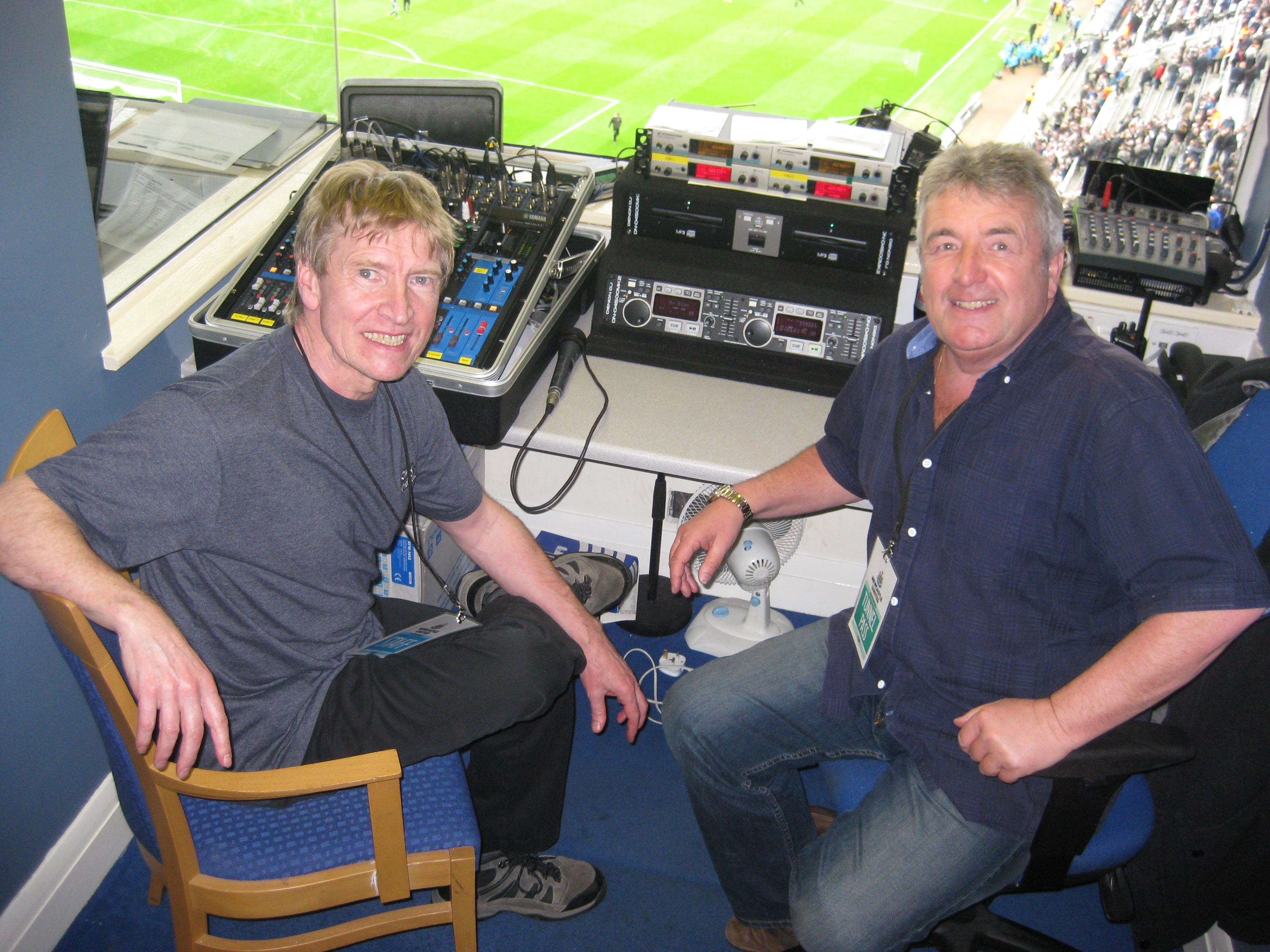
Alan (left) with match announcer at St James’ Park, Rob Byron.

What was your initial idea about recording a new version of the song ?

At the games we attended during the research phase of the project it was evident that the fans rarely sing the song, so what I wanted was to reach back to the nostalgia of how I heard it back when I first started going to the matches and try to create a fan’s version.

I’m thinking back to 1968 in the Leazes End covered stand where it sounded really powerful and loud like through a loudspeaker.

You would get to the match early to get your place and sing with all the other fans, it was a real communal thing and helped pass the time before kick-off. Now people can walk in five minutes before because they know they have their seat.

How did you put your idea into practice ?

I had a chat with representatives of the club, and they wanted a single voice to create a sense of unity and pride, Rob added that the fans only sing one verse, I thought this is going to be short then (laughs).

But it was one of those 4am thoughts when I got the idea how I was going to put it together, not have one voice but 50,000 voices as one. That’s where the challenge was, to make it sound like that.

I contacted sports radio stations to see if any audio of the fans singing the song without being contaminated by the match commentary existed.

One person got back to me, Chris Watson used to be in a Sheffield electronica band called Cabaret Voltaire, now he’s a top sound engineer who has worked with everyone including Sir David Attenborough.

With him living up here now, he had taken sound gear into the ground and got loads of recordings. I bought quite a bit of audio off him. Chris is also a big NUFC fan!

I also set up an evening where members of fan clubs Wor Hyem 1982 and Gallowgate Flags came to a pub, and we recorded them singing The Blaydon Races.

Then back in the studio, to build the track we mixed in the audio from Chris Watson’s ‘Toon Army’ chants, referee whistles, cheers, goals, crowd reactions in place of conventional instrumentation. We then added Stu’s tribal drumming.

All of this was to stay away from the jolly, comedy feel. However, listening back, it still didn’t sound how I wanted, so we then asked for full access to the Stadium and pitch side areas in order to pump the track through the St James’ sound system, then re-record the mixes of the fans singing, from different areas of the stadium. RESULT! Sounded great!

Originally the club wanted Jason Isaacs to sing it, he’s like the Michael Buble of the North (laughs). We met up and got on well and agreed we needed someone to lead the song, but this was going to be a fan’s version not a celebrity version, so I asked him not to sing it but be ‘five pints in’ belting it out (laughs).

He loved the idea ‘I go to the match and sing along so it’s no problem’. He done a brilliant job and belted it out like a fan – five pints in!

How do you feel about the song now ?

It’s still being played at St James’, and I see it as an ongoing project which I can add to. Using photos and visuals of matches from past to present is an idea I’ve been looking at, and how The Blaydon Races has been sung at matches over the years.

I would love to have recordings of The Blaydon Races from the 50’s, 60’s, 70s to mix into the track and create an audio/visual exhibition. (Anybody out there with any recordings?)

Stu Haikney was my co-producer on this, and he’s done a brilliant job. Stu is also a big Newcastle fan and we felt it had to be right. We wanted to get it to transition from a music hall song to a real football chant.

We wanted the true authentic sound of fans singing at St. James’ Park and not take the easy option of using a ‘stadium simulation’ studio plug-in. Football fans spot that sort of thing a mile off (laughs).

It’s like a call to arms, a Northern anthem which captures the tribal spirit of the beautiful game and the roars at St James’ on a match day.

More stories soon from Alan about The Loud Guitars and current band The Attention Seekers.

For further info contact the official website

the-attention-seekers.co.uk 

where the track is available as a download/stream on Spotify, Amazon & iTunes.

Interview by Gary Alikivi    October 2019.

POLTERGEIST – Dan Green investigates Mysterious Tyneside

Mysteries of the world are fascinating subjects and we rely on scientists, archaeologists and storytellers to bring them out of the dark. Finding a mystery closer to home can add more interest.

This was the case for former South Shields resident Dan Green. Dan is a British author, broadcaster, researcher and writer, he recently got in touch and told me some interesting stories that he researched when living in the town.

Until 2013 when it went out of publication, I was a writer for the well-known monthly national magazine ‘Paranormal’. Issue 63 bore the cover ‘The South Shields Poltergeist’, a bizarre candidate for this country’s most well witnessed and intensely frightening case on record, if true.

It was the horror encountered by a young couple and their 3-year-old son whilst living in a terraced house in the town during the winter of 2005. A saga that was to last for one full year before the poltergeist phenomena, as it usually does, left just as mysteriously as it had arrived.

It left a steadily escalating trail of terror the sort of stuff Hollywood movies are made of – objects balanced at angles defying logic and gravity, macabre threatening messages left on paper and the child’s Etch-A-Sketch, even text messages and emails on a mobile that couldn’t be traced back to any source. There were all forms of attack levelled at the family.

Before sceptic’s cry ‘Hoax!’ the phenomena was witnessed by a number of people on different occasions and thoroughly researched by local paranormal investigators Darren Ritson and Mike Hallowell. Darren himself on one occasion witnessing the ‘large black shadow’ responsible.

The full account of the twelve-month assault can be found in their book ‘The South Shields Poltergeist’. Was this caused by a disturbed unconscious mind of a young child, or some controlling intelligence? Who can say for sure.

Unfortunately, we will never know the true identities of the family involved or the address of the property, as all such details were changed to preserve anonymity and perhaps sanity.

Who would want to knowingly live in, or even next door, to a house that may well have once housed what remains the most frightening paranormal manifestation of poltergeist in the UK.

For further information about the work of author Dan Green contact:

www.dangreencodex.co.uk/

Gary Alikivi October 2019.

CLOSE ENCOUNTERS ON TYNESIDE Dan Green investigates Mysterious Tyneside

‘There’s a starman waiting in the sky
He’d like to come and meet us
But he thinks he’d blow our minds’.

Sang Bowie in ’72. Over the years there’s been many songs written about UFO’s and aliens. Back in the ‘50s Bill Buchanan and Dickie Goodman wrote The Flying Saucer which landed at no.3 in the American charts.

In the ‘60s The Byrds sung of a Mr Spaceman and in the ‘80s the Ramones ripped through Zero Zero UFO about aliens visiting earth.

Some Native American tribes believe they have gained knowledge through extra-terrestrial contact with their star ancestors. But when you find a mystery closer to home, it can add more interest.

This was the case for former South Shields resident Dan Green. Dan is a British author, broadcaster and researcher, he recently got in touch and told me some interesting stories that he researched when living in the town. One of them reminded me of an experience I had back in Summer 2013.

I was walking on South Shields beach around 6pm, above was bright blue sky with a few clouds.  I was enjoying the sun and listening to the gentle waves – my mind was just wandering.

Out of the corner of my eye and way up high, I saw a small silver disc moving slowly. I thought it might have been a plane because there is a flight path nearby. I watched the disc move slowly for a minute or two, looking around for maybe a reflection off something else in the sky.

It was silent and moving very slowly then suddenly it shot off very fast and didn’t leave a trail. What was it?

In 1988 author Dan Green wrote an article for The Shields Gazette chronicling close encounters in the town including incidents now referred to as ‘Unidentified Aerial Phenomena’. He found that in 1967 the UK was besieged with a flurry of strange lights appearing in the skies.

The newspaper reported ‘A bus driver said he saw a cigar shaped object surrounded by a bright green glow over the coast near Brighton. Sparks were coming from its tail and for a short time it travelled parallel with the bus’.

Not to be outdone was our own South Shields, with the Gazette reporting some boys claimed to have seen a bullet shaped object hovering over Horsley Hill electricity sub-station.

One boy glanced up and saw the glowing green outline of an 8ft long cigar shaped object hovering 100 yards away – ‘It must have spotted us, cos it just shot back up into the sky’.

Below is part of Dan’s article in The Shields Gazette from 1988.

‘I was an impressionable 10 year old when the Shields Gazette popped through my letterbox with a page reading ‘UFO over Tyne Dock’.

‘On the night of October 21st 1967 residents living near the river had been invited to the spectacle of three dazzling white triangular lights stationary in the sky. They had been hanging for a full half hour before vanishing’.

‘People craned necks out of their windows to witness it, and one in particular had called the police. This enterprising fellow, later nicknamed Ronnie Rocket – took his enquiry as far as the Ministry of Defence who eventually sent him a reply that ‘Everybody had seen a weather balloon that had blown over from Liverpool!’ 

‘That October week saw more puzzling sights in the skies of Shields, as early morning workers catching the ferry viewed a host of fiery ‘Flying crosses’, and a sighting of a cigar shaped object was reported by a couple walking their dog in the Bents Park during the day’.

‘Residents in Whiteleas saw an object streaking across the sky ‘like a bullet’. The 1967 UFO flap was never given any plausible explanation, but I’m sure as hell it wasn’t a scousers balloon’.

For further information about the work of Dan Green contact –  www.dangreencodex.co.uk/

Gary Alikivi October 2019.

MIND GAMES ? Dan Green investigates Mysterious Tyneside

Mysteries of the world are fascinating subjects and we rely on scientists, archaeologists and storytellers to bring them out of the dark. Finding a mystery closer to home can add more interest.

This was the case for former South Shields resident Dan Green. Dan is a British author, broadcaster, researcher and writer, he recently got in touch and told me some interesting stories that he researched when living in the town.

fa

I came across a genuine fairy story in the small area of woodland behind the football and rugby playing fields of South Shields Marine and Technical College. I’m no psychic, but I had been drawn to this location after playing football there for years, used to have the odd pee in the bushes.

Anyway, in 1983 I was curious at the suggestion that not only could images imperceptible to the human eye be picked up on camera, but that great mystery of mind could even imprint them onto film with enough effort.

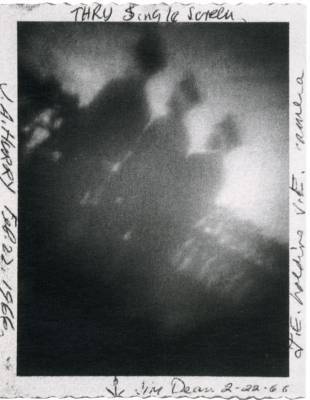
A controversial claim by the much-tested American Ted Serios and his ‘thoughtography’ experiments.

A-thought-image-created-by-Ted-Serios

A thought image created by Ted Serios.

As ever a true scientist, I thought I’d try some experimentation of my own and took some pictures in the forestry area behind the fields with the strong thought of traditional fairies being there.

When the pictures where developed it was hard not to notice some representations of diaphanous semi-opaque figures of the established fairy variety. Surely this was just imagination or the brain forming patterns ?

I repeated the experiment with similar results and decided it high time to involve an independent investigator. I sent the negatives to the newly formed Association for the Study of Anomalous Phenomena, and they passed them over to their expert the very credible and respected Vernon Harrison, former President of the Royal Photographic Society.

He could see exactly what I was pointing out and suggested he came to South Shields to take his own photos with his own equipment. He would take the photos at intervals of one minute apart and if the entities were seen to move about, then we might have to consider the unthinkable!

Vernon sent his report to the ASSAP but was puzzled when they refused to fund his venture. I later found out on an 1855 map of Shields that this precise area had once been called ‘Fair Fields’. A corruption from a far distant recollection of ‘fairy field’ perhaps ?

Later in the decade Shields had a prestigious private visit from my friend university lecturer and journalist Joe Cooper of Leeds, who came to my home in South Shields with a big problem.

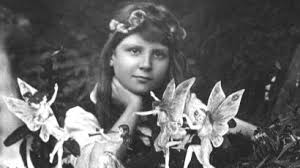
It was Joe who had finally revealed the case of the Cottingley Fairies whereby two cousins had fooled the world for almost 70 years having faked photos of fairies at the small beck at Cottingley.

For year after year Joe had visited the girls asking them how they had done it, but they always insisted the fairies were real. They weren’t, they had been cardboard cut outs with hat pins and the truth only finally came out in 1983 when the girls fell out and one decided to spite the other with a confession to Joe.

Under normal circumstances Joe would have been delighted with the scoop he had patiently waited years for, but not when the manuscript for his book defending the photos as genuine sat with his publisher and was about to be published!

What should he do, he asked me and my wife? Look the other way and just have the book come out? The girls confessed to The Times newspaper the following year and the game was up, but they claimed the very last photo they’d taken was genuine, so Joe went with this to cut his losses. But experts later found out it wasn’t genuine.

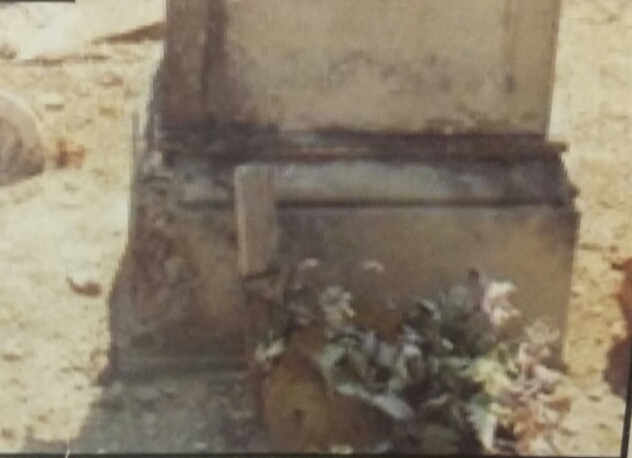
My interest in the camera picking up fairy images invisible to the eye continued for a while after. Here’s a pic of my favourite taken in France, a fairy figure lazing from left to right at the bottom of a tomb. Real or simply imagination?

fairyat-tomb

And there you have it, for those who consider belief in such things – Fairies in South Shields – who needs to go to Glastonbury!

For further information about the work of author Dan Green contact:

www.dangreencodex.co.uk/

Gary Alikivi October 2019.

HIDDEN TREASURE on Tyneside with investigator Dan Green

Mysteries of the world are fascinating subjects, and we rely on scientists, archaeologists and storytellers to bring them out of the dark. Finding a mystery closer to home can add more interest.

This was the case for former South Shields resident Dan Green. Dan is a British author, broadcaster, researcher and writer, he recently got in touch and told me some interesting stories that he researched when living in the town.

I lived in South Shields for over forty years, and this is one of my better investigations, originally introduced to the public as a centre page article in the Shields Gazette in 1989.

I’d come across ‘The Cuthbert Code’ first told to me by a retired Benedictine monk who was living in the town. He told me how St Cuthbert was originally buried at Lindisfarne and eventually found a resting place in Durham Cathedral, only to be disturbed by Henry VIII’s marauding commissioners looting for treasure during the Reformation.

While orthodoxy tells us that he was reburied at this shrine in 1542, the Cuthbert Code records that his loyal monks looked to safeguard his body against any further attempts at sacrilege, so reburied him in a secret location.

A substitute skeleton was placed in the tomb. The secret of his reburial location is closely guarded by no more than 3 monks at any one time.

I discovered an 1895 manuscript tucked away in the safe of St Hilda’s Church in South Shields, called ‘The legend of the Fairies Kettle’. It mentioned Cuthbert and how a gold cup had been stolen from its fairy guardians at Trow Rocks on the coast at Marsden. Then it was whisked away to Westoe, then taken to Durham Cathedral to be buried alongside Cuthbert.

Knowing a bit about Freemasonry I deduced that there was a broader message here and that a treasure linked to St Cuthbert was telling us that something thought to be in Durham Cathedral was in fact at Westoe.

This ‘treasure’ being Cuthbert himself – bear in mind that during medieval times the monks of Durham owned Westoe Village.

I set off on the scent of the saint and a hunch led me to Westoe Village. In 1989 there stood a derelict Nunnery once owned by The Order of The Poor Sisters of Mercy. At the time of my interest the Nunnery had just started to be re-developed and the ground was disturbed.

The builders allowed me access and on the stone floor under inches of dust and grime I found a five-pointed star mosaic.

By now I had my centre page in the Shields Gazette newspaper, and they promised they would carry a follow up. I’d accumulated a lot of evidence including a curious plaque high up on a wall in the village stating, ‘Follow the Paths of the Lord and you will find him’. Was this telling us to follow some subterranean path or tunnel under the Nunnery leading to Cuthbert?

The new owner of the land was intrigued by my Gazette article and allowed us three days to nosey below the site before it would be filled in. Hurriedly I took two burly ex-Westoe miners, plus a stonemason friend of theirs and entered an accessible dark mazy passageway that led to another sealed off passage.

I hadn’t told the owner that my crew were armed with lump hammers, they smashed a hole through the passage wall.

Using plasticine we took an imprint of a Freemasonry mark on a brick in the wall. We were now under a stairwell and a hollow cavity. Our stonemason accomplice told us that there should be something below – the perfect place to hide something of value. Cuthbert?

Frustratingly, our time was up, with no chance of being able to return or continue. At least, with photos we had taken each step of the way, we had the follow up Gazette article.

But then the Editor took fright at the implications and refused to print it. I also did a short phone interview for The Sunday Times.

What happened next is a mix of comedy and tragedy. My Cuthbert Code resurfaced in 1997, just before I left South Shields when new evidence again cast doubt on the final resting place of another Catholic saint, Thomas Beckett at Canterbury Cathedral. A similar situation to mine then.

I arranged to meet up with the latest Gazette editor and try again to see if what had been my intended second article could at last be presented to the awaiting Shields’ population. I took a dossier in and after studying the work he broke his silence with, ‘Is this a wind up?

I found the question disappointing and assured him it wasn’t, and we continued talking for some time. He concluded he’d think about running a feature and be in contact in a few days.

He did and said that he couldn’t possibly run it. I pressed him why and here’s his reply which I still remember clearly, ‘Because I live in the flat above your location!’

What was the odds of that? I didn’t know whether to laugh or cry, but it was true, his flat was right above the location. Perhaps, if he’s still there, with lesser odds, St Cuthbert and his treasure is also there below him.

More mysterious stories from Dan will be posted soon, for further info contact:

www.dangreencodex.co.uk/

Gary Alikivi  October 2019