THE BOY FROM BENWELL with Film & TV Director, Bob Smeaton

‘You can play a hundred gigs and reach a thousand people. You can do one television show and reach millions’

When White Heat broke up in 1982, Tyne Tees art show ‘Check it Out’ filmed a half hour special on the band which Geoff Wonfor directed (later at live TV music programme The Tube).

The special was broadcast during February 1982 a week before their farewell gig at the Mayfair.

’When we told Geoff Wonfor that White Heat were splitting, he told us that Tyne Tees should make a documentary about the band. Geoff was able to convince them that they should do it and that he should direct it.

We filmed our second last gig at the Gulbenkian Studios near the Haymarket in Newcastle. What a lot of people don’t know is that we mimed a whole set of songs from our album In the Zero Hour and then mixed that in with film from the actual gig. So we in fact played each of the songs twice.

After we had mimed to all of those songs I had almost blown my voice out. Even though we were miming I still used to sing the songs. All the audio that was used in the documentary came from the album, none of it was live.

We also shot some stuff of me returning to the shipyards. One of the followers of White Heat has put it up on You Tube’.

White Heat. Circa 1978

White Heat (circa 1978)

The blog is heading for 50,000 views so a great way to mark this milestone is to feature Director Bob Smeaton. If you’ve ever watched the Classic Album series, caught a Hendrix documentary or any TV with big names from the music world on- Bob’s probably directed it.

Along with being nominated three times for an Emmy as director of music and arts documentaries, he’s a double Grammy award winner. In 2017 he worked with fellow Geordie, and ex AC/DC vocalist, Brian Johnson for the Sky Arts series A Life On the Road.

Before working in film and television, Bob was lead vocalist and songwriter with North East rock band White Heat. Signed to Virgin records, the band toured extensively and released one album and two singles. This is his story…..

‘When I was around fifteen me and my mates became obsessed with guitars. I couldn’t afford a guitar so I became a singer, it was the cheaper option. All you needed was a mic and you were up and running.

I was never going to be the best singer in the North East. But I had learnt a lesson that if you put on a show that helped hide any bum notes then you stood a fighting chance.

There were loads of great singers around at the time, Mick Whitaker, Dave Taggart to name but two. I was never going to be as good a singer as those guys and over the years rather than develop as a singer I was getting better as a front man’.

Who were your influences in music ? 

‘My dad had a large record collection when I was growing up. The first records that I listened to were his. I would have been around eight years old at the time. He had records by everyone from Slim Whitman to Elvis Presley.

I always loved songs that told stories and I used to love learning the words and singing along to their records.

I had no idea what any of the singers looked like aside from what I saw on the record covers. So as far as I was concerned there wasn’t a great deal of difference between the likes of Slim Whitman, Elvis and Tom Jones. They were just great singers who were singing great songs.

Then in my early teens I started hearing Tamla Motown on the radio and at my local youth club disco. Again, great singers and great songs.

But I still had very little idea of what the artists looked like as I very rarely saw them on television.

The big moment for me was when I started getting into rock music. This was the first time when the visual side became as important as the musical side. It all came together, the songs, the musicianship and the way the bands looked.

Even though I hadn’t as yet been to see a live gig. Just the pictures I saw in the music press, Sounds, NME and the Melody Maker was enough to get me excited’.

‘The first band that I saw performing live that had an affect on me were The Showbiz Kids. I was working as a floor waiter at the Scotswood Social Club and they were one of the bands that appeared.

What made them stand out was the singer, Rob Coyle, he grabbed your attention and demanded that you look at him.

Up to that point the audience in the club would pretty much ignore the bands until the end of the evening then they would all be up dancing. With Rob it was different, you had to watch him. He was like Mick Jagger.

And he made me realise that if you put on a show you would get the audience attention. I think Rob Coyle is not only one of the greatest front men to come out of the North East, but one of the greatest front men, period.

I saw him a couple of years ago fronting Dr Feelgood and he was still brilliant. Rob was a massive influence on me.

I remember meeting him for the first time and I was really made up that he knew who I was and had heard of my band’.

Was there a defining moment when you said ‘I want to do that’ was it watching a band or hearing a song ?

’Again, this comes back to seeing Rob Coyle and the Showbiz Kids. But the moment when I thought ‘I could do that and be a contender’ was when I saw The Clash at Newcastle Polytechnic.

Up to that point I had seen loads of bands, Zeppelin, The Who, Bad Company, all who had great singers but way out of my league as far as aspiring to be like them.

When I saw Joe Strummer I realised that with punk rock you didn’t have to be a great singer in order to make it. If you had the right attitude, then you were well on your way.

Strummer had attitude by the shed load, and he looked great on stage, you believed in him 100%’.

When did you start playing gigs and what venues did you play. Was it in the immediate area or travelling long distances and did you support name touring bands ?

’I started doing gigs with my first band Hartbreaker around the mid 70s. The band were, me on vocals, Bryan Younger on guitar, Colin Roberts on bass and John Miller on drums.

We didn’t want to play the working men’s clubs as we didn’t want to do cover versions and I wasn’t great at singing other people’s songs.

Therefore, we started writing our own songs and began playing gigs on the Newcastle pub circuit. The Bridge Hotel, Cooperage, Gosforth Hotel and Newton Park.

At the time our goal was to be as good as another local band, Southbound, they were brilliant and we got a couple of gigs supporting them. They are another one of those great North East bands that never ‘made it’.

I remember they once brought a demo that they had recorded to play to me when I was still living at home at my mam’s in Benwell. It was brilliant, if they had come from Alabama rather than Sunderland I am convinced they would have been as big as Lynyrd Skynyrd.

Hartbreaker built up quite a following, but it was still just a side-line to our day jobs. I was working as a welder at Swan Hunter Shipyards at the time.

When punk and new wave happened around 76/77 that’s when I started thinking I could possibly make a career out of music. The doors had been kicked wide open. By then we had changed our name to White Heat and had added an extra guitarist, Alan Fish’.

What were your experiences of recording ? 

‘Around 1976 we had acquired a manager, Brian Mawson, who also managed the record department of Windows music store in Newcastle. Brian got us studio time at Impulse Studio in Wallsend.

I would nip up the road from the shipyards at lunchtime and lay down a vocal while in my overalls then head back to work.

I never enjoyed the studio as much as I did the live gigs. In the studio there was no place to hide any dodgy vocals. White Heat were much better live than on record.

Mond Cowie (ex-Angelic Upstarts) also worked in the yards and I remember him telling me that he was quitting his job to go full time with the band. I was really jealous.

I hated the yards but it was something to kick against and a lot of my lyrics were influenced by working there and wanting to get out of the place.

White Heat released an independent single called Nervous Breakdown which we recorded at Impulse, it was produced by Mickey Sweeney.

Mick produced everyone who came through the door at Impulse, from the Angelic Upstarts to Alan Hull. He was a great guy and full of enthusiasm for the band.

The studio was run by a guy called Dave Woods. Dave like Mick loved the band and around this time set up Neat Records.

I thought at one time we might have ended up on Neat Records but instead we released Nervous Breakdown on our own label called Vallium.

The record did really well in the North East and we started attracting the attention of the major record labels. I quit my job as a welder and became a full time musician. It was the best decision that I ever made.

We eventually signed a deal with Virgin music publishing and Virgin Records. We toured with the likes of Judas Priest, the Vapours and did the odd gig supporting amongst others the Climax Blues Band, Gen X, Split Enz and the Tom Robinson band’.

By 1981 the band had released their 10 track album ‘In the Zero Hour’…

‘When we were recording parts of In the Zero Hour at Rock City Studios which is in the film complex of Shepperton Studios, James Cagney was there filming the movie, Ragtime.

I went into the canteen one day and saw him sitting there having his breakfast. I asked one of the production people if I could go over and say hello to him. I was told he wasn’t feeling too good and maybe I should ask again tomorrow.

The next day he didn’t turn up. Ragtime turned out to be his last ever film. I wish I had got to speak to him as he died shortly afterwards.

But it was great to see him in the flesh. If anyone ever asks me who my favourite film actors are I always used to say, Elvis Presley, Stan Laurel and James Cagney’.

Did the band have any help or supporters ?

’We were really lucky in that I became great mates with a guy called Geoff Wonfor who was a television director working at the BBC. Geoff would make film clips of the band and get these shown on the local BBC channel.

This helped the band reach a wider audience and soon we were playing bigger gigs. By now we were playing places such as the Mayfair.

I loved doing television performances, just to see yourself on the telly was such a buzz. Nervous Breakdown did really well, and we were hovering outside the national charts.

If we had made it onto Top of the Pops I am convinced we would have been massive, but we only ever did local television.

In the TV documentary there is a backstage scene of the band getting together and shouting ‘Nice one’. Was that a pre-gig ritual or a set up just for the camera ?

’We used to have a roadie called Paul Elliott who when we came off stage would always tell us that the gig had been a ‘nice one’. Regardless of how good or bad we felt it had been, that always made us feel better.

We adopted that line, and it became part of our pre-gig ritual. It was a bonding thing, always raised a laugh and was a good way to loosen up the vocal chords.

We used to come on stage to the theme song from the James Cagney film, Yankee Doodle Dandy, that was because I was a massive fan of Cagney and he was once in a film called White Heat which was another connection’.
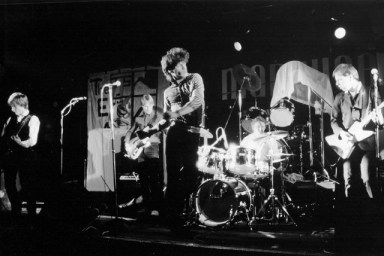
White Heat at the Marquee.

White Heat live at The Marquee, London.

Looking back what do you think of the Bob Smeaton then, and have you still got the white jacket you wore on the documentary ?

’I watched the Check it Out documentary when I was writing my book. I thought I came across like a right cocky bastard. But I was young and I was cocky and I thought I looked great.

I even thought that the white jacket looked great, but not sure it quite went with the braces!!

I no longer have the white jacket. I threw it into the crowd at the end of the final White Heat gig. A bit like a cowboy hanging up his guns.

I still get asked if I can still do the press ups that I used to do during the solo of Nervous Breakdown – and I can. But I feel a bit knackered afterwards.

If anyone looks at the Nervous Breakdown clip on You Tube they will notice that the performance is all captured in a single shot, there are no edits in it.

Geoff Wonfor was on stage with the cameraman, and I would push the camera in the direction of where I thought it should be filming. That was all spontaneous and it’s a great clip.

In fact, I would probably go as far as to say that Nervous Breakdown is the best song that White Heat ever wrote and that along with that video clip pretty much summed up what the band was all about.

It was a strange dichotomy with White Heat. I never wanted us to be considered a ‘local band’ I wanted us to succeed on a national level but so much of the success we did achieve was because of the following we had in the North East.

We did do a number of gigs in London, but we really should have moved down there if we wanted to really grow a fan base.

But we were all local lads and maybe the desire to make that big step wasn’t present within all the band members’.

Have you any stories from playing gigs ? 

‘I have just written my memoir which is coming out in November, and I have written about touring with the band. Those were the best days ever; they were not so much funny as really exciting. Touring is the best thing in the world.

I have been fortunate to have made music my life, but nothing compares to performing with a band. White Heat went from playing to fifty people at the Bridge Hotel to selling out the Mayfair at our final gig playing to 2,000 plus.

I really miss performing live, the size of the crowd is secondary. It’s as good performing in front of a hundred people as it is two thousand.

I have done both in fact we once played a gig just outside of London to eight people. That’s the smallest crowd we ever played too. The biggest crowd was probably around three thousand when we were supporting Judas Priest on tour and played Sheffield City Hall’.

After White Heat did any other bands enquire about you as their frontman ?

’After White Heat split I didn’t want to join another North East band I always felt that would have been a come down. I moved to London for six months and joined a band called Agent Orange who were made up of ex members of the mod group The Chords, along with Mick Talbot who used to be in the Merton Parkers and then later formed the Style Council with Paul Weller.

I recorded almost an albums worth of material with Agent Orange, the studio time was paid for by Polydor who The Chords used to be signed with.

Polydor were keen to sign the band and we were in the process of arranging some gigs so that they could see the band live. But I bailed out as I missed being home in Newcastle.

The lads in White Heat were my mates. The Chords were not really my mates. I wanted to ‘make it’ but not at any cost.

Those days with White Heat were the best times and I wouldn’t change it for the world. Also I felt we split up at the right time’.

Version 5

What does music mean to you ?

’It sounds like a cliché but music changed my life. If I had not become obsessed with music, I don’t know what would have become of me.

I have been many things, an actor, television presenter and now a director of music documentaries. But this all came about through my love of music. It has been the gateway to everything that I have done.

I still love seeing live bands and hearing new records. There is so much great music around now, you just have to sift through it to find the gems. A good song and a good singer, that is still my yardstick’.

What are you doing now and are you still involved with music ? 

I was really fortunate in that thanks to my friendship with Geoff Wonfor I got involved in making music videos. This led to working on a great number of music documentaries.

For the past twenty-five years or so that is pretty much what I have been doing. I have been lucky to have worked with a number of the bands that I grew up listening too. The Who, Pink Floyd, The Rolling Stones and The Beatles.

My background in music, and having played in a band has been a great help when working with those people. They realise pretty early on that when it comes to music I seem to know what I’m talking about.

If any young kids read this and are thinking about playing music, I would say go ahead and do it. You have got to get out of your bedroom and start playing music with your mates. It’s one of the best feelings in the world.

Even if you don’t ‘make it’ just to walk out on stage and perform in front of an audience is something that you will never regret’.

Bob Smeaton memoir ‘From Benwell Boy to 46th Beatle…and Beyond’ out now.

Interview by Gary Alikivi October 2018.

For more Tyneside stories why not subscribe to the ALIKIVI You Tube channel.
SOUNDS ALIVE: The Power of Music

The adrenalin rush of the thunderclap from Icelandic football fans. The guitar intro to Alternative Ulster by Stiff Little Fingers. Kurt Cobain’s anger on the Nirvana anthem Smells Like Teen Spirit.

And what about John Bonhams bombastic drums on When the Levee Breaks ? Sound has a real strength and songs have unforgettable moments. What’s yours ? 

Music has a power to ignite and heal. Rewind to the ’80s. A charity single aimed at raising money for famine relief in Ethiopia. Pop and rock stars of the day including the Durans, Spandau, Quo, Sting, Bono and not forgetting Bananarama crammed into Sarm West studio in London.

Songwriters Bob Geldof and Midge Ure realised they didn’t have a nice little charity single on their hands but a major pop record when George Michael and Boy George laid down their vocal tracks on Do They Know it’s Christmas.

The song raised millions and the Live Aid concert at Wembley Stadium followed. Bono becoming Bono. Freddy’s Big Night Out. And Geldof salutes ‘The lesson today is how to die’. History was made. The power of music.

The shelves in my local library are full of music related books. Lately I’ve read biographies by Judas Priest guitarist K.K. Downing and the Russian classical composer, Prokofiev. Complete contrasts ? Prokofiev has his lighter moments but listen to Dance of the Pagan Master. That’s Heavy Metal from way back.

You’ll also find a bit of Prokofiev in Greg Lakes I Believe in Father Christmas. Check out the horse drawn sleigh in Troika. Wonderful sound. What am I saying here ?

Well, not only do we want to listen to music, but read about it and talk about it. That’s the power of music.

Of course, we all have our own tastes and top ten lists. But music is a leveller, and it can be used to sum up our feelings at any given moment.

After the England football team were beaten in the Euro ’96 semi-finals Walk Away by Cast was played on TV over pictures of the manager Terry Venables head down, hands in pockets walking down the touch line knowing this was probably his last match in charge.

In that team Geordies Gazza and Shearer stood tall. But football didn’t come home that day. 

The internet in the late ’90s. Is that when music started to lose its value? I’m not talking about value that rings the till. More of a value that can be considered important. Even cherished.

In interviews guitarist Noel Gallagher talked of Oasis not being the most popular band in the ’90s, but the most important. Blur might have something to say on that one, but they never had quarter of a million at Knebworth.

What is the attraction of music? Some songs have great stories. You’ll have your own favourites like the first records you bought. The songs that marked important moments in your life. The inspiration behind them, who wrote the lyrics and what it means to you.

And finally, your funeral song. Yep, some people have their favourites ready for when they finally check out. Music really is the soundtrack to our lives. From beginning to the end.

Well the music is your special friend. Dance on fire as it intends 

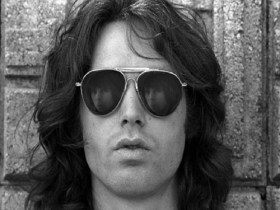
Music is your only friend. Until the end.  (Jim Morrison, When the Music’s Over). 

Gary Alikivi   October 2018.

ALIKIVI

Recommended:

1980 The Year Metal was Forged on Tyneside   11th Feb. 2018.

Rockin’ All Over the Toon  22nd May 2018.

Rockin’ All Over the Toon Again  14th Sept. 2018.

When the Music’s (not) Over 24th Sept. 2018.

For more Tyneside stories why not subscribe to the ALIKIVI You Tube channel.
GUARDIAN RECORDING STUDIO #4 Metal on Tyne with Mythra, Saracen & Hollow Ground

Guardian Sound Studios were based in a small village called Pity Me in County Durham, North East UK.

There are various theories on the origin of the unusual name of the village – a desolate area, exposed and difficult to cultivate or a place where monks sang ‘Pity me o God’ as they were chased by the Vikings.

Whatever is behind the name it was what happened in two terraced houses over 30 years ago that is the focus of this blog. They were home to a well-known recording studio.

From 1978 some of the bands who recorded in Guardian were: Neon, Deep Freeze and Mike Mason & the Little People. A year later The Pirahna Brothers recorded a 7”.

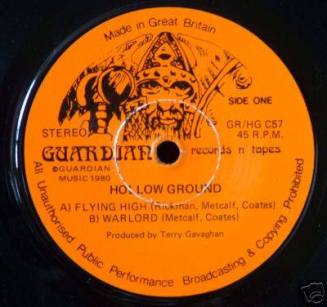
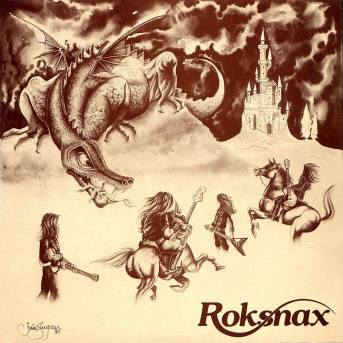
1979 saw an E.P from Mythra and releases in 1980 from Hollow Ground, Hellanbach and a compilation album, Roksnax.

From 1982 to 85 bands including Red Alert, Toy Dolls, Prefab Sprout, Satan, Battleaxe and Spartan Warrior had made singles or albums. I caught up with a number of musicians who have memories of recording in Guardian… 

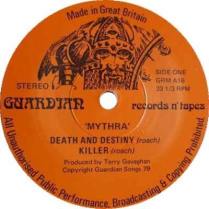
MYTHRA – Death and Destiny 7”EP 1979. Tracks: Death and Destiny, Killer, Overlord, UFO.

MYTHRA

JOHN ROACH (guitar): ‘With Mythra we saved some cash from our gig money with the intention of recording a demo tape to see if we could get any interest from record companies.

We checked out Impulse and Guardian studios and decided to go with Guardian. From what I remember we were offered actual vinyl records for our demos, rather than cassette tapes’. 

MAURICE BATES (bass):  ‘The first recording session was a new experience and opened our eyes to another part of being in a band. The owner Terry Gavaghan was more of an engineer than producer, he just said to us no slow songs lads keep it up this is good ! 

JOHN ROACH: ‘Guardian Studios was in a very small, terraced house in Durham. If you entered from the front street you ended up in the main recording room, with a very small isolation room for the drums.

Through a door you entered the control room which was actually the back of the house. Terry Gavaghan lived next door. He kept disappearing during the recording, going for something to eat or answer the phone to the big record companies!

MAURICE BATES: ‘We slept upstairs to the studio so we could get on with recording straight away in the morning. But as we were recording our own bit separately, everyone else had to leave the studio so we ended up in the pub! Happy days’.

JOHN ROACH: ‘We released the vinyl EP in November 1979. It is well documented that this was one of the very first records to be released of what would become known as the New Wave of British Heavy Metal’.

HOLLOW GROUND – Flying High 7’ 1980. Tracks: Flying High, Warlord, Rock On, Don’t Chase the Dragon.

HOLLOWGROUND

JOHN LOCKNEY (drums): ‘Because we had our own material, we were trying to get the money together to get in the studio and record it. It was so nerve wracking then cos we were green as grass. Doing overdubs and things something we had never done before’. 

MARTIN METCALF (guitar): ‘One night we went to a Raven gig at Newcastle Mayfair and Steve Thompson who was producing at NEAT studios then, pulled me to one side and said there’s a deal at NEAT if you want.

I liked the idea but told him we had just sorted something out with Guardian. We went down to the studio in Durham and recorded four tracks. It cost around £500’. 

JOHN LOCKNEY: ‘It really was great. I mean you’ve been brought up and bought singles. Now suddenly you’ve got one of your own. We were proud of the songs. We think they still stand up today and we went round selling them to local record shops. It’s still one of the proudest things I’ve ever done you know’.

MARTIN METCALF: ’I still remember the smell of the brown cork tiles in the studio and having to Sellotape the headphones on my head when recording as they kept falling off ! In hindsight maybe NEAT would have turned out better for us in the long run’.

JOHN LOCKNEY: ‘We went back to record another two for a compilation album Roksnax. The production and the way we played was better then.

We weren’t as green and went back again and done another four tracks for demos to flog around record companies. You can tell the difference how confident we were with more experience in the studio’.

SARACEN – Roksnax compilation LP 1980. Tracks: Speed of Sound, Fast Living, Feel Just the Same, Setting the World Ablaze.

roksnax

STEVE DAWSON (guitar): ‘We went into Guardian Studios where our friends, Mythra, had recorded their Death and Destiny EP.

Most of us were friends from school or through the scene, you know, being thrown together in this cauldron of New Wave of British Heavy Metal. We booked a day there and recorded three songs’. 

LOU TAYLOR (vocals): ‘I saw it as moving up to the next level and felt excited to be in the studio and something happening for Saracen. When we went down to the studio we first drove past the place and double backed on ourselves to find it.

It looked just like an ordinary house, later we found it was two terraced houses knocked into one’.

STEVE DAWSON: ‘After the initial recording session, we were invited to attend a meeting with the owner Terry Gavaghan who proposed an idea to us about putting our tracks on a compilation album. It was going to feature local bands Saracen, Samurai and Hollow Ground. So we decided yeah let’s go for it’. 

LOU TAYLOR: ‘I can’t remember much from the sessions apart from recording my vocals quite late at night and the drum booth being tiny. When Dave was behind the drums, we had to pass him refreshments every so often as it was such a tight squeeze to get in.

Terry was forever nipping out of the studio and coming back with a smelly cheese sandwich or something to eat, and he loved to talk about the resident ghost !

STEVE DAWSON: ‘The album was basically a ‘live’ performance in the studio with minimal overdubs. I spent my 21st birthday in that place…I’ll never get it back!’

LOU TAYLOR: ‘On reflection we might have been better off recording at NEAT, as they were more loud and proud, you know the whole crash, bang and don’t forget the wallop’.

If anyone has information or recorded in Guardian studios, it’ll be much appreciated if can you get in touch.

Interviews by Alikivi.

Recommended:

1980: The Year Metal was Forged on Tyneside, 11th February 2018.

ROKSNAX: Metal on the Menu, 9th March 2018.

GUARDIAN STUDIO STORIES

#1 TYGERS OF PAN TANG May 3rd 2018

#2 SPARTAN WARRIOR May 20th 2018

#3 STEVE THOMPSON (Songwriter & Producer) July 11th 2018

THE WEARSIDE KNIGHT – in conversation with North East entertainer Alan Knights

38197362_2177287099220215_4133692420791468032_o

What bands did you see when you were younger ?

‘Used to go to the Newcastle Mayfair on Tuesdays that was for local and up and coming bands. Friday nights was big bands like Deep Purple, T.Rex, Strawbs that’s where I fell in love with Sonja Kristina from Curved Air. Also saw Rory Gallagher there. That’s when I met him.

My uncle was a baker, and he had a young lad working for him and to subsidise his apprentice wages he worked as a doorman at The Mayfair.

Well one night Taste were on and the young lad who worked at my uncles bakers was working that night. He let us in the dressing room and there was Gallagher at the table full of dark drinks, rum or sherry who knows and the drummer was hitting the wall with his sticks.

I said ‘Great to meet you Rory’ shaking his hand. ‘What did you get your haircut for ?’ He said ‘It gets in my soup’ haha.

But it was sad that time when I was flying back from holiday and the paper just said ‘Rock Star Dies’. That was it you know. Aww he was a great player’. 

Can you remember your first guitar ?

‘Aye it was a cricket bat with a fishing line on. I never used to do anything right at school. I went away youth hosteling and the teacher taught me how to play the guitar.

It was the first time I was praised ‘Well done Alan’ instead of ‘Knights you can’t do that’ you know. Music put me on the right rail.

I started work at the Ministry in Longbenton in ’68. We used to sort out pension books, family allowance, national insurance things like that. It was a big complex.

A lot of musicians and bands worked there, you had Alan Hull from Lindisfarne and members of Raw Spirit. Dave Black worked there. He went to London and had an album with his band Kestrel it was called The Acrobat. Great stuff prog music you know, fantastic.

But at work I’d go round telling everybody I played guitar. This kid sold us a beat-up acoustic which only had four strings on it and that’s how I learnt to play bass. All self-taught.

I have a few guitars now but my pride and joy is my Rickenbacker 1973 Fireglow. I paid £275 quid for it, it’s got a bit buckle rash on the back but it’s worth a bit more now’. 

When were your first gigs and what venues did you play ?

‘In the early days I was nervous as anything playing pubs and folk gigs. Once was playing the mandolin in this folk club and couldn’t feel the plec in my fingers. So nervous.

But I loved the folky thing starting out in Washington. But when the miners’ strike happened, we couldn’t play the pit places, so we reconstructed our set for the pubs.

A bit of Irish and pop stuff that worked really well. That was with Beggars Bog. The name is from a farm up Corbridge and Hexham way’.

Have you recorded any of your music ?

‘I was playing solo and heard that fellow North East musician Derek Miller was doing backing tracks. We met up and I felt as if I’d known him all my life. So we put a duo together and went out as El Vivo, recorded a few albums and done a lot of stuff on the radio where presenter Paddy McDee was a great supporter of ours.

Then a few more musicians got together, and we ended up a five piece. We wrote a lot of original stuff with harmonies, synth and a few traditional songs.

I went to the studio one day and they had something playing I said I can see ships you know and started singing  Here’s A Tender Coming’. They said what’s that ? It’s an old folk song from South Shields. So we added a middle 8, few harmonies and my daughter played a clarinet on it.

We had a song called The Man that Saved the Day it got a lot of radio play. It’s about a guy I worked with on a ship that caught fire at Swan Hunters shipyard.

As a young ‘un I was a plumbers mate and thankfully got off the ship in time. The guy who the song is about got a lot of lads out of the engine room’.

Have you any stories from your time gigging ?

’In the ’80s we put a band together called Beggars Bog with Davey Hiles on guitar, Davey Hutchinson on guitar, me on my Rickenbacker bass which I’ve still got.

We done this documentary something to do with Nissan and Frank Wappat on the radio. His recording studio was in a church in North Shields. So there was four of us in the pulpit with cans of McEwans export.

We done the show and at the end of it he said ‘it’s a bit late to go for a pint now I’ll take you to my private bar’ which was called the Bunker.

I‘m a tall lad so I thought it would be a low ceiling sort of place but it wasn’t. It was a room all about the Germans during the war with these orange lights on and listening to Hits from the Blitz. We looked at each other and said this ain’t for us haha.

We ended up on the telly a show called Bog on the Tyne, on Northern Life presented by Paul Frost. But that band folded and I ended up in the Dynamite Twins. We all had club names – I was Kurt Fontaine, we had Tristram St Clair, Jason Saint Maritz and we had the names stuck on our mic stands. We couldn’t do it for laughing’. 

IMG_5270

Alan with guitarist Keith Satchfield.

What’s the pub and club scene like now ?

‘Well you got people going out for buttons you know, the Ed Sheeran types. They are keen. But it’s the money thing, if you can get the bass down on a backing track, the drums that’s two people they’re not paying for. 

We just got back from Corfu and a lot of the acts just have a laptop. Never saw one guitar.

But I love working live. Played at a Buskers Night with a fantastic drummer Mick Nevins and former Fist guitarist Keith Satchfield we’re called The Labour Exchange.

I’ve also teamed up with a guy called Leonard Brown he was in The Happy Cats. He’s only 26 year old, an accordian player. For a young lad he has a wise head on his shoulders. Great technician and a pleasure to work with. We’re called The Ferry Hillbillies, I get the Bouzouki out for that one.

We have a few gigs lined up, one at the Allendale Folk Festival. I also run a few buskers nights with a lad called Dave Moffat, great lad, been on the circuit for years, he’s got no hair now haha.

Open mic nights are also a great way to bring new blood through. Cos if you don’t look after the young un’s you’ve got no future. Some great young one’s coming through’.

38197362_2177287099220215_4133692420791468032_o

Can you pinpoint why in the past few year, Tyneside has had a number of entertainers, singers and comedians who have broke through to the mainstream ?

‘You can go back to Gerry Monroe he was a Shields lad on Opportunity Knocks. Then Splinter with Costafine Town and Bryan Ferry. Then you had Terry Slesser and Davey Ditchburn both with various bands who had been there or there about you know.

There was Dave Black and his band were on Top of the Pops. Looking back Tyneside has always had a strong entertainment background’.

What does music mean to you and what has it given you ?

‘Howay man, what does music mean to me ? It’s the food of life man. If I don’t have any musical intake for about two days I’m like a bear with a sore head.

If it’s not driving around dropping posters off, promoting the gig, if it’s not actually being up there and doing it, maybe sitting in behind somebody, putting a few harmonies on in a studio.

It’s all I talk about just ask wor lass haha. Music has given me a good lifestyle, a hell of a lot of pleasure, satisfaction. And a big family, the friendship of musicians in the North East is second to none, we always look after each other like’.   

Interview by Gary Alikivi    September 2018. 

Why not check the ALIKIVI You Tube channel for more North East stories.


WHEN THE MUSIC’S (not) OVER.

Autostop-con-Jim-Morrison

For the music is your special friend

Dance on fire as it intends

Music is your only friend until the end

Until the end, until the end.

(The Doors, When the Music’s Over from the album Strange Days, 1967)

First thing in the morning it’s the squawk from the seagulls, the gush of water as you fill the kettle then turn the radio on. Sound is all around us.

When I was young going to a Catholic Junior school I remember hearing Jewish songs like ‘Hava Nagila’ and ‘Shalom Shavarim’. The radio played ‘Leader of the Pack’ by The Shangri-La’s and ‘Gaudete’ from Steeleye Span. 

Watching Top of the Pops meant my pocket money was spent on a 7inch single by Bowie, Slade or Sweet. I still listen to a lot of music today and buy the odd cd.

Last one I bought was a double, a Best of Bob Dylan. I got it at a car boot sale for a quid ! Bargain. There were loads of great songs on, so I got my wallet out but only had a £20 note. ‘Struggling for change here have you got nothing smaller ?’ said the bloke.

I searched in my pocket for some change and counted out 90p. Holding the note in one hand and the coins in the other. He said ‘No chance, I’m not selling that for 90p….. it’s a double album !’  

I’ve closed a lot of interviews by asking what does music mean to you or what has music given you ? The answers are fired back. No chin stroking, no pause for thought, just an instant reply. Here are some of them….

Michael McNally: ‘Music is an escape, a freedom from whatever ties us down. It can be the medicine we require to soothe or the motivation to move. Without it we are monotone, bland and sad’. 

Bernie Torme: ‘Meeting great people, shit people and doing things that a shy kid with a stutter from Dublin could never have imagined in a thousand years! Gave me everything really, for which I am eternally grateful, I wouldn’t have exchanged my life for anyone else’s. It definitely did not make me rich though! 

David Ditchburn: ‘Got loads of happy memories, I would never change it you know. I’ve done a few other things in life and enjoyed them but still every night I sit down and play the guitar and write songs. I can’t imagine life without it really. It’s what I exist for I guess’.

Danny McCormack: ’Well it’s got me around the world and it’s like a feeling of belonging. You go to a gig, and I feel one of the crowd. I’m with my people, being part of a community of music lovers, and I can express myself in music. Being confident and comfortable in yer own skin which is important. The ultimate that music has given me is freedom’.

John Gallagher: ‘It’s given us so much, the opportunity to travel the world, meet my wife, have my family and just the ability to sit in a room with a guitar and bang out some riffs and create a song. Just to know that you have made something. We are incredibly lucky to be able to do what we do and do not take that lightly, so when we go out its 100% 24/7/365 mate!!!!

John Verity: Music has given me everything – but at times it has taken everything away too. It means everything to me. I have a very long-suffering wife, Carole. She lets me be what I am despite the faults and that’s amazing, the way she accepts my obsession with all things music related’.

Robb Weir: ‘I’ve loved every second of my musical career, the whole ride has been like sitting at the front of a giant rollercoaster, hands up, screaming with delight! Music is a way of life, it’s a wonderful thing, and it can be your best friend. You can turn to music at any time of your life and it can be a great comforter. I absolutely love it.’ 

Arthur Ramm: ‘Well I can’t live without music. If my hands don’t work, I don’t know what will happen. I listen to music all the time and I am in a band now with Les’. 

Les Tones: ‘When I’ve got a guitar, I lose loads of time cos I can’t put it down. I’ve also been teaching music and I got into repairing and building guitars. I still play in a band now’. 

Tony Wilson: ‘It was like opening a door to the world – I’ve travelled, met good and bad people. Coming back to the folk scene I’m flattered that people remember me. There are still some fantastic people who put you up, give you meals, drive you places…just the most incredible thing ever….really….that’s music’.

David Taggart: ‘Everything. Even more so as I get older. Lying on my back as a toddler in our council house listening to Swan Lake, Ella Fitzgerald or the Fab Four. Or at the Newcastle City Hall to see the now legendary Rolling Stones concert where Jagger introduced the crowd to his new wife Bianca – while Bowie clapped in the wings.

Fashions and fads fall along the wayside as your journey progresses and all you’re left with is the thing that really matters. The music’.

Gary Alikivi    September 2018.

To read the full interviews just type the name in the white box at the top right hand of the page.

Don’t forget to check the ALIKIVI You Tube channel.

ALL THE WORLDS A STAGE in conversation with Sound & Light engineer Colin Smoult

What is your background in music ?

‘In 1991 I bought Jump, a second-hand record shop in Station Road, South Shields. Another shop called Excalibur moved in upstairs a few years later.

This was a ‘Head’ shop where the owner Roy was selling hippy style stuff, clothing, candles, ornaments, that sort of thing.

It was going well until the council started plans to demolish the buildings on Station Road, and as word got around the trade dropped off.

So, in 1998 I moved to Fowler Street with its higher rates and rent. But I also realised the entire record industry was changing with internet downloading, and soon vinyl albums and cd’s were slowly fizzled out.

Excalibur had closed down by now, and I had realised there was definitely a trade there. People coming into the shop asking can you get this, can you get that basically what Excalibur used to sell.

So, I changed to half records and cd’s, and half of what was a ‘Head’ shop. Then slowly phased out the records side of it to sell 100% head stuff’.

Where you playing in a band then ? ‘Yeah, I formed Shovelmouth in the mid ’90s and then a few years later I started booking bands at The Office pub in South Shields. Just as a favour really because I had so many contacts for various bands on the circuit.

I used to go and see a lot of bands around Tyneside and if I liked them then I wanted to get them on in Shields too. I was a big fan of live music, and still am.

The vast majority of pub bands are hobby-ests. You cannot make enough money playing pubs twice a week to make a living. It’s just pocket money for a lot of these bands, although often the gear they have on stage is worth thousands of pounds.

They are very proud and want to play through good quality equipment so if they get it stolen then it’s heart breaking. Guitars are different as they are pretty unique with serial numbers on, so they can turn up, whereas amps and other bits and pieces usually disappear into the ether’.

How did you progress to engineer live sound for bands ? 

‘I used to do Shovelmouths sound, and watching other bands you would pick up little tricks on how to get a better and bigger sound. Are the drums miked up? what’s the p.a. output? that sort of thing you know.

At first I was sort of playing at it really, nobody teaching me, all self-taught. But there was one moment when it clicked.

In the early 2000s Powerage the AC/DC tribute band had a gig booked for some bikers near Chopwell. They couldn’t get a p.a hired but they could bring a sound engineer. The guy was called Tony Smith from Crook who regularly did sound on the main stage at Stormin the Castle Bike Rally.

So I provided the p.a. mic’s and leads, he borrowed a mixing desk and done the sound on the night.

I tell ya my little p.a. sounded a million dollars that night. There was my ramshackle gear, and he has made it sound unbelievable! And that inspired me. Just spending one gig looking over his shoulder I learnt so much in that one night.

About six years back I hooked up with a friend Glenn Minnikin, who is an incredible tech head, a very bright lad. We eventually ditched the analogue gear and went digital, plus keep on adding to and improving the kind of light show that we can do.

It’s just snowballed from there, to doing sound and lights on a regular basis for numerous bands around the North East’.

10575229_10153324751233419_4816116301412612361_o

Colin with Glenn Minnikin.

What type of venues do you work in ?

‘Well, we can tailor it down to pubs if needed, like Trimmers in South Shields, or up to a full-on spectacle if that’s what’s required. We’ve done many social clubs and some theatres as well.

To be honest the bigger venues have way more appeal to us. We can do more impressive lighting and the big rooms let the sound breathe’.

With pubs and clubs closing every day in the UK, have you seen a change in the venues and audiences ?

The pub-band scene isn’t as vibrant as it was perhaps 10 years ago for people my age, and the younger audiences aren’t really coming through at a pub level.

They’ll go to festivals to see major bands, but the support for original local live music at a grass-roots level is virtually non-existent unless they are family or friends of the band.

University towns or cities tend to be different. The important thing is the limited number of places they can play these days. But it’s the chicken or the egg isn’t it. Pubs don’t want to take the chance of paying money for a band and not enough people turning up.

Back when we were younger, we wanted to see why our mates were talking about this or that band, what the buzz was all about. We’d turn up and support them, but by the 2000’s it became affordable to have a home-studio computer software, and you didn’t need to be in a band to perform music.

Not needing to work with other musicians, just programming your own drum tracks, bass lines, the lot, …all by themselves’

Earlier this year I went to The Sage in Newcastle and saw Judie Tzuke who complained during the gig of a bad throat. I got to thinking how serious an illness has to be before cancellation ?

’Maybe she was feeling fragile. She’d still have wages to pay and other costs to cover, so she’d still want to do the gig. If you’re talking main players like lead guitarist or singer are so ill they can’t do the tour, they’d have to be bedridden to cancel.

Back in the ’80s bands were lucky to break even on ticket sales, so they made it up on the merchandise and record sales. Nowadays due to declining record and download sales, the ticket prices have escalated.

Bands do not want to cry off on a tour, that is their bread and butter now’.

Have you come across musicians who want to pull the gig ?

‘I know of singers who with the slightest cold are looking to pull the gig. It’s like hang on, this gig’s been booked months in advance, the rest of the band are fit and ready, just that the singer is not at full strength.

You not only let the band down, and the audience, but the pub might struggle to get another act on at short notice’. 

Do you think many backing tracks are used in live performances ?

’There are some name rock bands out there who will use backing tracks on the lead vocals. When the high notes come in the sound guy pushes the backing track up, likely recorded from a previous live show, but it helps him hit that high note.

Many years ago, it was rumoured that Journey had done that because the singer had trouble with his throat and they didn’t want to cancel any dates.

When recording an album in the studio, they know they have to get it right because that album is going to be listened to over and over again, and any bum notes are going to stick out like a sore thumb.

But when it comes to live performance it’s experienced in the moment. If something is played a bit faster really who cares, it’s a live vibe, it’s a buzz. Yet for live albums? I’m not sure about them, it’s “that doesn’t sound so good let’s go in the studio and overdub it” ha-ha’. 

12022519_10153229660808282_7694142023163192956_o

Colin at Stormin’ the Castle Bike Rally.

You also compere at the Stormin’ the Castle Bike Rally….

’Yeah, I just realised it’s been 15 years now. I’d previously played there in 2000 and 2002 with Shovelmouth. I was asked to come onboard and help with compering in 2004 because their guy couldn’t do it one night, and I’ve done the job ever since’. 

Any stand-out moments from there ?

’I’ve loved every year. There’s always great moments, great bands. Local bands who play always bring their A-game. Name bands play great shows as well.

Maybe a stand-out moment was watching Pete Way performing with UFO absolutely plastered. As the gig went on his legs were getting more and more buckled. At the end of the show the band were laughing as he went off stage as they were so used to it.

The Quireboys just played a great show this year, and there was Spike (vocals) another man who likes a good sup, a very affable drunk, loveable, likeable guy but you’re thinking, will he last through the gig?

As he staggers up the steps with uncertainty to get on stage, you’re thinking this is looking dodgy. Then he gets on stage and click he’s into show mode! Throwing the mic stand up in the air, catching it, singing to the audience, brilliant vocals, so much charisma’.

In the last 10 years there has been a number of successful entertainers and comedians that have come from this area. Can you pinpoint the reason why ?

Certain places have had that, Liverpool in the ’80s with Echo & the Bunnymen, Lightning Seeds, Frankie Goes to Hollywood. Coventry with the Two Tone, Ska scene. They seem to have musical vibes about them.

Obviously South Shields is not on the same level, but undoubtedly there is some talent here.

There have always been incidents like when many punk bands started because they saw The Sex Pistols, or a number of rock bands formed because they saw Jimi Hendrix. Live entertainment has always been big in this town, even with the theatre, if people go to see it then perhaps they are inspired to then go and do it themselves.

Maybe it’s a snowball effect of the more there is, the more people get inspired by it. But back to your question of why South Shields ? Really I couldn’t pinpoint one thing. Maybe there’s something in the water ha-ha’.

DSC_0348

Shovelmouth at the Ampitheatre, South Shields June 2012.

What does music mean to you ?

‘It’s a passion, it always has been. I started off being a music fan, watching bands and buying the albums. Then playing in bands and started booking bands.

I enjoyed being part of setting-up live music up to entertain others and now it’s evolved to the point where I’d rather be behind the scenes doing sound and lighting, enhancing the bands’ performance.

I get a buzz out of knowing I can make a good band shine a bit brighter. My satisfaction is knowing I played my part in that. When you see the audience loving the show that’s great. Yeah, it’s my passion’. 

Interview by Gary Alikivi    September 2018.

Don’t forget to check out the ALIKIVI You Tube channel.

ROCKIN’ ALL OVER THE TOON AGAIN -Alikivi blog makes the news.

IMG_5252

On the blog in June this year, Roksnaps featured photo’s of bands playing live over 30 years ago. The rare pic’s were taken by music fan Paul White. Photo’s which capture the atmosphere and excitement at Newcastle City Hall. 

20170929_110031

Music fan Paul White

On Wednesday September 12th journalist David Morton wrote an article and featured the photo’s in The Chronicle newspaper and on it’s website.

Newcastle was becoming a rock music powerhouse. Black Sabbath, Scorpions, Whitesnake, Motorhead, Thin Lizzy, UFO among others all trod the boards of Newcastle City Hall’. 

The blog is coming up to 40,000 views, plus this is the 175th post, so a great way to mark that milestone is with a double page in the local newspaper.

Gary Alikivi September 2018

Recommended:

Roksnaps #1 18th February 2018.

Roksnaps #2 22nd February 2018.

Roksnaps #3 27th February 2018.

Roksnaps #4  4th April 2018.

Roksnaps #5  20th June 2018.

1980 The Year Metal was Forged on Tyneside   11th February 2018.

Rockin’ All Over the Toon  22nd May 2018.

Don’t forget to check the ALIKIVI You Tube channel.
ALL IN A DAYS WORK with North East entertainer Howard Baker

37878883_2117337425003963_15456895808569344_n

What have you been doing since last year’s interview ?

‘Vicky Price and I took about five months to put together an old fashioned ’60s show band, The Blue Flamingos. We had all the backdrop’s made and all the props to make it look really good.

The first half of the show was British ’60s and the second half was all American ’60s. But ’60s song’s only last two minutes so by the time we had committed ourselves we thought we’d have to do 40 songs haha.

So, we got a video up on the back wall and do a bit of patter cos it was a two-hour show. We decided to go out of the way and try it somewhere new, so we looked at The Westovian Theatre in South Shields.

First night sold, so added the second night. People were singing along, yeah went really well’.

How did the gig at Westovians come about because it’s not known as a music theatre ?

‘That’s right I believe it was the first music show promoted there. It’s a small theatre that holds 260 and at first I was thinking of putting a rock show on there but I thought this ’60s show would be better suited.

So, we went down and paid the booking fee for 27th and 28th July. I was surprised how well it went down so we are taking it to The Phoenix Theatre in Blyth then hopefully moving it around the country.

We are in the process of doing that now ourselves rather than using agencies although Steve Lloyd Promotions, a big national agency have just picked us up. He said he can get us on festivals with bands like Gerry and the Pacemakers, Amen Corner and The Merseybeats. I said yeah go ahead and do it.

So he’s working on creating some national links for gig’s next year.

We are a revue band we aren’t a tribute band like a Bobby Vee or Billy Fury, although we sing those songs we aren’t trying to copy.

I still have the Howard Baker Band working with some really good musicians so really busy. We’re all older and wiser than before’. 

3

Can you remember any gigs when you weren’t older and wiser ?

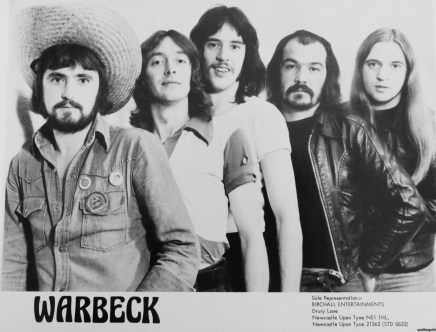
’We – Warbeck – were on part of a tour with Argent in the early ’70s. I remember playing at The Locarno in Sunderland and Argent had just brought out their single Hold Your Head Up High.

I was watching them from the side of the stage waiting for this song, they eventually played it and it went on for about 20 minutes. Talking about stretching out the favourite haha.

I talked to him afterwards he was a really nice guy I think he wrote I Surrender which Rainbow recorded also God Gave Rock n Roll to You a Kiss number so yeah, he wrote a good few tunes.

When I was in Warbeck we were playing at the Marquee in London and were supporting a band called Upp. It was a project that Jeff Beck had put together. They were a sort of rock fusion, great sound – out of this world.

He came in the dressing room, he is only a small, slim guy, he said to me I like your vocals, good band, keep at it. I don’t remember much from then but that was good of him to say that’. 

What do you think about the current covers and tribute bands scene ?

‘I played support to a famous singer’s son – I won’t name him. But he sung in the style of his father, and he was so bad. You sort of recognise the songs, but they weren’t anywhere near his father – and he was probably on a couple of grand.

At that point I was thinking I must be doing something wrong’.

Is that the fault of the agent pushing them out when he should have more control over the quality ?

’Of course, but if your father is that famous it definitely has more clout. Karaoke singers might be good for a couple of songs but the agent tells them they have to do two sets at 45 minutes each. They say ’What I only know three songs’.

Some of them get out to the club’s and die on their arses.

Problem is some agents don’t go and watch them beforehand. I’ve had a few on with me and the agent say’s ‘What were they like Howard ?

I’m like ‘Don’t go there with me mate, I don’t want to get loaded up telling you about someone. Get out there and find out for yourself’.

One girl was so bad she came off stage and said to us ‘I’m thinking off doing cruises you know’. Somebody under their breath said ‘Aye, Titanic’ haha’.

One night at The Latino in Sunderland a singer was on before us and some of the audience had been putting beer mats on the stage, with messages on.

The singer thought they’d say ‘We love’You’re great’ and ‘Can you do this song’ all that you know.

Well when it was our slot, I was in Warbeck then, I picked up some of the beer mats and they had written ‘Get off, you’re rubbish’ and ‘Don’t come back’ and a few others with shall we say choice language.

I remember doing a show with Tom Jones and his band The Squires, also Bobby Thompson now these people were real pro’s and you could understand why they were at the top of their game. It’s their calling in life, it’s their gift’. 

37890756_2117337551670617_5350621268959821824_n

How much work do you put into performing ?

‘In my repertoire I’ve got about four and a half hours’ worth of songs. In my head I can possibly remember 200 songs.

I done a lot of writing with Warbeck, Nightwalker, and for the cd I put out in 2016 The Paris Files I done a lot. The single off that was number one in the Reverbnation European chart, off and on for 44 weeks and the album got to number three.

I got an email from a band called Red Cadillac in Kentucky wanting me to go over their and play. Well that’s difficult to do that because at the time I had 22 shows in 29 days in the UK.

It would be great to go over there, but I didn’t want to drop the other musicians in the shit. They would have lost 22 days of wages which adds up to a lot of money. Yes, it’s a full-time job we gotta pay the bills’.  

Do you find it hard to switch off and rest your voice ?

‘It’s hard to do that. I’m lucky that I sing in three or four keys. So if I have a problem I can always change, if any the first thing that goes is my bottom end. My middle and top are no problem’. 

Is charity work something you do ?

’Not for the Cancer charities and the big one’s because they get a lot of donations and special nights put on for them, so I stick more local like Feline Friends who are struggling so need more help.

The owner Lynn works hard on it and she has a full-time job. It’s a really good cause’.

When do you have a holiday ?

‘My wife, God bless her. I’d booked to go to London cos my son lives there. I’d booked four days. We saw a couple of shows went for a few meals, but I get it in little bursts like that. I play a few weeks in Tenerife.

When I was recording in Paris, she’d be there for a few days but it’s no fun for her as I’m working. But she goes out with (producer) Eric’s wife so that’s ok but normally for holidays I have to book a year ahead.

Last real holiday seven days it was, we were in New York and went to this club, I ended up singing with the band haha’.

What type of artists come from the North East ?

‘Well you’ve had people like Marcus Brown keyboard player with Madonna, then the like’s of Sting, Johnna (Brian Johnson), Coverdale, Rodgers… it’s a bit like in the United States the North is more supressed than everywhere else, you know doom and gloom. Detroit and Bruce Springsteen the places that have a bit depression bring out the best in singers.

I remember going through Middlesbrough in the ’70s and you ended up with a film of red dust on the car from the chimneys in the chemical works. Hartlepool was similar, but now them places are picking up.

You had people like Chubby Brown, very controversial comedian lot of people didn’t like what he was doing, but it was a way out for him’.

Are you saying that they fight harder ?

‘Yes definitely, from here the rock bands like Raven fought like hell to get out and do something. Some sort of made it. Bands like Avenger look back and say at least I tried.

I had a band Nightwalker in the ’90s with Ted Hunter on guitar, Shaun Taylor on drums we done a few gigs in France we were a cracking band, great musicians again from the North.

The like’s of Ditchy (Dave Ditchburn) should of got further, I heard some of his original stuff – really good. Pete Barkley from Lucas Tyson, bands like Cirkus were all great players. They all had deals but it just fizzled out for one thing or another.

I could cry that some of these didn’t get the right platform. We – Warbeck -were in there, in the veins of the Whitesnakes who we supported, but it was down to managements screwing the whole thing up’. 

1

With the number of pubs and clubs closing down where can you see the work coming from ?

‘Basically, with the work the strong will survive. The good acts will always work. The work is really tight, and the good acts are moving further afield. You’ve got to be more diverse.

I do a full Irish show, a full swing show, full out and out rock, ’60s and ’70s and a ballad show. Luckily I saw that 15 year ago and that’s when I started diversing.

It takes a couple of years to learn those type of shows, to bed it down. So if you’ve only one type of show your pigeon holed.

Funny I done a solo show not long ago in Northumbria University and it was a ’60s night. 800 students came dressed in their tank tops, loons and wigs. Kids of 18-19 year old coming up to me asking for Herman’s Hermitts or Wayne Fontana haha’.  

How important is image ?

Style and image are very important. The main difference now is being either a great singer or a great singer and good showman. You’ve got to make the effort. If I go on it’s shirt, waistcoat depending on the show sometimes a suit.

Some people come into the club, set the gear up and go straight on stage. As a punter you should expect something a bit different from the artist, not the guy offf the street.

I remember an agent called Andy Green I was doing the Jubilee Club for him, we were in a trio called Riff Raff. We were doing a 10 night run for him. Well Andy had been a Highland Guard or something, big strapping 6 foot 2 guy. He also used to put Wrestling events on.

Anyway this Welsh girl came in, we were all set up she was going on first and Andy said on the mic ‘Ladies and gentlemen put your hands together for this young girl from Wales.’ Then it was ‘whoa hold on, hold on get off and get yersel dressed you’ve had that on since you’ve got here’.

While the audience waited she had to change her dress and that’s what Andy was like. He only wanted really smart looking acts that looked the part because they are up on stage performing for the audience. And that’s what it should be’.

Do you listen to current music and how do you think the internet has affected music ?

‘No not really doesn’t really impress. Sam Smith, Ed Sheeran…couldn’t go and pay to see those guys.

I know old school people who like their vinyl or cd’s because they haven’t a clue about downloading. Some bands are limited if they only release downloads but their expense is much smaller not having to make the product but advertising still costs. You can lose a lot more on vinyl or cd than you can on download.

There is millions of songs out there on You Tube and young bands can use it as a calling card. The Amazons, Spotify’s, You Tubes are always making money and you might not – but that’s business’. 

Interview by Gary Alikivi 2018

Recommended:

Trevor Sewell, Still Got the Blues, 21st June 2017.

Howard Baker, Howards Way, 17th August 2017.

John Verity, (ARGENT): Blue to His Soul 7th November 2017.

Dave Ditchburn, Man for All Seasons 1st February 2018.

BECKETT , Music Matters, 9th April 2018.


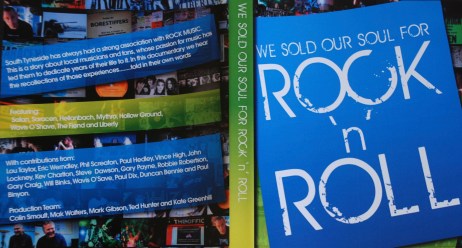
WE SOLD OUR SOUL FOR ROCK N ROLL documentary on South Tyneside rock music.

DSC_0172

In February 2017 I transcribed interviews from the documentary and decided to put them out on a blog. I added some new interviews and updated the originals. Then more musicians got in touch.

The blog has snowballed from North East bands like Beckett to worldwide musicians like John Dalton in California. To date it has reached nearly 40,000 views.

But how did I tackle this documentary and pull it all together? Firstly, I talked to a few musicians who passed over some of their archive of demo tapes, videos and photos. Plus, I already had a number of photographs I had taken through the ’90s.

Then a lot of research was done in the Local Studies Library, South Shields. I remember during the ’80s reading a feature called Young Weekender in the Saturday edition of local newspaper The Shields Gazette. It featured interviews, releases by local and national bands, plus a list of gig dates around Tyneside.

The library had all the Gazette’s on microfilm. It took a few visits but in all it was a good start.

Then during May 2007 filmed interviews were arranged at The Cave in South Shields, formerly Tyne Dock Youth Club, where in the 1970’s some of the bands had rehearsed and performed as teenagers. 

I was surprised at the amount of people who turned up to tell their story, and what excellent stories they were. The title of the documentary is from a Black Sabbath compilation album and sums up the feeling I got when people were telling their story.

Some bands even got back together after 30 odd years. After working on a few other projects, finally in 2010 a 30-minute version of the documentary was screened in South Shields, it was shown a few months later at The Cluny in Newcastle along with a film about the New York Dolls.

In September 2011 a full version was shown at the Central Library Theatre in South Shields. 

‘We Sold Our Soul for Rock n Roll’ is on the Alikivi You Tube channel.

To check out other films why not subscribe to the channel.

Gary Alikivi  2018.

RUN FOR HOME with North East actor & musician Michael McNally

RUNNING

How important are the arts in the North East ?

’Times have changed and opportunities in the Arts seem to have become more limited. The traditional route for actors, via drama school, now favours only those whose families can afford the expense of London based education.

As a result, far less working-class actors are breaking through.

Funding for theatre in education is almost non-existent and schools are encouraged to undervalue drama and music in the mainstream. Sad times in my opinion as young people need access to the arts just as much as they need access to health and fitness.

Without an outlet for our creativity, we stifle our imaginations and become frustrated robots’.

How did you get interested in music ?

‘The first year of my life, 1963, was spent in Gateshead but I always regard myself as a ‘Jarra lad’ because the next 17 formative years were spent in Jarrow. I was surrounded by music.

My dad who had served his time at Reyrolles and become a Pattern Maker (similar to a Draughtsman), was an accomplished singer, composer and musician.

During my early childhood, I would often wake to hear him return from night shift and start playing guitar, singing softly, sometimes Vincent by Donovan or one of his own compositions.

It may seem odd, but I looked forward to being woken in the middle of the night to hear this comforting sound. I don’t even know if he realised that I could hear him.

My dad was restless and would soon leave his secure and reasonably well-paid job at Reyrolles and take the risky step of turning professional, performing in a thriving North East, working men’s club scene.

The culture of most catholic families in Jarrow was for children to perform musical party pieces at social gatherings. My younger brother, Anthony, and I would sing songs my dad had written at such events, often performing the wrong lyrics accidentally.

I recall one occasion with everyone stifling their laughter in an attempt to protect our feelings when we sang the wrong word; instead of ‘parting’, we sang ‘farting’. We were only 5 or 6 years old. So my first and major musical influence was and still is, my dad, Michael’.

moobs

Who were you listening to ?

‘As a kid, there were remnants of the ’40s and ’50s hanging around like the Inkspots who were sentimental but tongue in cheek at the same time. I still like to listen to them.

Moving from the ’50s to ’60s, lots of rock ‘n roll, particularly Elvis, Buddy Holly, Eddy Cochrane and Roy Orbison. The Beatles were brilliant, particularly John Lennon.

I also felt a buzz listening to Hendrix, Free and The Doors. The ’70s were such a clash of styles. There was all that funk from the States, The Jacksons fronted by the remarkably talented Michael Jackson, the squeaky clean, coiffured Osmond’s, the second manufactured boy band after the Monkees, the Bay City Rollers etc.

Prog rock and YES with Rick Wakeman on keys, first experienced on the Old Grey Whistle Test on BBC2 blew me away.

In the mid ’70s I heard Steely Dan for the first time and loved the albums, Can’t Buy a Thrill and the Royal Scam. Then there was Bowie!! I loved everything he did’. 

When did you play your first gigs ?

‘My first instrument was piano. I started lessons at the age of 6. I really wanted to be a drummer but my brother got the kit as he didn’t like piano lessons.

Ironically, he still ended up a better keyboard player than me! I play guitar and bass too but rarely these days.

When I was 17, I formed a band with my best mate at school, Dave Morton called Private Collection. We played school concerts and anywhere that would have us. Good times.

Between the age 10-18, I played the clubs with my dad and brother in Mike Mason and the Little People. You might wonder why the surname changed from McNally in the stage name.

Well, we toured Scotland every summer and played a lot of ‘Orange’ clubs. My dad had been advised by an agent, years before, to play safe with a name that wouldn’t arouse suspicions about our Irish heritage.

We toured as a headline act at the same time as Cannon and Ball, The Krankies and Little and Large haha!

1977 and the Sex Pistols changed everything. Popular music was being punched full in the face. Bands like the Clash, Undertones and Buzzcocks hugely impacted on young people, encouraging them to pick up an instrument and thrash it loud and hard with attitude.

Although I was performing what could be described as ‘cabaret’, this music and the emotion behind it really appealed to me. I think I found a lot of the mainstream music unctuous and superficial. Punk meant revolution and it was exciting!’

Who are you listening to now ? 

’I have continued to have an eclectic taste in music. I love classical music when I am chilling, jazz sometimes when I am travelling and hearing some of my son, Luc McNally’s Scottish Folk music.

I like the Killers, Arctic Monkeys and Vampire Weekend introduced to me by my daughter Ellen.

bobsmeatonACCOUNTS

Michael with Bob Smeaton on set of the 1983 film ‘Accounts’.

How did you get into acting ?

‘I left the family show at 18 to study. I started a Law degree in Newcastle. My plan was to be a solicitor but play in a band at the same time.

Having successfully completed my first year in 1983, I auditioned and was cast in a leading role for a Film on Four called Accounts, written by Michael Wilcox. Bob Smeaton and I played brothers in this beautifully written piece set in the Scottish Borders.

Bob has achieved some remarkable things in his career including Emmy awards for producing music documentaries. I took a sabbatical for a year to make the film but never returned to my studies.

Once the film was shown and well received, I was offered representation by London agents. I made a huge decision and moved to the Capital’.

corry

Early scene in Coronation Street.

‘I managed to survive a steep learning curve and found work in television and theatre. My first repertory experience was as the narrator in a musical version of The Piper of Hamelin at Liverpool Playhouse.

Next was Andy Capp at Newcastle Playhouse in ’85, and work at Royal Court and Royal Shakespeare Company. As soon as I finished a job there were always opportunities for the next.

Whilst playing Jacky Milburn in Wor Jacky at Newcastle Playhouse in 1989, I was invited to Tyne Tees TV to discuss a series which required a presenter. As a result, I got my first presenting job in a show called McNally.

I made 13 programmes and had a fantastic time being paid to do what I enjoyed most, meeting interesting people and having adventures’.

What does music mean to you ?

‘Music is an escape, a freedom from whatever ties us down. It can be the medicine we require to soothe or the motivation to move. Without it we are monotone, bland and sad’. 

What are you up to now ?

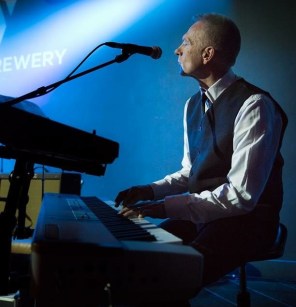
’Musically, I am playing keyboards in local band, The Moobs! We have a large following in the region and play songs that get crowds excited and on their feet.

Watch out for ‘The Running Show‘, which I will be presenting with Tony ‘The Fridge’ and others, coming soon!’ 

MOOOBS

On stage with The Moobs.

Interview by Gary Alikivi August 2018