CLOSE ENCOUNTERS – with Peter Whiskard bassist for ’80s North East metallers Alien.

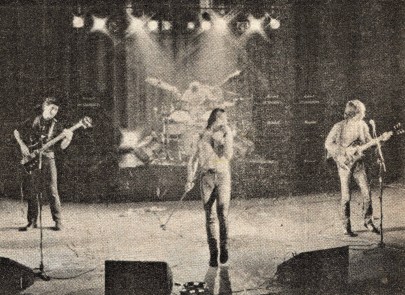
The North East New Wave of British Heavy Metal (NENWOBHM) was immortalised on the One Take No Dubs 45 released by NEAT Records in 1982.

The 12” featured Black Rose, Avenger, Hellanbach and Alien.  I talked to Peter Whiskard bassist for Felling metallers Alien…

‘Derek our singer had a reputation for a no-nonsense approach to life. During a gig at the Mayfair he found himself the unwilling target of several beer vessels – thankfully plastic – thrown by a miscreant in the audience.

He jumped off the stage, felled him with one blow and jumped back onstage without losing his composure or his place in the song’. 

How did you get involved in playing music and who were your influences ? 

‘I sang from a very early age and learned classical piano. An early indication of my chosen instrument was when I occasionally played piano duets and always seemed to gravitate to the bass part.

A defining moment was when I hit adolescence and something seemed to click when I was jamming along to records. Needless to say the classical piano was abandoned.

My influences were from the sixties and seventies, early Status Quo, Free, Cream, Bad Company and The Velvet Underground’.

30821021_10213391913764875_321165391669371062_o

When did you start playing gigs and what were your experiences of recording? 

‘I started playing gigs when I was fifteen with friends in the Felling area of the North East. I believe our first gig was at a youth club in the same building where we rehearsed.

We didn’t really gig much and the last one was at the Sixth Form Common Room Disco!

I went away to University and when I returned I formed a band called Bad Luck with the former singer. We did many local gigs and recorded a few tracks at Neat’s Impulse Studios where I met label boss Dave Wood.

A self-financed 45 single release came from these recordings. Unfortunately, this band didn’t last long.

Then I answered an ad in the paper for Alien in 1982. The place where a lot of Neat bands rehearsed was the Spectro Arts workshop in Newcastle and I remember once overhearing the tremendous noise of Venom practising one day when we were offloading our gear.

The band had a chequered history in the time we were together, but we were offered recording at Neat Records for the One Take No Dubs EP. We still had to pay £50 for the privilege – Dave Wood was notoriously stingy.

The recording took perhaps only part of a day because the essence of it was to have a ‘live’ feel and there would be no extravagant nonsense like overdubbing and repeating the process to seek the ‘perfect’ take. Hence the title ‘One Take No Dubs’.

thumbnail

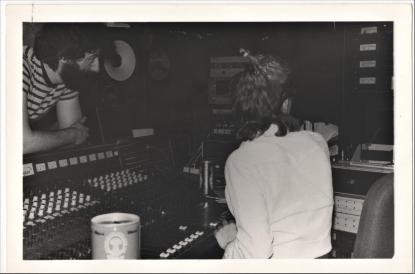
‘The engineer for the earlier trip to Impulse with Bad Luck and the Alien session was Keith Nichol – a lovely guy who was patient and skilful.

The band played together in the studio – this was opportune for Alien’s style as we were capable of flights of improvisation as can be heard in the middle section of Who Needs the Army, one of the up to now unreleased tracks from that session.

In the recording session we were in fine form, especially Ron Anderson the guitarist who recently has sadly died. A track from the recording called Absolute Zero also appeared on a compilation cassette called 60 minutes Plus sold only through Sounds and Kerrang.

A Neat Singles Collection featured the track Could Have Done Better from One Take No Dubs’.

allhelllet-back

What can you remember of Impulse Studio ?

Impulse Studios lived behind a fairly anonymous doorway in Wallsend, Newcastle. It was a small place, the studio walls were covered in the ubiquitous polystyrene tiles for absorbing acoustic sounds.

There was an office where the day-to-day running of the business took place and also a special ‘green room’ where Dave Wood would make his deals and entertain the celebs.

Our relationship with Dave Wood soured somewhat as the singer felt we were being exploited financially. The band fell apart by ’83.

We briefly reformed to do a gig at the Classic Cinema in Low Fell.  After Alien I joined a band called The Blues Burglars who were quite popular at the time’.

va-the-neat-singles-collection-vol-2-2002-back

Can you remember any high points for Alien, TV or music video’s ?

’I’m afraid we weren’t together long enough to get established to record any TV appearances or film any music videos. Although we did play some gigs with Raven and others at Newcastle Mayfair.

I’m afraid I can’t remember much about the gig with Raven but I don’t think we hobnobbed much with the other bands. The audience was pretty appreciative as that was during the heyday of Neat Records.

We regularly played gigs in Felling such as the Duke Of Cumberland, and our gigs had a reputation for having a febrile atmosphere with an undercurrent of unpredictability.

The singer was a powerful performer and had a great rock voice. We also had several friends in other bands on the Neat roster.

I knew the drummer from Hellanbach who lived round the corner, and went to school with the singer from Emerson and Axis: two Neat bands which are relatively unknown.

The singer of Axis was originally born Simon Blewitt but is now called Sam Blue and at one point sang with Ultravox as well as singing on The Streets hit Dry Your Eyes!

What are you doing now and are you still involved with music ? 

‘I’ve been a classroom teacher since I moved to Kent in 1986, but now I am semi-retired and teach guitar to Primary age students. I still play gigs regularly.

I’m afraid I’m now playing in a folk/country band called John Doggerel and the Bad Poets. We comprise me on bass, guitar, and assorted instruments including mandolin, accordion and ukulele!

We are based near Margate. I recently remastered and released a track which wasn’t used from the original Neat session called Who Needs the Army. Now available at iTunes and all good digital platforms’.

Interview by Gary Alikivi  May 2018.

Recommended:

Brian Ross SATAN/BLITZKREIG: Life Sentence, 20th February 2017.

Lou Taylor SATAN/BLIND FURY: Rock the Knight, 26th February & 5th March 2017.

Micky McCrystal, TYGERS OF PAN TANG: Cat Scratch Fever, March 17th 2017.

Steve Dawson SARACEN/THE ANIMALS: Long Live Rock n Roll, 2nd April 2017.

Martin Metcalfe HOLLOW GROUND: Hungry for Rock, 18th June 2017.

Steve Thompson,( NEAT Producer) Godfather of New Wave Of British Heavy Metal, 27th June 2017.

Richard ‘Rocky’ Laws, TYGERS OF PAN TANG: Tyger Bay, 24th August 2017.

Gary Young, AVENGER: Young Blood, 17th September 2017.

FOR FOLKS SAKE – with North East songwriter & storyteller Tony Wilson

‘Folk music for me is about the human condition and being able to express it without any classical training. The songs can be stories like Shakespeare, but condensed into four verses. They are very emotionally driven’.

31784322_10156388483067070_8534182708157349888_n copy

What got you interested in music and was there a moment when you said ‘I want to do that’ ?

‘I think I was always a singer. I sang in the church choir and at school. There was a ‘Time and Tune’ lesson where I’d be the kid who sang really loudly…and in tune.

I was brought up on Gene Autry and Johnny Mathis records but with regards to folk music there was a lot on television in the late ’50s,’ 60s, and was very popular.

There was a feeling in the air that there was something other than Americanisation of folk music. There was a very influential radio programme called Folk on Two with Jim Lloyd which featured live artists.

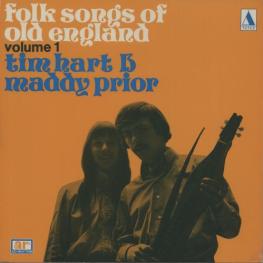
There was Tim Hart and Maddy Prior who later went on to be part of Steeleye Span. They were young, vibrant and sang traditional songs so it was a big leap from the Beverly Hillbillies on tv to finding out about my own culture.

Also Shirley Collins who played a folk opera Anthems in Eden, which was a celebration of everything within folk music. Yes, all that was very influential’.

TIM_HART_&_MADDY_PRIOR_FOLK+SONGS+OF+OLD+ENGLAND+-+VOLUMES+1+&+2-657259

Was there anyone in your family background who had a musical instrument ?

‘I lived in Tyne Dock, South Shields until I was 7 year old. I was very outgoing, singing a solo in churches that sort of thing but my parents were very quiet, conservative and an attitude of don’t draw any attention you know? Completely opposite to me, was I really their child ha ha?

But there was no music in the family apart from a Sunday night when we’d get around the radiogram and play our 78 records. There were folk songs at school we’d sing Scarboro Fair so there was a burgeoning folk scene coming on. You’d hear Bob Dylan, Julie Felix and Donovan on the radio, they were the acceptable face of folk.

I used to try and play loads of instruments. I was given a tin whistle, a harmonica and a jaw harp but I couldn’t get on with them. The Spinners were on the television and The Dubliners were in the charts’.

‘I’d heard this music and it triggered something inside, it was almost primeval. To be honest it was unlike anything I’d ever heard before and I was very curious about it. Also, at 15, it was a chance to sing rude words.

But the thing that really got me going was a folk club at school. I had a five-string banjo like The Dubliners who we went to see at Newcastle City Hall, and that was ‘wow this is amazing’. So, at school I was into the music that was more unpolished, out of tune almost.

There was a great wave of making music yourself which was appealing. At the school folk club musicians used to come and play for us, Jim Irvine, Jim Sharp, Jimmy Boyles and world renowned performers like Ed Pickford and Bob Davenport would come. Some of them ran a well established folk club at the Marsden Inn, South Shields.

There was also another at The County where we used to go sometimes when there was a performer on. They would get around £10 or something. The MC, Bob ‘the gob’ Gilroy, would let us in as the underage drinkers helped make up the fee for the performers.

We would also go out to other folk music clubs so that would broaden our spectrum of what we’d see and hear. Places like The Glebe in Sunderland’.

31946517_10156390061007070_2755255798517989376_n

What was your experience of recording ?

‘I only had a reel-to-reel Ferrograph which was guaranteed mono. You had one microphone and placed it almost like the His Master’s Voice dog kind of thing. You didn’t make that many albums because it was a very costly process.

We recorded in about ’74 or ’75 made an album and toured Germany. It was with a band called IONA on Celtic Music here on Tyneside and I was very nervous. We had eight tracks I think and did everything live in the studio which was a small room about 12ft x 12ft as I remember. It sold well in Germany, but I didn’t make any money from it.

I’d played music properly from 1968, joined bands and busked then went to Leeds University and refined the way I played. I qualified from university as an agricultural zoologist.

I started playing a lot of Irish music and met up with a load of old Irish guys in Leeds and learnt from them. If you weren’t good enough, they would make a point of telling you. So, you would practice, practice and practice. These guys were maestros of their time, in their 70s and 80s with this wealth of experience and dry wit.

The German folk scene looked toward Ireland as this Utopia of being folk you know, because the music was suppressed by Hitler. So, when they took folk on board it almost became more Irish. Why was it supressed?

I suppose, at that time, it wasn’t German music for German people. They eventually found their own folk music and the Irish traditional music sort of went lower in want’.

Did you have a manager or agency ?

‘No it was very low key. In Belgium there was a manager Leon Lamall who ran a music venue called The Mallemolem (Crazy Windmill). He would organise tours in France, Belgium and Holland. I was with IONA 1975-79 and there was a lot of touring, 2-3 month at a time. We had a van to get around, have somewhere to stop and people are always willing to feed you but all the money went into the p.a. and promotion.

People would always offer to buy you a drink. You would get money at the end of the tour, but people abroad would ask ‘what is your real job ?’ ha ha’ 

MCCONVILLE

Where did you go next ?

‘I had done some solo stuff when I met up with a Tyneside bagpipe and flute player from Jarrow called Mick Doonan. We did a lot of touring in 1980/81, every place we could around the UK.

We ended up forming a band with The Mathews Brothers and did really well, incredibly popular but then they had a family argument and split up. After that some money went missing and that soured the whole thing. It left a bad taste.

Then I went solo and because I had family by then I stopped touring and stayed closer to home in Leeds and played the workingmen’s clubs. That was the early 80’s before backing tracks came in.

My agent used to say ‘Will you play Batley Democratic Irish League Club’…’But last time they paid me off’ I replied…’Doesn’t matter… they’d take anybody. How much do you want Tony’….’£89.50’ I said…’Bloody hell why do you want that’…’Because that’s how much the shower costs to install at home’.

Every song was another part of the shower. Just getting on with it you know. I was doing the folk clubs myself but when backing tracks came into the working men’s clubs I was redundant overnight.

A guitar and voice were seen as very old hat. But to keep my hand in I worked on a BBC Leeds folk radio show plus I played at Whitby Festival for 17 years on the trot and compered at folk festivals during school holidays as I was teaching by then’. 

What was your experience of working on radio ?

‘I was there around three years, and the show was 45 minutes every week interviewing so many of my heroes. Loved it! At that time, I was also writing a lot of my own songs. But as I say I started teaching a lot, still doing bits and pieces with the folk but really it wasn’t until 1999 when I got back playing and singing in folk clubs again.

I was offered to join a band again, go on tour, play at the Millennium Dome in London. It sounded so good. I checked the contracts and away we went. The first year was incredible, tour dates, hotels, theatres, festivals, everything fine… even got a bit of money. But unfortunately another family bust up and I found I was only getting a small percentage of the money. But hey that’s just the way it goes sometimes.

I’d been burned in the past now I’d been left high and dry just before an American tour was planned. But through a contact I got some storytelling work in schools and I took that around the country’.

10005892_10152827224132070_6410402771909671676_o

What are you doing now ?

‘Well at the start of 2017 I started doing floor spots at Buskers nights and Open Mic’s around the North East. Last year I did around 150-180 spots.

Nobody owes me a living… doesn’t matter whether I’ve played that club 25 years ago I’ll still play the floor spot. It’s about how to get the best out of the song. Where’s the light, where’s the shade, where’s the point where I can emphasise?

I recorded every song that I wrote onto cassettes so I can always refer back to them, as you do with video now. When I play I also drag out all of these songs I wrote 30 years ago and they pass the old grey whistle test! People hum and whistle to some of my songs.

In 2009 in Whitby I met up – again – with a folk musician from Scotswood, Tom McConville. We had lived in a house together in the mid ’70s and played as a duo. We got on really well and a year ago we got up and played as a duo.

It’s a shame that there’s not as many folk clubs as there used to be. Sunderland had a few, Newcastle about four, it’s a contracted scene now’.

What does music mean to you ?

‘I think any musician might say, ‘I feel as if I’ve lived three lives. The places I’ve been, the things that I’ve done and the things I’ve experienced.’ It was like opening a door to the world – I’ve travelled, met good and bad people.

Coming back to the folk scene I’m flattered that people remember me. There’s still some fantastic people who put you up, give you meals, drive you places…just the most incredible thing ever….really….that’s music’.

Interview by Gary Alikiv  May 2018.

ANGELS WITH DIRTY FACES – with former Slutt bassist John Hopper

R-2904680-1507475761-7493.jpeg

Neat Records were based in Wallsend, North East UK. The operation worked out of Impulse Sound Studios. Neat were arguably the most instrumental NWOBHM label in the UK.

The label is notable for early releases by North East chief headbangers Venom, Raven and Blitzkrieg who are acknowledged as major influences on American thrash metal bands Metallica, Megadeth and Anthrax.

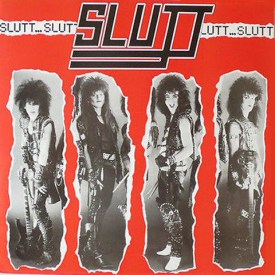
One of the lesser-known albums was from SLUTT. A gang of twisted metallers from Tyneside with their makeup, leather and studs. They released one album in 1988. The original bassist John Hopper talks about those times…

I remember signing the record contract in the rehearsal rooms. Our guitarist Antton walked in and said, ‘right sign there’. We did, then got on with rehearsing.

We didn’t think of asking someone to look at it first. It wasn’t ‘Right I’ll let my solicitor see it first you know ha ha’.

How did the band get together?

‘For a number of years Glen and myself worked at the Roman Fort in South Shields and the wages from there helped finance our instruments. Me on bass, Glen Wade on drums and a friend was interested in doing some vocals.

We played some rough versions of Kiss songs, we were friends just messing around. Our singer had a friend over in North Shields who knew a guitarist… ‘He would be perfect for your band’  he said.

Next thing a guy with a guitar, trem and long hair came over. That was Antton Lant. We didn’t know about his brother Conrad or Neat records but soon we got to know the connection with Venom.

Anyway our first gig as SLUTT was I think at The Cyprus pub in South Shields. Later we went on to do a showcase for NEAT at Tiffanys’ nightclub in Newcastle. So that was our first step.

In 1987 we played at The Queen Vic pub in South Shields and got paid £300 which we used to rent lights, dry ice etc. That gig was a blast. And was videotaped and the audio exists’. 

neat album flyer

How did the record with NEAT come about ?

’We first done a four track demo tape at Impulse Studios in Wallsend. We just recorded it live all in one room but additional guitar or anything that was needed we would drop that in later.

The line-up was Antton on guitar, me on bass, Glen on drums and our original vocalist. On that demo Glenn had the use of a Ludwig kit owned by Tony Bray from Venom – we asked them first like!

That was in 1986 and the tracks from that demo were lifted and put on the album which was released in ’87.

That was the first version with the LP and remains unreleased but its archived. The album needed the new singers vocal on it. Antton was friends with a singer, so Peter Seymour (RIP) came in, we rehearsed, and it was great.

Things were becoming real you know. We got forms for our passports as we were going out on tour, NEAT paid for those. Like any band we just wanted a break, yes we were fortunate with the link we had with Neat but we still had to put the time in, the rehearsals.

The years going across the Tyne to North Shields, picking up Antton and his Marshalls, then coming back through the Tyne Tunnel to the rehearsal studio. Sometimes twice a week. SLUTT was full on, and commitment was first and paramount’. 

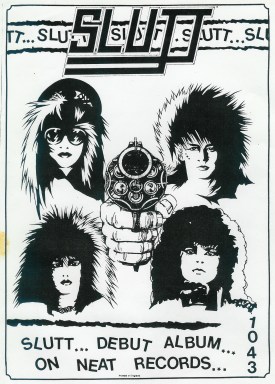
The album was released on vinyl in 1988 with Neat catalogue number 1043. The album includes Angel, Breakin’ All the Rules, Revolution, Thrill Me and more.  

vlcsnap-2018-04-28-10h21m07s244

Who came up with the ideas for the songs?

‘The music was from Antton and the vocalist. The rest of the band would write some lyrics too. We went back to the studio and recorded Peters vocals over the original master tapes.

If some things didn’t sound right, they were quickly changed. Kevin Ridley engineered, and Conrad Lant produced. I remember Conrad sent me out for something to eat a few times he liked his squid and chips!

But yeah, they had both worked on the demo tape and then the album which was a totally different feel. There was more pressure, there was more ‘Sorry lads them backing vocals are not in key can you do them again’.

There were plenty of sound effects put on it, backward drums and live crowd noises. We had a visit from a guy who ran the Venom fan club in France.

There is a piece on the track Revolution, about the French revolution and this guy just spouts out something in French and we put it on the track, it sounded great. In all it took about seven days to record I think’. 

SLUTT 87

Who else was in the Neat studios then?

I was amazed and sucked into the Venom thing that had gone on in NEAT. We had heard their records and by ’86, ’87 they were a big band and basically this was their studio.

Funny every other band there the Avengers, Atomkraft all wore leather and studs it was like a blueprint – we were similar to the leather and studs look.

The Atomkraft lads were knocking about. Venom’s Tony Bray was always there and guitarist Jim Clare came in with an amp for Antton. He used it for his solo’s.

It was only a small Galion Krueger but totally ripped the place apart you know. Venom manager Eric Cook (RIP) came in once or twice as I say Neat records belonged to Venom and all their gear was there.

I walked past one room and inside was bits of the stage show that they used. Another was Dave Woods’ office he was like the headmaster in his room…ha ha’. 

Did you promote the album ?

‘In 1988 just after we released it, we done a few gigs in Poland. Nasty Savage were the main headliner, with Exhumer and Atomkraft. They were doing a European tour and we flew in for the Poland leg.

We arrived in Warsaw and went to the train station. The train was like an army train, it was separate carriages with compartments, and we got split up. Glen and I sitting next to total strangers, us with our tight jeans and long dyed black hair.

Eric Cook (RIP) came along and took us to the food carriage. I got a bowl of soup with a raw egg in the middle. Well, we hadn’t eaten for hours.

For the rest of the gigs, we had our own minibus with a driver. It was only the journey from Warsaw to Katowice we got the train because it was a long trek’. 

‘Eric Cook took us over there he was with us all the way and Tony Bray was the Tour Manager as Venom were in between albums or something.

The tour was an eye opener because a serious edge kicks in. The first gig was at the Spodek Arena in Katowice in the south of the country. The arena is a huge ufo shaped building. The festival was called Metal Battle and started at 10 in the morning.

We were the first English band on at 12.30. We only got half an hour at the most with no sound-check. The whole thing was broadcast on Polish Television.

I remember at one point we were on stage and a woman with a handbag came on! I’m sure Eric or Tony pushed her on.

The first couple of songs the front rows were fists raised, jumping up and down, there was 15,000 people there, it was unreal.

The second gig was at an ice rink in Poznan. It took about four hours to get there in our minibus. It was the same bill, but we weren’t looking forward to the gig.

We weren’t sure about the make-up that we were wearing then, so we talked to Nasty Savage about it and they said ‘Just do what you did yesterday, keep it the same, it’ll be ok’. He was right the crowd went berserk.

Eric came back to the hotel with a bottle of champagne ‘Well done lad’s best band of the night’. We got paid and it was ok set ‘em up, vodka and orange, bottle of champagne, just live it up cos we aren’t taking anything back ha-ha’.

ronny press conference poland

Press day in Poland with Nasty Ronnie, Ian Davison (Atomkraft), music journalist Dave Ling & Tony Dolan (Atomkraft).

‘The last gig was in Gdansk in the north, a very industrial town. We went down great there as well. It was just the first date where it didn’t happen for us.

Rock journalist Dave Ling covered it for Metal Hammer. I remember doing one of the press conferences with Antton. I didn’t like it though. All the big bright white lights and your make up is all smudged.’.

What was the next move ?

‘By now we had done the album, got back from the Poland gigs and were in rehearsal doing some new material. There was talk of backing Wrathchild at Newcastle Mayfair and doing a few other things but sometimes they don’t come off.

There are highs and lows all the way through. So now our drummer Glen becomes uninterested with the band, so he goes his own way.

We get a new guy in on drums, very talented he was. We were over in Byker at Dons rehearsal rooms. After a period of rehearsals and photo sessions my head just started to drop you know. The dynamics of the band were changing,

We were doing things another way and really, I just didn’t fancy it. So, I stepped back from it all and the band went on.

How long was I in the band? Looking back, I remember I was at Newcastle City Hall watching Motley Crue on the Theatre of Pain tour in ’85 and we were rehearsing around then. That was at The Green Rehearsal rooms in South Shields.

So fast forward to the end, I think it was 1990 when I left the band’.

What are you up to now? ’Now I work in the print industry I’ve been for over 25 years. I still love music and always will’.

Interview by Gary Alikivi   April 2018.

Recommended:

WARRIOR: The Hunger, 12th April 2017.

VENOM INC: Hebburn or Hell, 28th July 2017.

ATOMKRAFT: Running with the Pack, 14th August 2017.

TYSONDOG: Back for Another Bite, August 2017.

AVENGER: Young Blood, 17th September 2017.

GUARDIAN RECORDING STUDIO #1 Tygers of Pan Tang

gaurdianadvert

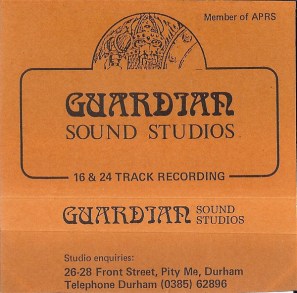
Gaurdian Sound Studios were based in a small village called Pity Me in County Durham, North East UK.

There are various theories on the origin of the unusual name of the village – a desolate area, exposed and difficult to cultivate or a place where monks sang ‘Pity me o God’ as they were chased by the Vikings.

Whatever’s behind the name, it was what happened in two terraced houses over 30 years ago that is the focus of this blog.

From 1978 some of the bands who recorded in Guardian were: Neon, Deep Freeze and Mike Mason & the Little People. A year later The Pirahna Brothers recorded a 7” and there was also an EP released by Mythra.

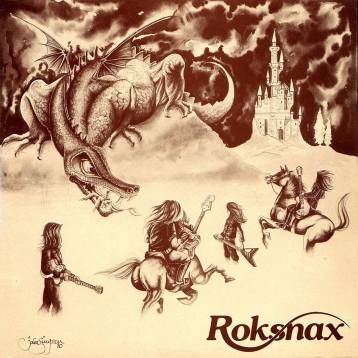
1980 saw E.P’s from Hollow Ground, Hellanbach and a compilation album, Roksnax.

From 1982-85 bands including Red Alert, Toy Dolls, Prefab Sprout, Satan, Battleaxe and Spartan Warrior had made singles or albums. I caught up with a number of musicians who have memories of recording in Guardian… 

TYGERS

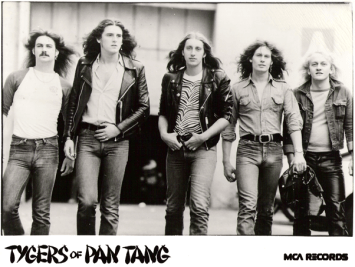
TYGERS OF PAN TANG – Demo’s & B sides.

ROBB WEIR: ‘When we arrived at the address for the studio, I thought we had got it totally wrong! It was a small street full of pit colliery houses. Nothing wrong in that of course, just we couldn’t see a recording studio anywhere.

We pulled up to number 32 or whatever the house number was and knocked on the door expecting to be told we were in the wrong area. The door opened and a young man with a ‘bush’ on his head greeted us. ‘Hi, I’m Terry Gavaghan, welcome to Guardian!’

As we walked in his front room it had been converted into a makeshift studio with sound proofing on the walls. Terry had also knocked a huge hole in the wall dividing the lounge to the dining room which was now the control room and fitted a large plate glass window.

I remember asking him where he lived, ‘upstairs’ he said as if I should have known.

Anyway we recorded the entire Spellbound album there as a demo for MCA our record company and Chris Tsangarides our record producer.

We also recorded the ‘Audition Tapes’ there, John Sykes and Jon Deverill’s first Tygers recordings. Which was to be a free 7 inch single to be packaged with Hellbound when it was released.

I think we were there for a few days recording and during one of the sessions I was in the studio by myself laying down a solo.

When I had finished, I put my guitar on its stand and as I made my way into the control room my foot caught the stand that John’s guitar was on, and I knocked his Gibson SG on the floor!

He was watching through the control room window and ran into the studio going ape! I of course apologised but he couldn’t forget it. In the end I told him to shut the f**k up as no damage had been done and if he didn’t some damage WOULD be done!

What did come out of Guardian were some fantastic recordings. Terry did us proud I have to say. His studio and his warmth were fantastic! The moral of the story is, ‘Don’t judge a recording studio by its colliery house appearance!’

RICHARD LAWS ‘Tygers of Pan Tang recorded at Guardian twice. Although we were usually associated with Impulse Studios home of Neat Records.

We had sort of fallen out with Impulse and Neat, so we recorded the demos for our second album Spellbound at Guardian.

We recorded about five tracks, I think. These demos were later released on various compilations. The demos for Spellbound were the first time we recorded with Jon Deveril and John Sykes in the band.

Later we recorded two B sides for singles off our fourth album, The Cage. Whilst we were there doing the B sides our record company came up and did a play through of the fully mixed album which was the first time we had heard the finished product’. 

If anyone has information or recorded in Guardian studios, it will be much appreciated if you get in touch.

Interviews Alikivi.

Recommended:

Richard Laws TYGERS OF PAN TANG: Tyger Bay 24th August 2017.

Robb Weir TYGERS OF PAN TANG: Doctor Rock  2017

1980: The Year Metal was Forged on Tyneside, 11th February 2018.

ROKSNAX: Metal on the Menu, 9th March 2018.

MUSIC STILL MATTERS – for former Danceclass vocalist Dave Taggart

From his early days with The Executives, to packing out North East venues in Danceclass, recording in Germany with LiveRoom, writing TV soundtracks, and now touring with international pop star Belinda Carlisle, Dave Taggart has music in his bones…

‘I’m living in Brighton now but always a Sunderland lad, that’s where I was brought up. After I got married, we gravitated to the south coast where keyboard player Mark Taylor (Elton John, Simple Minds, Echo and the Bunnymen) landed me the job as guitarist and backing vocalist for the world-famous Belinda Carlisle.

Suffice to say I’ve toured the world and we’ve had such a great time’.

BELINDA

Dave on tour with Belinda Carlisle.

From a very young age music has been the life and love for Dave Taggart. But where was he first turned on ? 

‘The first time I was in a Pontins Holiday camp in Morecombe. It was 1966 and we were on holiday for a week. As kids, we were left to our own devices as was the norm in those days.

My greatest pleasure was sitting at the side of the stage watching the resident band play the latest hits. I was besotted and quickly became the bands gofor. I would receive a 10 bob note and orders for five ice lollies and packets of polos.

This was of course to disguise the smell of the drink on their breath, which was a sackable offence.

After that I suppose I was hooked on music and at 11 or 12. I received my first beat up cello guitar with half the machine heads missing and an action on it like the Tyne bridge drop.

For influences I had too many to mention, John Martyn, Brinsley Schwarz then of course all the rock stuff. Lifelong friend and cohort Tony Mcananey lived in the same square as me and we would spend every summer night practising, practising, practising without any real idea.

One evening he turned round to me and said you’re the singer ok !

When did you start playing gigs and what venues did you play ? 

’From school days we were taken to local folk clubs around Sunderland where we would play a bit of Lindisfarne, Fairport Convention, Crosby, Stills & Nash, Neil Young and early Eagles stuff before they went shit.

Our mentor and driver at the time was our drama teacher Terry Deary. I wonder if teachers are allowed to do that these days.

But he just had faith in our talent. Incidentally, that influential educator of young minds would go on to receive fame and fortune himself with the Horrible Histories…true bloody story that! 

By 1977 we went out to Germany just to get away from the North-East and learn our chops. We’d play the American army and Air force bases. It certainly was a baptism of fire, and we learnt a lot about the craft of performance.

But too much innovative and exciting stuff was going on back in the UK. The likes of Elvis Costello, Clash and Ian Dury were happening.

So, by early ’78 we returned to England and formed a band in Sunderland called The Executives. It immediately took off. Success spiralled into a writing frenzy and low and behold Danceclass was formed’. 

A split in late ’79 saw some of The Executive members go on to play in Well, Well, Well and The Toy Dolls.

The complete line up of Danceclass was Dave Taggart, vocals,  Tony Mcananey, bass, Ali Reay, guitar and Trevor Brewis, drums. 

DANCECLASS

’We just gigged and gigged acquiring a massive fan base which then attracted record company interest. By 1981 we ended up on the famous A&M record label.

EMI begged us to sign with them, but we were rather green and ended up with in the end, the wrong label.

First album was recorded in Basing Street in London later to become the famous Sarm West. The producer was Mike Chapman famous for his work with Sweet and later Blondie.

We toured with various large acts of the time Sad Cafe, John Martyn and Judie Tzuke. We also performed on the famous live music show The Tube’.

The Tube was a live music show broadcast from Tyne Tees Studio’s in Newcastle, UK. The show ran for five series from November 82 – April 87 and was responsible for introducing Frankie Goes to Hollywood, relaunching the career of Tina Turner and the last ever appearance of The Jam before they split.  

‘But it’s the old story, we went as far as we could with that label. We got the chance to support Blondie at Wembley Arena but apparently Debbie or Chris Stein spat their dummy out and refused to come to the UK.

This was devastating news for a young band like us.

Our second record signing was to MCA records. Some interesting material was written and recorded around that time. I think at one point we had Judy Tzuke on backing vocals and a coterie of musical acts hanging around so it was an exciting time.

Unfortunately, our guy at the helm Stuart Watson, was sacked from MCA and they cleared his roster of acts. Including us. Once again, the young guys from the North-East were left floundering on the rocks.

Left to our own devices in that big London town, I turned to session music mainly singing backing vocals and ended up for some reason on a lot of UK metal albums.

There is a Dave Taggart backing vocal credit on the Destiny album by Saxon as well as albums I cant even remember singing on’. 

What are your thoughts on the second album, is it just collecting dust on a shelf somewhere ?

‘Looking back on the Danceclass second album, although the material was a considerate departure from the full speed ahead power pop of its forerunner, the writing especially from Tony Mac had so much more depth and maturity.

The basic songs were beaten out at a beautiful, rented house overlooking the lake in Bowness, while next door Simple Minds were recording their tracks for the Waterfront album.

When we thought we had enough material, it was decided we should go abroad for further stimuli and the plush Wisseloord recording studios in Hilversum, Holland was chosen’.

Officialy opened in 1978 the studio was founded by electronics company Phillips and was used by international musicians such as Elton John, U2, Scorpions, Tina Turner, Def Leppard. 

‘We took along Steve Brown (producer ABC, George Michael, Wham! Alison Moyet, Freddie Mercury, The Alarm, The Cult, Manic Street Preachers, The Pogues) and we had Richard Cottell on keyboards.

It wasn’t easy recording the album as some of the songs changed dramatically as they grew and some just remained as a basic ‘rock out’ vibe. Suffice to say an album that we were proud of didn’t make it for release.

We got compensation, but when you’re in your early to mid 20s with a passion for your music, it hurts.

All water under the bridge now so, yes, that album will be collecting dust somewhere in a vault and all I have left are some well-produced demos on quarter inch tape and a cassette of the album’.

LIVEROOM

What was your next move ? 

‘By the 1990’s I had returned to Sunderland and started writing more songs with Tony Mac who had got a job writing the music for Jimmy Nails BBC Spender series.

While all this was happening our old Danceclass manager got us a deal with a new fledgling German label who loved the material. We went out to Frankfurt to record the LiveRoom album.

Moderate success followed and loving the creative environment, I stayed in Germany writing for TV and film while Tony returned to the North-East to mix the Spender soundtrack.

An older countryish song that Tony almost threw away later became the inspiration for Jimmy Nail’s mid-90s TV hit Crocodile Shoes.

These were real fun times as Tony wrote the music for the album with Jimmy Nail and we all ended up performing on it. Then of course touring it.

After the Top of the Pops performances and tours I took time out to travel with my guitar to the Middle East and Europe before landing a job writing some of the incidental music for the BBC production Our Friends in the North.

DT

Finally, what does music mean to you ?

‘Everything. Even more so as I get older. I might not like some of the crap pumped out, but I appreciate the time put in and how they got there.

I’ve always had an all-embracing love of different genres and that’s down to parental and sibling influence.

Lying on my back as a toddler in our council house listening to Swan Lake, Ella Fitzgerald or the Fab Four. My brother taking me to the Sunderland Empire at the tender age of 12 to see Sonny Terry, Brownie McGee, Bukka White.

Or a year later the Newcastle City Hall to see the now legendary Rolling Stones concert where Jagger introduced the crowd to his new wife Bianca – while Bowie clapped in the wings.

Fashions and fads fall along the wayside as your journey progresses and all you’re left with is the thing that really matters. The music’.

Interview by Gary Alikivi   February 2018.

For further information check http://www.danceclassuk.com

Recommended:

Steve Dawson SARACEN/THE ANIMALS: 2nd April 2017.

Trevor Sewell 21st June 2017.

Kev Charlton, HELLANBACH: 23rd June 2017.

Steve Thompson, (Songwriter & NEAT records producer) 27th June 2017.

John Verity, ARGENT/PHOENIX: 7th November 2017.

Dave Ditchburn BRASS ALLEY/GEORDIE/PILGRIM: 1st February 2018.

Les Tones & Arthur Ramm, BECKETT: 9th April 2018.

MUSIC MATTERS – for Les Tones and Arthur Ramm founder members of Beckett.

The ’70s and ’80s saw bands playing every night around the North East at mainly workingmens clubs...

’Mostly it was two clubs a night with yer first set starting at 8pm. Then travelling to another club, loading in, setting up, playing a set and finishing for 2am.

Finally back home and bed. Before you know it yer ma was shouting up the stairs it was time to get the bus for work. Aye them were the days ha ha’….remembers Arthur Ramm.

Stories like these have been told many times before in smoky bars and clubs of the North East. But here we are sitting in The Word, a brand new cultural venue in South Shields. 

A large circular building with huge glass walls and what looks like a floating staircase. As far removed as you can get from bingo, beer and bands.

The stories were pouring out from Les Tones and Arthur Ramm founding members of Beckett. A band which changed line up many times until they called it a day in 1974.

During their time Beckett had played countless gigs around the North East with stand out support slots with Rod Stewart and the Faces. There was a two week residency in the Top Ten Club in Hamburg, Germany.

They notched up 25 UK dates with Captain Beefheart, 33 with Alex Harvey and 25 with Slade. Signed with major labels Warner Brothers and CBS. Released a single and a self titled album. 

They also found time to appear on BBC TV music show the Old Grey Whistle Test, and a slot at the Reading Festival.

We talked about music in general and the sounds travelling across the Atlantic – Elvis, Chuck Berry, Rock n Roll USA how they influenced a generation of British musicians. Turning on the Led Zepps, Deep Purples, Eric Claptons, who in turn put their stamp on the sound and British rock came out the other end. 

Although they were referring to nearly 50 years ago, like a relay team passing the baton, stories from Les and Arthur still sounded fresh and told with good humour. Music really does matter.

When did you first get interested in music ? 

Les: ‘My dad was a piano player, my uncles were keyboard players for the cinema. When I was 14 my brother and cousin had acoustic guitars and my sister played all the ’50s records. I’ve always had music around me.

I used to go to the local fairgrounds and there I heard Love Me Do and other songs by The Beatles. I just loved the sound and that changed my direction of what I wanted to do.

I got a guitar and I was approached by a fella called Tommy Stead who was in a popular blues band called The Jump. So I joined the band at 15 and learned loads from them’.

Arthur: ‘I was aware of The Shadows but I wasn’t really interested in that, like Les it was The Beatles that kicked me off. It was Paul McCartney, I loved the way he played, he sang, he looked. I just loved The Beatles music’.

IMG_3740

Les Tones aged around 14.

When did you get your first guitar ? 

Les: ‘I was serving my time as a sheet metal worker in Hebburn Palmers shipyard when I bought a Hoffner Galaxy on tick, a loan you know.

Then I exchanged it for a Burns guitar until my dad bought me a Gibson 335 for £150. That was great, wish I still had it’.

Arthur: ‘There was a shop called Saville Brothers in South Shields and there it was in the shop window with a card stuck next to it with £7 10 shillings written on.

Eventually after a few weeks of pestering my mother, she relented and gave me the money ‘But you’ll have to pay it back’ she said. That’s where I bought not a bass, but my first six string guitar. 

We had no money for amps, so we first started with radios which had valves inside. That could amplify the sound and it had a speaker in, so we used the output.

But the 5 watts wasn’t loud enough cos when you were in rehearsal with a drum kit banging away you needed something louder.

So, we got what The Beatles and The Stones were using that was AC 30’s. They were the biggest amplifier at the time and then Eric Clapton started using a 50-watt Marshall.

That became the norm until Pete Townsend said he wanted bigger. He wanted 100watt because they were playing big places, and no one could hear them at the back of the hall.

Suddenly it’s getting bigger and louder with 4 x 12 cabinets and everybody’s ear’s getting used to that level of sound. I remember we were playing Annabels Club in Sunderland  and to load the gear in you used the back stairs. We were loading in 4×12’s and they were so big you couldn’t see your feet’.

Les: ‘It was good having a full house and using all that gear at that volume because people absorbed the sound but if you had a venue a third full it was very different. But now a lot of people are returning to AC 30’s and using larger PA’s’.

Arthur: ‘I’m still using a Marshall now because I’m used to the sound and Les uses a Messa Boogie which is smaller in size but has plenty of power. The technology has changed over the years.

We were playing the Birtley club one time and I had just bought my Marshall 100watt head. We were loading the gear in up the steep stairs at the back and I think it was our singer Terry Slesser who said ‘I’ll carry that up for you’.

My brand new Marshall head slips out of his hand and goes boink, boink, boink, down the steps to the bottom. The side of the box fell away. I was distraught.

We got the gear on stage and thought do I switch it on? Will it go pop! Eventually I turned it on and it worked perfectly. When I got it home I used some glue to stick the side back on. Marshall amp’s are made solidly you know’. 
IMG_3736

Arthur Ramm

Where did you rehearse and play your first gig ?

Les: ‘Around 1964 The Jump used to have house rehearsals at Tommy Steads and played on a Sunday at Aloysius Church Hall in Hebburn.

The church ran it and they had bands on every Sunday and served soft drinks. The atmosphere was brilliant we used to look forward to it.

When we played I used to push my amplifier up the street to get into the hall, we loved it. Tommy who is still playing today, was all genned up with the American music cos he had the records so we played a lot of soul and blues.

But then Tommy moved to London so I left the band and joined Hedgehog Pie. We were classed as an underground band. But yeah that’s how I started’.

Arthur: ’We got a school band together and I was playing sort of bass notes on the heavy strings of my six string guitar. Sounded nothing like a bass really but that’s what I was after.

So, I got one out of the local magazine for £35 and I was away then.

Then what changed for me was when I heard John Mayalls Bluesbreakers featuring Eric Clapton and I thought wow I want to learn how to play like that.

My first gig was at a wedding in Careme House in South Shields. It was for the guitarist’s cousin, and we done about half an hour of bluesy songs’.
IMG_3726

The Shadey Kases with Arthur Ramm on the left.

How did Beckett form and where did the band rehearse ?

Arthur: ‘I was in a band called The Shadey Kases, who I joined around ’65 or ’66. I was the rhythm player, just a lonely strummer. One night Les was playing with his band in Sunderland with this great sounding guitar ‘Who is that playing, sounds fantastic’.I said.

I was normally a shy person but afterwards went up to Les and said how did you get that sound, you’re playing is excellent. He was so friendly and showed me the amp and all that.

We really got on because some people can be a bit stand offish. When Beckett started, he was the guy to ask to play guitar and he said yes’.

Les: ’I was in Societys Child and we used to get a lot of work at the Hedworth Hall in South Shields. Alf Josephs from there used to manage us. But the band split over the singer and keyboardist arguing over petty things.

The Hedworth Hall was a place all the bands would go to after a gig because it was open till 2am and we’d get in free of charge. There I met up with Arthur who had just left the John Miles band. ‘How would you like to join me and Alan’ (Craig, drummer).

So yeah we are the three founding members of Beckett. We got Bill Campbell in on bass. Rehearsals were in a pre-fab building near St Francis Church in South Shields. Alan Craig got it cos he knew someone from the church.

We used to go 2-3 times a week to rehearse, and we done some Kinks stuff, some Deep Purple. 

How did the name of the band come about ?

Arthur: ‘When we were talking about what we are going to call ourselves I said why not Becket ? There had been a film made called Becket starring Richard Burton and Peter O’Toole and I just liked the name. Sounds good. Just the one word.

So yeah we all went with that. If you look at Ringo Starr’s drumkit just the way they write the name Beatles, the style of the writing you know it just worked.

The two t’s at the end came about because Ted Hooper suggested we should write it that way. Ted was always hanging around and had a brother who was playing guitar in West One, another Shields band we knew.

Next we saw an advert for a gig we were doing at the Golden Slipper in South Shields and we were advertised with the two t’s. From then on in, it just stuck’.

Where did you gig and what venues did you play ?

Arthur: ‘We ended up being very successful starting off around the pubs and clubs. Usually there would be 2x 45minute sets. Early days we’d have lots of current stuff that was in the charts, Elton John, Fleetwood Mac, Creedence Clearwater Revival, Beatles, Stones that sort of stuff.

A blessing was the Bailey Organisation because they had the Latino club in South Shields and they would get us to guest before the main artist came on like Tom Jones, Englebert Humperdink, whoever had been on Top of the Pops.

There were venues like Wetheralls, La Bamba in Darlington, La Ronde in Billingham, La Dolce Vita, The Cavendish Club there was so many. Only problem was it wasn’t till 2am when we finished then we had to get back home and we still had day jobs.

I was an apprentice tool maker and had to get up for the bus to work at 6.30am’.

Les: ‘The band used to play around the North East nearly every night of the week, quite often two bookings a night.

We’d be sort of living two lives cos we’d be in a bubble on stage, going down well and everything was great. Then I’d get in at 4 in the morning and my mother would be dragging me out of bed at 6.

Then not much later you’d be walking to work in the snow. The band was a job, we’d pay the stamp every Friday and get pay packets every Sunday.

Arthur would get a cheque off Mel Unsworth the promoter then share it out. We would only have Tuesday off cos we had girlfriends’.

Arthur: ‘Good thing was you’d have the extra money from the gigs so you could buy an extra pedal or better guitar.

One of our first gigs was at a nightclub in Darlington and the stage was big, we were right at the back and the singer was way out at the front. It was an area where all of the audience could see the artist.

The lights dimmed, we went on and played an instrumental first called Supernatural. Our singer Rob Turner came on twirling the mic stand, giving it everything and there was only a dozen people there but he got them clapping.

We were playing at the back in the shadows and were amazed because at rehearsals he’d just sit on a seat sort of crouched over and sing! When he was on stage his demeanour changed he was a totally different person. I always remember that gig.

But I always remember the day he died. We were playing a gig at La Ronde in Billingham and were just coming up to 2am. He said let’s do a blues thing, Les you just kick it off, so we started to play.

He started to sing ‘If I Knew You were Coming I would have Baked a Cake for You’ it was a blues song and that’s the last one he sang with us’.

Les: ‘I remember that gig, I remember as if it was yesterday. At the end he had a bit to drink and a girl with him. We had a policy of you go with the band you come back with the band. Then the day’s your own you know.

We said you’re coming back with us just take her number. Arthur and I went home as usual in the Hillman Minx, that was our bassist Bill Campbells car and all we talked about was Rob not coming home with us.

Next day was a Friday I got out of bed and went downstairs. My mam said someone’s been and left a message to phone Arthur it’s very important.

The nearest phone was at the bottom of the street, so I went down, phoned Arthur and he told me the bad news. I was shocked, we were upset and got the band together to talk about it. We went to see his parents’.

Arthur ‘We were told the weather conditions were very foggy that night and he was on the edge of the road near the pavement thumbing a lift. A few cars went by then he got hit.

By now the girl he was with starts to thumb as Rob is on the ground. But cars just passed by because it looked like a drunken couple. Eventually someone stopped and drove him to hospital but he had too much internal bleeding’. 

Les: ‘He was only 24. The car just drove off. The person driving was caught because he put his car in a garage to have the windscreen fixed.

He said to police he didn’t stop because he thought he had just hit an animal. Reports said he was under the influence of drink and drugs. He never got put in prison, just fined’.
IMG_3733

Terry Slesser in the middle.

Did the band make the decision to carry on ?

Les: ‘Let me tell you it wasn’t an easy decision to make. But we had gigs lined up and we knew a singer already who could fit into the band. Terry Slesser was a roadie for the John Miles band The Influence, Terry had also formed a band called Zig Zag.

I had seen him a few times and thought he had a good voice. He was confident and had long hair. He joined the band eventually’. 

Arthur: ‘Yeah he learnt the songs very quickly, and fitted in. We done some great gigs especially supporting the Alex Harvey Band. They were so tight, really impressed with them’. 

29513317_2027308000926881_477571122474352749_n

What was it that drove you on ?

Arthur: ‘It was just that the gig was so important, it was a simple as that’.

Les: ‘The time Beckett was playing it was magic. When we’d play the workingmen’s clubs they were queuing out the door at 6pm to get a seat to see us. That’s the way it was.

We’d play Middlesbrough and go to a gig in Sunderland. We’d go in a separate car from the road crew who were in a van with all the gear.

When we went in the club you would see lots of faces who were at the first gig, they’d travelled up to see us. We really appreciated that’. 

When did Beckett start songwriting ?

Arthur: ‘Les left the band, and joined Sandgate. We got a guy called Kenny Mountain in. He was in a band called Yellow with Vic Malcolm from Geordie. They had a single out but didn’t do much.

I rang Kenny who said he didn’t want to play lead, but he would still be in the band. That meant I had to up my game. Kenny came up with some songs and we ended up sticking a couple in the set, then adding a few more, then a few more.

That led us to meeting a guy called Geoff Docherty. He was a local promoter and saw us playing in Sunderland’.

Geoff Docherty was a very successful North East promoter with major bands including Pink Floyd, The Who, Rod Stewart and David Bowie.

One of the venues he promoted was The Locarno in Sunderland, a Mecca ballroom that held 3,000. For more information Geoff has authored two books ‘A Promoters Tale’ and ’Three Minutes of Magic’.

Arthur: ‘Geoff approached our singer, Terry Slesser. Geoff said he liked the band and said, ‘I can do something for you’. We had other offers, but the managers wanted too big a cut out of the money we were earning. It wouldn’t have left us with much.

So, we arranged a sit-down meeting with Geoff, he was straight talking. We were very impressed.

The clincher was when he said ‘I won’t take any money, not a penny from you until you are successful. I will have you backing people like Rod Stewart and Ten Years After’.

Not long after we started travelling the country playing gigs and what a thrill it was playing in London, especially the Marquee club. He was exact to his words’.

IMG_3725

Did Geoff Docherty get the record companies interested in Beckett ?

Arthur: ‘Yes he got to know them all as he used to book the bands for the Top Rank Suite in Sunderland. He was very pushy. He’d tell them to come and see the band. His rhetoric and the way he put it over. Very convincing.

He got us a deal with Warner Brothers and then we went to CBS. We got a £10,000 advance from Warner Brothers. Think our Mercedes van was around £4,000.

But I had left before they made the album with Warner Brothers. They got Bob Barton in. The line up kept changing. All the original members had gone by then’.

By the time the album was released on Warner label Raft Records in 1974, the Beckett line up was Terry Wilson Slesser (vocals) Kenny Mountain (guitar) Robert Barton (guitar) Ian Murray (bass) and Keith Fisher (drums).

The Iron Maiden connection is a story for another day if one of the members can get in touch. As we were about to leave The Word I asked Les and Arthur one more question.

What does music mean to you ?

Arthur: ‘Well I can’t live without music. If my hands don’t work I don’t know what will happen. I listen to music all the time and I am in a band now with Les’. 

Les: ‘When I’ve got a guitar I lose loads of time cos I can’t put it down. I’ve also been teaching music and I got into repairing and building guitars. I still play in a band now’. 

Interview by Gary Alikivi March 2018.

Recommended:

Steve Dawson, THE ANIMALS: 2nd April 2017.

Harry Hill, FIST: 29th April 2017.

Trevor Sewell, 21st June 2017.

Howard Baker, WARBECK: 17th August 2017.

John Verity, ARGENT: 7th November 2017.

Dave Ditchburn, BRASS ALLEY/GEORDIE: 1st February 2018.

ROKSNAPS #4 with John Edward Spence

Roksnaps are fan photographs which captured the atmosphere of concerts on Tyneside during the late 70’s and early 80’s. It was a time when rock and metal bands ruled the city halls up and down the country.

On Tyneside we had the main venues of Mecca in Sunderland, The Mayfair and City Hall in Newcastle.

The gigs were packed with tribes of mostly young lads from towns across the North East. T-shirts, programmes and autographs were hunted down to collect as souvenirs – and some people took photographs on the night.

Here are more Roksnaps from John Edward Spence pictured above with White Spirit guitarist Janick Gers in 1982.

‘The first gig I went to I was 15. It was on the 31st of October 1977 at the Newcastle City Hall and the band was Ritchie Blackmore’s Rainbow. The support band were called Kingfish. Rainbow came on really late and we missed our last bus home so one of friends had to phone his dad for a lift’.

‘Around October ’78 I decided to take my camera to a few gigs. I had a job so I bought a roll of film and some flashcubes, my camera was a Kodak 126. I couldn’t take it to every gig as the film and flashcubes used to make a dent in my pay packet’.

‘I used to go to loads of gigs at the City Hall and the Mayfair of course, that was my favourite venue. I was also lucky enough to see the bands associated with the NWOBHM, just loved the music around then’.

‘I don’t go to many gigs now. I always try and watch The Tubes when they come over, in fact the last gig I went to was to see The Tubes supporting Alice Cooper at Leeds, great gig’.

Interview  Alikivi.

Recommended:

Steve Thompson (NEAT producer) Godfather of New Wave Of British Heavy Metal, 27th June 2017.

1980 The Year Metal was Forged on Tyneside 11th February 2018.

LOST IN MUSIC – with North East musician Bernadette Mooney.

War Machine went on to play many gigs after the album was released in 1986 and I was asked to do a photo shoot in Kerrang called ladykillers. I really enjoyed the day as Bon Jovi was getting his photos taken the same day and for that month’s issue we both appeared in the Kerrang magazine.

We also appeared in Viz as the meanest band in the North East but I think Venom should of got that one!

29632870_10156154899861678_1773365855_o

How did you get started in music ?

‘Bought my first guitar when I was 15 and had lots of song ideas but wasn’t sure how to write. There was lots of lyrics in my head so I wrote them down, taught myself to play guitar from a book and started to write my own songs.

A friend heard them and played them to a guy who was in a band. He liked my voice, so I ended up doing a few gigs with him.

Then I joined a band called Chapter 24. I played a while with them as a guitarist and vocalist but then moved on to a local band called She with Lee Robertson. I played a few gigs with them before forming War Machine with Steve White on guitar.

We were both from Wallsend and Les Fry was living in Jesmond he was on bass. We had a drummer called Steve Smith who still gigs in the North East.

My influences then were Pat Benatar, Steve was into Black Sabbath and Venom. I first met Steve White at college and we dated. Before he formed a band with me he was in Atomkraft with Tony Dolan who is now with Venom Inc.

Steve and myself would write the songs together just by jamming. I had lyrics and give them to Steve who would write the guitar bits and Les added bass. I think Les wrote some songs too’.

Where did War Machine rehearse and gig?

‘We used to rehearse in an old building. I think it was in Felling near Gateshead. It was horrible. The guys used to pee in Brown ale bottles as there were no toilets.

I used to stand in a cardboard box with newspaper in to keep my feet warm. But we were skint and it was cheap.

We did a few gigs around the North East and in Scotland. When we did a gig we went all out with the show. Pyrotechnics and explosions which always seemed to be going off near me!

One night at Chrystal’s Arena in Scotland we set a ceiling on fire and got sent a £300 bill. We never paid of course. Couldn’t do that now with health and safety I don’t know how we got away with it.

We even got offered a gig in what was then Yugoslavia. But they wouldn’t let us in because of our name. I remember we entered a Battle of the Bands held in Gateshead Brewery. We came second, or was it third ?

War Machine would rehearse a lot before a gig, getting really tight and after playing many venues in the North East we ended up with a good fan base’.

What was your experience of recording ?

‘We recorded a demo at Neat records and on it was a song I wrote called Storm Warning. Dave Woods who owned Neat records, liked it so much he offered to record our album.

The line up of the band that recorded was me, Steve and Les and we had Brian Waugh on drums. We didn’t get much time in the studio and we felt it was a bit rushed.

Our album did pretty well abroad, but we never received any royalties or from any other songs that were used on compilation albums. Dave Wood said all the money from the album paid for the distribution.

Nerd alert: War Machine released Unknown Soldier in 1986 on the Neat record label. An eight-track album including the tracks Power, On the Edge and No Place to Hide.

The same year the album was also released by Roadrunner records in the Netherlands. Tracks by War Machine appeared on at least four compilation albums released in the ’90s.

‘We were young and naive so never questioned it. We were like many bands in that respect. We were played on a lot of radio shows across the world even the USA.

I hosted the Alan Robson North East radio rock shows as he was a fan and played our music on his broadcasts’.

What happened next with the band ?

‘After a couple of years gigging, I decided to leave the band as I got offered a job as a costume designer in London. It felt like the band was just doing the same round of gigs and I needed a change.

Steve White the guitarist went on to play for Venom and Les went on to open Voodoo cafe. I worked in London for a few years where I did a lot of gigs with different bands’.

401116_10150671728451678_311093959_n

What are you up to now, are you still in music ?

‘Being back home in the North East I have always played music and mainly my own. I write, record and produce my own songs. My style is very mellow now, a bit like me. Not like my wild days with War Machine which I really enjoyed’.

Listen: bernea on Reverbnation

Interview by Gary Alikivi March 2018.
Recommended:
SATAN/BLIND FURY: Lou Taylor Rock the Knight, 26th Feb & 5th March 2017.
WARRIOR: The Hunger 12th April 2017.
FIST: Turn the Hell On, 29th April 2017.
TYSONDOG: Back for Another Bite, 5th August 2017.
ATOMKRAFT: Running with the Pack, 14th August 2017.
VIIXEN: Fox on the Run, 19th March 2018.

METAL ON THE MENU – The Making of Cult NWOBHM album Roksnax in Guardian Studio

roksnax

South Shields is a small town on the North East coast of England. During the 1970’s the main employment was heavy industry. Shipbuilding and coal kept the workers thirsty.

Pubs and clubs were doing a roaring trade with entertainment from local rock bands. Heavy riffs and pounding drums were echoes from the pits and shipyards.

By 1980 the New Wave of British Heavy Metal had rolled in. The sound waves crossed the Atlantic and landed in a garage in San Francisco. Metallica were born and went on to become one of the biggest bands on the planet.

Not far from that garage lived a young Nick Vrankovich. Nick is now at Buried by Time and Dust Records who have re-released Roksnax, one of the albums that helped kick start the New Wave of British Heavy Metal.

Originally released in 1980 by Guardian Records, the compilation album was produced by Terry Gavaghan.

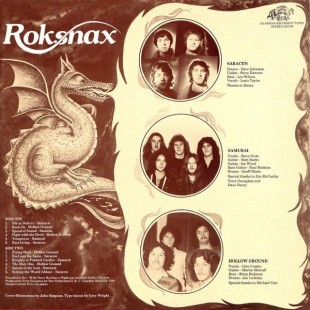
He recorded three North East bands at his studio in Durham. Teesside based Samurai, and from my hometown South Shields, Hollow Ground and Saracen. The main players behind the re-release take up the story…

13221640_10208445604351664_4215948318101441378_n

Nick Vrankovich

Nick Vrankovich (Buried By Time and Dust Records): ‘One night not long ago, I was sitting drinking some Newcastle Brown and spinning some of the compilation albums I had from the NWOBHM time, Lead Weight, HM Heroes, Metal for Muthas, all packed with songs that meant so much to us.

Then I played Roksnax and I was quickly reminded of two things. One was that all twelve songs are incredible. When you talk of the magic of heavy metal or the mysticism of the NWOBHM surely, they must be referring to releases like this.

The second was how obscure this one was compared to the others. I made a clear decision that night to contact the bands to see if we could make this masterpiece available again.

When I got in touch with the guy’s I found the willingness, generosity and honesty incredible. Even though I’m now over 50, these tracks mean as much to me as the day I first held the album all those years ago’.

‘By the end of 1980 I was 13-year-old and not yet aware of the New Wave of British Heavy Metal. I was into Kiss, Van Halen and shortly after Black Sabbath would change things for me in a big way.

By the end of 1981 I discovered the Record Exchange in Walnut Creek, California which is about thirty minutes outside San Francisco.

The second I entered the record store an obsession would be born. The store was heavily stocked with all the latest imports and cutting-edge heavy metal from the UK and Europe.

The extreme appearance and imagery of bands like Venom, Mercyful Fate, Angel Witch and countless others was something that fired my imagination and created an obsession that continues to this day.

The fact that the music was so fantastic and really heavy only added fuel to the fire’.

BACKROK

‘The Record Exchange is where I first remember seeing the album Roksnax. It was an import which meant the price was $9.99 which was a huge sum of money for me.

I remember looking at the photos on the back, it all looked so old and obscure. I was unsure what it would sound like. I had not heard of any of the bands on the record and of course it was next to impossible to find out about them unless they had a record deal. Sadly, this time I never bought the lp’.

‘The release disappeared into obscurity and was forgotten about until one day my brother scored a copy of the single Warlord by Hollow Ground.

Needless to say we were overwhelmed with how great it was and amongst other NWOBHM singles, it was right up there with Mythra and Witchfinder General.

We knew there were extra tracks from Hollow Ground on the Roksnax album, so we hunted down a copy. We eventually found one and heard the instant magic from the Hollow Ground tracks.

We were equally crushed by the Saracen and Samurai tracks. The speed of Saracen with the killer Dawson guitar riffs and soaring vocals from Lou Taylor was not only trailblazing but still raises the hair on my arms to this day.

Samurai was undoubtedly the most obscure band of the three, but their heroic sound was also incredible’.

Martin Metcalf (Hollow Ground): ‘I remember the buzz of being involved in Roksnax. The whole experience of being in Guardian Studio’s during November 1980 was magical.

We met up with producer Terrry Gavaghan and talked through the idea of a compilation LP with a couple of other bands from the North East. Our mates from Shields, Saracen were also on the record.

We were in the studios for two days and slept overnight there. The studio was basically two terraced houses knocked into one. I still remember the brown cork tiles in the studio and having to Sellotape the headphones on my head when recording.

The great memories of honing the songs and bringing them together with my friends, still burns brightly. The fine tuning and adjustments as we worked on them was a great feeling of coming together as a band, a unit.

We used two of the songs from our EP Flying High and Rock On and added Fight with the Devil and The Holy One to make our four tracks for the Roksnax album’.

Steve Dawson (Saracen): ’Right from the start of the band the other members wanted to get in the studio, but I thought we should of developed our sound a bit more, let it breathe a bit, walk before we run so to speak.

But we booked some time in Guardian Studios where Mythra had recorded their Death and Destiny single. The owner Terry Gavaghan proposed the Roksnax album to us where he would put us on a compilation album.

It was basically a live album with some overdubs’.

Geoff Nixon (Samurai)‘I have very fond memories of that time. We were convinced that we had an excellent line up, we felt as though we had something special.

We were made so many promises by Terry Gavaghan at Guardian, we believed everything he said. He signed us to a five-year publishing deal, as young lads we were flattered about the whole project’.

Martin Metcalf (Hollow Ground): ’Its real music made by real musicians. You can’t replicate it with machines. Sparking off each other while recording the tracks will stay with us forever. It’s what being in a band is all about…and we loved it.

We were so proud of the music that we produced, and still are! It stands the test of time and the whole album is a perfect snapshot of the vitality of the NWOBHM movement’,

Lou Taylor (Saracen): ’Now it’s not the world’s number one album but everyone involved in this album agreed that it is a wonderful feeling and something special about getting your name on a piece of vinyl.

Terry was true to his word and got the album in the shops. I bought six of them straight away ha ha’.

Geoff Nixon (Samurai): ‘But we actually split just after the album, sometimes you get one shot at fulfilling a dream don’t you. Many years later I found that the album had been on sale around the world, but I don’t think it ever sold in Britain.

Looking back, we had a lot of fun and of course we always have the album’.

Lou Taylor (Saracen): ‘Just being prominent enough to be invited to be part of something which we had no concept of how much impact on the British music scene the emerging talent in this genre actually had ! NWOBHM say what ??

Guardian Studios were in -famous enough already due to releases from acts in the region so this opportunity seemed too good to pass up!

Martin Metcalf (Hollow Ground): ’Lars Ulrich from Metallica bought a copy of the Roksnax LP in Los Angeles and that lead to our track Fight with the Devil being played in a Metallica documentary. This was the documentary about the making of their Black Album.

The scene is Lars Ulrich driving to the studio in his Porsche listening to Fight with the Devil. The film was released in 1992 and if I remember correctly, we’re on the credits between Black Sabbath and Madonna!

It led to me and Glenn our vocalist being invited to gigs on the Black Album tour. We had access all areas and were in the famous Snake Pit. It was brilliant’.

Lou Taylor (Saracen): ’Over a series of trips to a sleepy country village including one session which soaked up guitarist Steve’s 21st Birthday – a sacrifice of serious proportions ha!

The long days and nights, the scary stories, the ghostly appearances, the owner eating sandwiches… Roksnax? The narrow deadlines, the even narrower drum booth, the raw uncertainty of the mixes – still.

But all tempered with the undeniable thrill of the coming eventuality: four guys making their dreams come true, putting their music on vinyl for the very first time and still to be heard worldwide today…priceless !

Interviews Alikivi 2017.

Recommended:

Pyromaniax – Bombs, Flashes and Burnt Eyebrows 12th December 2017.

Have You Heard This One ? -10 best stories from this years interviews 18th December 2017.

1980 – The Year Metal was Forged on Tyneside, 11th February 2018.

WHICH SIDE ARE YOU ON ? with Anarcho/punks Decontrol

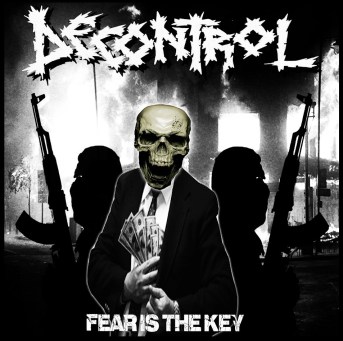
Decontrol-FearIsTheKey-Album-Sticker

Originally formed back in 1991 Decontrol have returned…

‘Still loud, still angry and still hoping to see the devastation of the Tory Party’.

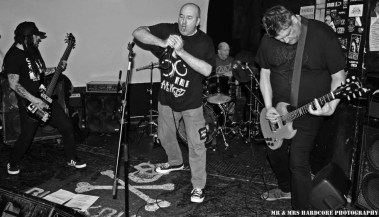
Based in the North East of England the line-up is Neil (drums), Nick (guitar), Bry (bass/vocals) and Paul (vocals)…

’Here’s a story from on one of the first gigs we played when we reformed. Neil is very energetic behind the drumkit and was knackered near the end of the first set.

At the break he got up to go to the bar for a pint of water to cool down. We’d done a bit of crowd banter and then got on stage and started up the second set.

We signalled to him at the bar that the song was about to start. So in one movement he grabbed a pint, ran to the stage, sat down behind the kit, picked up the sticks and started the song right on cue.

A quality piece of timing. I doubt that we’d ever pull that one off as neatly again, haha’.

Where do the ideas come for your songs?
Paul: ‘Lyrics come from all sorts of areas. Social commentary is easy to do when you have so much shit going on in the world. War, animal rights, consumerism, religion, the system, facism; so much choice!

Sometimes I might have an idea of how a riff should go, but for the life of me I cannot play guitar. I have to try and hum the tune…badly.

More often than not it’s the rest of the band who come up with songs and I have a surplus of lyrics I can fit into what they produce. I might come up with the odd idea about the composition, but I’d say it is 99% plus done by the others’.

Nick: ‘I just play and play and see what comes out. I’m no Steve Vai so I just write what I think will sound good for us. I do think the fact that three of us come up with tunes make our sound varied. It works for us’.

Who were your influences ?
Bry: ‘Hearing Black Sabbath as a kid and being taught guitar by my Uncle. I listened to Crust and Hardcore bands such as Discharge, Wolfbrigade, Sect, Chain Of Strength, also Death metal and grindcore’.

Paul: ‘I’d been into Slade/Sweet/Wizzard as a young boy, then Kiss as a teenager and by my 20’s thrash and hardcore.

What made me get off my arse was when I saw ENT on Snub TV back in 1989. As well as going down to Bradford with Energetic Krusher that same year. I thought ‘I have to get into a band’ it took me a while, but I got there.

When the band first got together I was heavily influenced by Conflict, Discharge and ENT. I liked the idea of projecting the vocals in a clear way.

Nowadays, there’s a bit of Rudimentary Peni influence in there as well as a touch of early Hellkrusher, who are mates of ours’.

Nick: ‘Always listened to music but it always looked difficult. Then a mate gave me an old Kay Les Paul and 50 watt combo and showed me how easy it was to play the WASP track Tormentor and Killed By Death by Motorhead.

I haven’t progressed much since then. Mick Ronson was the person I wanted to imitate, thrown in with some of Ian Hunter’s song writing. I just loved music, not any particular genre.

I am just as much at home with country music as I am with hardcore. Peter Hammil deserves a special mention for just being involved with the oddest and most varied music ever created’.

27072450_1519622614811596_8077905447722490146_n

When did you start playing gigs and what venues did you play?
Bry: ‘I started when I was 16, but I’ve played all over the world with various bands including Mantas from Venom. I filmed two music video’s with Mantas and appeared briefly on Japanese TV !’

Paul: ‘The band started playing in 1991. We’d supported the likes of Genital Deformities, Hellkrusher, Disaster and Hiatus. All the original gigs were in the local area at the likes of Images in South Shields and the Irish Centre in Newcastle.

The furthest we got was Consett supporting Mutant, whose drummer, Neil is now in the band!

Nick: ‘Played in Kent with the mighty SORB, East Kent’s best crust band. Done other bits and bobs but they’re secret’.

What is your experience of recording/studio work ?
Bry: ‘I recorded quite a bit, and it rarely goes to plan!
Nick: ‘Love it and do little bits at home. I’d spend more time in a studio working if I had time’.

Paul: ‘I’ve only been in the studio three times (1991 for the original demo and our two albums since 2015). I was nervous at first, but once I get into that booth with the cans on my head, I feel pretty much at home.

It’s been weird doing the albums as we’re usually feeding off each other in terms of cues but been segregated can cause a bit of an issue. We’ve done well so far and can only get better!

Have you any stories from playing gigs?
Paul: ‘Oh, yes! one occasion last year made me laugh. We’d played down Nottingham and our driver (Tony) was knackered after a long day driving us around. Well after dropping the van off, we all had a fair few drinks. He left early to crash out back at the hostel.

A few hours later we came back boozed up and try as we might, we couldn’t stay quiet. Bashing around the corridors with our gear and shouting as we entered the room. We put the lights on and there he was, still corpsed out. We thought he was dead haha’.

What are the future plans for Decontrol ?
Paul: ‘We’re currently halfway through writing songs for our third album. Which we hope to have out by the back end of the year. We’re also planning to record four new tracks and a cover song for a 3-way split CD with fellow Northerners Anord and our friends up in Scotland, Frenetix.

That will come out April or May, we hope. We’re also featuring on a planned compilation LP for Antifa, with an alternate version of a track from our second album. Not sure when that is due out but keep in touch on our Facebook page https://www.facebook/decontrolneuk.

Interview by Gary Alikivi February 2018.

Recommended:

Mond Cowie, ANGELIC UPSTARTS, Angels of the North 12th March 2017.

Neil Newton, ANGELIC UPSTARTS, All the Young Punks 4th June 2017.

CRASHED OUT, Guns, Maggots & Street Punk 6th July 2017.

Steve James, WARWOUND, Under the Skin 9th July 2017.

Danny McCormack, THE MAIN GRAINS, Death or Glory 8th September 2017.

Steve Straughan, UK SUBS, Beauty & the Bollocks 1st October 2017.

Carol Nichol, LOWFEYE, Radge Against the Machine 15th November 2017.

Danny McCormack, THE MAIN GRAINS/WILDHEARTS, Comfort in Sound 15th February 2018.