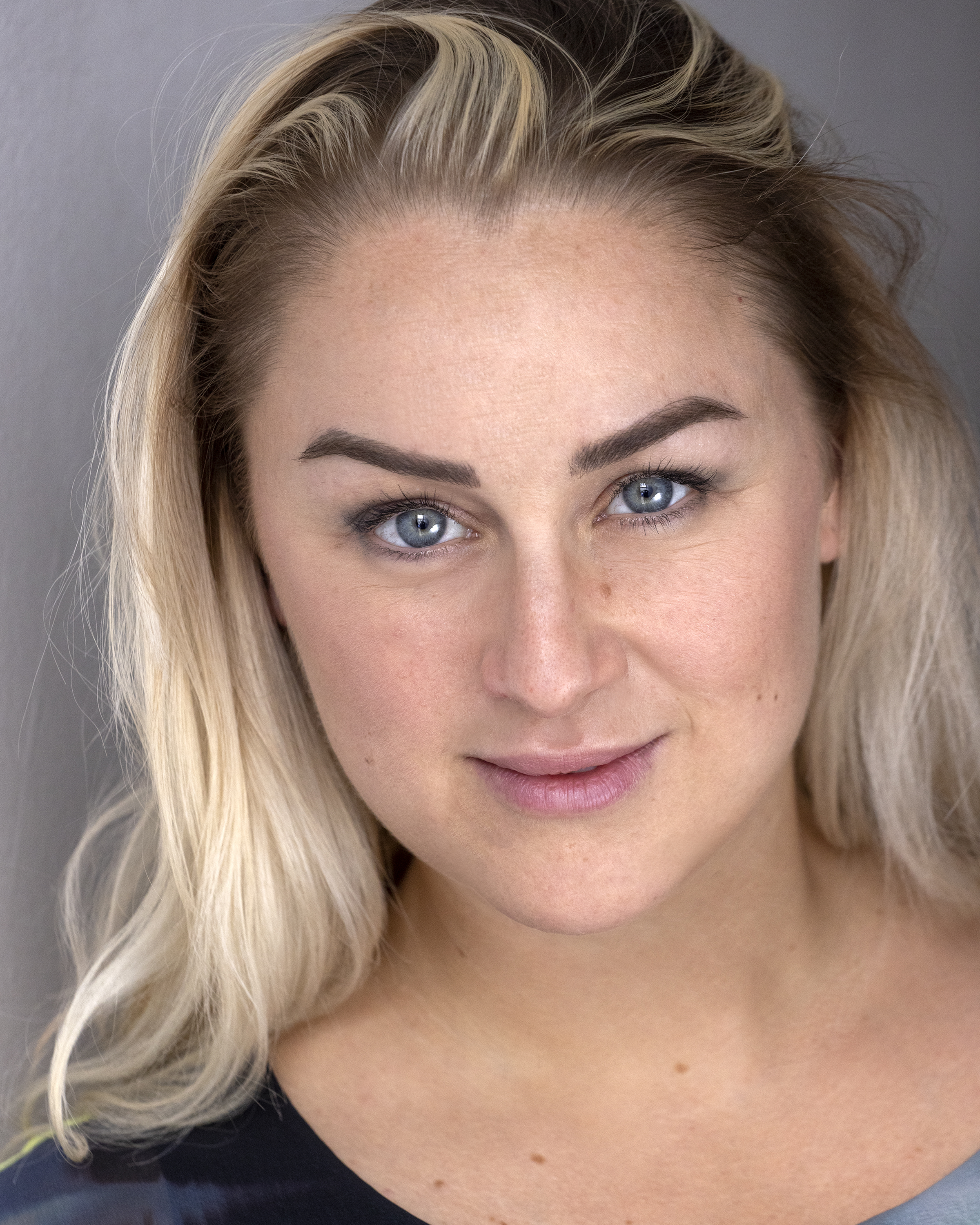
STORIES OF WAR – with award-winning author & freelance journalist Terry Wilkinson

“I’ve always been fascinated with everything World War Two related and RAF in particular. My grandfather was in the Royal Flying Corps, and both my father and my son were in the RAF” explained Terry.

“I was in the Air Training Corps in South Shields but then a medic came to school to test us all for colour-blindness. I failed the test miserably and was told I would never be accepted by the RAF. I was gutted, as you can imagine”.

Terry lives in Marske on Teesside, but was born in South Shields at midnight 21st– 22nd December 1948…“My mum asked the midwife which day was my birthday. She was told it was the 21st as my head came out on that day. That crosses the Winter Solstice, so my top half is Sagittarius and my bottom half Capricorn. I think this explains why I’ve done so many different jobs in my life” joked Terry.

Throughout his school years his parents moved around the country…

”We lived above a wallpaper shop in Stockton on Tees, then moved to Billingham and later down south to Reading and Mitcham”.

Finally, the Wilkinson family moved back to South Shields where Terry was a pupil at South Shields Grammar Technical School for Boys.

“After leaving school, I worked for the Crown Agents for Overseas Governments in London, then Wise Speke stockbrokers in Newcastle where I became a Member of the London Stock Exchange”.

From 2000 I ran a successful Theatre in Education company touring schools for 15 years. It won a Best New Business Award but I gave it up in 2015 in order to write”. 

When researching his family tree and local history Terry has always been fascinated by one event.

“At midnight on 3 May 1941, the factory and Head Office of Wilkinson’s Mineral Water Manufacturers in North Shields was hit by a single German bomb. It went through the roof, descending through all three floors, taking all the heavy bottling machinery and chemicals down to the basement – which was in use as a public air raid shelter. 107 died, 43 of which were children. Whole families were wiped out.”

Details of the tragedy can be found in the book North Shields 173: The Wilkinson’s Lemonade Factory Air Raid Disaster (173 was the telephone number of the factory.)

“It is written by my good friend, Peter Bolger, who also manages a comprehensive website on the incident” > www.northshields173.org

“Because of censorship and the government’s desire not to damage public morale, little is known beyond Tyneside. It was, however, one of the largest loss of life incidents from a single bomb during the provincial Blitz”.

Nothing is known of the identity of the plane which dropped the bomb – type, squadron, mission etc – as German records were mostly destroyed in the closing stages of the war”.

“I wanted to write a story that answered all these questions and create a fictional alternative. Having said that, nobody could say with any conviction this is not what happened”.

Terry started on a series of five espionage novels. ‘Handler’ is set in 1941, ‘Sleeper’ in 1942 and is currently working on the third ‘Chancer’ which covers 1943. 

“They’re a mix of fact and fiction and trace through the war years of an English-born German spy, Howard Wesley, and his nemesis, MI5 agent Albert Stokes”.

“Wesley is a figment of my imagination. Stokes is based on a real character. And this is the pattern for the other books in the series. I also like to plunder WW2 history for little-known incidents and people who feature against the broader background of what was taking place in the war”. 

‘Handler’ won a ‘Chill With A Book’ Premier Readers Award just a few months after publication. This spurred Terry on to get others in the series out there as quickly as possible.

“A few of those who have given good feedback have made the point that it would make a good series. I am convinced that it would. I certainly write with a film or TV series in mind”.

“In the shorter term I am hoping to record the whole series as audible books. I recorded an extract from the book that author John Orton is currently writing (link to interview below) and he was happy with it”.

“I’ve spoken to my publisher – UK Book Publishing – and offered them my services as a narrator for others. I’m also an actor, card-holding Equity member and very good at accents and dialects”.

For further information contact Terry on his official website> www.terrywilkinson.co.uk

Social media>

Facebook – Terry Wilkinson, or Twitter – @terrydwilk

Link to John Orton May 2023 interview >

THE STORY SO FAR with author John Orton | ALIKIVI UK : NORTH EAST CULTURE

Alikivi   August 2024

KNOCKOUT with former boxer Terry Patterson

Terry Patterson had one foot considerably smaller than the other so wore a calliper.

“It’s known as a clawfoot. I was bullied by school gangs so decided to fight back”.

From gutting fish, to boxing to heartfelt poetry – this is Terry Patterson’s story.

Born in North Shields in 1956 Terry attended Ralph Gardiner Secondary modern school, he left with no qualifications but was taken on as an apprentice fish filleter at North Shields fish quay.

Working on the fish quay was hard but good fun. Weighing, icing and boxing salmon to begin with, then learning how to fillet various types of fish and how to drive a popper lorry. I tell ya’ the smell took some getting used to”.

With school bullying still fresh in his mind, Terry joined North Shields Boys Boxing Club where he was taught by ex-professional Joe Myers.

His boxing career lasted a total of 22 years, in that time he worked in the shipyards and had been a school caretaker.

A couple of years ago I interviewed ex-boxer now coach Preston Brown from Sunderland.…”Yeah I know Pasty Brown very well” said Terry. “Over the years I fought a few Sunderland lads. Derek Nelson was a classy boxer who turned pro. I fought two ABA finalists in Gordon Pedro Philips and Willie Neil. I fought Pedro in the North Eastern Counties final but lost. Both lads were well schooled”.

“Willie’s coach asked if I’d fight him one evening because his opponent hadn’t turned up. I weighed in at 10st 6lbs (welterweight), he was heavier than me by 6lbs. I knew his reputation for knocking people out. Norman Fawcett negotiated with his team and £50 was slipped into my hand for taking the fight”.

“Willie could bang a bit – so could I – but he had me down three times during our bout. We set about each other unleashing hell for three fierce rounds. I had him going at one point after landing a good left hook but the bell sounded and my chance to finish him had gone”.

“Gordon and Willie are still good to this day – it’s been 36 years since we shared a ring. I see them at boxing dinners and  Boxing Club Reunions. Both of them bought my novel ‘Like Mother Like Son’.

In over 200 bouts Terry won national honours and passed the advanced ABA coaching exam plus he was involved with coaching youngsters until 1986.

After an industrial accident left him unfit to continue his love of boxing, Terry was determined to focus on another sport and won the Disabled Sport England Snooker Championship five years in a row.

“I qualified as a UK professional snooker referee and got a call up to referee the Maltese open in 1997” said Terry.

In 2002 he became North Tyneside’s first World Professional Snooker Coach. He coached at Wallsend Supa Snooker for disabled and able-bodied youngsters, but after a fall on icy roads, not only had he injured his back, he suffered from a dark depression.  

Terry addedI was diagnosed as clinically depressed. It’s something I just try to get on with. A surgeon advised me to take up knitting – no I didn’t – but I was determined to excel at something.”

Throwing himself into a number of academic courses at North Tyneside College Terry volunteered at Newcastle’s Percy Hedley training centre working for clients who had cerebral palsy.

He spent over five years working in various care homes until the injuries he sustained over the years got the better of him.

“Depression is something I’ve dealt with my whole life but I feel life still holds challenges for me”.

With an interest in poetry and short stories he began to spend his time writing. To date Terry has produced 46 novellas and three novels ‘Like Mother like Son’, ‘He Who Rides a Tiger’ and ‘Living with Grandpa’. His writing is free to read on Movellas.com.

I’ve also written plays – two of which have been staged in various theatres. ‘Reaping the Benefits’ and ‘The Redundant Blade’ which was written as a tribute to Tom Hadaway”.

“We were only four days from staging ‘The House Across the Road’ when covid broke and we lost cast members. Eighteen months later we tried again and two days before the production two young cast members took ill. My producer and I lost a lot of money and we decided to walk away and the group disbanded.”

Prolific North East Writer and theatre producer Alison Stanley and cast will be reading one of Terry’s plays at Laurels in Whitley Bay, at 2pm on Thursday 22nd August. ‘A Home for Willie’ raises awareness of dementia.

Terry explains “At 68 years of age I’ve never done any for personal gain, never made anything from it but would love to have one of my books or plays made into a television programme or series”.

“I would like to follow where Catherine Cookson and Tom Hadaway left off. I hope that one day when I’m no longer around I’ll be remembered like the people who inspired me”.

Alikivi   August 2024


COP ON THE TYNE – in conversation with ex police detective & writer Arthur McKenzie

Now 85, Arthur talks about joining the police force as a cadet in 1955…

‘Yes, I was a polis in Newcastle, the city was a lot different then I’ll tell ya, it was still getting over the war to be fair. My first beat was Sandyford Road where the Civic Centre is now. That was all houses then’.

‘It was quite a tough beat, a rough area with pubs like The Lamberts Leap and another called The Sink near the Haymarket. You had to earn your corn, there were no radios or panda cars – you were just pushed out onto the beat and that was it, you had to get on with it’.

‘There was a police pillar (similar to a post box but with a telephone inside) on the corner of Sandyford Road. If you arrested anyone you hoped you could get the person to the pillar. It was difficult cos sometimes you had a couple of guys fighting…you had to get them there, it wasn’t easy’.

‘There was generally more respect for the police then, you would get more help from the public once you established yourself on the beat, which you had to do cos you were tested out straight away’.

‘Once they knew you were fair and straight you got a lot of help from them. You were on that same beat for years, you weren’t just passing through you got to know every shop keeper, every doctor, every villain…you got to know the whole community. But then the T. Dan Smith regeneration project of slum housing clearance began and the place changed completely’.

‘I always liked paper work, always took pride in my reports. A crime file for shoplifting or murder has a beginning, middle and end and you had to go to court and defend what you had written. In the end someone could go to prison so you’re under pressure, under scrutiny. That reality far exceeds any drama’.

‘I moved from department to department, CID, drug, vice, crime squad, then around 1978 I worked for the anti- corruption team in the Government based in Hong Kong. For the year I was there I would see people living in cages on roofs, people swapping babies in hospitals, it was a weird place. I wrote an article for the Police Review national magazine on what I saw, they paid me £25 for it. It was read all over the country’.

‘I didn’t start writing until I was 40 you know. When I came back to the UK, I worked in Washington Police Station, a young cop called Jeff Rudd came to see me ‘I used to be a musician in a band, I’ve still got all these tunes going round my head but can’t put words to them. I read your article and seen your reports, I wonder if you’d be interested in putting some words to my tunes?’

Well, I give it a go and then thought nothing of it until a few months later I was pleasantly surprised when he handed me a tape with the songs on. I really enjoyed my time with Jeff, he was a very accomplished guitarist. We ended up writing around 50 songs, one of them ‘Big Bren’ was about the athlete Brendan Forster, that was played on radio’.

‘That led us to doing an interview and playing some of our music on the Frank Wappat BBC Newcastle radio show, then we done a couple of gigs in Washington. Next thing my wife Irene said why not contact Tom Hadaway? (writer When the Boat Comes In, Newcastle Live Theatre).’

‘I wasn’t sure at first because I didn’t know him but as he was from North Shields we met and he told me to write a play. ‘What do I write about Tom?’ I asked ‘Write about what you know. What fires you up.’

‘So, I went away and wrote about the bait room. Tom read the play and was laughing at it ‘Yeah, you know how to write dialogue son’.

‘There was a police section house near Exhibition Park, in it was a bait room, just a pokey little room with a table to play cards on. If you’re on night shift you’d take sandwiches and a flask of tea in. That’s where you gathered around 1am where the events of the night would unfold’.

‘You would get advice on how to deal with someone, it was a good place to sort things out like the older cops would tell you how to deal with a death, how to deliver a death message to the unfortunate family. It was a sort of meeting of minds over a game of cards. Aye the bait room was a good place to vent your spleen so to speak.’

Running parallel with his police work Arthur was training in athletics at the running track at Ouseburn, Newcastle.

‘I was on shift in the Bigg Market from 5pm till 1am, that was rough, there was fighting most nights. After finishing I would grab a few hours sleep then go to court, then onto shot put training. I was in the British athletics team from 1962-71 and competed in the 1970 Commonwealth games in Edinburgh. I was very fortunate and saw the world with athletics’.

Arthur talked some more when the conversation turned to the present day and the riots that are happening this summer around England. He recalled a quieter time for the police.

‘I remember we had a huge kettle for the bait room. It was always on the stove. One day a big fish wagon went past the section house and dropped a fish out of one of the boxes. I picked it up brought it back into the station put it in the kettle and boiled it up. All day everybody was complaining about the smell from this mackerel…and no, we didn’t eat it!’

‘Another story was one night when I was up beside the Hancock Museum going to the section house at Park Terrace. Can you remember the litter bins that used to hang on a lamppost? Well, this one was upside down on the lawn outside the Hancock and it was moving around. I lifted it up and there was a hedgehog underneath it!’

‘So, I put it in my coat and took it up to the section station. Inside are lockers to put your bait in so I put the hedgehog inside one of them and waited for the copper to open it. He just about had a heart attack when he opened the locker!’

Hearing these innocent stories was a world away from watching how the police were dealing with the riots around the country, but then Arthur’s tone changed.

‘I remember it was winter time, snow piled up on the ground. I went in for my bait around 12.45am and heard a muffling sound, I opened the door and there was an older police officer trying to commit suicide with a plastic bag on his head. There was a scuffle as I grabbed hold of him but couldn’t get the bag off. I looked around found a fork and split the bag but caught his face at the same time’.

‘He was playing hell with me for saving his life ‘What right did I have’ and all the rest of it. As we were having this argument I could hear the other officers coming in for their bait so everything was put back right, we straightened up the chairs and table as if nothing had happened’.

‘That policeman only had a couple of year service left, he was very bitter, he didn’t thank me. Turned out he had a hell of a life with his wife and thing was he had seen action in the second world war’.

After writing about his experiences in The Bait Room, Arthur kept in touch with Tom Hadaway and wrote another play.

Tom looked at it and gave me pointers, when I finished it landed on two desks. One was the BBC in Manchester where I met them, it ended up on the Saturday Night Theatre radio show, which was a big thing’.

‘The other was the script reader for David Puttnam (producer Chariots of Fire, Local Hero, Midnight Express) who hated it at first but won her round in the end. She said she couldn’t do anything with it but put me in touch with an agent who was looking for writers for a tv show called The Bill. That’s where the writing started’.

Arthur being interviewed on BBC Breakfast about writing ‘Harrigan’.

In 1988 Arthur retired from the police force giving him more time to devote to his writing where over the next decade he delivered TV episodes for Wycliffe, The Bill, Casualty, Spender and Harrigan. The Bait Room was finally made in 2009.

‘I used the same discipline for writing as I did sport. Getting a focus, deciding what you want and going for it.’

‘What am I doing now? I’ve had a lot of my writing shown around the North East. ‘Pickets & Pigs’ was a story set to the background of the 1984 Miners strike’.

‘Later this year I’ve got a play on stage which I started writing in 2003 with Dave Whitaker. ‘Blackbird in the Snow’ is one of those that you leave on a shelf for a while then go back to’.

‘I worked with Dave on a musical about the Jarrow March called ‘Cuddy’s Miles’. John Miles wrote the music for it, Cuddy was a cook on the march, he was John’s relation. That was well received when it played The Customs House in 2004’.

‘Sadly, Dave passed away in 2021. He’ll be sorely missed so the new play is produced as a salute to Dave’s beautiful lasting memory’.

‘Blackbird in the Snow’ has a four night run with the premier on 5th November 2024 at Laurels, Whitley Bay. For more info and extra dates contact the official website >

Blackbird in the Snow | Line-Up (lineupnow.com)

Alikivi   August 2024

WHO WERE THE CRAMLINGTON TRAIN WRECKERS?

New play by writer Ed Waugh (Dirty Dusting, Wor Bella) & directed by Russell Floyd (The Bill, Eastenders).

Royalties from over 20 professionally produced plays including Dirty Dusting, Wor Bella, Hadaway Harry, Carrying David and The Great Joe Wilson, plus financial support from Arts Council England allows playwright Ed Waugh to focus on what he loves best: working class history, in particular forgotten North East working class history.

South Shields-based Ed and the team behind this important work have unearthed another forgotten story about the North East.

“This is an incredible story, full of drama and tension, an almost forgotten story, despite the incident making headlines nationally and internationally.” explained Ed. The subject of the new play is The Cramlington Train Wreckers which premieres in November and tours the region.

To maintain their profits, coal owners told miners they had to take a 40 per cent cut in wages. Stanley Baldwin, Conservative prime minister in 1926, also said every other section of the working class had to take pay cuts ‘in the national interest’. A General Strike was called and Northumberland miners were ready to challenge the establishment.

Ed explained “The intention was to stop a blackleg coal train that the miners felt was undermining the strike. Unfortunately for the perpetrators, they accidentally derailed a passenger train, the carriages were part of the Flying Scotsman”.

“The upshot was eight Cramlington miners were sentenced to a total of 48 years’ imprisonment for their part in the derailment”.

Most of the 281 passengers were treated for shock and bruises with only one person slightly injured, fortunately there were no deaths.

“Although largely forgotten, the story is an important part of British history. With the centenary of the General Strike rapidly approaching I felt it was important to assess the events in an informed, dramatic and entertaining manner. Were they terrorists or workers defending their jobs and communities?”

A North East tour in November 2024 includes South Shields Westovian Theatre, Gosforth Civic Theatre, Alnwick Playhouse, Hexham Queen’s Hall, Cramlington Learning Village Theatre, The Glasshouse Gateshead, Playhouse Whitley Bay, Bishop Auckland Town Hall and Barnard Castle Witham.

The Cramlington Train Wreckers is supported by Arts Council England.

For further details visit http://www.cramlingtontrainwreckers.co.uk

August 2024

FLYING HIGH – Manhattan, Helicopters & Council Estates

The site has been live since 2017 and now in 2024 is on course to hit 400,000 views so it’s a big thanks to readers from all over the world.

As the years fly by I find myself looking back and remembering film projects I’ve worked on. Memories may be a bit fuzzy but the good stuff comes to the front.  

During a recent sort out at home I came across a work diary from 20 years ago. A quick flick through revealed a busy summer starting with dates for a short film I was commissioned to make about public art in the North East.

When discussing the project I was asked how would the film be made? Looking at the map of the art trail there’s quite a few sites located over a large area.

Off the cuff I remember replying ‘Well you can get great angles from above…so why not use a helicopter’. To my surprise my suggestion was met with enthusiasm and I was given the green light. Now I’d never been in a helicopter before and I’m not too clever with heights, when leaving the meeting I asked myself why did I even suggest it?  

Back to my office and a quick look through Yellow Pages, yes it was that long ago, I came across Eagle Helicopters based in Newcastle, so put a phone call into them and booked a flight.

One sequence was shooting at Roker Marina in Sunderland, then the Conversation Piece on South Shields seafront and another circling the Angel of the North in Gateshead. To be honest it’s hard to believe it was 20 years ago, but the exhilarating feeling of filming in a helicopter hundreds of feet in the air will always remain.

A couple of weeks after that I flew out to America and enrolled on a film making course at New York Film Academy. Within days of landing at JFK airport and booking into a hotel in East Village, I was shooting a music video on the streets of Manhattan! I picked up some great tips from the Academy’s instructors for future projects.

A month later I returned to South Shields and was approached by South Tyneside Council about making an in-depth documentary recording a regeneration project in the town. Basically, the council tenants were looking to spruce it up. The brief was to document the progress working with the residents. Sounded like a good opportunity to use the techniques I learned in New York. And it was.

I remember first day of filming and a resident asking ‘What do you want to see’? my reply was ‘Show me the worst on the estate and we’ll work up from there’. ‘You’ll do for me’ he said.

He showed me the back of a vacant house where there was a make shift wooden shelter with a sleeping bag and quilt. Obviously, somebody’s bed, somebody’s home.

Years later when reading through those pages it made me realise the highs and lows of documentary film making in one summer. From capturing the celebration of public art from the sky, then brought down to earth by filming real life desperation.

Alikivi   July 2024

WALKING MY STREETS – New Poetry and Prose collection from Jarrow born Tom Kelly.

Tom Kelly is a short story writer, playwright and lyricist now living further up the Tyne in Blaydon. He’s written a number of musicals with the late John Miles that have been produced by The Customs House, South Shields, including the work of Tyne Dock born author Catherine Cookson.

‘Tom & Catherine had its premier at South Shields Customs House, it was really exciting. All the team were really nervous on the opening night but when the overture began, we all felt it was going to be a success. And it was. It had a ‘sold out’ run. A measure of its success was that me mam wanted to go every night! And she was not a theatre-goer. She loved ‘Tom & Catherine.’

“The play was first produced in 1999, and again 2001. In 2006 there was an outdoor performance at Bents Park, South Shields in which Jade Thirlwall (Little Mix) appeared, and most recently in 2019” said Tom.

His two football plays I Left My Heart in Roker Park (1997 & 98, 2004 & 2014) and Bobby Robson Saved My Life (2019) toured the North East and were well received by audiences and critics alike.  

I Left My Heart in Roker Park’ is a one-man play that looks at the life and football times of an avid Sunderland supporter. As more than one have said of the play, ‘it makes you laugh and cry” said Sunderland fan Tom.

His new book ‘Walking My Streets’ is his fourteenth and thirteenth published by Red Squirrel Press. Tom read at the Lit & Phil, Westgate Road, Newcastle, Cullercoats Library and The Word in South Shields to promote the book.

I’ve already read at a number of venues and thankfully it’s gone down very well. As it says on the books cover, ‘Walking My Streets’ explores in prose and poems Kelly’s life and the changing face of his native north-east of England’.

Walking My Streets is available from Red Squirrel Press.

Contact the official website >

https://www.redsquirrelpress.com/poetry?Author=Tom%2520Kelly

Alikivi   June 2024

TITS UP – New play from Alison Stanley

“A couple of years ago a young friend of mine was diagnosed with breast cancer, people think it’s older people who develop this disease, so I wanted to raise awareness of this”.

Alison Stanley

‘Hard’, ‘Life of Reilly’ and ‘You Need To Say Sorry’ writer & actor Alison Stanley has tackled diverse subjects such as autism, sex workers and domestic violence. Her new play ‘Tits Up’ examines the strength of maternal love and the choices women face. 

“Last year I found a lump and experienced the process of going to the breast clinic. Fortunately, my lump wasn’t anything of concern but it did make me think”.

“Even though I was fine I began questioning my own mortality and spent nights wondering what would happen if I had cancer? What would’ve happened to my son who is autistic”.

Alison threw herself into an intensive period of research, she spoke to people who had lived through cancer and heard real stories including from the LGBTQ community who had another perspective.

I went along to Live Well with Cancer in North Shields where the ladies were kind enough to share their stories with me”.

From here, Alison created a piece that looked at life choices for three different women with different lives united together in their fight against breast cancer.

Alison explains “Tina, Rachel and Rosie are unlikely friends. Tina is a devoted Mam, she can’t understand why ‘bonny bairn’ Rosie wants to put rings through her nose, and Rachel, who lives to work, can’t understand why Tina is content at home and why Rosie doesn’t iron her jeans”.

Alison addedThe three characters are very different and would never have met if they hadn’t found themselves having treatment at an oncology ward. The play hasn’t been cast yet, but will be soon.” 

Alison’s last play ‘You Need to Say Sorry’ received good reviews and is now used by Northumberland/North Tyneside social services as a training tool.

“I’m in discussions with Northumberland Police to do the same with them. A lot of police and social services staff came to see the play”. 

Alison also finds time to be Director of Participation at the Whitley Bay venue, Laurels, where her new project is called ‘Pasty, Play & a Pint’. People buy a drink and a pasty and a ticket to see a reading of a script of produced plays and new writing.

“It’s an attempt to open up the theatre during the day and encourage older visitors” added Alison.

‘Tit’s Up’ runs from October 8-17 at Laurels, Whitley Bay. There are some matinee performances and tickets are on sale now via Laurels official website.

Link > Laurels Whitley Bay – Restaurant, Bar and Theatre

Alikivi  2024

TON UP for North East actress and entertainer Helen Russell 

A North East icon will celebrate her 100th birthday with the launch of her new book of poetry at The Word, South Shields.

Helen is one of the few surviving ENSA (Entertainments National Service Association) members from WW2 – the elite troupe who entertained military personnel. She joined ENSA at 15-year-old and toured the UK singing and dancing.

Helen was born in London on May 30th 1924 near the London Palladium. “I was bitten by the showbiz bug as a young girl and fortunately I could sing and dance well, so I was able to follow my dreams”.

Helen started her career aged eight and at 14 performed in her first professional pantomime, Dick Whittington, at the Winter Gardens in Morecambe.

During the war Helen married Colin Hillcote, who ran a dance hall in Belfast. “It was an exciting time there, too”. At the end of the war the couple returned to South Shields, Colin’s home town, and she has been an adopted Sand-dancer since 1946.  

In the 1950s Helen was singing at church events and played many roles as member of the South Shields Amateur Operatic Society. A friend who performed in working men’s clubs heard Helen sing and invited her to step up on stage.

“From there I became an artist in my own right, singing and dancing throughout the region” she said.

“We didn’t have a phone in the house so I’d take calls on the local public telephone box to tell me where I was playing that night! Sometimes it meant getting a bus to Newcastle and then catching another to Stanley in County Durham, or Ashington in Northumberland, then heading back after 10pm – all the time humping my guitar and other equipment. I had no helpers!”

“When guitar groups became popular in the 60s I had to stop dancing on stage because of all the leads and wires. That’s when I took up the guitar and later started writing my own songs.”

In 1965 a Vaux beers television advert came calling and a number of variety shows were filmed at Tyne Tees Television, including a double act with Bill Pertwee of Dad’s Army fame and working with Dick Emery. She was a contemporary of North East legends Bobby Thompson, Bobby Pattinson and Dick Irwin, all of whom she knew well and regularly worked with.

Her TV and film appearances include When the Boat Comes in, Supergran, Catherine Cookson adaptations, Highway (during which she sang with Harry Secombe), Emmerdale, The Fast Show and Billy Elliot.

On stage, Helen’s credits include performing in her self-penned plays Off the Shelf and Keep Calm and Carry On. She was also an original Dirty Duster, a play which transferred to Newcastle Theatre Royal and sold out twice. Helen was still performing in the Dirty Dusting tour until the age of 90!

She was also part of the hugely popular Angels of the North variety group with the two other original Dirty Dusters – Jean Southern and the late Gwen Doran. Their shows, mostly of original material, were self-written and performed to sell-out audiences all over the region.

Regular successful contributions to BBC Radio 4’s Poetry Corner sparked Helen’s creativity, she started writing in the 1970s and returned to poetry during the Covid lockdown.

Her new book of poems “Oh! Life is a Joy” will be launched at a free event in The Word, South Shields Market Place at 1pm Thursday, May 30th.

There will also be an ’in conversation’ with Helen to mark her remarkable life and career. All profits from the book will be donated to cancer charities. Helen successfully fought off breast cancer a decade ago.

 Alikivi   May 2024

STATS FANTASTIC – seven years & counting

After 500 posts and over 370,000 views, WordPress (who run this blog) have sent their congratulations to the North East culture site after completing its seventh year, aye seven years, can’t believe how quickly time has gone.

From the first post in February 2017, the free site – without any ads, pop ups or clickbait – has gone from strength to strength picking up views not only here in the UK but worldwide, including USA, Japan, Brazil, Sweden, Ireland, Australia and European countries Spain, Italy, France and Germany.

First up were metal bands Fist, Mythra, Raven, Satan, Venom and Tygers of Pan Tang followed by music memories from bands including Beckett, Angelic Upstarts, White Heat, Lindisfarne, Lorraine Crosby, Wildhearts, Dance Class, Kane Gang and Southbound.

Searching the site, you’ll find interviews with authors and photographers, there’s also stories from recording studios Guardian and Impulse.

As well as theatre producer Leah Bell and TV actress Lesley Saint-John, by far the most popular post at 15,000, there are stories from roadies, radio presenters and TV production teams.

During the 2020 covid lockdowns people looked for something new to read so their views added to the regular readers, resulting in monthly numbers of 7,000 with a high of 9,700.

Now the site gets a steady monthly count of 4-5,000, I must say a big thanks to everyone who reads the posts – much appreciated.

How long will it last? Well, the phone’s still ringing and stories keep dropping in my inbox, so I’ll keep gaan until the juice runs out.

Alikivi   February 2024

WOR BELLA HITS LONDON – the incredible story of heroic North East women footballers during WW1.

Catherine Dryden as ‘Wor Bella’.

Wor Bella, a tribute to the heroic North East women who played football during World War 1 is transferring to London. The play will be staged at the Bread and Roses Theatre, Clapham, before coming back up North to the prestigious 1200-seat Newcastle Theatre Royal in April. The play features a to-camera cameo by former Newcastle United footballer Alan Shearer.

Wor Bella is named after the show’s lead character Bella Reay who played centre forward for Blyth Spartans Ladies and scored 33 goals in 30 matches. She was the “Alan Shearer of her day”.

Wor Bella will star Catherine Dryden, who is currently performing with Jimmy Nail at Newcastle’s Live Theatre. Catherine, who hails from Chester le Street, is a RADA graduate and has toured number one venues nationally with The Pitman Painters and The Play That Goes Wrong.

Catherine explained “The play is a tribute to the million-plus women who stepped into exhausting and dangerous industrial work when men were conscripted in 1916”.

“They were selfless people who not only saved the war effort but raised money to support injured soldiers, widows, orphans and other charities by playing football.”

She continued “Factory teams of munitionettes formed on Teesside, County Durham, Wearside, Tyneside and Northumberland to raise money for wartime charities. I’m delighted to be playing “Wor Bella.” 

It was an incredible time for women’s football, Blyth Spartans Ladies played Bolcklow Vaughan (Middlesbrough) in front of 18,000 people at the inaugural 1918 Munitionettes Cup final at St James’ Park, Newcastle, and later 22,000 at Ayresome Park, Middlesbrough.

“Unfortunately, the FA scandalously banned women’s football in December 1921. It wasn’t unbanned until 1971!” added Catherine.

Written by Ed Waugh, (Dirty Dusting, Waiting For Gateaux and Alf Ramsay Knew My Grandfather – all co-written with Trevor Wood and the self-penned Hadaway Harry).

Ed added “We’ve had tremendous support for our talks from the likes of history societies, WI’s, U3As, libraries, football clubs and cultural groups. The response has been incredible.”

The play toured the North East in 2022 and received a number of reviews….
“A rollercoaster ride of laughter and euphoria to sadness and anger… mesmerising” said The Journal.
 

Kyle Crook, Blyth Phoenix Theatre Operational Manager, added “Rave reviews with both staff and customers. A must see!” and Katy Taylor, Artistic Director at Hexham Queen’s Hall Arts Centre “Brilliant…went down a storm with the audience”.

Any groups interested in hearing a talk are asked to contact Ed via the official website > http://www.worbella.co.uk

For Theatre Royal tickets google > ‘Theatre Royal Wor Bella’ for London tickets visit > www.worbella.co.uk

Alikivi   February 2024