Teesside based songwriter & producer Steve Thompson has had a hell of a career in the music biz, from producing heavy metal bands Venom, Raven and Tygers of Pan Tang, to mainstream artists Sheena Easton, Elkie Brooks and Celine Dion recording his songs, plus working with Pete Waterman, Gus Dudgeon, and The Hollies.
Here he talks about his early influences and forming Bullfrog.
A BIT OF BULLY
Records I was fond of in the ‘60s were The Beach Boys. Brian Wilsons skill in making records was unbelievable. I used to listen to the radio and they were so far away like gods playing this music.
But the thing that got me into playing guitar was seeing everyday guys around town playing guitars, just ordinary people.
Like all kids in my town, I went straight from school into Consett Steel Works. With three other steelworkers we formed a band called Bullfrog and served two apprenticeships.
One of them by day working in the steelworks, the other by night playing the pubs and clubs of North East England. That was my first stab at the music industry.
Bullfrog supported a lot of bands like Vinegar Joe and Edgar Broughton. On October 10th 1974 I got a call from our manager to say there was a gig going that night supporting Wishbone Ashat Newcastle’s Odeon Cinema and could I get the band together.
When the call came in I had been dying my cream-coloured platform boots, I fancied green. But because I was in a rush, I turned out on stage that night with one green boot and the other still cream.
Steve (in blue) in Bullfrog.
I’VE GOT A PLAN, MAN
When Bullfrog were in Island Studios in London our first producer was Roger Bain, he also produced Black Sabbath.
I was introduced to his friend and record producer, Gus Dudgeon of Elton John fame, later on I did a lot of work as a songwriter with Dudgeon.
The whole process of studio and song writing really intrigued me so I knew where I was headed. I wrote a few songs put them out and a guy called Dave Wood heard about me and found a slot at Impulse Studio in Wallsend.
Next up read Making Tracks #2, when Steve is producer at Impulse Studio in Wallsend, home to New Wave of British Heavy Metal label NEAT records, and crosses swords with metal maniacs Raven, Venom & Tygers of Pan Tang.
Teesside based songwriter & producer Steve Thompson is planning an audio and video presentation of stories from his time as house producer at Neat records.
‘I’ll also add some studio out-takes and unreleased tracks’ said Steve.
In 1977 Thompson became house producer at Impulse Recording Studios in Wallsend and helped set up Neat Records earning him the title ‘Godfather of North East New Wave of British Heavy Metal’.
The first couple of releases at Neat were pop records, but with the Tygers of Pan Tang, Neat led the charge for the New Wave of British Heavy Metal (NWOBHM)- North East Division.
Before leaving Neat, Thompson also produced Raven and Venom. The North East trio became arguably the most influential bands of that period, especially in the USA. Metallica in particular recognising the influence the three North East bands had on them.
Steve recalled the Raven album sessions… ‘Producing the Raven album was intense and rewarding. I’ve heard them described as ‘athletic rock’ and that’s just about right cos as they were recording I had to gaffa tape the headphones to their heads as they were just bouncing off their heads as they were banging ten to the dozen!’
Venom drummer Tony Bray said ‘When our first producer Steve Thompson heard us crashing through ‘In League with Satan’ he had the understanding that he was able to record something original and ground breaking. We didn’t, but that’s a good producer’.
What will we expect from the show Steve ?
‘This is an depth presentation of my time at the coal face of heavy metal. I want to paint a picture of what it was like to be there when these historic events happened. There are some interesting aspects to the story, some hilarious and some outrageous. This is a rock and roll story so beware if you’re easily offended’.
Thompson went on to write songs recorded by mainstream artists Sheena Easton, Elkie Brooks, Celine Dion and Wavelength who appeared on Top of the Pops with Hurry Home. The single peaked at number 17 after three month in the UK Singles chart.
In these covid times how will we be able to see the show ?
‘When lockdown eases I will present this story at a venue with reduced capacity. We’re also installing a state of the art camera and streaming system. You will be able to book tickets for the venue (limited numbers) or book a ticket for the live stream. More news will be released when I have it’.
Here in the North East the Tyneside Bloc has given up a load of music stories from bands including Venom, Fist, Satan, White Heat, Angelic Upstarts, plus Tygers of Pan Tang.
Since forming in the coastal town of Whitley Bay in 1978, the Tygers have released a number of studio albums with their latest Ritual in 2019. The present line up of Robb Weir, Gav Gray, Jack Meille, Craig Ellis and new guitarist Francesco Marris have chipped in with up to date news and stories from the Tyger camp.
Former members including Jon Deverill, Fred Purser, Dean Robertson, Glenn Howes, Micky McCrystal and more have told their side of the story. John Sykes must have lost my number.
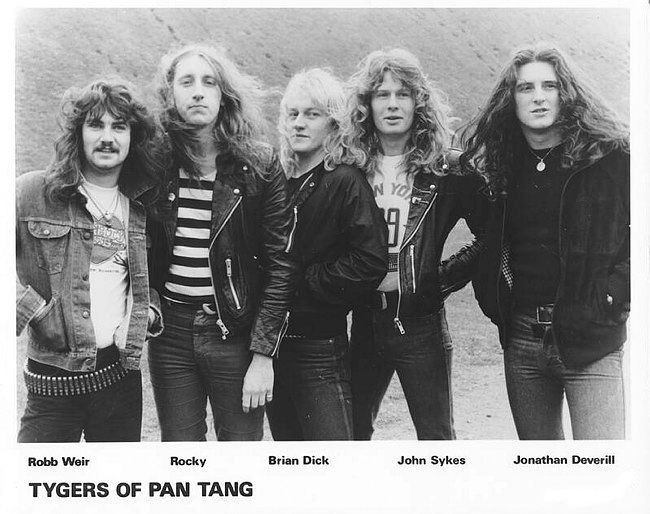
The blog has also featured interviews with original members Robb Weir, Richard ‘Rocky’ Laws and now, Brian Dick. After extensive gigging around Europe, plus live shows in Japan, and playing on six studio albums, Brian called it a day in 1987, here he remembers where it all started.
DELIVERING THE GOODS
By the time I’d saved enough money to purchase my first drum kit, for several years I’d been harbouring the idea of being in a band. I attended gigs at Newcastle City Hall on an almost weekly basis since I was 11 year old, all financed by paper rounds.
I would soak up anything and everything from Zeppelin to Leonard Cohen, always mesmerised by the drummer. I only ever played along to records, with my Russian hi-fi speakers inches from my ears – luckily I had very tolerant neighbours.
TYGER BAY
During A levels I used to go to Newcastle Poly most Friday nights, there would be name bands playing almost every week. This is where I met Rocky Laws who had a Heavy Metal DJ slot upstairs, turns out he played bass and lived round the corner in Whitley Bay. We got together in his parents garage with his mate Robb Weir. Rocky came up with the band name, Tygers of Pan Tang, he lifted it from Sci-Fi novel Stormbringer by Michael Moorcock. And so it began.
RATS IN THE CELLAR
First gig was in a pub cellar in Durham City, we were a four piece then with singer Mark Butcher. It was a memorable gig as only one person attended and I cut a rat in two putting my bass drum back in its case. Songs included Ted Nugent cover Cat Scratch Fever, Rush’s Bastille Day and Motorhead. We regularly played pubs including The Golden Eagle in Blyth and some working men’s clubs.
After releasing their first single ‘Don’t Touch Me There’ on Neat records, MCA picked up the band and re-released the record earning them a record deal and releasing their debut album, Wild Cat.
TYGERS ON 45
We had previously been to Impulse Studio in Wallsend to record demos. So to record ‘a record’ was very exciting. I remember Cronos from Venom was the junior staff member. I would imagine it was all done and dusted in the same day. It all led to record and publishing contracts, national gigs, giving up the day job as a Computer operator at Tyne and Wear Council, plus our first ever trips abroad. Brilliant.
PENNIES FROM READING
We played Reading Festival twice, 1980 and 1982. The first was very nerve-wracking. We were onstage during the daytime and you could see the cans and coins coming towards you. The second was much better. We played in the dark as we were the penultimate band of the day before Iron Maiden. It was much easier than playing a pub where audiences are on top of you.
Several years ago I heard a BBC recording of the 1982 appearance on Radio 6 and was quite taken aback – it was bloody good. Definitely a career highlight.
THE CAGE TOUR
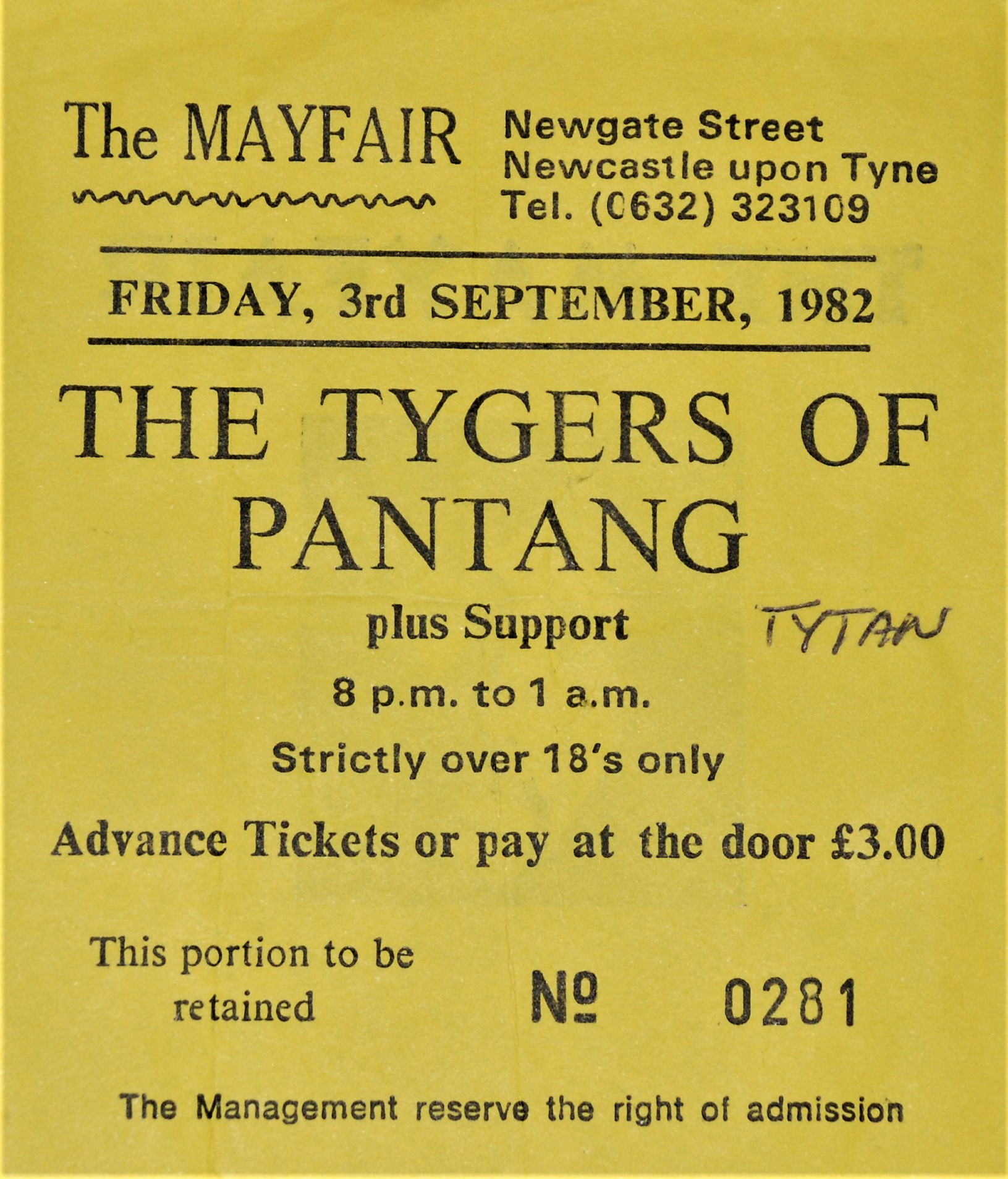
My ticket from 3rd September 1982. I paid £3 to watch the Tygers and openers Tytan at Newcastle Mayfair.
Can remember the Mayfair gig for three reasons – I got the bus to town in true rock star style, my then girlfriend was accidently knocked out after the gig resulting in several hours in A&E, and my Dad came to see us for the first time. He was still very disappointed I’d left my secure job but following the Mayfair gig could see why.
ROCKY ROADS
Any road stories ? Three that came to mind, but there is many, many, more. Loads of drug and drink fuelled tales that will remain untold to protect the guilty and their subsequent families. There were also many jolly japes like when a plastic fork was dipped in dog shit before an unnamed member ate his Chinese takeaway.
The time when our manager had to leave early doors for London’s King’s Cross train station and was barricaded in his bedroom with several rooms worth of furniture. Then Trevor Sewell (North East guitarist) was depping for us in Barcelona and forgot his guitar, he came on playing a broom.
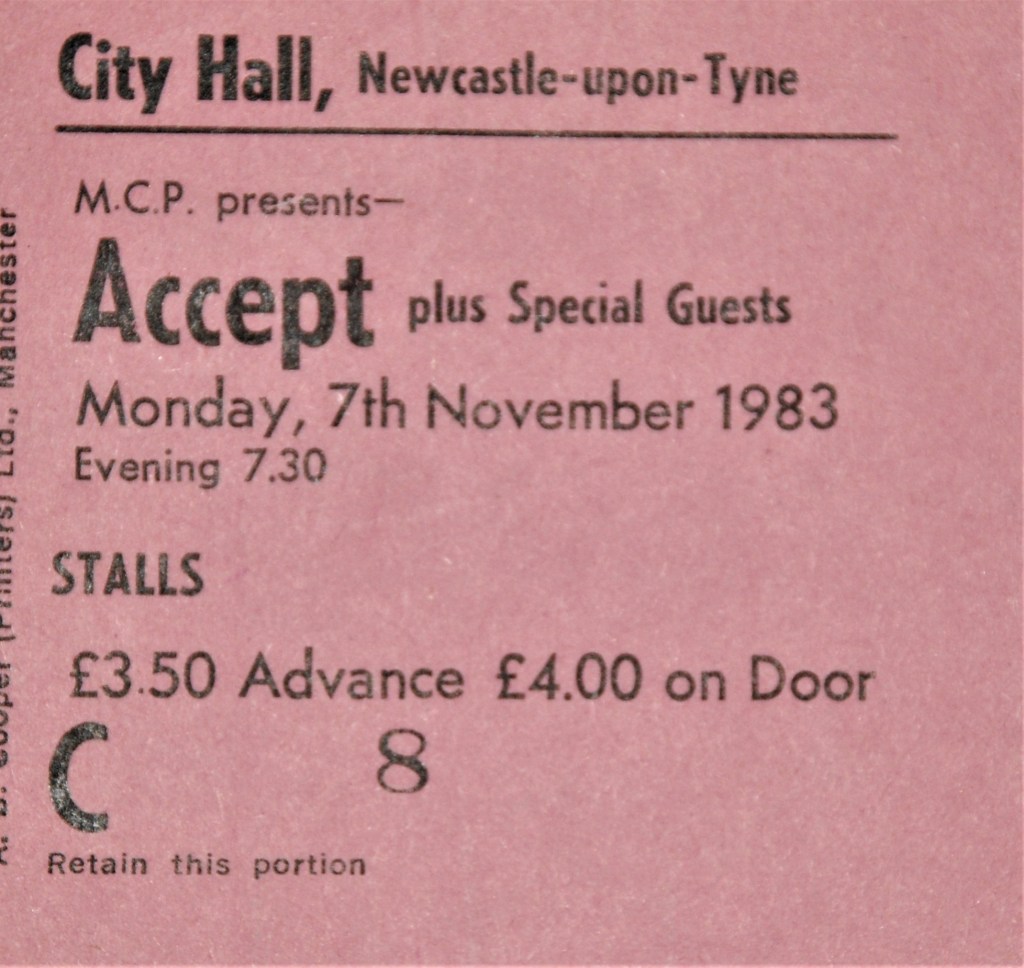
My ticket from 7th November 1983 I paid £3.50 to watch Accept and openers Sargeant. This gig was rescheduled for 27th January ’84.
I was in a great band called Sargeant, still in touch with Stevie Lamb (guitar). We opened for Accept on that tour and I remember Tony Liddle (vocals) at the Hammersmith Odeon. He had eaten too close to gig time, puked on stage, shouted ‘rock an’ roll’ and the stalls rose to their feet.
ALL ABOUT THE SONG
It’s been many years since I last listened to the back catalogue and with little thought two songs come immediately to mind, Life of Crime and Stormlands, both b-sides, both recorded in 5 minutes with no real production. My favourite album is Spellbound by a country mile, fave tracks are Gangland and Hellbound – when performed live the bpm is on overdrive!
FINAL COUNTDOWN
Tygers came to a natural end for me around Autumn ’87 following a final run of gigs across mainland Europe.
THOUGHTS FOR TODAY
I was due my new teeth in Turkey this month and am the beneficiary of free prescriptions for the over 60’s ! Out here on Exmoor National Park in West Somerset where I’ve lived for 20 year, me and my partner share our cottage, outbuildings and land with several animals. My daughters and grandchildren live in the North-East so I’m a regular visitor, or rather was until covid.
Until lockdown I was active on the local pub gig ‘scene’, an enjoyable hobby with good craic.
Part four of an interview with Brian Rapkin (Brian Bond), he recalls when Punishment of Luxury decided to call it a day and brings the story up to date with what they are doing now.
With Punilux, after the first tour of Europe we had second album syndrome – songs we were demoing in early 1980 were very different, which was fine, but also they were not as strong as those on Laughing Academy. Song lyrics in general weren’t so clear and effective – I was writing a few good bits here and there but also some obscure, self-indulgent stuff. Creatively it was like a cul-de-sac.
COMPANY COLLAPSE
Before our second European tour in August 1980 UA ceased as a record company. EMI took over and then dropped us, so we were in a bad place. Our A&R man Tim had left EMI so we had no-one to fight our corner.
To EMI we were a band with no hit singles. No album bands any more, no nurturing of talent over a three year period. Thatcher was in. Monetary mindset – instant success or the sack.
Did EMI spurn the new material because some of the songs were anti-war? Who knows? At an EMI farewell party, Cliff the head man shook hands and wished us luck. I said “Good luck to you too.” He said “Why?”
LEAVIN’ AIN’T EASY
When we got back from Europe in August, spirits were low. Self-belief had taken a battering. We were at an impasse and it seemed time to part ways, so I left. It was a difficult divorce, but it was also interesting to write different keyboard-based ideas, in a piano room in Newcastle Polytechnic every day, demoing songs at Spectro Arts Workshop, who gave me a grant for recording. These songs, like Spots on the Sun, were the basis for forming a new project in Punching Holes, this was late ’80 and ‘81.
STAGE RETURN
Memorable gigs for Punching Holes was the first and best gig, at the Cooperage, Newcastle on Chinese New Year, 5th February 1981. With Norman out of the Big G on sticks, Tim Jones from Neon on guitar, Sid Smith the performance artist on bass and Steve Cowgill the jazzman on keys. it was pure adrenalin, very exciting.
We started to collaborate again as Punilux in 1983, recording in Waterloo, but despite some great songs like Doubting Thomas and a Brixton gig, my involvement was too peripheral and didn’t work that well.
EARNING A CRUST
I had to do theatre work for survival, so a 24-year gap followed when we lost contact and got on with our lives. In 2019 I was a freebie actor for half a day with Northumbria Police in Northumberland Street, being secretly filmed improvising as a man in his 60’s with early onset dementia, asking passers-by for help – it found its way onto Facebook (5.7k likes) and YouTube with the tag-line ‘The heart-breaking video that has police officers in tears. Grab your hankies, it’s emotional’.
The 1980s were a testing time but the old line-up got back and still lives on. In 2007 we reunited in The Green Mandolin, Gateshead to play for Jimmy’s birthday.
Then in 2008 we started gigging again. We got a great write-up in The Guardian by Dave Simpson, which Nev mentioned in his excellent blog. The team spirit was in good shape. We recorded ‘5’ at Blast Studios, Byker.
At our Punilux gigs since 2008 we haven’t done any songs from the 1980 writing period. The high-impact material comprises songs from 1977-79, and some from the ‘5’ EP (2011).
RECORDS & TAPES
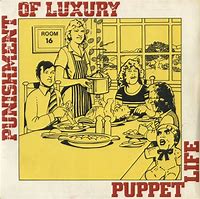
In autumn 2019 with Punishment of Luxury I did gigs in Middlesbrough, Leeds and Trillians, Newcastle to promote Puppet Life, a 5 CD box set of all live and recorded material on the Cherry Red label.
Last year, it was the turn of Punching Holes, with a vinyl album out on ZX records – The Ghosts of Pilgrim Street, from the lost tapes of their 1980/81 songs engineered at Spectro Arts workshop in Pilgrim Street, Newcastle, by the electronic maestro Ian Boddy.
It’s a historic album, as there’s no band as such any more, but we’re still all in touch. The gorgeous gatefold cover was by Richard Sharpe, who was in Holes during ‘82 and now runs ZX records in Essex.
Last year also saw the recording of Here We Are, a song for lockdown, in Mark ‘Biz’ Taylor’s back yard in North Shields with him on bass and effects, as seagulls screeched overhead. Tim Jones, ex-Neon and ex-Holes, mixed and mastered the music files in Penrith.
It was entered for the King Lear Prizes, for 70+ writers and it was a nice surprise to be ‘highly commended’ by a music panel led by Julian Lloyd Weber. A written piece The Diviner, based on my dad as a soldier in wartime Sicily, was also lucky enough to get highly commended in the short story category of the same competition.
In 2018 my partner Kathi and I performed Angels Wings by request at our son’s wedding in Bangkok. Kathi was lead singer and co-writer in Punching Holes during 1988-89 with debonair drummer Richie Donnison and quirky keyboardist Jeff Horsman adding their own potent brand of virtuosic creativity.
Angels Wings was a revamp of a Holes song, Gone Loco, from ‘81 and was featured in a Tyne Tees TV video just after the band had finally split for good. She sang it beautifully on the video and at the wedding, and folks seemed to like it.
Live at Trillians, Newcastle 2019.
IN THE NOW
There’s now a Punilux website and a Punching Holes website, and Punishment of Luxury continues on the roller-coaster of life. Sadly in early 2020 we tragically lost our close friend and colleague, the inspired artistic visionary Simon Underhill, who with Neil Defty did brilliant visuals and projections at our gigs all over the UK. His images, like a mass of yellow rubber gloves twitching in unison, were always a feast for the eyes and a delight for audiences.
Jimmy and I get together when possible, Steve is still going strong and Nev now lives and writes in Hampshire – we’re all still in close contact, writing and sending each other songs, or playing each other songs on zoom, so we’re raring to go again with some brand-new material.
Part three of Brian Rapkin’s (Brian Bond) memories of being a member of Newcastle post punk band Punishment of Luxury and recording in London studio’s.
We never lived in London but we stayed when recording or touring there. When we recorded Laughing Academy we stayed at a house in Fulham. Recording in London was brilliant.
The first single on Small Wonder we produced ourselves at Berry Street studio with an engineer but when the line-up was almost stabilised, we signed to UA and then the singles were produced by Mike Howlett, a lovely man and brilliant producer, prematurely grey with a calm outlook and a great sense of humour.
DEBUT SINGLE
The first single after we signed up was supposed to be Jellyfish, but the board at UA didn’t like it as an A-side. Tim, the A & R man, said “Look guys, I’m up against a brick wall here!” We reluctantly agreed to Engine of Excess as the A-side.
Then we signed to Screen Gems-EMI Publishing who gave UA a bollocking about the choice of A-side. So UA re-released the single with Jellyfish as the A-side but by then it was too late to get airplay. The momentum was lost. So that side of it was frustrating. But recording the songs was still magic.
At Eden Studios in Chiswick, Lene Lovich was packing away her sax as we came in. At Wessex Studios, Public Image Ltd were silently sat on a bench facing us as we came in, giggling at our long-haired roadies as they struggled with the equipment. Joe Jackson was playing pool in the rest room.
LONDON MARQUEE
When UA were about to sign us, Tim the A&R man saw us there and loved the gig, especially All White Jack. He was on cloud nine as we were. That was a highly charged night and a great venue full of atmosphere. It had such a history with the Rolling Stones and so many other great bands. It was an honour to be there, the crowd were superb.
STAGE DEBUT
Our first trial gig was as the Luxury Bastards at Gatsby’s, Whitley Bay ‘77. We were terrible. Our bassist, Badger, didn’t turn up but he hadn’t rehearsed with us, so it’s no surprise. It was before Jimmy, so Nev and Mal kept swapping guitar and bass for different songs, Les pounded the drums and I gurned for England, pulling faces as we died a death in dim lighting.
When the Big G started, whoosh, on came the bright lights and each with one foot on a low brass rail (except drummer Norman) they looked professional and slick. That taught us a lesson. Get sorted.
The first gig at the Blue Bell, Gateshead in 1977. We had to change into our stage gear in the toilets, avoiding puddles. We were so nervous, we hid behind amps while the first band The Carpettes played, and then raced through our songs at double the normal speed.
SOMEONE CALL THE COPS
The Guildhall 1978 with Neon and the Angelic Upstarts. We were bottom of the bill and missed the riot. During our set someone lobbed a can at the stage. We were doing a new song called World War 4 and I was wearing a dressing gown. I caught the can and put it in my pocket.
Later the Upstarts charged the stage with their fans when the headliners Neon were playing. There was carnage, blokes and girls beaten up, blood everywhere, the police came and made the rioters walk home to South Shields without their shoes.
SPITTING GAMES
Newcastle University 1978, where we were dripping from head to foot with spit, everyone gobbing at us like maniacs. Nev’s guitar, strings dripping, almost unplayable. Luckily I didn’t swallow anyone’s spit. After that gig the gobbing started to end, thankfully.
I remember headlining at the Music Machine, Camden 1978, with our name up there on the domed roof in big red letters, post-gig standing next to Lemmy from Motorhead at the bar. Members of Wire and Annie Lennox enthusing in the dressing room. Robert from Wire kept saying “You’ll make a fortune!”
On the Friday night with The Police headlining and special guests were Motorhead.
HAZY DAY IN THE ‘DAM
We played The Milky Way (Melkweg), Amsterdam 1980. As we walked towards the entrance, we could see folk milling around, openly smoking joints. Jimmy muttered “Ah, look, they’re aal smuurr…” and his voice trailed away as the Dutch promoter welcomed us in. During the gig half the audience were lying on mattresses spread out over the vast floor. The haze of dope smoke was all around.
Then there was the heady atmosphere of Reading Festival in 1979, with John Peel introducing us after we’d been on his radio show twice. The build-up was nervy but up onstage it felt surreal and tremendous to be facing 25,000 people.
SPY IN THE CROWD
We played the Leeds Sci Fi Festival in 1979 with Public Image and other great acts like Joy Division. It took place in what was like a huge aircraft hangar but it worked so well. It was overwhelming and exciting. John Lydon had his back to the audience much of the time.
The Leeds Sci-Fi Festival in 1982 had the legendary Nico headlining and we – post Punilux band Punching Holes – were a 7-piece by then, with Richard Sharpe on synth and Jonah Sharp on percussion and sax.
I remember Berlin 1980. It was magical. Like a dream. Checkpoint Charlie then the gig. And an interview on the radio. We stayed in the legendary Hotel Steiner, but on the way out we got hopelessly lost in Potsdam, on the edge of East Berlin. It was like a scene from the Spy Who Came in from the Cold.
The dark grey cobbled streets were wet with rain. Burly Russian soldiers on motorbikes bristled with machine guns, revving up behind our minibus. We couldn’t find the route back to West Germany. We stopped to ask directions from a friendly middle-aged East German with a bushy moustache. After we got back into the van, we assumed he’d be dragged off and shot by the Stasi, or the KGB, or both. Somehow we made it back to the West.
Next up on the blog read part four of the interview with Brian when Punishment of Luxury call it a day and find out what they are up to now.
In the first part of the interview Rapkin talked about his stage and TV career, in this second part he remembers his early days in music looking for a record deal with Newcastle post punk band, Punishment of Luxury.
TUNED IN
A song can have an unbelievable power – either the power to make you step inside yourself and think, or the power to galvanize you with energy and joy. I saw this when turning 19, hitch-hiking through France alone.
I stopped off in a juke-box café for a while. The Beatles’ Lady Madonna started playing and the cafe came alive – all these French guys got up and started dancing, laughing, and singing along to ‘See how zeyRun’.
I was beaming with delight, so proud of The Beatles, the piano, Paul’s voice, the guitar, the sax, the harmonies, the inventiveness and the euphoric drive of that music. It was magic. Two minutes and fifteen seconds of a song could take people to a different dimension. And it did.
TURNED ON
There was an old radiogram in our house, with speakers going into another room. Being much younger than my jazz-mad brother and my pop-crazy sister, a world of music drew me in. My parents didn’t get on well, so in a strained atmosphere music was an escape into other worlds.
Mr Sandman was haunting like a nightmare, Green Door by Frankie Vaughan told us of a secret world where people partied but the singer was lonely. Coconut Woman and Island in the Sun by Harry Belafonte were rays of warmth amidst the shadowy music. Every song went deep.
I first heard Elvis’ Heartbreak Hotel at 7. It stopped us all in our tracks – the vocal reverb, his passion, the electric guitar, the theme of loneliness, the sad double bass, the quirky piano. My sister worshipped Elvis. She took me to her friend’s house to hear Hound Dog. I was mesmerised.
Elvis’ Hard-Headed Woman had a compelling manic energy as did GreatBalls of Fire by Jerry Lee Lewis, and JennyJenny by Little Richard, the first single I bought. He ran out of breath and broke down mid-track but they still released it. He made a mistake and they kept it in! Who needs perfection?
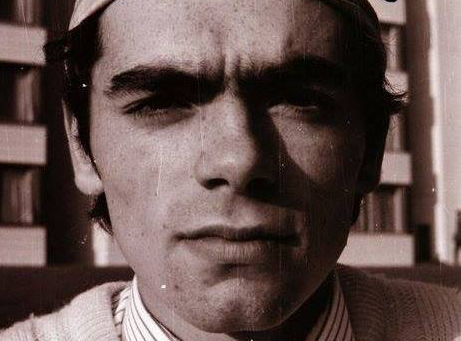
Brian in 1967 at Warwick University.
ALL THE LONELY PEOPLE
I had piano lessons for a while but hated practising and struggled with sight-reading. At 14 I learnt to play a cheap old Spanish guitar and re-taught myself piano, writing songs that copied The Animals and Them, Dylan and even Eleanor Rigby. The Beatles, Stones and Dylan were gods, with The Kinks and The Who.
Music was an escape from difficult schooldays – my headmaster was an ex-Japanese POW and was a bizarre sadist.
STUDIO VIRGIN
At 17 I left school, worked as a brickie and saved enough to cut a disc in a studio in Surrey. I wrote and recorded it using 12-string guitar, wooden flute, Hammond organ and the engineer on bass.
It was teenage atheism Heaven’s There for Those Who NeedIt, but it was a first stab at recording.
At university me and my best mate wrote and performed songs. We recorded at a studio in Coventry in 1969, and made about 100 copies of an LP, Dreams of the BlueBeast, selling them at Uni for 32 shillings each in 1969.
Germaine Greer (Australianbroadcaster & writer) was my Shakespeare tutor – even she bought one.
STAR MAN & KEMP
I also rearranged Lord of the Dance, sang it and played organ in Coventry Cathedral while Annie Stainer mime danced down the aisles as a female clown Christ.
Lindsay Kemp (Bowies dance collaborator) heard my voice on her rehearsal tape and hired me as a singer in a production.
I worked again for Kemp in Flowers years later. His marriage of theatre and Mozart, 1920s songs and Pink Floyd, was so powerful.
Flowers started with Mozart’s Requiem all of us dressed as nuns in high heels, stockings and suspenders, rubbing ourselves against a pillar.
Angie Bowie came to it, recruiting dancers for Bowie’s London Rainbow gig. Not being a dancer, I didn’t get picked by her but got a peck on the cheek and a freebie to the Rainbow– it was a mind-blowing gig, making me more determined to pursue music with visuals. Kemp and Bowie showed the magic of music combined with images.
Music weekly ‘Sounds’ squashed between The Police and Def Leppard.
GATESHEAD ROCKET
In the mid-70s I met Nev and Steve in Newcastle. They joined our theatre group Mad Bongo for projects like the musical of Orwell’s 1984. Punishment of Luxury began and song-writing with Nev became a new experience.
I discovered the inspiration of sharing ideas with him. He was a talented guitarist, composer and lyricist, who could change my ideas and de-normalise them, making them crazier. I could help him shape his ideas too.
We were alchemists, turning base metal into gold. Then with a superb bassist like Jimmy we had a super-strong combination. Later we got Steve, the dynamic drummer we always wanted.
As well as the inspiration of Bowie, we wanted to write powerful songs after seeing the Sex Pistols on Top of the Pops, doing Pretty Vacant.
It was 1977 and I was visiting Nev in his flat on the 26th floor of The Rocket, a high-rise in Dunston, Gateshead. Johnny Rotten seemed to leap from the screen into the room – visually and musically he was phenomenal, it was a seminal moment. We knew what we had to do.
MAKING NOISES
The Newcastle music scene in 1977 had The Big G as the leading punk outfit and the Young Bucks with a devoted student following at the Cooperage every week. Their drummer later joined Dexies (Midnight Runners).
One band, the 45s, had their own student following at the New Darnell, Fenham. The macho keyboardist used to down a full pint with one hand while playing a solo with the other.
The Big G were much better than us for a while, then we pulled our fingers out and got their guitarist Red Helmet to join us.
SIGN OF THE TIMES
Our songs reflected our lives. Nev wrote most of Puppet Life, about fascism and people controlling our lives in relationships or in politics.
He also wrote the music for, and I did the lyrics for, a song called Pouf, which we later dropped, as people misinterpreted the song if the sound system was poor and lyrics were unclear.
As the singer I was in role as a gay-bashing bigot, whereas Nev and Jimmy were singing defiant words as oppressed gays. It trod a fine line between ironic humour and provocation.
At the Blue Bell pub in Gateshead, pointing at men in the audience and chanting ‘pouf’ was a way to get them involved but it would be wrong to do it now.
The word was maybe used more casually in the ‘70s but is now acknowledged to be grossly homophobic and that kind of role-playing, often misunderstood then, would feel clumsy and awkward now.
It was partly inspired by my teaching days when teenage lads passed me in the corridor whispering ‘pouf’ at me. Real life was always a basis for song writing, but songs like that wouldn’t work in 2021.
LONDON CALLING
Once we discovered we could all work well together and our songs were going down well with local audiences, we wanted to take it further, play in other places and record the songs – we couldn’t afford to fund it all ourselves so we needed some money behind us to do justice to the songs and make a living out of what had become a passion.
We got our first London gig at the Elephant and Castle. With the aid of our manager Frank we played to a small bunch of people and an agent called Richard Hermitage liked us.
He booked us gigs, and we started touring more and more, getting good reviews and a better fee each time.
We had recorded Puppet Life,Blood of Love and The Demon at Impulse Studio, Wallsend at our own expense. We took the tape to London but it was the week before Christmas 1977. No-one saw us – they were all at Christmas parties – except Arnold Frollows at Virgin, who was interested.
He heard Puppet Life, then dove into a cupboard and came out with Devo’s Jocko Homo, an import single, saying Puppet Life was quite similar.
THE DEAL
We did a gig at Spectro Arts workshop in Pilgrim Street, Newcastle. Arnold Frollows came up to the gig and it got a glowing review in Sounds. It was a start.
We were offered a standard Virgin eight album deal, but the line-up wasn’t quite stable enough, even though many bands would have leapt at the chance.
So we went to an indie, Small Wonder in Walthamstow, East London. Pete Stennett, an open, visionary guy with long hair and a woolly hat, immediately liked the songs and said yes.
We had control over the artwork and production. It was so right. We stayed at Patrik Fitzgerald’s (the Punk Poet) big house, which he kindly lent us for a couple of days.
One of the biggest highs was sitting in the Cooperage with a drink and a transistor radio, listening to John Peel play Puppet Life for the first time. A dream come true.
Read part three when Brian is recording in London studios and rememberssome memorable gigs.
Here in North East England the Wearside Bloc has given up stories from experienced musicians Ian Munro and Field Music, Sunderland punk Steve Straughan and metallers Spartan Warrior.
Now the blog has more road stories from the Houghton le Spring contingent – The Carpettes.
‘Our first North East gig was in June 1977, then we went on to headline gigs with both Angelic Upstarts and Punishment of Luxury opening’ remembers Neil.
The band first featured back in May 2020 with Thompson talking about releasing two singles on the Small Wonder label, moving down south to London in ’78, and signing a record deal with Beggars Banquet – that brought a further four singles and two albums, Thompson looks back at those days.
Just after we finished recording our first album I made a phone call to Nick Austin, one of the bosses at Beggars Banquet, he told us fantastic news – we had a residency at London’s Marquee supporting The Lurkers every Wednesday in November ‘79.
I still remember Honest John in one of the soundchecks giving me a fiver to go to the off-licence to buy him a bottle of red wine.
LEAVE THIS TO HARVEY GOLDSMITH
Our drummer Tim was from Oxford and after a few London gigs he had this idea that he’d book a couple of gigs in Oxford as he knew the venues.
The first one was in February ‘79 at The Cape of Good Hope which if I remember was upstairs in a pub, and it was terrible. Hardly anyone there and it was a disco crowd – we didn’t get an encore.
The next one he booked was in March ’79 at The Corn Dolly this was an established venue. It was just so depressing, horrible and dark. They put an ad in the NME advertising the bands and we were ‘Ta Carpets’. Only a few people scattered here and there and it was a total waste of time, again, no encore.
So I picked up the NME and thought ‘leave this to Harvey Goldsmith here’. There was an Oxford pub in the gig guide called The Oranges and Lemons and they had The Ruts on that week. Perfect, a pub that has punk bands on.
I phoned them up and got a gig straight away on Friday, 1st June 1979, our 50th gig.
On the night it was packed. Me and George were talking to people outside who had come from Sheffield to see us – we rarely played outside London in them days. We went down a storm and got an encore. I felt like telling Tim ‘leave it to me from now on mate’.
A QUICK WORD WITH DAVE
The boss of Warners UK when The Carpettes were being handled by them was none other than ‘60s pop star, Dave Dee. When I was a kid I loved Dave Dee, Dozy, Beaky, Mick and Tich.
When we were on Beggars Banquet, one of the bosses, Martin Mills, the other was Nick Austin, eventually took us to the Warners office in June 1980 which was just off Berwick Street in London’s West End.
We were told there was a gym there. There was also a sauna and table tennis, all free to use – Angelic Upstart singer Mensi was always in that gym.
Now and then I used to go in the office to talk about The Carpettes to Sharon Wheeler who was press officer, but unfortunately I never saw Dave knocking about.
Fast forward 23 years to June 2003 and I’m in Camden Underworld to see the reformed Heavy Metal Kids. Dave Dee was there. He was the one that signed them to Atlantic in the ‘70s.
I watched the band and when they finished the punters were leaving but I still had a lot of my pint left and Dave Dee was standing nearby so I went over for a chat. I’d always wondered what he thought of The Carpettes and now was my chance to find out.
‘Hi Dave, I loved your band in the 60s’. ‘Aah thanks mate’ – he then goes on to talk about his band for a short while.
I tell him ‘I was in a band and we were on the Beggars Banquet label same time as Gary Numan’. So he talks about Gary Numan for a while. I’m thinking when he has a bit of a pause I’m gonna mention the Carpettes.
The next thing I hear is ‘Come on you – let’s have your drink’. I looked up and there was this big bouncer ‘Come on mate, out. We’ve got to get the club ready for the nightclub’. ‘I’m just having a quick word with Dave here. I’ll not be long’.
‘DIDN’T YOU HEAR ME – GIVE ME YOUR GLASS AND GET OUT’. So I never found out what Dave Dee thought of the Carpettes and sadly six years later he died so I’ll never know.
IT COULDA BEEN A HIT
We nearly got in the Top 100! When we signed to Beggars Banquet they were being distributed by the mighty WEA, and they were up to some dodgy business. They had hyped The Pretenders single Brass in Pocket to number 1 – I’m not saying this record didn’t go on to sell loads but it needed WEA’s help to kickstart it.
So they got our label, Beggar’s Banquet, interested in this idea – and it was a strange one that worked sometimes. Gary Numan & Tubeway Army released their first single Down in the Park. WEA had an idea they would use this single to get the public used to the band and then whoosh – push the follow-up into the charts.
Well, it actually worked – Down in the Park wasn’t a hit but the follow-up – Are Friends Electric got to number 1. So, what happens next ? They try the same with us.
Our single is released and is a warm-up for the next one that they thought could be a hit single – the problem is that the first one didn’t take off. It was played on daytime Radio 1 but WEA didn’t want it to be a hit so it wasn’t a hit.
The next release Johnny Won’t Hurt You – this is the one that’s pushed and hyped by WEA, it creeps into the chart at number 123. But it wasn’t getting any airplay – surely they hyped the wrong one. The next week it shoots up six places to 117 and the next week it’s out the charts altogether.
So that was that as far as WEA were concerned, we’d blown our chance. The follow up – Nothing Ever Changes, was a blinder and could have been a hit, but it was no good cos even though WEA agreed to distribute it, they’d given up on us.
The Teesside Bloc of Stockton, Middlesbrough, Billingham and Redcar have given up plenty of stories from Emma ‘Velvet Tones of Teesside’ Wilson, Mark Berry from power metallers Millennium, and songwriter & producer Steve ‘Godfather of North East NWOBHM’ Thompson.
Last month we heard from Hartlepool vocalist & guitarist Paul McCarte (link below), this post features another interview from one of the Hartlepool contingent.
I asked Procession drummer Mark Lloyd, did you think you were going to have a career and lifetime in music of going on tours, playing festivals and recording albums ?
That was the dream, and we gave it a good shot, even going self-employed as a band on a government scheme. Bad luck with vans scuppered our ability to gig, and we lost our long term rehearsal space which only enhanced the scupper. The pressure got too intense, and we imploded.
Looking back, we did achieve a lifetime in music because we are all still playing. It wasn’t what we all hoped for as idealistic twenty-somethings, but it was great fun.
GIMME THE GIG
I have no musical background or family musical connection – so I chose drums. I could hardly play and also started my apprenticeship as a goldsmith living in bedsit land. I helped out sound-checking the drums for Procession at a gig and got to know them all.
Paul McCarte (vocals/guitar) came to visit me and invited me to audition. I think I was the worst audition, but the best fit, so I was in. Happy days.
LONDON & THE HORN
In 1992 Procession went into Sarm West studios in London and recorded a session for Trevor Horn’s label ZTT – but didn’t travel up the M1 with a record deal.
The A&R man came up North to our rehearsal space and it felt like a step up the ladder was about to appear, he loved us and invited us down to London for three days recording at ZTT.
For my part, I had never played to a click, and any drummer who hasn’t will find it difficult, especially under the pressure of a chance like that in a huge studio environment.
Back then, drum machines had just become commercially available, and it was the first thing I bought and taught myself how to use and play in the aftermath.
I guess it’s like most things in life things do not always turn out how you would like, and in hindsight, he could have prepared us better for the experience.
THE BIG H
We didn’t get past the three-day interview because the recordings didn’t capture us doing our thing like we could live. Maybe if they had recorded the band live as we had in every other experience of being in a studio, the result might have been different, and we may have met the main man.
It’s not that we were opposed to being worked with – it was more like we didn’t want to be pulled apart and reworked without any foreplay.
END OF THE PROCESSION
We had no van, no rehearsal space, no money. It was like a slow-motion collapse. We tried to get funds by running a successful club night in a hotel that gave us rehearsal space. It was good but not enough to pay all our wages.
The pressure to return to jobs and get lives back on track was ultimately too great. We did manage to stay friends even though it was a painful time and continued to make music together in various guises over the years.
Subliminal Vineyards. A little festival gig with Tony Waite and Andy Wain
ALL ROADS LEAD TO GLASTO
Moving on from Procession we formed NEEB, the members were Andrew Wain from Procession on keys as the mad scientist, Peter Casson on crazy guitar, Tony Waite ‘basslord’ a fantastic bass player and studio wizard who has played in many bands since the ’70s. Completing the line-up the one and only Mark Hand on Rhodes, Moog and other vintage keyboards.
NEEB enjoyed a successful gigging period and released tunes on our record label Experiment Collective Intelligence, alongside Hartlepool band Hidden Agenda signed to Goldie’s label Metalheadz.
We played many festivals such as Glastonbury and Solfest, Scotland, we were in the Dogs in Space tent, an amazingly visual tent and a fantastic funky full-house gig. We played with our female vocalist, Vicky Jackson, and a guest singer Paul McCarte, enjoying a very colourful evening.
We also signed with a Japanese record company that sold lots of our music as downloads for phone ringtones – we like to think we were big in Japan!
LIVE, LOUD & NAKED
Touring around the country in a small van, squished like sardines, the gigs all melt into one, and the gigs you remember are mainly the ones that had a good crowd who got behind you.
Definitely, the most memorable gigs are the ones that hit that spot with the audience. The feeling it gives you on stage is far better than the gig location.
With Procession we had some fantastic responses in the Newcastle Riverside and The Arena in Middlesbrough. Later on the dream was to play Glastonbury.
I achieved that with NEEB playing on a sunny Sunday afternoon in 2000 on the Avalon Stage. A naked streaking singer being one of the highlights – yes, he was our singer, the infamous Ian ‘Ish’ Monaghan.
Master Goldsmith Mark Lloyd. Picture:Sarah Caldecott
GOLDEN FUTURE
I have just moved my successful goldsmithery business into new premises, and building a new rehearsal/studio space in the vast loft space.
My music playing now involves nights of jamming with most bandmates mentioned earlier, not necessarily under a band name. The latest NEEB incarnation, called Subliminal Vineyards, is me, Tony and Wainy with guitar from Mark Folland, a former member of Hartlepool band Brethren.
My plan with the new space is to create a music hub for us all to enjoy. It will be somewhere to jam, record the music and film live video streaming on a blue screen background – just enjoy the simple pleasure of playing music with my friends, not for money, fame or ego, purely for fun, ad infinitum.
Interview by Alikivi March 2021.
Links to interviews with Procession vocalist/guitarist Paul McCarte:
In a previous interview with Paul (link below), he talks about his former band Procession imploding after two albums, there was also a failed attempt at getting a record deal with ZTT.
I got back in touch with Paul and asked if he sees it as an opportunity missed to step up in the music business.
We were all in our early twenties, young and headstrong, and we knew that ZTT had a reputation for totally changing the sound of a band a la Frankie Goes to Hollywood. We were definitely not up for that, so we were hoping they liked us for what we were.
Their A&R guy saw the potential but seemed more interested in me than the band, and that was never going to fly with me, despite everyone in the band thinking I should go for it. I would have ended up like Seal just adding my face and voice to big ZTT produced tracks.
We were sure something else would present itself – because as one door closes another one opens. I’ve always been in it for the music rather than any kind of fame. Being creative is the whole point and we’ve made some wonderful music together since our time in Sarm West studio/ZTT.
It was their loss as we created two albums in the immediate aftermath, armed with no money in tiny studios with 100% passion and belief. The songs still sound marvellous and don’t seem to have aged.
I’ve tracked down three of the Sarm West/ZTT recordings on tape and am intending to release them on our Bandcamp when we have cleaned them up and remastered them.
After Procession called it a day, McCarte dusted himself down, and along with Nick Crozier (guitar) and Ken Napper (bass) started working on a new project together.
demon summer was born out of a desire to continue making music together. To begin with Ken Napper was just pitching in but like a moth was attracted to the bright light of what me and Nick Crozier were creating and just kept turning up and slinging his bass on.
This was fine with us as we’re all lifelong friends but at that point Ken had no desire to develop things toward a new band, although that is where me and Nick were headed.
Where did the band name originally come from ?
In 1999 we wrote some new songs as a four piece with former Procession drummer Mark Lloyd, recording them at Polaris studio in Hartlepool and this three track session saw the first use of the name demon summer.
I had a dream just before the recording session where we went to see New Order playing and got to meet them afterwards. The singer asked me if I was in a band and when I said yes he asked the name, to which my reply was demon summer. I wrote it down when I woke up, Nick liked the name so we used it on the Polaris session tracks.
After the session Mark Lloyd left to drum on his project (NEEB). Me and Nick Crozier realised changes need to happen in order to move on so I hatched a plan to get Ken Napper motivated again.
We needed a bass player and drummer so I asked a friend, Eddie Rees – who was playing bass in a local punk band if he wanted to join. He was very interested, so that part was sorted.
We arranged a meeting with Ken Napper and told him we had replaced him on bass but what we really needed was a drummer.
Ken had always been able to play drums but never had the chance so he jumped at it and committed fully to the project buying himself a drum kit. We rehearsed with the full line up of myself, Nick, Eddie and Ken, at that point we became demon summer.
Roadhouse, London advert for 15.02.04
Where were your first gigs and what venues did you play after that ?
Our first gig was on 12 December 2001 at The Studio in Hartlepool, and it was sold out as it had been a long time since we played. We had released the one EP earlier in the year so locally everyone knew about us, and our second gig was supporting Icelandic band Leaves at The Cornerhouse in Middlesbrough.
We’ve played over a hundred gigs and festivals with a lot of famous venues among them such as The Cavern in Liverpool, London venues The Borderline, Roadhouse, The Garage, Underworld, plus Carling Academy Liverpool, The Cluny Newcastle and a few Universities but probably our favourite venue has been The Empire in Middlesbrough.
Did you support any name bands ?
We played gigs with Doves, Echo & the Bunnymen, Longview, Bloc Party, The Boxer Rebellion, The Ordinary Boys, Maximo Park and toured extensively from 2002 to the end of 2005.
After that we mostly played in the local area. An odd little thing that demon summer were involved with is providing all of the music for the Morrissey documentary The Jewel in the Crown.
Are there any gigs that stand out ?
Playing The Empire was always fantastic. We were the opening band at Middlesbrough Music Live in 2004 and it was packed to the gills, also in 2005 when we played there during the tour for the single burn, it was a special night.
The Borderline in London was really full, and we got a great reception. Also, great memories of playing at the Tall Ships festival with Doves and Echo and the Bunnymen.
Did you record any of your material ?
We built our own studio called PulseArt on the top floor of my house which is where the one EP, debut album Sideshow and singles empty heart and burn were all recorded between 2001 and 2004.
Between March 12th and 17th 2004 we recorded in Liverpool’s Parr Street Studio laying down four new songs, three of which – founder, mary celeste and created were released last year as the Parr Street Session.
The session was engineered and mixed by the renowned Liverpool sound engineer Michael Hunter who has worked with some of the biggest bands out there such as Supergrass, Marillion and The Charlatans.
In 2005 we recorded the follow up single to burn which was a re-imagined poppier version of empty heart along with a song called you draw the line, all recorded at Tower Street Studio in Hartlepool.
But our record company Waterside Records folded just afterwards so we never released it. We remastered the songs and released them last year as the single empty heart two.
Between 2011 and 2015 we recorded the second demon summer album in PulseArt and this will be released later in the year preceded by the first single it’s a trap.
When did the band call it a day and why ?
Technically demon summer have not disbanded. Mark and Andy wanted to return to NEEB to work on an album so we agreed to put gigging on hold and just record the album which myself and Nick would produce with a very loose ‘We’ll talk about what to do next when it’s finished’.
What are you doing now ?
We all work on various projects. Mark and Andy have alongside their band NEEB been working under the moniker ATM and also Subliminal Vineyards with Tony Waite, Mark Hand and Mark Folland. Andy Wain (keys) also works under the alias Pixelate.
Myself, Nick and Eddie have been working on a new project since 2015 which we would have played live by now but for the pandemic.
Life in the North East started in 1973 in a basement flat in Leazes Terrace near St James Park, Newcastle. Waking up each morning to a kitchen sink full of slugs was not ideal, so I moved to Fenham sharing a flat with fellow-teacher Ged Grimes, guitarist in Hedgehog Pie.
I was teaching at John Marley Upper School where I entertained Bob Smeaton (former vocalist with Newcastle band White Heat, now music TV director, link below) and his class by reading chapters from The Exorcist.
Later in the ’70s came the North East punk scene, when I was living in Brighton Grove, Newcastle singing and writing songs as Brian Bond with Punishment of Luxury.
We had a single out on Small Wonder records then got a major deal with United Artists – an album Laughing Academy and three singles – and toured UK and Europe. EMI dropped us in 1980 and I left soon after to form Punching Holes.
In part two Brian will be talking more about his music, this post will focus on his acting career. I asked him when did you start acting ?
My brother, sister and I used to put on short plays for mum and dad when I was small living in Staines near London where I was brought up. That thrill of performing to an audience had begun.
There was no school drama even though I tried to get my English teacher to organise it. All that remained was sport, and boxing was mine.
My dad trained me and I won two cups in school, read books about it and loved Henry Cooper, Floyd Patterson, Sonny Liston and Mohammed Ali. I was obsessed. At 13 I won a bronze medal and made the school boxing team.
Training was dire in the bad winter of ‘63 – endless gym circuits, cross-country runs in the snow wearing boots and heavy backpack. I got flu and they dropped me from the team after two matches.
I lost them both, along with my killer instinct. Sometimes an illness jerks you into making changes. This one dragged me out of a rut into acting.
I was in an all-male school, so at 14 my acting debut was in Shakespeare’s The Merry Wives of Windsor, along with Stephen Milligan, the Tory MP who died naked with an orange in his mouth and a plastic bag over his head.
The first paid acting job was at 20 working for Bowie’s mentor Lindsay Kemp at York Arts Centre. This was soon followed by a role in the 1970 Edinburgh Festival as the virgin Sir Galahad in Mort d’Arthur. I trained method-style for the part by remaining chaste until 21.
1971 involved acting in a different role. I found an ad in The Stage and applied to be a clown in Cottle & Austen’s Circus. The first performance in Surrey was adrenalin-packed but they didn’t like my ‘grotesque’ make-up so they toned me down and made me an auguste, a tramp clown.
It lasted three days, the ringmaster went into a sulk after I spurned his advances, so he refused to give me the training he’d promised.
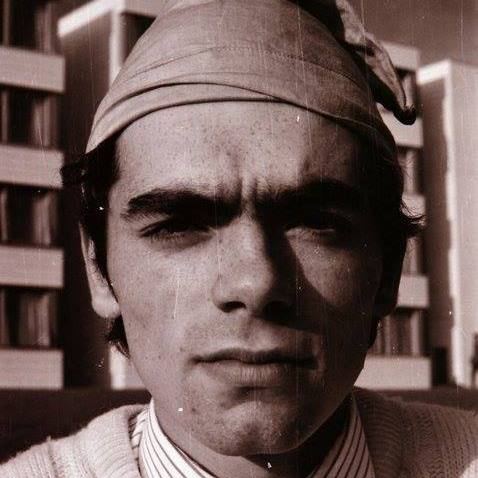
Brian as a young clown in 1967 at Warwick University.
When did you sign professionally?
I signed up as an Equity actor in 1975 whilst as a variety performer singing and playing guitar and keyboards in Mad Bongo theatre group, based in the North East.
As a stage actor, the best roles were in a production about the trial of Oscar Wilde. We toured it around North arts centres and colleges. It was a disastrous opening night in Kendal but then we pulled it all together and it was much praised.
The first speaking part in film acting was in BBC’s Machine Gunners (1982) as a Polish officer. I didn’t have to audition but chatted to Colin Cant, the director, a lovely man who gave me the part after I told him of my Polish ancestry, which was almost true.
In 1995 Brian appeared in Tyne Tees TV programme Stranger than Fiction, associate producer was Vin Arthey who features in an earlier blog. (link below)
How did you get the part ?
Dave Holly was my agent and they liked my Russian accent, the role as a 1920s Soviet intelligence officer was a dream. In a sense it was like going back centuries to revisit my family’s Russian roots as a Rapkin.
The scene involved interviewing William Fisher, the Geordie Russian spy born in Benwell, and decide his suitability as a Soviet agent. I thought smoking a cigarette would help the atmosphere and it probably did, but as a lifelong non-smoker it was hard to do.
The location of the scene was the main assembly hall in Heaton Manor School, where ten years previously I’d been a teacher.
My son was about to enrol at this school and the location was ideal – dark, polished wood everywhere, and a floor where footsteps could echo, perfect for a top-secret meeting between a spy and his handler.
What other roles did you have on TV ?
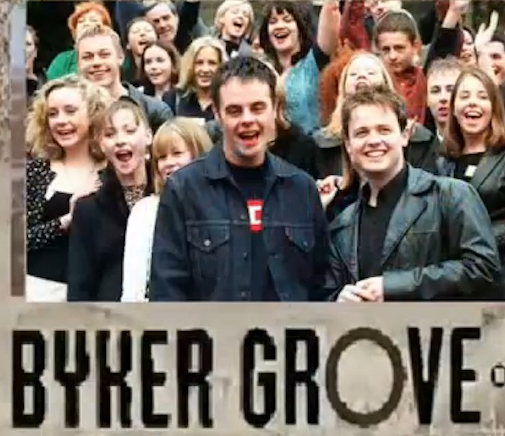
Byker Grove allegedly cost £1000 a minute to shoot, and this may be why most of my role as a sadistic supervisor – in black clothing, brandishing a long stick – ended up on the cutting-room floor. I was overseeing a group of youths doing community service and had to shout at them. We did the scene twice.
Take 1: The sound meter leapt into red and distorted, so had to be done again.
Take 2: One of my lines was marred by a slight fluff. Mathew Robinson the director said ‘Next scene!’
I asked if we could do it again. No was the answer, we gotta move on. The only line of mine that survived was ‘Oy! Back to work!’
Ant, Dec, and Jill Halfpenny, were just kids. I was watching the filming at one point and they were performing a scene. Mathew said ‘Cut! Let’s do it again but speak more slowly this time.’ Jill said ‘But that’s how real Geordies speak!’ and he said ‘Yes, but this is being networked all around the UK, from Cornwall to Scotland. Everyone in the country’s got to understand everything that you’re saying. OK? One more time. Action!’
I was a cockney detective in Spender in 1990. I was in the opening scene with Jimmy Nail and Amanda Redman in a train carriage.
Nervy, with the crew squeezed into the aisle between the seats, Mr Nail chivvied the crew along. ‘Come on everyone, the actors are on tenterhooks here.’ That helped my nerves. I was the new boy on the block.
During a move from one location to another, I missed the coach for Less Important Actors and had to share a trailer with Jimmy and Amanda. They chatted about past experiences.
She mentioned that she’d toured with the Rocky Horror Show. I tried to join in the conversation ‘I love that show. What part did you play?’ She turned towards me, stared at an empty space and forcing a smile, said ‘I’m sorry?’ There was an awkward pause.
I repeated it, this time less confidently. Jimmy Nail waded in with a put-down reply ‘What part did you play?’… ‘The lead, of course!’. End of conversation. Cue to look out of the trailer window. Tumbleweed floats by.
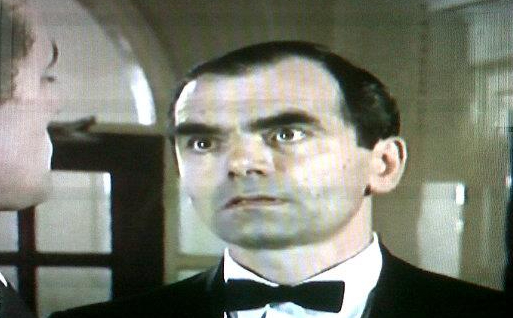
Playing a Maitre D in ‘The Round Tower’ by Catherine Cookson 1998.
Have you any stand out memories from filming ?
One day as an extra for a TV drama I had to get costumed up at 7am in the Rex Hotel, Whitley Bay. I wasn’t used in a scene until 4pm, so the best thing was to watch the filming and chat to others involved.
One of these was Jimmy Garbutt, a leading actor in When the Boat Comes In and one of the elders in the Superman film with Christopher Reeve and Marlon Brando.
He regaled us with tales from Superman. On the first day of filming Brando was shaking each actor’s hand saying ‘Hi, I’m Marlon Brando’ – as if they didn’t know.
When it came to shooting a scene, one of the other elders was Trevor Howard, who’d been with Brando in Mutiny on the Bounty. Howard was furious because Brando hadn’t bothered learning any of his lines and he’s had them written out in large letters, sellotaped to their set.
Doing a couple of Catherine Cookson films, The Round Tower and The Man who Cried, was challenging, and it was enjoyable to dress up and play Sir Walter Raleigh to Charlie Hardwick’s Queen Elizabeth I in CITV’s Kappatoo, elegantly laying a cloak on the puddle for her majesty to step on.
Once I was an extra in Supergran in a crowded pub scene. We had to drink from pint mugs and our glasses were filled with shandy. One of the extras, a stocky Geordie actor from Walker, took a look at his glass and barked at the Production Assistant ‘Ah’m not drinkin’ that!’
The PA – a slim, well-groomed man from the South East of England – bellowed in a high-pitched voice: ‘Remove this man from the set, please! Take his costume, thank you!’ Great days.
What are you doing now ?
I stopped acting for a living at 35 – too precarious, always touring in vans, no money, nowhere decent to live. I got married, started a family, taught in Cairo for a while then went back to Newcastle to teach and do whatever film or TV work came along.
From 1985 I taught drama in schools for 5 years, then post-16 students in a college for 30 years. Last year I took voluntary redundancy and now there are possibilities of work linked to the acting world.








 ALIKIVI UK : NORTH EAST MUSIC & CULTURE