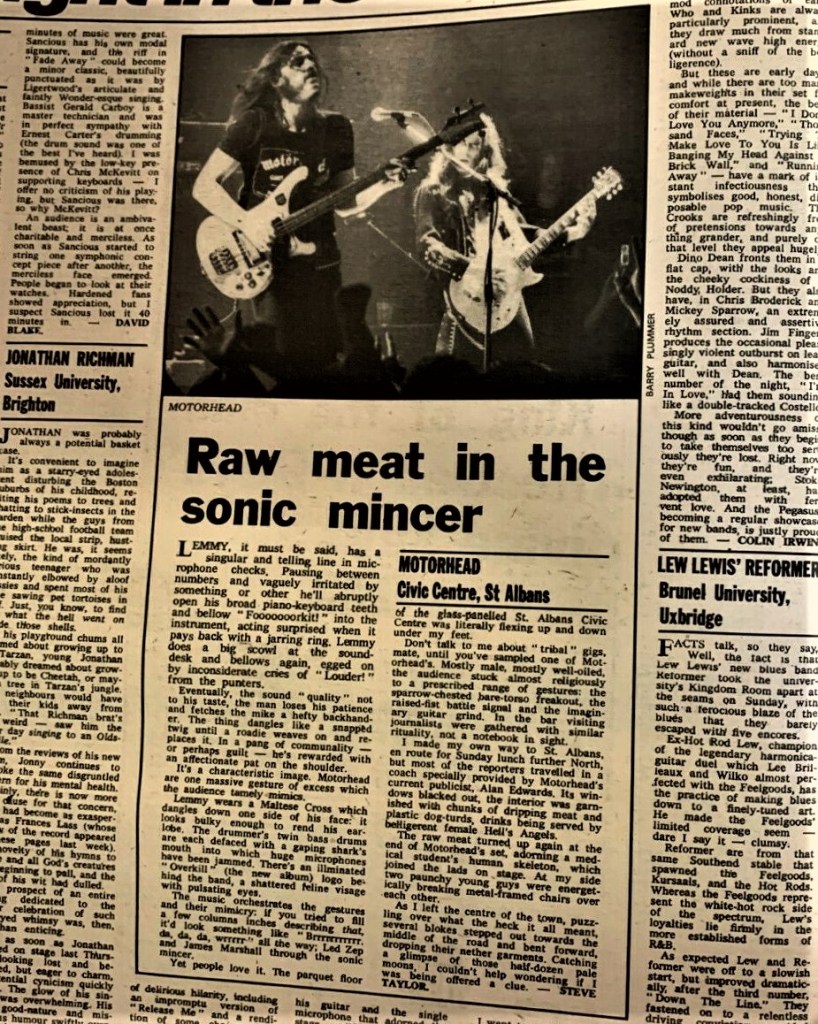
Looking through back issues of the UK music weeklies for a mention of North East bands, I came across a screaming headline from a Motorhead gig review – Raw Meat in the Sonic Mincer – Yep, that be ‘reet for the ‘heed.
Motorhead review in Melody Maker 31.3.79.
Sounds or NME was always knocking about our house, pocket money bought a copy for 25p. We could read exclusive interviews with bands out on tour promoting their latest album, check forthcoming UK gig dates or look at artwork for new albums.
The music weeklies were always something to look forward to – even though half the print rubbed off on your fingers.
Sounds had a mix of rock and punk interviews with Ozzy/Halen/Upstarts. NME featured alternative and post punk bands like Damned/Cramps/Costello. Take your pick of front covers splashed with Strummer/Coverdale or Debbie Harry.
David Coverdale (Whitesnake) front cover Sounds 20.11.82.
Journalist Garry Bushell became a household name for his interviews with Ozzy and the Angelic Upstarts. Mond Cowie from Tyneside band the Upstarts told me….
‘At one time the Sounds used to be called the Upstarts weekly because there was something about the Upstarts in every week, without fail. If it wasn’t a single review, it was an album or gig review.
If there wasn’t any new records out, we used to phone Garry up and give him stories, we used to just make them up’.
This next story doesn’t have a connection to the North East, but it’s an example how a band would plant or maybe sweeten up a dry story. American glam metal band Motley Crue benefited in the 17 April 1982 edition.
This came at a time when UK tours saw heavy double bills, overseas support bands and suitable opening acts with audiences enjoying the first band onstage, as well as the headliner.
I was just a kid in 1978 so too young to see the Sabbath/Halen eruption shake the foundations of Newcastle City Hall, but I did catch many big ‘rumble in the toon’ shows.
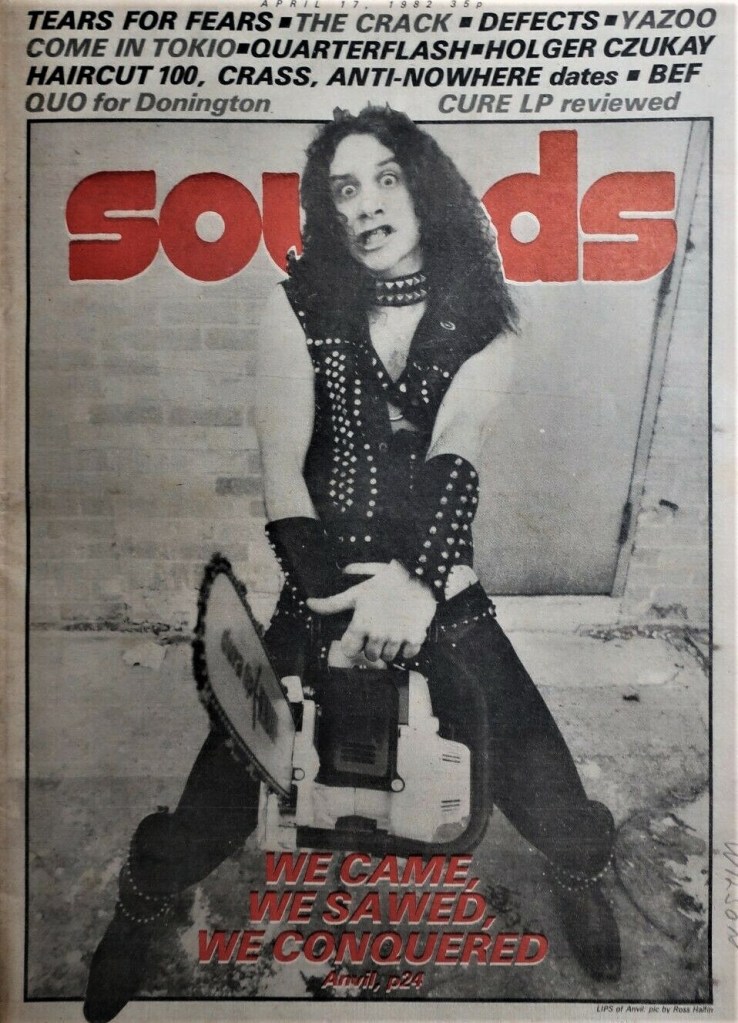
I remember the night German power metallers Accept went toe to toe with Judas Priest, polished American rock band Riot turned up the heat for Saxon and Canadian speed metal merchants Anvil, kept their heeds doon an’ rolled the way for Motorhead.
Anvil front cover Sounds 17.5.82.
The story in Sounds was ‘70s English rock band Wishbone Ash were looking for a support act for their upcoming UK tour. L.A Glam Metal band Motley Crue, were rumoured to be in line as the openers.
Who would put those bands together on the same bill and where did the story originate ?
The report stated an official Wishbone Ash source said the band ‘disliked’ the Crue image, and ‘unofficial’ sources quoted they were ‘wary of the competition’. Of course, there was no tour, but the report got a picture of the Crue top left on page 4 – result.
During autumn ’82 Wishbone Ash toured the UK, loyal Ash followers recall Spider or Mamas Boys opening, both bands on a similar dial.
Motorhead front cover Sounds 21.2.81.
If a band weren’t touring or didn’t have a record to promote they would find it difficult to get in the paper. So to keep up a presence they would feed trivial gossip to the news staff, and gain a few column inches.
A small article on Page 3 of the 4th October 1980 issue has ‘a £10 fine at Marleybone Magistrates for Motorhead drummer Phil Taylor for being drunk and disorderly’.
Apparently he was having a ‘playful’ fight outside a pub with guitarist Eddy Clarke.
The report finished off with ‘Only problem was, Phil was hit on the elbow by the stomach of the arresting officer’. A sense of humour always helped to get your stories printed.
Sellers on EBay are flogging pre-owned copies of music weeklies. They go for anything from £2.99 to £35 depending on who is on the front cover and featured inside.
What you waiting for, get yer bids in and take a step back in time.
Consett born Thompson features a couple of times on this blog. He digs out interesting and amusing stories from his musical memory box stretching over 50 years.
He talks about recording the first single for Tygers of Pan Tang in Impulse Studio, Wallsend, and being at the forefront of the New Wave of British Heavy Metal at Neat Records.
He also recalls working in studios with Raven, Gus Dudgeon, Rodger Bain, Sheena Easton, The Hollies and Venom. Check out the links at the end of this post for his stories.
Recently, Steve got in touch and brought me up to date with what he has on the boil….
‘Covid put the mockers on much of my creative output in 2020, so for this year my aim is to generate output in spite of the virus. First to come is an excerpt from my book I’m writing ‘Stories From a Songwriters Life’.
Life has provided me with tons of stories which I need little encouragement to tell. For years people who’ve heard and enjoyed these stories have been saying “write a book”. I’ve resisted this for a couple of reasons.
First of all, I’m embarrassed to do something as egotistical as writing about my life. The second reason is the idea of writing something ‘long form’ worries me. I’m a songwriter, a storyteller. Everything I do is short form: a three-minute pop song, a short anecdote. How could I maintain interest over several thousand words?’
pic. Kev Howard
Good news is that Steve has decided to take all the anecdotes and life stories and patch them together.
‘If I can make this flow in a coherent way, maybe I’ll have a book’…said Steve.
He’s making the early chapters available free to read on download and I’ve had a look at some stories including these from his youth….
‘Apart from trying to write songs I had taken a few stabs at getting a band together but they all came to nothing. I became a weekend hippy. Tie dye, long hair, the lot. Overalls during the week and tie dye at the weekend. I was so into music and yet I’d not yet seen many live bands.
I noticed in Melody Maker that a pop festival was taking place over two or three days. So, that summer when I was just 18, I donned my safari boots and my homemade tie dye T Shirt and hitch hiked to Staffordshire with two bob in my pocket.
The 1970 festival featured among others: Free, Black Sabbath, The Grateful Dead, Traffic and Ginger Baker’s Air Force. I ate nothing for three days, smoked dope for the first time and ended up sleep walking around Stoke on Trent. Far out man!’
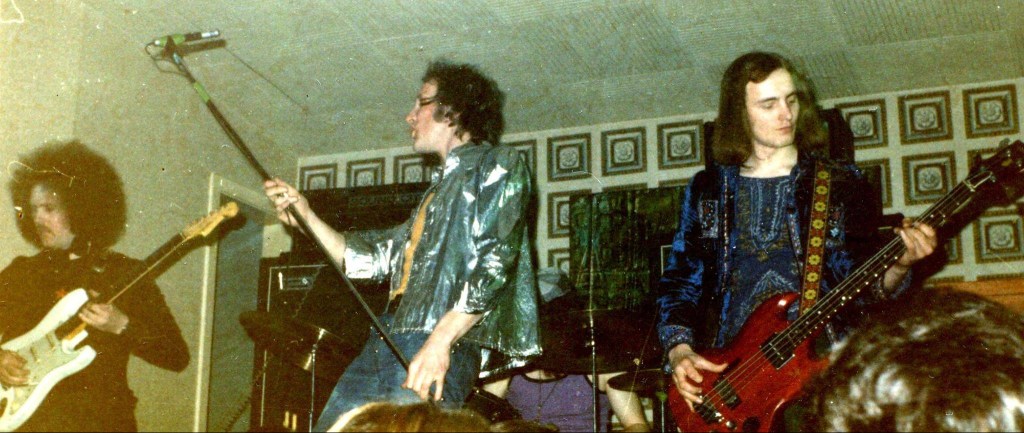
Steve (in blue) in Bullfrog.
Steve writes about his time as an apprentice in Consett Steel Works and how it made a lasting impression on him….
‘At the Steel works I remade the acquaintance of a guy from school, Robin Hird, who played guitar. We got talking and said he would give me a bass guitar if I would form a band with him. I readily agreed.
A few days later he turned up at my parents’ house with a drummer called Mick Simmons. I played them some songs I was writing, and Robin said “see, I told you he was talented”.
And that was that. Neither of them saw fit to inquire if I could play bass.
With the inclusion of Mick Glancy a few days later on vocals we had a band. My interest in being a steelworker declined. I was surely bound for rock stardom!’
Read the stories from Steve’s schooldays, starting work and beginning of his musical career in ‘Goodbye Consett’ which is free to download from Friday 8 January 2021 at
New book ‘Closest Thing to Heaven’ produced by MiE Fielding and Simon McKay captures ‘70s & ’80s Newcastle music scene.
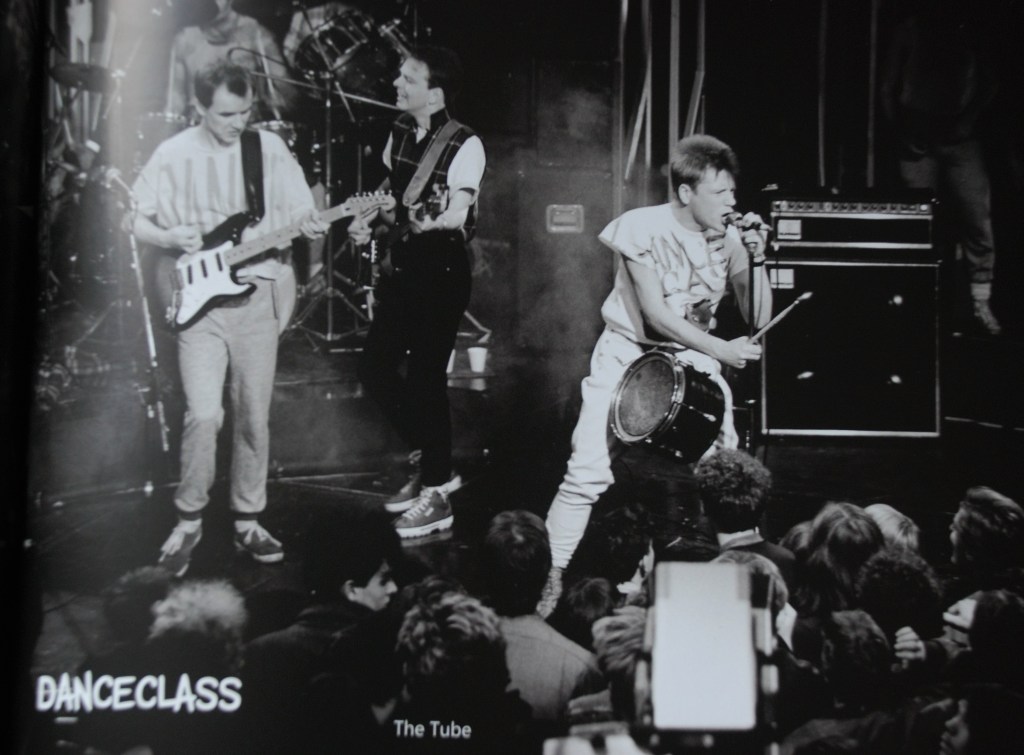
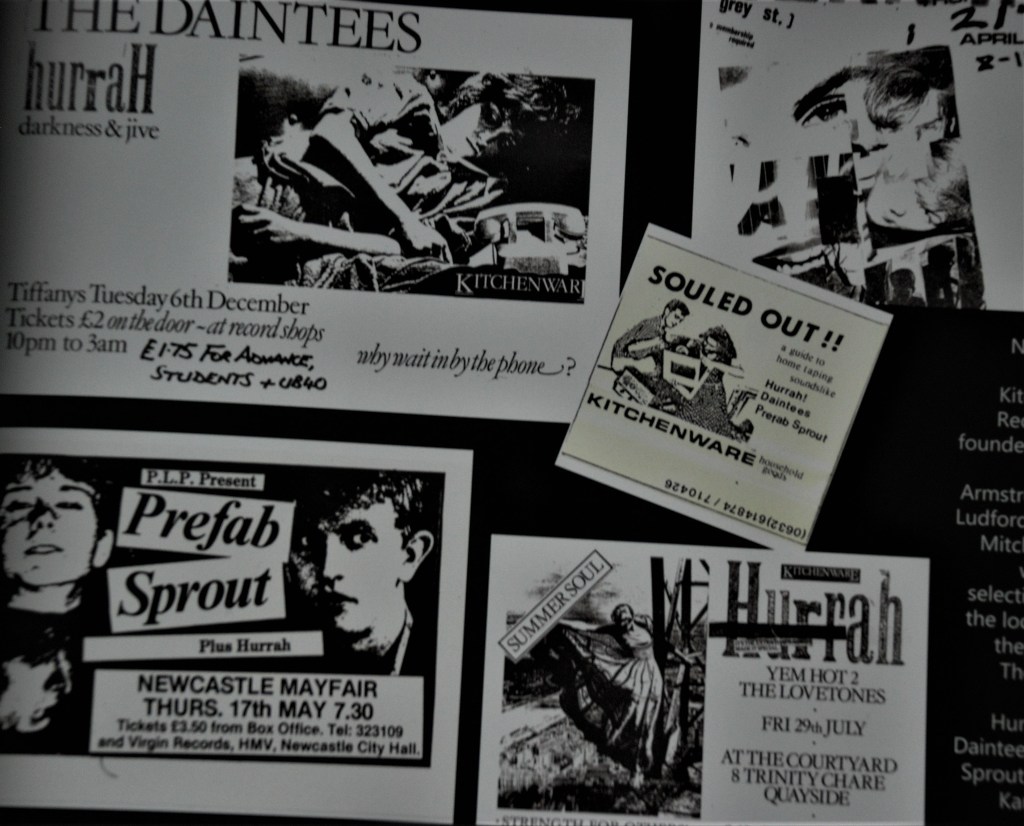
The 96 page book is a photographic montage of fashion, faces, venues, record shops and home-made flyers – and readers of this blog will be familiar to some of the bands featured.
‘We refer to Newcastle having more of a ‘village’ feel to it back then as everyone seemed to know everyone else. Thing is, how were those gigs organised as they were often well attended.
There are faces that I’m sure will be remembered, and not a tattoo or mobile phone in sight…explained Mick.
The main focus of the book are black & white photographs of North East bands Raven, Danceclass, Venom, White Heat, Angelic Upstarts and Tygers of Pan Tang tightly packed in with The Fauves, The Carpettes and Punishment of Luxury.
Mick added…‘As well as established acts playing in front of large audiences we tried to reflect the increase in energy as punk, new wave and electronica caught hold.
What unites them all is that they were performing in Newcastle in an era that has to be the most creative in the city’s illustrious history’.
There’s even a couple of early shots of Prefab Sprout in a pub in Jesmond, a young Jimmy Nail before TV fame as Oz in Auf Wiedersehen, Pet, and is that a snap of Neil Tennant pre Pet Shop Boys?
How did the idea come together Mick?
Closest Thing to Heaven was very much a side project as it’s not the kind of thing I generally get involved with as I’m heavily into the avant-garde in both music and art.
I’m a member of dumdum SCORE previously known as Ju JU Pell Mell pictured in the book. Simon was a member of the band The Said Liquidator and runs the fanzine Eccentric Sleeve Notes, he also DJ’s on Post Punk Britain.
I put the idea of a book forward to Simon who I’ve known for many years and he agreed to get involved immediately. We needed a ‘reason’ to do the book and decided we’d like to raise money for a music charity.
That lead me to fellow Northumbrian musician Kathryn Tickell who had set up the Young musicians fund with the aim of providing money for instruments for kids who couldn’t afford their own. So it was arranged that our royalties would go directly to the fund.
What was the inspiration behind the project ?
Like Simon I was part of that Newcastle scene, plus I had a number of 35mm negatives and photographs that were taken during the late ‘70s and ‘80s.
I knew Simon was also a meticulous collector of artefacts of the time. He saw the importance of stuff back then so he also came up with a treasure trove of related material.
Once we’d put our collective resources together it was a case of trying to contact other musicians who had been active during that period – many are still going – and asking for help. Luckily everyone was extremely helpful including rock photographer Rik Walton.
How long did the project take ?
The book came together over a period of around 18 months in which time a lot of the pictures needed restoration so I spent many hours on photoshop.
The next problem was how to present the book whilst avoiding the need for accuracy of names of band members as we soon realised that including individual names would be an impossible task after all these years.
What are your aims for the book ?
I think we’ve done a pretty good job in reflecting the Newcastle scene around that era and hopefully it will bring back some great memories for people as it did for Simon and myself, and above all it will raise cash for the Young Musicians Fund.
Looking ahead, the book was to be launched with an exhibition in Newcastle City Library, and an event featuring some music and associated art.
However like many other things of 2020 they had to be cancelled but hopefully we’ll have a proper launch in the Spring of 2021.
The book was available from 3rd December 2020 in all high street shops, and available online through Amazon or direct from Tyne Bridge Publishing at Tyne Bridge Publishing | Newcastle City Council
Note that Tyne Bridge (Newcastle City Libraries) operate a skeleton staff because of Covid. To date they have shipped 100+ advanced orders, any potential buyer would need to be patient if ordering direct from them.
Emma first appeared on the blog in May 2019 talking about her early influences…
’I learned a lot about performing and technical stuff in those early years. That’s when I developed my big voice. It was no more chirping from me. It was get big or get off!’
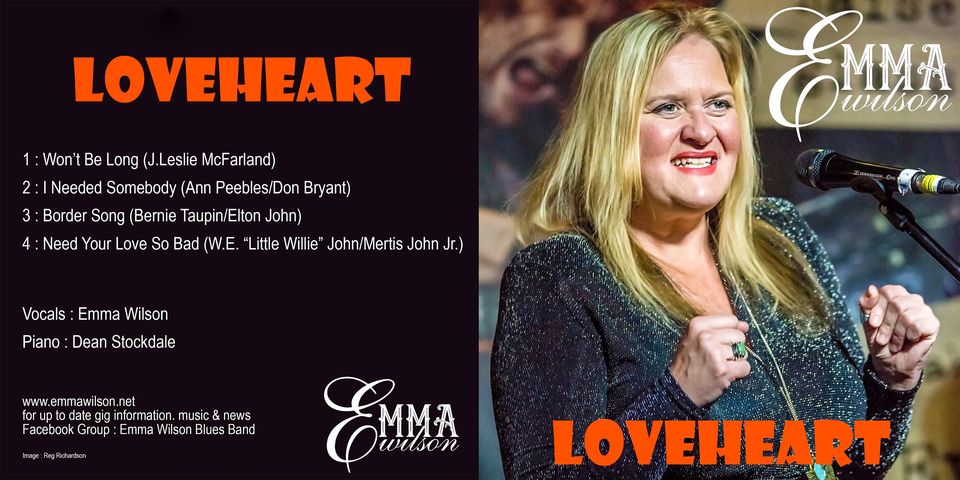
This week Emma has just released a new four track EP…
I was lucky to be able to get to the studio for one afternoon between Lockdowns and recorded the vocals for the EP, Loveheart. As with my last EP Feelgood, Dean Stockdale recorded his beautiful piano parts from home.
There are four songs on the EP and they have a theme. I lived in London away from my North East family for years where I met many good friends who now are scattered around the world.
This year has made me reflect on life’s complex human relationships and how precious they are.
Won’t Be Long (J Leslie McFarland) The version I know is by Aretha and one of my favourites by her, I love the rhythm of the track – like a train.
I Needed Somebody(Ann Peebles/ Don Bryant) You know I love Ann Peebles and this in one of her more heart breaking songs.
Border Song(Bernie Taupin/Elton John) Again I know Aretha’s version she called it Border Song (Holy Moses), I only realised it was by Elton and Bernie when I came to do the credits. Aretha puts the life into it. I hope to do it justice.
Need Your Love So Bad (‘Little Willie’ John/ Mertis John Jr) Wow I love Little Willie, his story is incredible. I know this song has been covered a lot but I wanted to give it a go, hoping to look back to Willies original style.
If yer looking for an original Christmas present to buy why not have a butchers at these books from North East authors who have featured on the blog.
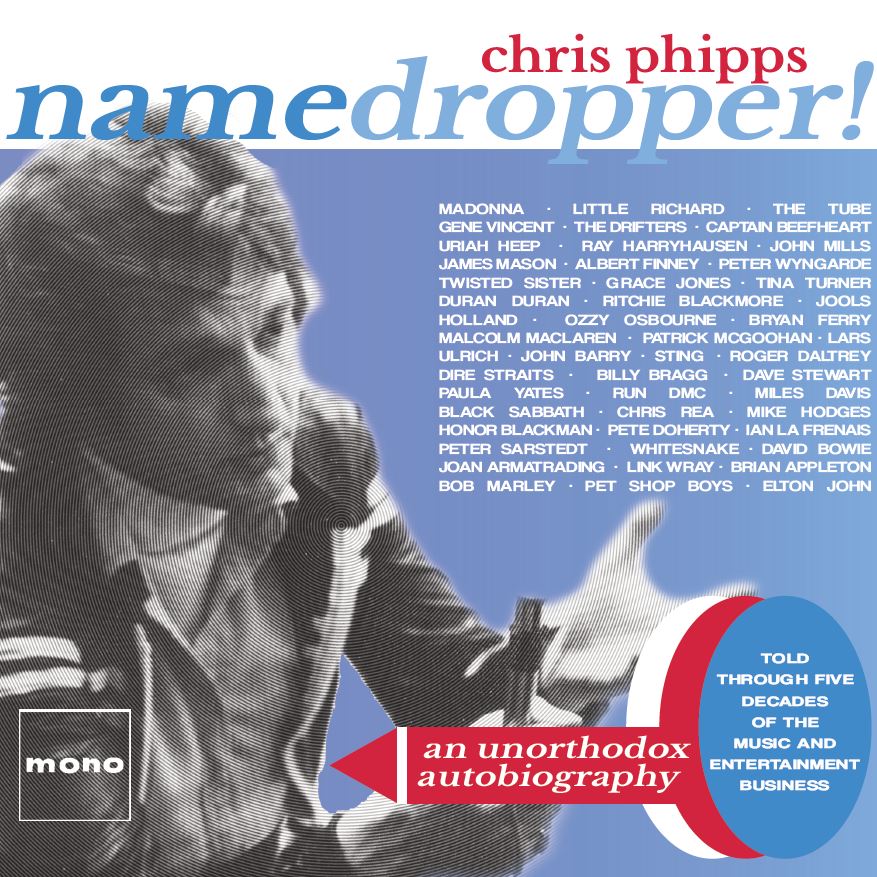
A big influence on my life was watching and being in the audience of ‘80s live music show The Tube, so when I got a chance to talk to former music TV producer Chris Phipps I didn’t miss the opportunity…
“As an ex-BBC producer I initially only signed up for 3 months on this unknown programme and it became 5 years!”
He gave me plenty of encouragement to carry on recording stories from the North East which I am grateful for, but sadly, not long after the interview, Chris passed away. He will be missed.
Chris wrote extensively and had an amazing knowledge of music and the entertainment business. He left an ‘unorthodox autobiography’ of five decades of celebrity and backstage stories from Ozzy to Madonna to Bob Marley in the book ‘Namedropper’.
The book is available at Newcastle City Library or through Amazon.
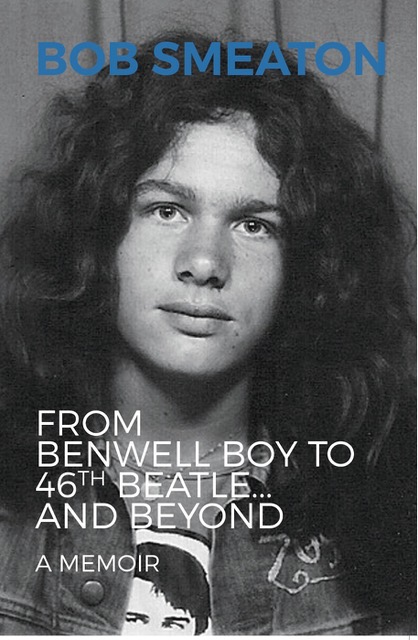
Growing up in the North East and obsessed with music was former White Heat frontman, now music documentary director Bob Smeaton“I was working as a welder at Swan Hunter Shipyards when punk and new wave happened around 76/77 that’s when I started thinking I could possibly make a career out of music. The doors had been kicked wide open”.
What he couldn’t have imagined was having his moment on stage at Madison Square Gardens not as rock singer, but as a Grammy winner.
‘From Benwell Boy to 46th Beatle & Beyond’ is available on Amazon or can be ordered in Waterstones, Newcastle.
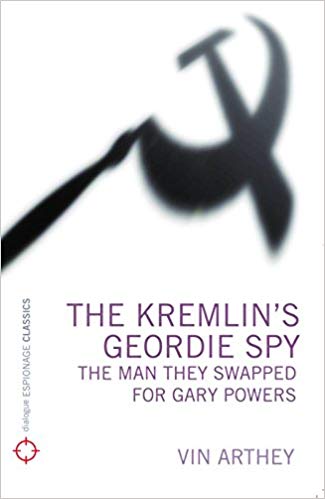
Earlier this year I read a great book ‘The Kremlin’s Geordie Spy’ and got in touch with the author Vin Arthey who told me…
“Newcastle born William Fisher turned out to be a KGB spy, he used the name Rudolf Abel and was jailed for espionage in the United States in 1957. He was exchanged across Berlin’s Glienicke Bridge for the American U-2 pilot, Francis Gary Powers. The Tom Hanks film ‘Bridge of Spies’ tells the story of how it happened.
I have a few pristine copies of the Geordie Spy on my shelf but with p&p, it would come out at £10 more than the Amazon price”.
More than four decades after the first screening of James Mitchells iconic BBC TV series ‘When the Boat Comes In’, the creators son Peter Mitchell, has written a novel ‘Jack High’ which tells the story of Jack Ford’s missing years.
“This is a man who has found a family in war. He interacts with union men, upper crusts, politicians….all he knows is how to survive and when he sees a chance he takes the opportunity”.
On the same dial as Roxy Music and Prefab Sprout, are Sunderland bands The Futureheads and Field Music who formed during the noughties…
The music community at that time was pretty tight. I’m sure there was rivalry, but it was also really supportive. We probably shuddered at the idea of it being a “scene” – but that’s what it was.
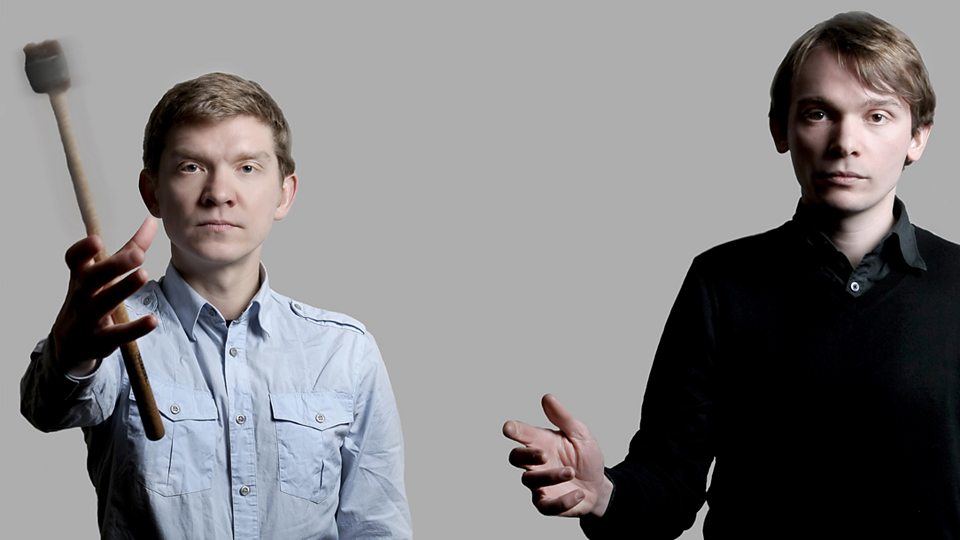
The spine of Field Music are brothers Peter and David Brewis….
We’d been teaching at a youth music project in Sunderland where we met Barry Hyde who later joined The Futureheads, and a bunch of other young musicians including Ian Black, who’d later join Field Music and release some records as Slug.
We asked Barry to join our band, which was just what we needed really. We could share our experience with regard to getting out there and playing and arranging for a band and he opened our eyes to a lot of music we didn’t know about – Captain Beefheart and The Velvet Underground and the free-er style of jagged edge in jazz.
That was an inspiring time, we had a lot of ideas and started a lot of bands which never played a gig. It took us a while to stop flailing around and make sense of what we wanted to do.
For Barry that was The Futureheads, and for us that eventually became the first Field Music album.
What was your first experience of a recording studio ?
We recorded with Frankie Stubbs at the Bunker in Sunderland a couple of times when we were first starting out – in ‘94 and ‘95 I think. And then we did a gig at South Hylton Working Mens Club to pay for a couple of days in Frankie Gibbon’s studio in Lambton Lion Park.
But really, we felt best recording ourselves. We had a cassette four-track at home and were always working on songs and we fancied ourselves as producers as well as players.
In 1997 we applied for the first round of Lottery Arts funding and they gave us £4000 to set up and run a community studio for six months. We couldn’t afford the rent after that, so we moved it back to our parent’s spare room.
Our first proper release was an EP under the name The New Tellers, was recorded there, along with the first Futureheads demos.
In 2001 we clubbed together with The Futureheads and a couple of friends to have our own studio and practice room in a community centre and since then, we’ve always had our own studio space.
We stayed in that first space for over ten years and recorded three Field Music albums, my first solo album as School of Language, Peter’s album under the name The Week That Was, most of the first Cornshed Sisters album, one of the early Maximo Park EPs, a chunk of The Futureheads’ fourth album and their first EP.
How did you get interested in music, are you from a musical family ?
We, that’s me and my older brother Peter, don’t come from a particularly musical background but our parents were of that generation who grew up in perfect alignment with British rock music.
They were nine or ten when the Beatles came along, 16 year old and trying out rebellion when Let It Bleed (Rolling Stones) came out.
And then in the ‘80s, when they were dealing with us, the few records they bought were either sophisticated adult rock like Peter Gabriel, Kate Bush and Hall and Oates, or sophisticated adult pop like the Pet Shop Boys.
What instruments did you pick up?
Peter was itching to play the drums after watching The Bangles on Top of the Pops. That was probably 1989. I wanted in on the action so I saved up for a twenty quid acoustic guitar from Argos.
Actually, I’d been saving my pocket money ready for a holiday in Yugoslavia, but their currency was devalued while we were there, so I ended up bringing my meagre savings back and bought the guitar.
We didn’t know what we were doing but we liked the idea of playing music and then found a Led Zeppelin track on one of our parents’ compilation albums I think it was called – ‘By Invitation Only’.
They also had Free Live – we became totally obsessed. Peter learned to play my guitar much more quickly than I did so I switched to bass after a couple of years.
Who were you listening to and who did you watch live ?
We had a brief period of going to gigs at Newcastle City Hall while we were learning to play. The first one was probably Jethro Tull, who had Dave Mattacks playing drums with them on that tour, which is odd because we’ve gotten to know Dave a bit in recent years.
We went to a couple of technical guitar-type gigs – Joe Satriani, Steve Vai – while we were learning to play but that style of music didn’t bed in with us. We bought a Black Crowes CD in about 1993 and that did make sense to us.
We travelled to Sheffield to see them play in 1995 but by then we were already gigging around the local pub circuit.
Where did you first rehearse as a band ?
We rehearsed in the spare room in our parents’ house in Cleadon Village. Our neighbours were very tolerant!
For a long time our bands revolved around me singing and playing bass or guitar, Peter playing guitar live but drumming on a lot of our demos and Andrew Moore, who was our friend from school and an incredible piano and organ player.
Our first drummer was called Paul Taylor. I’m not sure we ever saw eye to eye musically but he was a good drummer and amazing to watch.
A young metaller called David Dorward joined on bass one time, and when we went to college the pool of musicians we knew grew a lot and we played with a couple of really good local drummers – Jaimie Curle and Garry McKenna – though I think we always had a sense that we wanted to be in charge of the drums.
What was your early experiences of playing live ?
We must have played at school a couple of times but the first thing that really felt like a gig was a battle of the bands at Manor Quay called Wearstock in 1994. I think the band was called Underfoot back then.
From 1994 until 1998 we played tons of gigs on the pub circuit, doing mostly covers but gradually trying to add in our own songs. Our favourite venues were places like The Duke of Cumberland in Felling, The Turk’s Head in South Shields, Sleepers in East Boldon and The Keelboat in Fatfield.
There were tons. It was a very wholesome way for a 14/15 year old to spend their free time!
Once we retired the pub-rock band, we were playing at places like The Royalty, Pure, Ashbrooke Cricket Club and Bar 36 in Sunderland and occasionally we’d venture to The Head of Steam in Newcastle.
When did you become a professional musician and how has it worked out for you, is it what you imagined as a teenager ?
We signed a publishing deal a couple of months after I finished university in 2001 and since then I’ve mostly just been a musician. The period from 2001 until we released the first Field Music album was tricky. We didn’t really know what we were doing.
We had very supportive manager and a very supportive publisher but we didn’t understand the extent to which being independently-minded means doing things yourself.
We probably didn’t realise that in order to get a record made our way, we would have to record it and mix it ourselves.
We didn’t realise that in trying to make odd music on stage, we’d have to think very hard about how to make that work for an audience in venues which are primarily geared towards bands whose music is not odd!
Whatever dreams I had about being a musician when I was young have been stripped down to the barest elements and go along with essentially running a small business.
So, yes, I get to make the music I want to make and I spend all this heady time writing songs and being creative in the studio and working out how to play these songs on stage with my friends, but I also have to book hotels and do VAT returns and do amateurish joinery in our studio. It’s harder work than I imagined but also probably better.
What does music mean to you and what has it given you ?
I love writing songs and I love recording. If I ever have a period when I’m not doing those things I get gloomy and anxious. It’s not that it’s the only way I can express myself – I’m a wordy kind of person!
And it’s not that it’s the only thing I’m good at – I could probably have stayed in academia in some maths-related sphere.
But music is the thing which gets my synapses crackling. And in songwriting I can dive into pretty much any topic or follow any curious thought.
The last Field Music record grew out of a commission for the Imperial War Museum as part of a season about the aftermath of the First World War. We ended up researching and writing songs about planning law and sanitary towels and reparations and Tiananmen Square.
Our brains were in overdrive pulling these things together and turning it into a performance and then a record. It’s such a privilege that we get to do these things. But also I feel really proud that we can take on a challenge like that and make it work.








 ALIKIVI UK : NORTH EAST MUSIC & CULTURE