If yer looking for an original Christmas present to buy why not have a butchers at these books from North East authors who have featured on the blog.
A big influence on my life was watching and being in the audience of ‘80s live music show The Tube, so when I got a chance to talk to former music TV producer Chris Phipps I didn’t miss the opportunity…
“As an ex-BBC producer I initially only signed up for 3 months on this unknown programme and it became 5 years!”
He gave me plenty of encouragement to carry on recording stories from the North East which I am grateful for, but sadly, not long after the interview, Chris passed away. He will be missed.
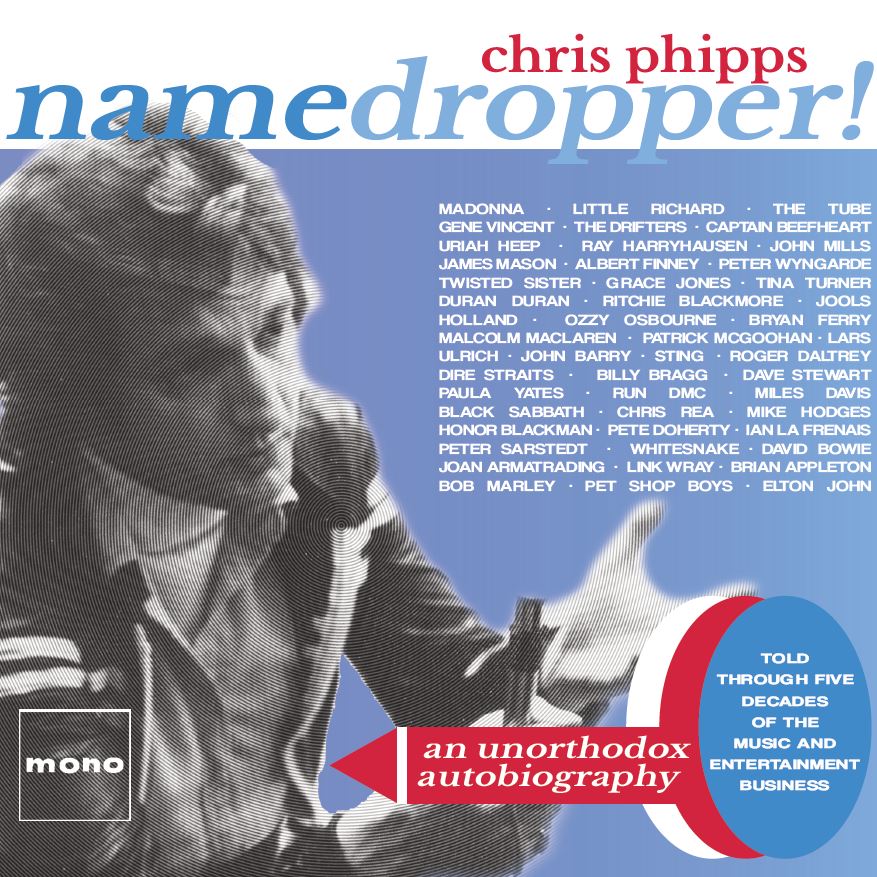
Chris wrote extensively and had an amazing knowledge of music and the entertainment business. He left an ‘unorthodox autobiography’ of five decades of celebrity and backstage stories from Ozzy to Madonna to Bob Marley in the book ‘Namedropper’.
The book is available at Newcastle City Library or through Amazon.
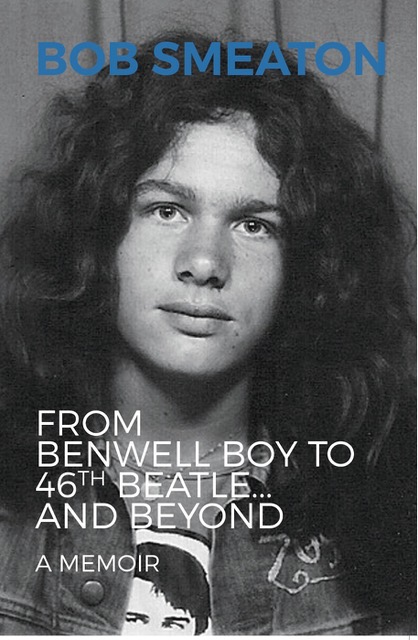
Growing up in the North East and obsessed with music was former White Heat frontman, now music documentary director Bob Smeaton“I was working as a welder at Swan Hunter Shipyards when punk and new wave happened around 76/77 that’s when I started thinking I could possibly make a career out of music. The doors had been kicked wide open”.
What he couldn’t have imagined was having his moment on stage at Madison Square Gardens not as rock singer, but as a Grammy winner.
‘From Benwell Boy to 46th Beatle & Beyond’ is available on Amazon or can be ordered in Waterstones, Newcastle.
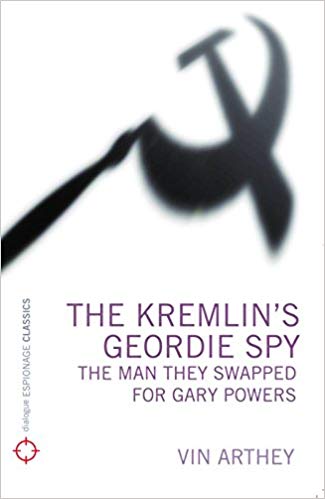
Earlier this year I read a great book ‘The Kremlin’s Geordie Spy’ and got in touch with the author Vin Arthey who told me…
“Newcastle born William Fisher turned out to be a KGB spy, he used the name Rudolf Abel and was jailed for espionage in the United States in 1957. He was exchanged across Berlin’s Glienicke Bridge for the American U-2 pilot, Francis Gary Powers. The Tom Hanks film ‘Bridge of Spies’ tells the story of how it happened.
I have a few pristine copies of the Geordie Spy on my shelf but with p&p, it would come out at £10 more than the Amazon price”.
More than four decades after the first screening of James Mitchells iconic BBC TV series ‘When the Boat Comes In’, the creators son Peter Mitchell, has written a novel ‘Jack High’ which tells the story of Jack Ford’s missing years.
“This is a man who has found a family in war. He interacts with union men, upper crusts, politicians….all he knows is how to survive and when he sees a chance he takes the opportunity”.
On the same dial as Roxy Music and Prefab Sprout, are Sunderland bands The Futureheads and Field Music who formed during the noughties…
The music community at that time was pretty tight. I’m sure there was rivalry, but it was also really supportive. We probably shuddered at the idea of it being a “scene” – but that’s what it was.
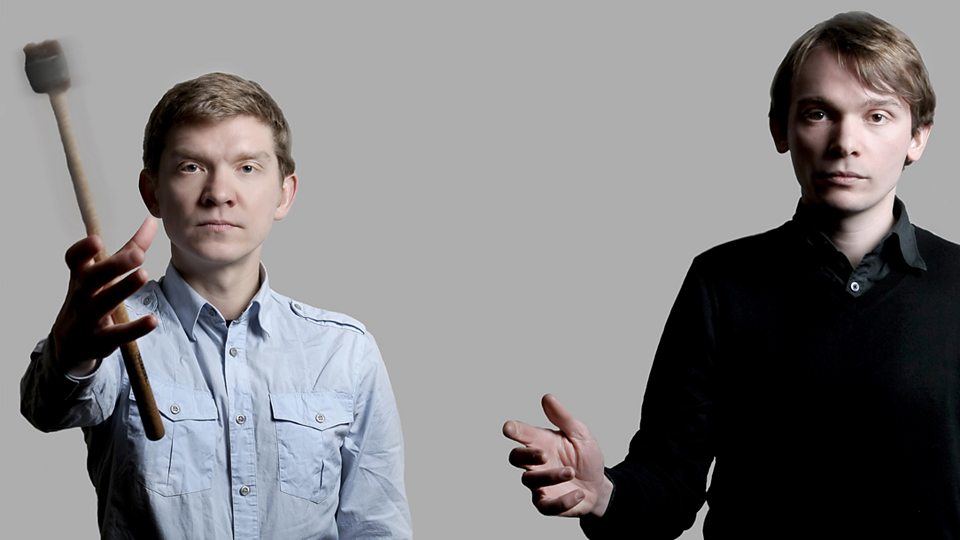
The spine of Field Music are brothers Peter and David Brewis….
We’d been teaching at a youth music project in Sunderland where we met Barry Hyde who later joined The Futureheads, and a bunch of other young musicians including Ian Black, who’d later join Field Music and release some records as Slug.
We asked Barry to join our band, which was just what we needed really. We could share our experience with regard to getting out there and playing and arranging for a band and he opened our eyes to a lot of music we didn’t know about – Captain Beefheart and The Velvet Underground and the free-er style of jagged edge in jazz.
That was an inspiring time, we had a lot of ideas and started a lot of bands which never played a gig. It took us a while to stop flailing around and make sense of what we wanted to do.
For Barry that was The Futureheads, and for us that eventually became the first Field Music album.
What was your first experience of a recording studio ?
We recorded with Frankie Stubbs at the Bunker in Sunderland a couple of times when we were first starting out – in ‘94 and ‘95 I think. And then we did a gig at South Hylton Working Mens Club to pay for a couple of days in Frankie Gibbon’s studio in Lambton Lion Park.
But really, we felt best recording ourselves. We had a cassette four-track at home and were always working on songs and we fancied ourselves as producers as well as players.
In 1997 we applied for the first round of Lottery Arts funding and they gave us £4000 to set up and run a community studio for six months. We couldn’t afford the rent after that, so we moved it back to our parent’s spare room.
Our first proper release was an EP under the name The New Tellers, was recorded there, along with the first Futureheads demos.
In 2001 we clubbed together with The Futureheads and a couple of friends to have our own studio and practice room in a community centre and since then, we’ve always had our own studio space.
We stayed in that first space for over ten years and recorded three Field Music albums, my first solo album as School of Language, Peter’s album under the name The Week That Was, most of the first Cornshed Sisters album, one of the early Maximo Park EPs, a chunk of The Futureheads’ fourth album and their first EP.
How did you get interested in music, are you from a musical family ?
We, that’s me and my older brother Peter, don’t come from a particularly musical background but our parents were of that generation who grew up in perfect alignment with British rock music.
They were nine or ten when the Beatles came along, 16 year old and trying out rebellion when Let It Bleed (Rolling Stones) came out.
And then in the ‘80s, when they were dealing with us, the few records they bought were either sophisticated adult rock like Peter Gabriel, Kate Bush and Hall and Oates, or sophisticated adult pop like the Pet Shop Boys.
What instruments did you pick up?
Peter was itching to play the drums after watching The Bangles on Top of the Pops. That was probably 1989. I wanted in on the action so I saved up for a twenty quid acoustic guitar from Argos.
Actually, I’d been saving my pocket money ready for a holiday in Yugoslavia, but their currency was devalued while we were there, so I ended up bringing my meagre savings back and bought the guitar.
We didn’t know what we were doing but we liked the idea of playing music and then found a Led Zeppelin track on one of our parents’ compilation albums I think it was called – ‘By Invitation Only’.
They also had Free Live – we became totally obsessed. Peter learned to play my guitar much more quickly than I did so I switched to bass after a couple of years.
Who were you listening to and who did you watch live ?
We had a brief period of going to gigs at Newcastle City Hall while we were learning to play. The first one was probably Jethro Tull, who had Dave Mattacks playing drums with them on that tour, which is odd because we’ve gotten to know Dave a bit in recent years.
We went to a couple of technical guitar-type gigs – Joe Satriani, Steve Vai – while we were learning to play but that style of music didn’t bed in with us. We bought a Black Crowes CD in about 1993 and that did make sense to us.
We travelled to Sheffield to see them play in 1995 but by then we were already gigging around the local pub circuit.
Where did you first rehearse as a band ?
We rehearsed in the spare room in our parents’ house in Cleadon Village. Our neighbours were very tolerant!
For a long time our bands revolved around me singing and playing bass or guitar, Peter playing guitar live but drumming on a lot of our demos and Andrew Moore, who was our friend from school and an incredible piano and organ player.
Our first drummer was called Paul Taylor. I’m not sure we ever saw eye to eye musically but he was a good drummer and amazing to watch.
A young metaller called David Dorward joined on bass one time, and when we went to college the pool of musicians we knew grew a lot and we played with a couple of really good local drummers – Jaimie Curle and Garry McKenna – though I think we always had a sense that we wanted to be in charge of the drums.
What was your early experiences of playing live ?
We must have played at school a couple of times but the first thing that really felt like a gig was a battle of the bands at Manor Quay called Wearstock in 1994. I think the band was called Underfoot back then.
From 1994 until 1998 we played tons of gigs on the pub circuit, doing mostly covers but gradually trying to add in our own songs. Our favourite venues were places like The Duke of Cumberland in Felling, The Turk’s Head in South Shields, Sleepers in East Boldon and The Keelboat in Fatfield.
There were tons. It was a very wholesome way for a 14/15 year old to spend their free time!
Once we retired the pub-rock band, we were playing at places like The Royalty, Pure, Ashbrooke Cricket Club and Bar 36 in Sunderland and occasionally we’d venture to The Head of Steam in Newcastle.
When did you become a professional musician and how has it worked out for you, is it what you imagined as a teenager ?
We signed a publishing deal a couple of months after I finished university in 2001 and since then I’ve mostly just been a musician. The period from 2001 until we released the first Field Music album was tricky. We didn’t really know what we were doing.
We had very supportive manager and a very supportive publisher but we didn’t understand the extent to which being independently-minded means doing things yourself.
We probably didn’t realise that in order to get a record made our way, we would have to record it and mix it ourselves.
We didn’t realise that in trying to make odd music on stage, we’d have to think very hard about how to make that work for an audience in venues which are primarily geared towards bands whose music is not odd!
Whatever dreams I had about being a musician when I was young have been stripped down to the barest elements and go along with essentially running a small business.
So, yes, I get to make the music I want to make and I spend all this heady time writing songs and being creative in the studio and working out how to play these songs on stage with my friends, but I also have to book hotels and do VAT returns and do amateurish joinery in our studio. It’s harder work than I imagined but also probably better.
What does music mean to you and what has it given you ?
I love writing songs and I love recording. If I ever have a period when I’m not doing those things I get gloomy and anxious. It’s not that it’s the only way I can express myself – I’m a wordy kind of person!
And it’s not that it’s the only thing I’m good at – I could probably have stayed in academia in some maths-related sphere.
But music is the thing which gets my synapses crackling. And in songwriting I can dive into pretty much any topic or follow any curious thought.
The last Field Music record grew out of a commission for the Imperial War Museum as part of a season about the aftermath of the First World War. We ended up researching and writing songs about planning law and sanitary towels and reparations and Tiananmen Square.
Our brains were in overdrive pulling these things together and turning it into a performance and then a record. It’s such a privilege that we get to do these things. But also I feel really proud that we can take on a challenge like that and make it work.



 ALIKIVI UK : NORTH EAST MUSIC & CULTURE