FAMILY PORTRAIT – Downey photography studios in South Shields & London

As I was sorting out some books this picture card fell out of one of them. It’s something I picked up at Shields Market a few years ago.

I’m not sure who the sitter is but the photo was taken by the Downey brothers, William and Daniel, who along with older brother James, had studios in the North East then moved to London.

Commercial photography was in it’s infancy when the brothers were taking pictures of royalty and personalities like Oscar Wilde.

Looking back to photographers in South Shields there was James Cleet with his housing clearance pictures during the 1930’s, and reported to be a bit of a showman in his mac and bowler hat, especially at Tyneside ship launches he would signify when he was finished by making a large sweep of his bowler hat and take a deep bow in front of the crowds.

Amy Flagg’s unforgettable Second World War images of a scarred town after the German bombs hit, then in her own darkroom printing photographs of devastating images of a town she loved, important pictures that still have a huge impact today.

Records show the Downey brothers worked out of a studio in London but before that were based in South Shields.

William Downey was born in King Street, South Shields in 1829, with help from his older brother James and together with brother Daniel, they set up a photographic business in the Market Square in 1860.

The studio became successful resulting in branches opening across the North East in Blyth, Morpeth and old Eldon Square in Newcastle.

In 1862 Queen Victoria commissioned William Downey to take a series of photographs illustrating the Hartley Colliery disaster near Blyth.

Soon after William and his brother Daniel moved to London where they accepted commissions from dignitaries and aristocracy including the UK royal family, the Emperor of Russia and King of Norway.

The brothers also took pictures of show business personalities from their studio at 57 & 61 Ebury Street in Belgravia, while older brother James with his grocery business, kept a studio open in South Shields.

Big brother James was a huge help to William and Daniel. He was a grocer and importer of German yeast with premises in West Holborn in 1865. Ten year later he had two shops trading as a grocer and confectioner out of 17 & 19 Eldon Street in the Laygate area of the town.

By 1881 he had one shop for his grocery business and opened the other as a photography studio. There is a record of a Frederick Downey at 19 Eldon Street, I suspect that he was James’ son who carried on the family photography business.

Meanwhile in London, Daniel and William continued their work of royal sittings and portraits. Sadly, Daniel passed away in Bethnal Green in 1881 while William died in Kensington in 1915. His son, William Edward, kept on the family business as did his son, Arthur.

A lasting record of their work is an impressive set of five books called ‘The Cabinet Gallery’ printed by Cassell & Company of London, Paris and Melbourne in 1890. The volumes include 36 photographs each plus a summary of the subject.

Kings, Queens, Professors and actors all sat for a Downey portrait, the attention to detail made them stand out among other photographers and ensured customers would return. Their stamp is on the back of some pages.

Throughout the early 1900’s there is records for a Downey photography studio at 17 & 19 Eldon Street, but unfortunately by 1912 the trail goes cold. What happened to the Downeys in London and South Shields? Is there more to their story? If you have any information to add please get in touch.

Source: Census records, Burgess Rolls, Wards Directories, Wikipedia, The Word South Shields.

Gary Alikivi   December 2019

THE MAN IN THE SHADOWS – James Cleet, South Shields Photographer 1876 -1959

In a previous post I talked about coming across pictures taken by the photographer James Cleet in the Local History Department of South Shields Library around 2008, particularly the housing clearances in South Shields during the 1930’s.

I was curious who he was and what he looked like. I had only seen his shadow in some pictures that he had taken – the outline of his cloak hunched over a tripod and camera. Then one day while researching through old newspapers I came across a story about him and there he was, looking straight at me, a camera in hand half covering his face – he had the look of Spanish artist Salvadore Dali.

On his death at the age of 82, local newspaper The Shields Gazette reported…

‘Mr Jimmy Cleet, a photographer for 68 years has died at his home in Wardle Avenue, South Shields. From the day he moved into the world of cameras as a 13 year old plate boy photography was his bread and butter, his hobby and his greatest interest in life.

He never cared much for flashlights, which he thought ruined details in portraits, and until he retired last year he still used a camera which he had bought 30 years previously in preference to a modern one. But if his equipment was a little old his finished photographs were never below the standard of excellent’.

They were and had an instantly recognizable look amongst all other photographers I researched. The Gazette added… ‘James Henry Cleet, the first South Shields man to be elected a Fellow of the Royal Photographic Society (1933), served a seven year apprenticeship in commercial photography and studied art at the old South Shields High School. As a young man he went to Fleet Street and worked as press photographer for The Daily Mirror and soon established a lasting reputation that he would get pictures whatever the difficulties.

On one of his first assignments he was given 20 minutes to produce a picture of Lady Londonderry as she left Charing Cross Station. No one could get near her, but he solved this problem by carrying some of her luggage to the train’.

When researching his family history I found that in the late 1800’s James’ Grandfather was a Master Mariner, the family owned several ships and they lived in Heugh Street on the banks of the Tyne. But unfortunately a downturn in business led to his father becoming a shipwright and the family moved to Bath Street in the Lawe area of the town.

On the 26th December 1908 James married Eva Aspery, they had a son James, but sadly he died at 4 year old.

The newspaper report carried on his story…Later he concentrated on his love of old marine photography and went to sea in all weathers to get his pictures. He had a deep affection for the Tyne, tug boatmen were always ready to help him.

A small man wearing a bowler hat, he was a familiar figure in every Tyneside shipyard. When he took pictures at a launch he would photograph the ship then the launching party, then with a magnificent sweep of his bowler hat and a deep bow he would signify he had finished’.

From 1930-38 James recorded what was called the ‘slums’ of South Shields, mainly around the Holborn and riverside area of the town. The photographs were commissioned by South Shields Public Health Department and displayed in a book published by SIDE Photographic Gallery in 1979. This features in a previous blog (24th December 2019).

Sadly, James Cleet died on 2nd June 1959, the Gazette article ended by saying ‘His photographs of South Shields form a remarkable record of the town, and like many photographers he objected to having pictures taken of himself’.

Source: The Shields Gazette, Census records, Wards Directories.

Alikivi    January 2020.

AMY FLAGG: HOLBORN & THE MILL DAM VALLEY

Following on from a previous post featuring Historian & Photographer Amy C. Flagg and her book ‘The History of Shipbuilding’, further information has come from South Tyneside Libraries….

‘The book was printed in 1979 about the same time when Hodgson and the Boswell Whitaker trilogy of books were printed. A figure of 200 copies each of these books were printed’. (G.B. Hodgson – The Borough of South Shields and Boswell Whitaker –The Preservation of Life from Shipwreck Volumes 1-3).

A tributary of the Tyne called the River Branin cut into South Shields over 200 years ago and created the Mill Dam Valley. An Ordnance Survey map of 1895 has the valley clearly marked. Before that time, it possibly would have extended in an easterly direction towards the North Sea making the Lawe an island.

In his book ‘The Borough of South Shields’ Hodgson states that…

in 1748 the churchyard to the south of St Hilda’s was described as sloping down to the edge of the Mill Dam Creek or the river Branin, a fine sheet of water, up which the tide flowed as far as the modern St Catherine Street. The creek when filled with water at high tide formed a picturesque lake.

Miss Flagg describes the Mill Dam Valley in her Shipbuilding book….

’When the Chemical Works occupied most of the space near the Mill Dam Valley, then a large sheet of water at high tide, the shipbuilders were all clustered together nearer the sea because the ‘Narrows’ – the throat of the river, which led to the Harbour was shoaly and difficult to navigate’.

She talks about walking along the riverside…

‘Leaving Low Street, crossing the Market Place and over the Mill Dam bridge to the ‘High End’. Holborn, the main street, was of a much later date than the old, almost medieval Sheeles’. (I’ve come across a few different spellings of the town – Shiels, Schiels and todays Shields).

Further reading reveals…‘Filling in of the millpond or valley by Newcastle Corporation in 1816’. I think Miss Flagg was referring to the River Branin as she added ‘After the valley was filled in, the remains of the creek were used for a mooring place – it is given as Mill Dam Dock on one map. After an unsavoury history it was filled in and only a very small ‘gut’ of the river remained’.

What was the ‘unsavoury history’ ? The book reveals more about the industrial map of ‘Sheeles’.

Miss Flagg includes a section about The Holborn Landing and two shipbuilders, William Wright and John Clay. Her research found William Wright had five sons, all of whom were Master Mariners.

She adds that one son, William, left the sea and was manager for many years at both High Docks and West Docks.

Another son, Leonard, married a baker’s daughter and founded the well-known Wright’s Biscuit Factory, the bakery being somewhere near Holborn Landing.

A document stated that ‘During the Franco-Prussian war the biscuit firm worked day and night for over twelve months making 48 tons of biscuits from 400 sacks of flour every week for the French government’.

Her research on John Clay revealed in 1847 he constructed the first iron ships built in South Shields on premises where Wrights Bakery originally stood.

Clay was labelled ‘King of Shields’ as he was listed as having his finger in many pies: the son of a grocer in Nile Street, a brewer, farmer, publican and banker who ‘went down with the bank’ in 1857. Although doubt was cast on his career as a shipbuilder, Amy concludes ‘the whole question is a mystery and must be left at that’.

There are copies of ‘The History of Shipbuilding by Amy C. Flagg’ available to read in the Local and Family History section at The Word, South Shields.

Gary Alikivi   December 2019.

HARD UP in HOLBORN – South Shields photographer James Henry Cleet 1876-1959.

During the 1930’s James Cleet was commissioned by South Shields Public Health Department to make a photographic record of ‘slum housing’ in the riverside area of the town – Holborn and Laygate.

Side Photographic Gallery in Newcastle produced a booklet in 1979 of some of the photos. Not sure if the term ‘slum’ was first used by Side Gallery or Public Health Department?

First time I came across James Cleet was when I was doing some family and history research in the Local History section of South Tyneside Library in 2007.

It gave me the idea to make a documentary highlighting Cleet’s work, and Holborn, the area once known as the industrial heartland of South Shields, plus the digitization project.

The Local History section had been awarded funding to digitize thousands of photographs they had in their archive and load them onto a new website. Volunteers were needed for this process and as I was self employed I could give a couple of hours a week to a worthwhile cause.

Spending time looking through photographs, some from the early 1900’s, of people, places and events around South Tyneside was a great way to spend a couple of hours.

It wasn’t long till I dropped in more frequently. Photographs by Emmett, Flagg and Cleet were an excellent record of the times.

Some images had familiar street names of area’s where my ancestors lived, mainly Tyne Dock, Holborn and Jarrow. Finding a family of photographers called Downey who had a studio in Eldon Street next door to where my great grandmother lived was an added bonus.

There was a small team of volunteers who recorded details of the images, scanned the photos, and uploaded them onto the website, this process features in the documentary.

Street names, buildings, shops and people were researched, as much information as possible was added. On the back of the pictures was nearly always a date or name of the photographer.

But unfortunately, some photographs were left blank and didn’t have any recognizable signs but were still uploaded.

After a few sessions I could recognize the styles of certain photographers and two of them stood out. Amy Flagg added extensive details to a lot of her work and covered some powerful subjects like the Second World War – climbing over bombed houses to get the shot won’t have been easy.

Some of her images became instantly recognisable, in her darkroom she stamped a date in Roman numerals on the bottom of the photo.

There were a load of photographs that were taken in Holborn by James Cleet, his style and composition was of a very high quality with clean, sharp images. Most of the images are taken on overcast, grey rainy days – is that a coincidence ? I doubt it.

The lighting gives the pictures a uniform look and add to the bleak, grim atmosphere of the housing clearance.

In research I found Cleet had regular work at ship launches, plus The Shields Gazette and Daily Mirror. While Flagg’s technique was more handheld, Cleet used a tripod in most if not all of his very sharp pictures. Both were passionate about their work.

Around that time an old guy used to come to the local history section and tell me a few stories about Tyne Dock and Holborn as his family lived in those areas.

Next time he brought in a booklet which he gave to me, it featured a collection of the Cleet housing clearance photographs I’d been looking at.

The booklet also included reports by the South Shields Medical Officer for Health talking about ‘rat repression’ and ‘eradication of bed bugs’. They reported….

’The women had a very hard life. They polished their steps, and the pavement was scrubbed. The backyard was washed regular. There was a question of pride. They had to keep them clean or they’d be overrun with vermin. No getting away with it. It had to be kept down’.

The report also included complaints from residents…

’A’ve seen some hard up times. Families of nine in one room. I knew a family, the father and mother had to gan ootside to do their business. Yes they used to do their courtin’ ootside. The mother used to stand at the telegraph pole on Johnsons Hill and have her love with the husband and then gan yem to bed. You couldn’t do nowt with all the family livin’ in one room’.

In a previous post I wrote about the important historical archive that Amy Flagg had left to the town: her Second World War photo’s plus the book ‘The History of Shipbuilding in South Shields’, the James Cleet housing clearance booklet is just as important a document of South Shields.

To check out the South Tyneside photographs featuring Amy Flagg and James Cleet go to :   https://www.southtynesidehistory.co.uk/

Gary Alikivi   December 2019.

HISTORY LIVES – Amy C. Flagg: South Shields Historian & Photographer 1893 – 1965.

Currently in South Shields Museum there is a small exhibition featuring houses and residents of Westoe Village. One of the residents was local historian and photographer, Amy C. Flagg.

Amy was born in Chapel House, on the site of a former medieval chapel, the house dates back to 1808.

In previous blogs (July 19th 2018 & July 11th 2019) I’ve looked at her life and included a link to a 16min film I made about her local history and photographic work, an important historical archive for the town.

Amy documented the air raid damage on Shields during the Second World War and printed the photographs in her darkroom in the attic of Chapel House. These photographs and detailed records were just one part of the important historical archive that she left.

Another part of her legacy was a book printed in 1979 by South Tyneside Council Library Service which featured her detailed notes on The History of Shipbuilding in South Shields 1746-1946.

The book includes a comprehensive list of ships, shipyard owners and important people of the town like Fairles, Temple, Wallis and the Readheads.

Amy put together a section about the shipbuilder John Readhead and Sons…

In 1894 at his home, Southgarth in Westoe Village, he had been in failing health for some time but had visited the West Docks almost daily until the last few weeks’.

During the Second World War she noted… ‘The West Docks may not have suffered as many attacks from the air as some parts of the town but there is no doubt that in terms of material damage, they were hard hit in April 1941 when major fires were started by incendiaries, and several bombs fell in Readheads yard’.

Further research by Amy revealed that …’A ‘Satan’, one of the largest bombs dropped in England to date, fell on Newton & Nicholsons premises near the West Docks but failed to explode: many other bombs of sizeable calibre also fell in the river nearby’.

Her notes revealed what she called a ‘family’ feeling in the Readheads shipbuilding firm…

’Not only between directors and employees, but department with department, staff with staff. Generation after generation has been proud and anxious to ‘get in’ sons or nephews to the various trades’.

Amy realised the importance that Readheads played to South Shields especially during both world wars and recessions.

The book includes sections on place names like Pilot Street, Mill Dam, West Holborn and Coble Landing. At the bottom of The Lawe next to the River Tyne was Shadwell Street and Pilot Street which feature in the opening section of the book…

’It is very fitting that these two streets should be the first section in these notes: the eastern extremity of the old township of South Shields was the birthplace and for long the nursery of shipbuilding in our town’.

Copies occasionally appear on EBay, and the book is available for reference only in the Local History section at The Word, South Shields. Check for details.

Gary Alikivi   December 2019.


BILLY’S STORY -The artist formerly known as Meths.

A few weeks ago a story was sent in from a South Shields resident who signed out as Tinwhistler. After initial contact they didn’t offer anymore clues about their identity. Was this Shields version of the X-Files Deep Throat ? A big exclusive or just a wind-up.

But after reading the story I remember the old guy in the article – Billy Meths. I often saw Billy, real name Billy Roberts, in South Shields Town Centre during late ‘70s early ‘80s, most times sitting on a bench comforting a bottle of cider.

The story also brought back a reminder of another couple of characters that hung around Shields. During the ‘80s I often saw a guy known locally as ‘Cowboy’ cos of his boots. I wasn’t sure if he was homeless or staying in a hostel.

Then during the noughties hanging around the Mill Dam and river area of the town was ‘Wavey Davey’, he got that label from waving at passing ships.

Where are they now ? There will be many Shields folk that can offer stories about characters from the town like Billy Meths – this is Tinwhistlers…..

    Billy Meths cracking pic.

Billy’s home was South Shields. Most of us exist in a finite amount of square feet on one or two floors that come with restraints known as mortgage, freehold or tenancy and all the rules and regulations that go with them.

That is what we call our home. Billy viewed the town as his home, picking random points that could serve as a base when it suited.

Back in the early ‘70s society enjoyed virtual full employment and homelessness was not a national issue. But there was always going to be those in society that seemed displaced and show a preference for living outside the parameters of a normal existence, preferring a much harsher alternative.

Constantly battling the elements, hunger, alcohol – or lack of it – and the occasional assistance of passers-by. Billy Roberts was one of them. But I want to go back in time to the era where I first heard of and met Billy Roberts, the artist formerly known as Meths.

He was one of several who sought cover in the Town Centre particularly in the Market Place. Someone your parents might tell you to avoid, someone that was barred from every public house in the town yet with his singing, dancing and playing of music either with harmonica or his ‘bones’, would entertain the pub’s punters on the streets.

He had a nickname ‘Billy Meths’ a name that was maybe bestowed in the previous decade by cruel kids that saw a loner drinking from a bottle in the street. His demeanour and mood would fluctuate depending on alcohol intake.

Some of the older workers in the licensing business referred to him as ‘Gypsy Roberts’, perhaps because of his nomadic lifestyle and no set official residence.

Nor would he likely have had his lobes pierced though I came across him once wearing a clipped-on hoop that was so big a dolphin could’ve jumped through it.

Perhaps Billy considered the whole of South Shields his home, setting down at various locations depending upon the season. As I grew a bit older, I’d venture into town and would often see him around as I’d be visiting record shops.

Sheltering from the elements he’d sometimes be in a bus stop with a bottle of cider, causing anxiety to those waiting for a bus. He might not be seen for a while but then when least expected, he’d appear pushing a barrow of scrap and rags that he’s moving on to turn into cash for cider in order to attain his preferred state of consciousness.

Leaving school and entering a life of work afforded me the dubious pleasure of sampling the weekend night life and I’d see Billy more often. At the junction of Mile End Road, Ocean Road and King Street there would be stationed a police vehicle and officers with dogs to attend any possible outbreaks of Saturday night violence.

Billy would be drawn to the Ship & Royal pub, peering in through large windows, the pub had floor to ceiling glass windows that gave the customer a great view of the outside world. He would be weighing up the paying customers, also wondering what mischief might be achieved.

He might begin with a knock on the glass then maybe lewd hand gestures, face pulling, a sparring routine. Of course, if you knew him, you’d maybe laugh, smile and wave him on.

But there was always one who was not aware of this growing legend in our midst who would remonstrate, return the hand jiving and on Billy pushing his face right up to the glass his target would then bolt for the door in order to deal with Billy in a pugilistic fashion.

Billy’s timing was impeccable and his walk away followed by his collaring by a drunken assailant takes place in full view of the police. Those watching through the big windows see a police response to an older gentleman being harassed by a young drunken bully. They’d spring into action and Billy had another ‘kill’.

Summer ‘76 I was working in the family’s retail business and my father was a beer drinker. I suppose out of family loyalty I would accompany him for a sup.

Again, in the Ship & Royal, as usual the bar was busy with workers and shoppers relaxing before returning home. On this occasion Billy entered the pub resplendent in a three piece navy suit that looked a remarkable fit, he had an open necked white shirt and a cigar in one hand, the other hand behind his back.

A barmaid was fulfilling a large order and loaded drinks onto a tray ready to carry them over. ‘Large brandy please’ was Billy’s request. ‘Out Billy, you know you’re not served in here’. She then began to walk toward her customers carrying a full tray.

His response was something like ‘Ok love no problem’ and went toward the door to exit. He was now behind the barmaid and his other hand came from behind his back revealing a fully inflated balloon. He held it out and brought the lit cigar to touch it. I saw this so didn’t jump, but the barmaid shrieked, dropped the tray and drinks went all over both table and punters.

Another occasion I was on Ocean Road and Billy was in the bus shelter. He had his companion of Gaymers or Bulmers cider with him and seemed fairly lucid when I sat talking with him.

He volunteered the fact that he originally hailed from Blaydon and that at one time he had been a keen amateur boxer. ‘No trophies son, no trophies, just memories’.

I did partake of a drink from his bottle on the assurance that there was no added substance and stayed for a little while. But unfortunately, I can’t remember other pearls of wisdom he volunteered that night.

There was a time when a friend of a friend was sufficiently displaced to need to share accommodation with Mr Roberts. Luckily it was summer, but he stated how cold it had been that night. He slept underneath the Waltzer at the Fairground which was Billy’s summer residence.

There was a previous summer residence, the Tyne lifeboat, a landmark at the pier end of Ocean Road. I believe he put in for an exchange when he alleged that he was being harassed by police and on one occasion two cadet officers did urinate on him.

My father told me he bumped into him whilst on his way for a pint or three. ‘Good evening, Mr Roberts and where are we off to this fine evening ? ‘Good evening, sir. I’m now moving to my winter residence as it’s starting to get a little bit cold during the evening. Mulligans Mansions, top floor, is where I’ll be for the coming winter’. Where he meant was the multi-story car park situated just off Mile End Road.

Some weeks later my dad bumped into Billy and asked how he was settling in. Now below the car park at ground level there was a night club originally known as Banwells… ‘I’ve got noisy bloody neighbours’ he stated. ‘I’ve been down several times to complain and ask them to keep it quiet as I cannot get a night’s sleep’.

Trying to visualize the scenario where two burly doormen respond to rapping on the door and seeing a bedraggled gentleman of the road type, possibly holding a blanket and complaining, had me in fits.

When his spirits were high he’d often break into song, do a jig and bring out a harmonica or his ‘bones’ to entertain. When low he could be found somewhere with a bottle going through some sparring routines, beating the pulp out of his invisible opponent.

Billy’s musical talents had not gone unnoticed as another of the town’s characters, Brian Batey, would invite him to gigs to sing on stage with the band Brian sang with, The Letters. He was recorded at Bolingbroke Hall in 1981 and is on You Tube.

Billy’s lifestyle eventually took its toll and his health deteriorated. He was cared for at the Ingham Infirmary and afforded a private room by the then casualty consultant, Miss Seymour.

Seymour was an eccentric born again Christian who had spent the earlier years of her medical career attending to the sick and dying in the Congo. She now attended to the needs of Billy Roberts and may well have assisted financially with his funeral.

He died I think circa November 1984. I’m sure there will be many Shields folk that can offer stories about characters from the town. Thanks Billy.

Is there another Tinwhistler out there ?

Gary Alikivi   December 2019.

STOCKIN’ FILLERS 2

2019 has seen nearly 100 interviews posted mostly musicians, but also featured artists, poets and authors. If yer lookin’ for a Christmas present to buy why not take a butchers at these books that featured on the blog this year.

It’s not often that anyone has a visual record of their life – but Sheila Graber from Shields has done it in a book that is packed with illustrations created of our area since 1951. ‘The book is packed with anecdotes of my life as a Sandancer, it’s ideal for sending to folks abroad as a memento of Canny Shields’.

‘My Tyneside’ is available from The Word in South Shields and on Amazon. Check Sheila’s website

http://www.graber-miller.com/BookPage01.html

When doing some local history research I came across a new book about Westoe written by Dorothy Fleet…

This book tells the story of each of the houses and the families who lived there from the mid-1700s. More recently the Village has undergone a revival and many houses have been restored as cherished family homes. Although now totally surrounded by our busy town, Westoe Village remains a place apart’.

For further information about ‘Westoe, a History of the Village and it’s Residents’ contact dorothyfleet60@gmail.com

Burglary, prostitution and gambling all appear in ‘Five Stone Steps’ a fictional account of life in South Shields Police Force during the 1920’s. The book is written by former Shields lad John Orton

‘I needed some info about the police in Shields and my very good friend Tommy Gordon helped. His father served in Shields police and he told me some of his stories’.

The book is available to order at The Word, South Shields and on kindle plus paperback via Amazon.

Gary Alikivi  December 2019.

THE VILLAGE PEOPLE – new local history book about Westoe, South Shields by Dorothy Fleet.

In 2016 I made a documentary ‘Westoe Rose’ about South Shields photographer and local historian Amy Flagg who lived in the Westoe area of the town.

Her most notable work was recording the impact of bomb damage on South Shields during the Second World War. When doing some local history research in The Word I came across a new book about Westoe.

The book goes into great detail not only of the houses but it’s residents. The section on Chapel House, where the Flagg family lived, includes a copy of an inventory of furniture which Amy listed for 21st May 1941.

It includes a typewriter and photographic equipment in an attic, a what not and stirrup pump in the hall, with a gongstand in the breakfast room – it’s all in the detail.

To find out more I talked to the book’s author and member of South Shields Local History group, Dorothy Fleet…. 

More recently the Village has undergone a revival and many houses have been restored as cherished family homes. It has regained its elegance and has a sense of the atmosphere of yesteryear. Although it is now totally surrounded by our busy town, Westoe Village remains a place apart.

This book tells the story of each of the houses and the families who lived there from the mid-1700s. About 200 years ago it gradually became the desired location for families of successful local businessmen, who often worked together for the successful development of the town. For centuries before then it was a remote rural village of farms and cottages.

(Map of 1768 with the River Tyne flowing out into the German Ocean, now the North Sea. A blue arrow points to Westoe at the bottom of the pic).

One of the stories in my book about the history and notable residents of the Village concerns Mrs Paine and her family. In 1780 a dashing Royal Navy Lieutenant called William Fox was in command of the ‘Speedwell’, an armed vessel on press gang duty in Peggy’s Hole on the North Shields bank of the River Tyne.

Mrs Paine’s young daughter, Catherine, fell in love with William and they arranged to elope to Gretna Green. Catherine joined William in a horse drawn carriage and they travelled at speed, changing horses at the posting stations along the way.

Married by the blacksmith at Gretna, they returned home the following day, and their marriage was accepted by the family. The following year Catherine gave birth to their son, George Townsend Fox.

Their romantic story ended tragically when William fell or was pushed into the icy cold river late one night when boarding the ‘Speedwell’. His fellow crew members recovered his body but, with no knowledge of hypothermia, presumed he was dead.

Left almost penniless Catherine returned to her family home. By 1807 her son George Townsend had married and had eight children, one was William who emigrated to New Zealand.

After a highly successful legal and political career there, he served four terms as their Prime Minister and his childhood home in the Village is now a privately run hotel that bears his name.

The book is already selling well and with all proceeds going to the Local History Group to hopefully keep the group going forward and remaining solvent. With all the research, design and illustrations it’s been a real team effort.

For further information about ‘Westoe, a History of the Village and it’s Residents’

contact:   dorothyfleet60@gmail.com  

Interview by Gary Alikivi   November 2019.                                                                 

POLTERGEIST – Dan Green investigates Mysterious Tyneside

Mysteries of the world are fascinating subjects and we rely on scientists, archaeologists and storytellers to bring them out of the dark. Finding a mystery closer to home can add more interest.

This was the case for former South Shields resident Dan Green. Dan is a British author, broadcaster, researcher and writer, he recently got in touch and told me some interesting stories that he researched when living in the town.

Until 2013 when it went out of publication, I was a writer for the well-known monthly national magazine ‘Paranormal’. Issue 63 bore the cover ‘The South Shields Poltergeist’, a bizarre candidate for this country’s most well witnessed and intensely frightening case on record, if true.

It was the horror encountered by a young couple and their 3-year-old son whilst living in a terraced house in the town during the winter of 2005. A saga that was to last for one full year before the poltergeist phenomena, as it usually does, left just as mysteriously as it had arrived.

It left a steadily escalating trail of terror the sort of stuff Hollywood movies are made of – objects balanced at angles defying logic and gravity, macabre threatening messages left on paper and the child’s Etch-A-Sketch, even text messages and emails on a mobile that couldn’t be traced back to any source. There were all forms of attack levelled at the family.

Before sceptic’s cry ‘Hoax!’ the phenomena was witnessed by a number of people on different occasions and thoroughly researched by local paranormal investigators Darren Ritson and Mike Hallowell. Darren himself on one occasion witnessing the ‘large black shadow’ responsible.

The full account of the twelve-month assault can be found in their book ‘The South Shields Poltergeist’. Was this caused by a disturbed unconscious mind of a young child, or some controlling intelligence? Who can say for sure.

Unfortunately, we will never know the true identities of the family involved or the address of the property, as all such details were changed to preserve anonymity and perhaps sanity.

Who would want to knowingly live in, or even next door, to a house that may well have once housed what remains the most frightening paranormal manifestation of poltergeist in the UK.

For further information about the work of author Dan Green contact:

www.dangreencodex.co.uk/

Gary Alikivi October 2019.

MIND GAMES ? Dan Green investigates Mysterious Tyneside

Mysteries of the world are fascinating subjects and we rely on scientists, archaeologists and storytellers to bring them out of the dark. Finding a mystery closer to home can add more interest.

This was the case for former South Shields resident Dan Green. Dan is a British author, broadcaster, researcher and writer, he recently got in touch and told me some interesting stories that he researched when living in the town.

fa

I came across a genuine fairy story in the small area of woodland behind the football and rugby playing fields of South Shields Marine and Technical College. I’m no psychic, but I had been drawn to this location after playing football there for years, used to have the odd pee in the bushes.

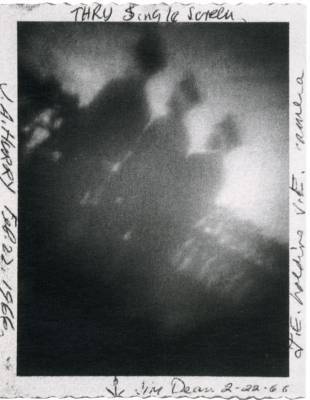
Anyway, in 1983 I was curious at the suggestion that not only could images imperceptible to the human eye be picked up on camera, but that great mystery of mind could even imprint them onto film with enough effort.

A controversial claim by the much-tested American Ted Serios and his ‘thoughtography’ experiments.

A-thought-image-created-by-Ted-Serios

A thought image created by Ted Serios.

As ever a true scientist, I thought I’d try some experimentation of my own and took some pictures in the forestry area behind the fields with the strong thought of traditional fairies being there.

When the pictures where developed it was hard not to notice some representations of diaphanous semi-opaque figures of the established fairy variety. Surely this was just imagination or the brain forming patterns ?

I repeated the experiment with similar results and decided it high time to involve an independent investigator. I sent the negatives to the newly formed Association for the Study of Anomalous Phenomena, and they passed them over to their expert the very credible and respected Vernon Harrison, former President of the Royal Photographic Society.

He could see exactly what I was pointing out and suggested he came to South Shields to take his own photos with his own equipment. He would take the photos at intervals of one minute apart and if the entities were seen to move about, then we might have to consider the unthinkable!

Vernon sent his report to the ASSAP but was puzzled when they refused to fund his venture. I later found out on an 1855 map of Shields that this precise area had once been called ‘Fair Fields’. A corruption from a far distant recollection of ‘fairy field’ perhaps ?

Later in the decade Shields had a prestigious private visit from my friend university lecturer and journalist Joe Cooper of Leeds, who came to my home in South Shields with a big problem.

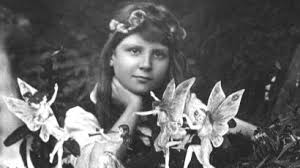
It was Joe who had finally revealed the case of the Cottingley Fairies whereby two cousins had fooled the world for almost 70 years having faked photos of fairies at the small beck at Cottingley.

For year after year Joe had visited the girls asking them how they had done it, but they always insisted the fairies were real. They weren’t, they had been cardboard cut outs with hat pins and the truth only finally came out in 1983 when the girls fell out and one decided to spite the other with a confession to Joe.

Under normal circumstances Joe would have been delighted with the scoop he had patiently waited years for, but not when the manuscript for his book defending the photos as genuine sat with his publisher and was about to be published!

What should he do, he asked me and my wife? Look the other way and just have the book come out? The girls confessed to The Times newspaper the following year and the game was up, but they claimed the very last photo they’d taken was genuine, so Joe went with this to cut his losses. But experts later found out it wasn’t genuine.

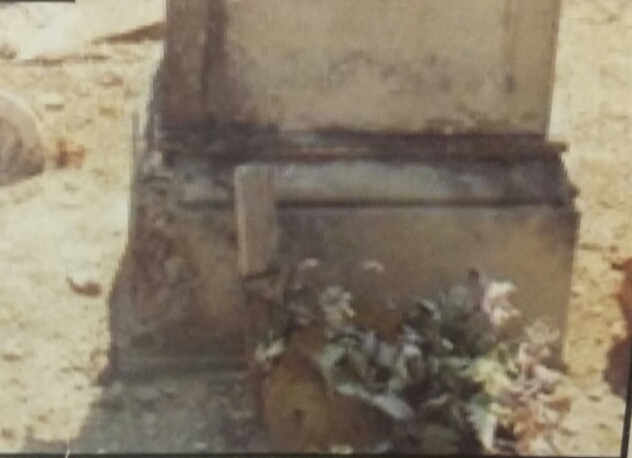
My interest in the camera picking up fairy images invisible to the eye continued for a while after. Here’s a pic of my favourite taken in France, a fairy figure lazing from left to right at the bottom of a tomb. Real or simply imagination?

fairyat-tomb

And there you have it, for those who consider belief in such things – Fairies in South Shields – who needs to go to Glastonbury!

For further information about the work of author Dan Green contact:

www.dangreencodex.co.uk/

Gary Alikivi October 2019.