WESTOE ROSE – The story of Amy Flagg, South Shields Historian & Photographer 1893-1965

STH0001974

Research and script I wrote for the 2016 documentary ‘Westoe Rose’.

Amy Flagg is fondly remembered as the lady in a hat and trench coat, who quietly went about photographing buildings and recording the history of a town she loved. But who was Amy ?

This is a story of courage and determination of a very unique woman who captured some of the most devastating images of South Shields in the 20th century.

At the end of the nineteenth century the North East was the industrial heartland of the UK. Collieries, Shipyards and Steelworks covered the landscape. Small villages dotted around the area offered their residents some clear breathing space away from the hazy smog of the town.

Westoe Village in South Shields was home to many notable people of the town. The shipbuilding family the Readheads, Robert Ingham MP, and in Chapel House was the Flagg family. In this grand 20 roomed house was Ambrose, his wife Annie and their only child Amy who was born on 30th of September 1893.

Amy’s father originally came from South London, and was educated at Cambridge University. In 1889 he married Annie Broughton of Westoe and was appointed Headmaster of the Marine School in the town.

He was also member of the Ancient Vestry of St Hilda’s where he rubbed shoulders with influential people. He arranged for Amy’s private education.

The young Amy had a brief romance with a neighbour in the Village but sadly like many men from the town he went to fight in the First World War and never returned, throughout the rest of her life she never married.

There is no record of her being employed so what did she do with her education ? This was a time when women had just fought for the vote, was she involved in the Suffragette movement ? Reports describe Amy as a shy, quiet and gentle woman willing to help others.

There is accounts of her spending hours in the garden of Chapel House and having an active role volunteering in the local hospital and library. Whether helping someone find information about the town or reading to a patient in hospital, was Amy now becoming aware of her surroundings and her purpose in life ?

By 1930 she was a member of the local photographic society. At a time when only a few female photographers worked in the UK, a woman behind the camera was very unique.

This is the time when Amy blossomed and began to see the world around her in a different light. She was fascinated by the changing landscape of the town and photographed the housing clearances along the riverside.

But the camera techniques that she had been using were brought into sharp focus in a period that would be Amy’s defining moment in her creative life. She captured the town’s suffering through one of it’s most traumatic episodes: the Second World War.

When the bombs dropped, she captured the scars with her camera.

Amy’s father had died in 1936 and her mother died during the war, plus the town she loved was falling apart from the German air raids. Her life was crumbling around her. These were her darkest days.  

But Amy was determined that these events would not destroy her, having a purpose and remaining active helped strengthen her. She gained recognition for her work and became the town’s official photographer during the war.

After receiving permission from the Ministry of Information and the Chief Press Censor, Amy produced a series of booklets of the Air Raid Damage.

An intelligent, determined and very courageous woman, at nearly 50 years old, she was climbing into demolished houses and onto bomb sites to capture the photographs.

To accompany the photographs, she documented as much information as possible about the areas and streets which were hit by bombs. She also recorded in great detail the time of the air raids and if there were any casualties or deaths.

‘On January 11th 1940 shortly after 10.00 hours South Shields felt the first impact of warfare by the Luftwaffe. The Air Ministry announced: Enemy air craft crossed the coast near Newcastle today. No bombs were dropped. Fighter patrols were sent up and Anti-aircraft guns opened fire’.

The pictures are haunting and as time passes they take on a new meaning for a wider audience. It is as if she was aware of the effect and importance they would have in years to come.

In her dark room she printed every photograph herself of the devastation caused by air raids on the town. With the traumatic events revolving around her, Amy would go to the darkroom where she could feel warmth and security in her own home as images she had taken that day were revealed by the mix of the chemicals.

She would watch the magic happen in front of her eyes.

Even the Flagg family home didn’t escape from the German bombs.

‘At zero 45 hours on the 16th April four bombs fell in the grounds of residential property in Westoe. The first on the edge of a field at Seacroft failed to explode and was dealt with by the bomb disposal unit at a later date. The second and third fell in the gardens of Fairfield and Eastgarth respectively.

The last one on the lawn ten yards from Chapel House. No casualties were reported but considerable damage was done to a large number of houses in the neighbourhood, including over forty roofs of houses in Horsley Hill road which were penetrated by lumps of clay thrown up by the explosions’.

These incredible photographs are considered to be her most valued and precious legacy. In her very extensive diary notes of October 2nd 1941

‘At daylight on Friday morning the Market Place looked like the ruins of Ypres; nothing could be seen but broken buildings; the square was littered with debris and a tangle of fire hose; all the remaining windows in St Hilda’s Church were shattered, the roof dislodged and the old stone walls pitted and scarred with shrapnel.

The Old Town Hall suffered heavy interior harm and none of the business premises were left intact. All the overhead wires were down and it was not until the afternoon of October 9th that buses were able to pass along King Street’.

Experiencing the two world wars, a changing landscape to her town, and both parents recently deceased, creatively and emotionally events of this magnitude would have tested the resilience of most people.

But she picked herself up and threw herself into a frenzied period of her life.

Recording information from parish records, researching family tree’s from notable people in the town, collecting various reports and photographs from the local paper that she would then cut out and paste in scrap books.

She was continually surprising librarians by asking to see little known documents, and then by hand she would record facts then type them up at home.

Amy was tireless in her thirst for knowledge about the town she loved, and with a lot of buildings disappearing during the war she thought it important to record as much information as she could.

Sadly this lead her to the last piece of work which was published by South Tyneside Library Service in 1979. It took Amy eight painstaking years of research to produce the book ‘Notes on the History of Shipbuilding in South Shields 1746-1946’.

‘Shadwell Street and Pilot Street. It is very fitting that these two streets should be the first section in these notes; the eastern extremity of the old township of South Shields was the birthplace and for long the nursery of shipbuilding in our town.

John Readheads story is that of an extremely successful industrialist in South Shields, from being a practical blacksmith, he built up one of the most prosperous shipbuilding firms on Tyneside. He made his way from wood and iron tugboats to large steamers for every part of the world.

John Readhead died on the 9th March 1894 at his home Southgarth, in Westoe Village; he had been in failing health for some time but had visited the West Docks almost daily until the last few weeks’.

Amy also noted the huge effort by Readheads during the First World War. Amongst the constant procession of merchant vessels which needed repairing after being torpedoed or mined, they supplied 20 cargo vessels, 3 armoured patrol boats and one vessel which was converted into an oil tanker for the Admiralty.

Amy noted in the book that nothing better illustrates the importance of Readheads than the genuine rejoicing when local newspaper the Shields Gazette announces in large headlines ‘ANOTHER ORDER FOR READHEADS’.

In her later years it was reported that Amy put as much work into her garden as she did of her house. She spent countless hours planting unusual flowers and plants.

Family, friends and neighbours were constant visitors to it, and she delighted in showing them the statues and conservatories. Even turning the crater caused by a world war two bomb into an ornamental garden.

Amy lived in Chapel House until 1962 when she gave the house and grounds to South Shields Corporation to enable the expansion of the Marine College. This was a heart breaking decision as she lived there most of her life.

‘I have not the slightest idea about the value of the house, but I shall not leave yet. I intend to spend one more summer here’.

But it was something that would of pleased her father as he devoted his life to education in the town. The Marine and Technical College being the successor to the Marine School where he worked for most of his life.

Amy stayed in the village for another three years until her death from stomach cancer on the 22nd February 1965. Her body was cremated and the ashes buried in the family grave in Harton Cemetery.

Amy requested a quiet affair but her popularity meant her funeral was attended by over 200 people including the Mayor of South Shields, her close friend and Librarian Miss Rosemary Farrell and a contingent of medical staff and nurses from the Ingham Infirmary.

In a last generous gesture Amy left a substantial amount of money in her will to Ingham hospital. A small remembrance in the town is Flagg Court, and the local photographic society where she was a member hold a yearly competition where the winner receives the Flagg Cup.

Amy’s extensive papers, research and photographs were all placed with the local library and are still held there to this day. Amy Flagg will be remembered as one of the town’s most important photographers and local historians.

To watch the 12min film check the You Tube channel at https://www.youtube.com/watch?v=gB1a3Y-yFhM

 Gary Alikivi  2019.
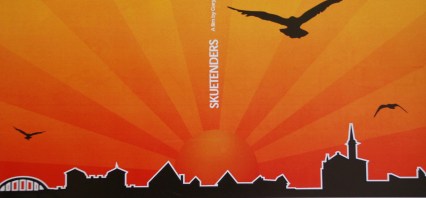
SKUETENDERS – documentary about The Lawe, South Shields.

DSC_0165

Over seven years – 2009-2016 – I produced over 20 documentaries around South Tyneside. I never received any funding to produce the films, each DVD was sold to help fund the next one.

Little Ireland’ in 2009 sold well and was sent to ex-pat’s around Europe, Canada and Australia but ‘Skuetenders’ was the most successful. I’ve lost count the number of copies sold, it’ll be around 800. 

The length of any programme can differ from very short adverts to full length films of 100 minutes plus. It depends on the story that you are telling. An interesting documentary on tv can be turned into just a number of soundbites.

They can tell the story but rush over some really good bits with the interviewee talking for less than 10 seconds. I’ve watched a few.

When I had the idea to make a documentary around the Lawe Top in South Shields I didn’t want it to be full of soundbites. I wanted the interviewee’s to have enough time to tell their story. Not only was it important what they had to say but it was all in the Geordie accent.

The idea was to wander around The Lawe Top collecting stories from residents with a narrator explaining the history of this oldest part of South Shields, it even has a Roman fort.  

As with all documentaries made over the seven years, arrangements were made with Hildred Whale at the South Shields Heritage Club to screen the film in the library.

Downstairs had a great theatre with over 100+ raked seats, a stage, large screen, video projector hanging from the ceiling and projection room with VHS and DVD players. It also had an audio mixing desk and mic’s for invited speakers. A great set up.

A date for the first screening on 2pm 19th October 2011 was arranged and that quickly sold out. A later show at 7pm was added. That sold out. Another date was added. Same again, a quick sell out. This was repeated until the film was shown six times.

Further evidence of a thirst that people have to see and hear stories from their hometown. The documentary had a running time of 70 minutes and was repeated in the next documentary ‘Tyne Dock Borders’. Another area of the town with a long history. 

To view the edited film go to the ALIKIVI You Tube channel and subscribe to watch more.

Gary Alikivi August 2018.

LITTLE IRELAND – documentary on Irish immigration into Jarrow, UK

DSC_0313

Sarah McFadden, (7th from left) my Great Grandmother, at Haggies Rope Works, in Willington Quay, Wallsend. A long way from Derry.

Little Ireland came about after I’d been researching my family tree in late 2007. I knew I had Irish background but not sure of the exact locations where they lived.

The Local Studies Library in South Shields was a great source for information. The filing system with the old press cuttings and the brilliant photographs by Amy Flagg and James Cleet of Tyneside in the 1930’s of area’s where some of my family lived after travelling from Ireland.

The old maps were really interesting. I could see where my Great Grandfather Dawson Downey from Derry lived. Bell Street, East Jarrow, across the road was the chemical works where he worked, next door was The Alkali pub and just up the road was St Bede’s Church. I thought thousands of families would be exactly the same. Never having to go very far. Living a small life.

I never realised the full impact that the Irish had on the North East and in my case, Jarrow. The population had grown so much around the 1890’s that the village became a small town.

I started to jot down a few notes when I read an article in The Shields Gazette in 2008 about Irish immigration written by Tom Kelly (Jarrow born playwright). I got in touch and we met up at The Customs House in South Shields. Quickly, a plan was made, a structure for a documentary and interviews with Jarrovians with Irish ancestry fell into place.

It wasn’t forced, it was easy to put together. 

We started filming at St Paul’s in East Jarrow. Tripod up, camera ready, Tom reading the opening lines from the script, but it didn’t feel right. We stopped and went back to my studio. Had a cup of coffee, talked about it then went out in his car again to Jarrow.

I started filming in his car and Tom started talking as he drove. This was more like it. Hand held felt more comfortable, being part of the film. As though an old Irishman had come back and was searching for his town ‘Like driving into the past’.

Over the next few weeks, I filmed interviews with people who had Irish relatives. For one interview I arranged to talk to singer Leo Connolly at his home in Jarrow.

I turned up, knocked on the door but got no answer. I knocked again and heard someone in the house. I looked through the front window and there they were. Two blokes with acoustic guitars and Leo in the middle singing his heart out. That was Little Ireland right there.

The documentary was successful it was screened for the first time to two sell out audiences at The Customs House on St Patricks Day 2009.

The film has been shown at various venues including St Bede’s Church Hall where most of the Irish, and my family, attended when they first came to Jarrow over 100 years ago.

Link to the documentary, to check out other films on You Tube subscribe to the channel.

Gary Alikivi   August 2018.

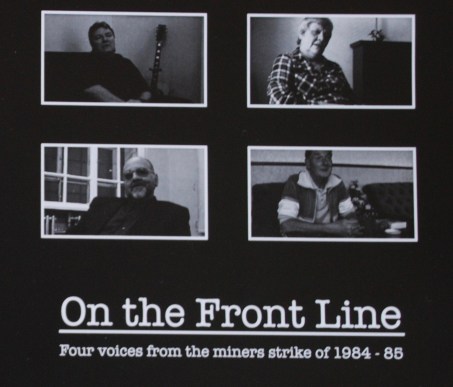
ON THE FRONT LINE – miners strike documentary

DSC_0154

I was walking down King Street in South Shields when I noticed a group of lads walking up the street laughing, joking and looking as if they didn’t have a care in the world. I wondered if any of them had jobs?

Were they killing time until their next shift at work ? Or their next giro? This led me into thinking about the unemployment problem in my hometown. 

I sat down on a bench where two old men were. I overheard them talking about how they had spent their working lives down the mines. Westoe Colliery used to be nearby. Listening to their banter, made me think back to when the strike began in March 1984.

I was 18 at the time, about the same age as those young lads who passed earlier. It was always on the telly. Scargill, Thatcher, pickets and police. TV footage of the battle of Orgreave. Explosive scenes of a class war. 

Reality was that thousands of men weren’t working. There was no money coming in to pay bills and feed kids. How did their families survive?  Whole communities were brought to their knees due to financial insecurity. Families torn apart.

I thought it would be interesting to find how people coped in that time of crisis. People who were directly involved given a voice to record their cold, hard, bitter truths. 

During research for the film the stories that I heard were laughter, sadness, courage and pride. Some people didn’t want to talk about the strike, or for any of their comments to be recorded. After all these years feelings still ran deep. Emotional scars. 

The years have rolled on and out of the ashes of the pit’s new businesses and housing developments have appeared. But the mining industry will never be forgotten.

Link to the documentary and to check out other films on You Tube subscribe to my channel: 


Gary Alikivi.

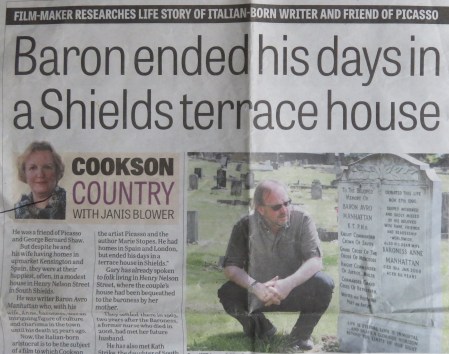
SECRETS & LIES – Shields Gazette article on documentary about Baron Avro Manhattan

IMG_4950

As the blog hits 35,000 views Journalist Peter French wrote in The Shields Gazette 7th August 2018….

The life and times of Avro Manhattan, an Italian born Baron whose artwork and writing made him friends and enemies throughout the world, and who chose to spend his final years, living with his wife in South Shields are truly fascinating. But don’t take my word for it – let the man himself reveal to you all about it’.

To read the story go to…www.shieldsgazette.com/lifestyle/nostalgia/hit-man-s-target-settled-in-south-shields-1-9288202

Or watch the documentary ‘SECRETS & LIES’ posted on 17th July 2018.

Gary Alikivi    August 2018.

WESTOE ROSE – making the documentary about South Shields Historian & Photographer Amy Flagg

DSC_1081 copy 3

Amy Flagg is fondly remembered as the lady in a hat and trench coat, who quietly went about photographing buildings and recording history of the town she loved. But who was Amy ?

By the Second World War both her parents had died, plus the town she loved was falling apart from the German air raids. Her life was crumbling around her. When the bombs dropped, she captured the scars with her camera.

This is a story of courage and determination of a very unique woman who captured some of the most devastating images of South Shields in the 20th century.

Just some of the script from my documentary about South Shields photographer and local historian Amy Flagg. I came across her photo’s a few years ago when I was part of a group who volunteered to digitize the photographic collection held in South Tyneside Library.

They were excellent photographs especially her record of the Second World War bomb damage in South Shields. A brave woman.

In my research I found that Amy had a darkroom so was able to print her own photograph’s. I know the magic that can happen there as I had my own set up during the early ’90s. My darkroom was in a cupboard under the stairs where I’d print the black and white images.

Before I had the home set up, I went on a short course in photography and darkroom techniques at a local community centre. If I was investing time and money, I wanted to know my way around a darkroom first.

I’d go out with a roll of film and shoot some photo’s, develop them into a roll of negatives then put them into the enlarger and exposed the photographic paper to the light shining through the negative. Then put the paper through the tray of chemicals.

The image started to come through – it was like magic. I knew I had to do more of this, and I did.

In June 2016 the time was right to make a short documentary about the life of Amy Flagg. Using archive information, Amys local history diary entries (pic above) and photographs from South Shields Library I put a script together.

North East playwrite Tom Kelly provided the narration, local journalist and writer, Janis Blower, added the voice of Amy. We  recorded the voice overs at The Customs Space studio in South Shields.

As with many documentaries I’ve made, North East musician John Clavering captured the mood with some great music.

On March 8th, 2017 ‘Westoe Rose’ was screened at The Word in South Shields on International Woman’s Day.

Watch the documentary ‘Westoe Rose’ and to check out some of my other films go to You Tube and subscribe to my channel.

Gary Alikivi    June 2018.

SECRETS & LIES – making a documentary based on the the life of Baron Avro Manhattan.

A11

I came across Avro Manhattan in Summer 2012 in the Local Studies Department of South Shields Library. At the time I was researching South Shields born Eileen O’Shaughnessy, wife of 1984 author George Orwell.

The library have a couple of large cabinets, inside are files with photographs and cuttings from local newspapers of notable people and events on Tyneside. All in alphabetical order. I flicked through to the O’s but landed in the letter M’s and came across a name which was unusual for Tyneside.

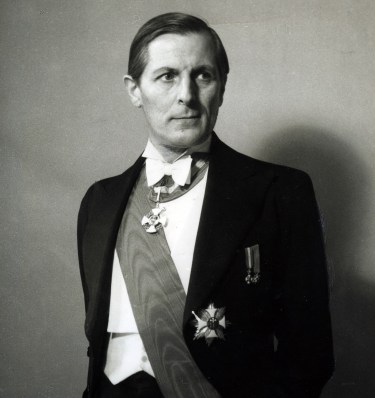
Sounding like a ’70s rock star, Baron Avro Manhattan was born in Italy in 1914, he was an author and artist. In the articles they reported he met Picasso, had homes in London and Spain, and a plot of land in the Bahamas. In his will he left over half a million pounds. Impressive story for someone who ended their days in a terraced house in South Shields.

A week later I was in a charity shop when I came across a small book ‘Poems by Manhatten’. At the entrance of South Shields library there was a small plinth about 5ft tall with a bust of Manhattan on top. I started to tap his head a couple of times for luck.

After completing the Wildflower film about Eileen O’Shaughnessy (available on the Alikivi you tube channel) I started research at the end of his life, records show he is buried in the Blackhill cemetery in Shotley Bridge. His wife’s parents lived in the town which is 30 miles from South Shields.

IMG_1024

Article from The Shields Gazette, June 2015.

There was more information on various websites but a lot more digging was needed, I talked to his former neighbours and friends. Stories I heard about him were getting bizarre – who was he? I put a request in local newspaper The Shields Gazette and received a few calls in response.

The story was on their website and a woman from Germany called Gunda Kraepelin got in touch. She sent over photos of Avro when he was a young artist in Italy. She also told stories about him when he was young as her mother knew him well.

A visit to London was arranged as I got in touch with an art dealer from Sussex who has an extensive collection of his framed artwork. Then another response from somebody closer to home.

A woman had bought the South Shields house that he died in. Inside were carpets, curtains, old bits of furniture and in a spare room upstairs was a box of artwork, books, letters and photographs – full of personal stuff. Lucky she had kept hold of it and now handed it over to me – it was a goldmine of information about Avro’s life.

After months of research and writing the script, I was ready to record and make a documentary. North East actors Jonathan Cash with his wife Helen were going to be the voices of Avro and his wife Anne. We recorded the narration and musician’s John Clavering and Dom Santos added music and sound.

In The Customs Space studio in South Shields, I was sitting with the sound engineer Martin Trollope and Helen Cash in the control room. In the studio Jonathan was sitting next to a microphone with a copy of the script.

After reading all the material on Avro, writing the story and looking at his photo’s I imagined what he might sound like. I was looking down at the script when Martin said ok let’s go for it. Jonathan read the first sentence and immediately I turned to Helen and said, ‘Avro’s in the room’. 

DSC_0315 2

Leaving plenty of space and time when working on a project allows more information to be collected – a positive aspect of not having to work to a deadline. I did receive a couple more leads but nothing that would add to the film.

Then in 2018 I shared this intriguing story. The search isn’t over to find out all the secrets and lies surrounding Avro Manhattan.

Watch ‘Secrets & Lies’ here and check out some of my other films on You Tube and subscribe to the channel. 

Gary Alikivi    July 2018.