How’s the stats so far this year? Numbers from the UK and USA with regular hits from the European block of Spain, Italy and Germany plus a sudden spike from Ireland.
So, it’s big thanks to readers taking the total views over 410,000 since knocking out the first post in February 2017 which was an interview with one of the original New Wave of British Heavy Metal bands Mythra.
This post features another batch of North East stories from this year with links to the full interviews at the end. First up are Hartlepool based VaingloriousUK who got in touch in July.
‘We began seeking out, tidying up and uploading historic – and sometimes hysterical – video footage of music associated with the North East. The VainGloriousUK channel currently has up to 170 videos uploaded’.
‘One of these was the appearance of Brian Johnson’s first group Geordie. Recently we learned that our copy appears to be the only one still in existence when we were contacted about it being used in a forthcoming documentary about Brian’.
‘Most musicians are flattered that we care so much about their music, some are a bit wary about how their historical musical legacy may now be viewed – what you thought was important at 16 is not the same when you are 66!’
North Tyneside Actor & Theatre Producer Alison Stanley got in touch and talked about her latest project ‘Tits Up’.
‘A couple of years ago a young friend of mine was diagnosed with breast cancer, people think it’s older people who develop this disease, so I wanted to raise awareness of this’.
‘Last year I found a lump and experienced the process of going to the breast clinic. Fortunately, my lump wasn’t anything of concern but it did make me think’.
‘Even though I was fine I began questioning my own mortality and spent nights wondering what would happen if I had cancer? What would’ve happened to my son who is autistic?’
‘I went along to Live Well with Cancer in North Shields where the ladies were kind enough to share their stories with me.’
In June we had a severe Heed Case – musicians Newts Newton (ex Angelic Upstarts guitarist) and Si Cadelik (Northumbrian Psych rock bassist) filled yer in about their new album.
‘The new album explores gaslighting, narcissism and entitlement. All three elements feature heavily in populism and identity politics. Social media allows this to flourish, elbowing aside balance, objectivity and critical thinking. This emboldens extremists and those who seek to radicalise people with their brand of hateful rhetoric’.
‘Rather than tackle the causes of problems, the trend is to scapegoat. This should be a worry and concern for everyone, not just two people in a band. One day, that scapegoat might be you!’
‘We’ve been involved in music since our late teens, so that’s approximately 40 years and counting. In some ways it feels like forever, in others, like only yesterday’.
In July playwright Tom Kelly talked about writing a number of musicals including the work of Tyne Dock born author Catherine Cookson.
‘Tom & Catherine had its premier at South Shields Customs House, it was really exciting. All the team were really nervous on the opening night but when the overture began, we all felt it was going to be a success. And it was. It had a ‘sold out’ run. A measure of its success was that me mam wanted to go every night! And she was not a theatre-goer. She loved ‘Tom & Catherine.’
‘The play was first produced in 1999, and again 2001. In 2006 there was an outdoor performance at Bents Park, South Shields in which Jade Thirlwall (Little Mix) appeared, and most recently in 2019’.
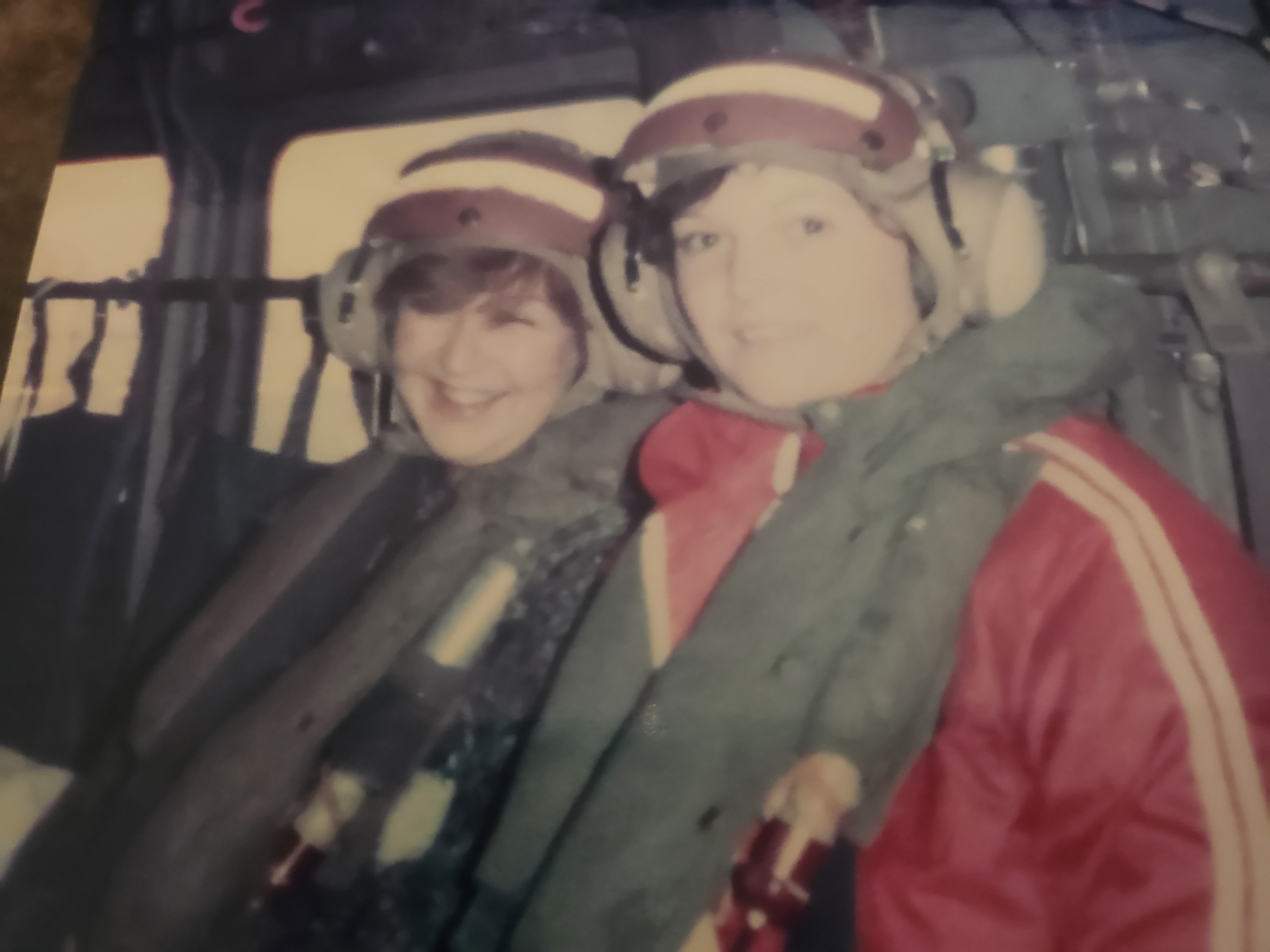
After a career in the Royal Navy which took her around the world, to managing pubs in the UK, plus running an island in the Falklands, now in her mid-60s Karen is back working on Tyneside where she fosters for people with learning disabilities.
I’ve always been in a job were your committed 24/7. When I look back the Falkland islands was a fascinating adventure but that story is for another day, this is about my time in the Royal Navy.
When I left school at 16 I didn’t have a clue what I was going to do but my parents were adamant I was going to get some kind of job and my mother knew someone who worked in an office in South Shields.
But I knew an office environment wouldn’t be any good for me because I struggled academically. I didn’t know it at the time but I was dyslexic.
I was out in Sunderland with a friend and he was talking about joining the army. This triggered a thought in the back of my mind as something maybe I could do.
I went to South Shields careers service, the only leaflet they had was about the Royal Navy. I applied and got an interview at Gunner House opposite the Central Station in Newcastle. I passed that and got offered a training place in Reading – joining on the 2nd October 1978.
It was scary travelling down south on the train but when I got there somebody was waiting and took me to HMS Dauntless where I started my provisional training.
Karen with new recruits (back row on left) at HMS Dauntless, Reading 1978.
HMS Dauntless is your basic training base. We had to prove we were physically fit, learn about teamwork, Navy values, how to respond to orders, the importance of ceremonial duties and drills then finally getting fitted for our uniform.
It was hard, I didn’t get the strictness of it all at first. When they say clean the floor with a toothbrush it really meant that and when they say get there at 10am it really means 9.55am because Navy time is always five minutes before. Once after turning up late, I had to clean every window in the dormitory using newspaper and vinegar. I shaped up after that.
I had lovely long dark hair but after they gave me all the injections my arms were really sore and I couldn’t lift them up to put my hair up in a bun. You always had to tie up your hair when on parade – so in the end I had it cut off.
After five weeks training, we had a passing out parade and I was sent to HMS Pembroke in Rochester as a WREN Catering Steward where I took more training.
HMS Pembroke was the place we went to learn how to be a good officer steward. We were shown different types of dinner service, bar work, how to clean the silverware, uniforms, shine shoes. We also learned first aid and basic fire training. We were often told ‘Leaning time is cleaning time’.
In the month when I joined there was about thirty of us and only two from the North. In the café one day some lads came in and heard I was a Geordie. They asked me to say things like motor boats and paper planes! They were fascinated with the Geordie accent.
While I was there a TV show was being made and we got to meet one of the actors. The local paper back in South Shields printed the photo with me and an actor dressed in German uniform.
For possible bomb threats we always done exercises and always warned beforehand. Late 70s the I.R.A bombing campaign was prolific and this time HMS Pembroke was threatened with a bomb.
We were in our barracks when everything went quiet and the siren went off. We were under threat. This wasn’t an exercise – it was real. We all hid under a table. Fortunately, nothing happened but it’s a scary feeling thinking we could all die here.
Then on 10th January 1979 I went to HMS Neptune the nuclear submarine base in Faslane, Scotland. It was a beautiful affluential area around Gare Loch. It was a good dorm with only four of us in, really good girls.
As a Steward we served meals to officers and guests at official receptions, operated the bar and looked after officers’ accommodation.
One time we went out on the submarine as it submerged in the loch it was doing angles and dangles, that’s basically moving up and down. Everything – even the tea urn had to be secured.
But this was the time of the start of nuclear protests, they were setting up camp outside the gates and chaining themselves to the fence. Before the protests it was pretty much easy going around the base we would go out on our bikes, now we couldn’t go out as much.
There was a chance of a four-month draft stewarding in the barracks in Northern Ireland. I was still 17 so the Navy had to ask my parent’s permission if I could go. ‘No chance’ they said. So that was that.
I was livid, more livid with the Navy that they had to ask. I was responsible enough to be part of their war team but had to ask me mam to go! Would love to have gone there.
The Falklands war was on when I was based at HMS Vernon in Portsmouth in 1982. I remember when the first ship was hit on 4th May. We were in a disco and everybody was dancing when the music suddenly stopped and an announcement was made about HMS Sheffield.
I knew one of the chef’s whose ship was one of the first hit and sunk. He told me afterwards they were getting in the lifeboat and someone shouted ‘that’s typical, it was a really good scran tonight’. The Navy use dark humour to get out of any situation.
The fact of not knowing who was alive or dead brought on a lot of mental health problems after that war. It must have been terrifying what they went through.
Morale during the war was to carry on as normal as you would expect. I’m sure there was a conscious effort from all ranks to keep morale up. The war lasted 74 days and when the fleet returned in 1982 huge crowds gathered on the quayside to welcome them back.
On ships they have what they call Sods Operas which is a show they put on with games, songs, jokes. Each mess has their own night like karaoke, darts or talent night. We all need to laugh to keep morale up and for letting off steam – but sometimes a laugh wasn’t enough.
The submarines would go away for three months underwater and the crew would need a release when they returned to shore. They’d choose a bar to go in all night to let off steam, get drunk and fights would break out. Some nights would get out of hand, but if you’d been cooped up after not seeing anyone else and not even being able to go for a walk to clear your head, how would you cope?
A fantastic opportunity come out of HMS Vernon. It was a four-month draft to Australia. A tri-service of Army, Navy and Air Force basically doing a swap with their forces.
It took around a week to get there – there were no commercial flights for us. First, we went out on a Hercules to Germany then stopped in Singapore for a few days. The Australians flew us into their country then down to Sydney. I went on to our accommodation near Canberra which was in the middle of nowhere.
The Australian Navy were lovely but this was a culture shock, kangaroos jumping all over when you’re going to work, a beautiful beach but couldn’t swim in it cos there’s sharks, there was no local buses, nothing to do really.
I wasn’t benefiting from being in Canberra so was fortunate with the help of an English officer to arrange a draft to Sydney. This was completely different. Accommodation was like American motels and based next to Bondi beach.
It was a lively place – I remember The Flying Pieman restaurant, the Aussies love their food – the barbies, fantastic meals. We had a week’s holiday and travelled up to the Gold Coast – I loved it there.
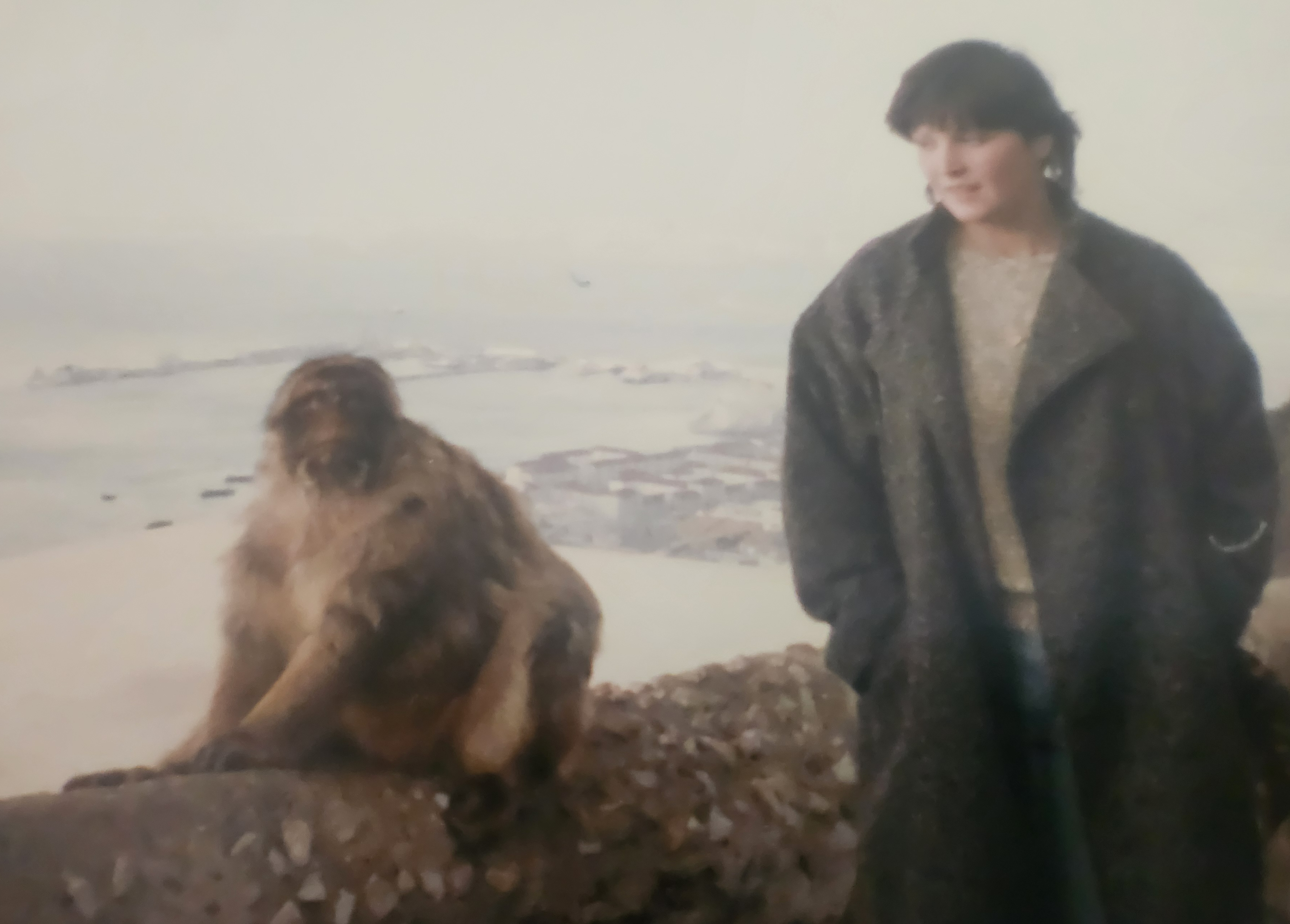
Gibraltar rock in 1985.
By 1985 I was based in Gibraltar at HMS Rooke as an Acting Leading Wren. We were contained on the rock because the border wasn’t open then. Gibraltar didn’t have much, there were dusty old streets and you couldn’t get things like fresh milk.
There was nowhere to go really. Instead of going stir crazy the Navy used to take us over to Morrocco. We’d get away for a weekend to Tangiers.
When I was there the border with Spain officially opened and we walked through to get our passports stamped, then we could go to have milky coffee or a few drinks in La Linea. With the border fully open now we went up the coast to enjoy seaside towns like Fuengirola, Marbella and Torremolinos.
Back to the UK and Portsmouth, or Pompey as it was known to the Royal Navy, the city had lively pubs and clubs used by the Navy, it was a good run ashore. Yes, we liked a drink, who doesn’t? But as I’ve said socialising was our way of letting off steam and relaxing after a hard day’s work.
At HMS Nelson we had summer and winter balls in massive marquees to organise. Big entertainers were booked, TV people and celebrities were invited. One year we had Kenny Ball and his Jazzmen playing, another Oliver Reed turned up but was kicked out for being drunk and offending people.
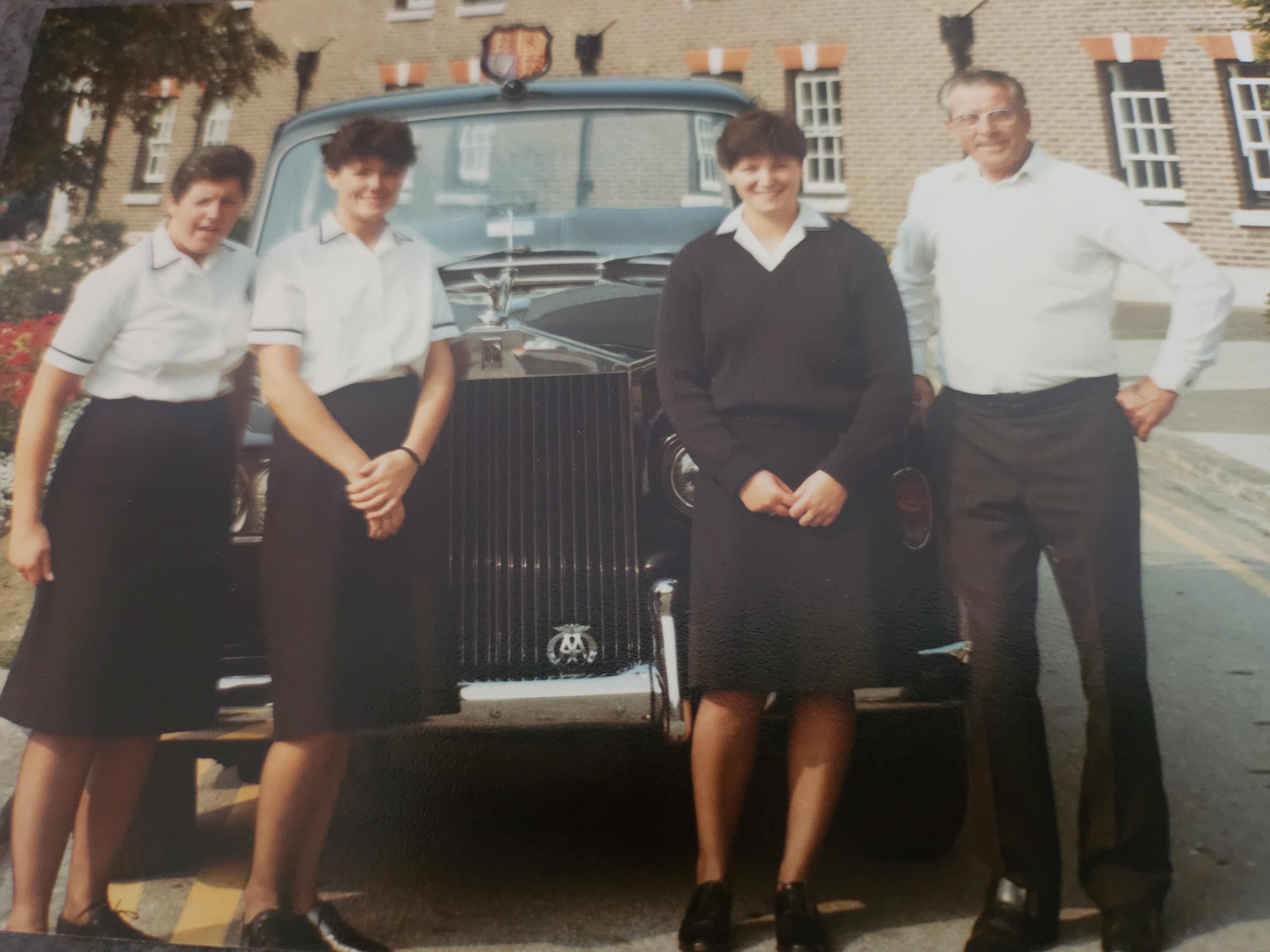
We had a really special visit one year from the Queen for a commemorative event. There were hundreds attending and sniffer dogs were brought in for security. A massive truck turned up a few days beforehand with the Royal’s own cutlery and plates.
To lay the table we had to get out a tape measure and length of string to make sure everything is straight and measured up. I’m sure she never says ‘that fork needs to be an inch over’. As I served her lunch she would say ‘Thank you for bringing that’. She was lovely, like a little nana, really nice.
From there I went to HMS Warrior in London working for the Flag officer of Submarines who worked out of a property in Rickmansworth. He had a team to look after him – chef, driver, chief steward, then me.
I wasn’t there long as I moved back to Portsmouth and HMS Dryard where I worked for the Captain. I loved my last years in Portsmouth but that’s where I finally left the Royal Navy for good on 5th March 1990.
What do I think of my time in the Navy? For someone from little South Shields not knowing much about the world and who had only been on a caravan holiday in Wales, to go to all these places, meet different people, experience different cultures and make life-long friends was fantastic.
The Navy teaches you to be self-sufficient, disciplined and learn valuable life skills like teamwork. It might be a good idea to bring back some sort of National service today, it’ll only be a good thing.
Now living in South Shields, retired teacher Rosie Anderson still feels there is work to do and more stories to tell.
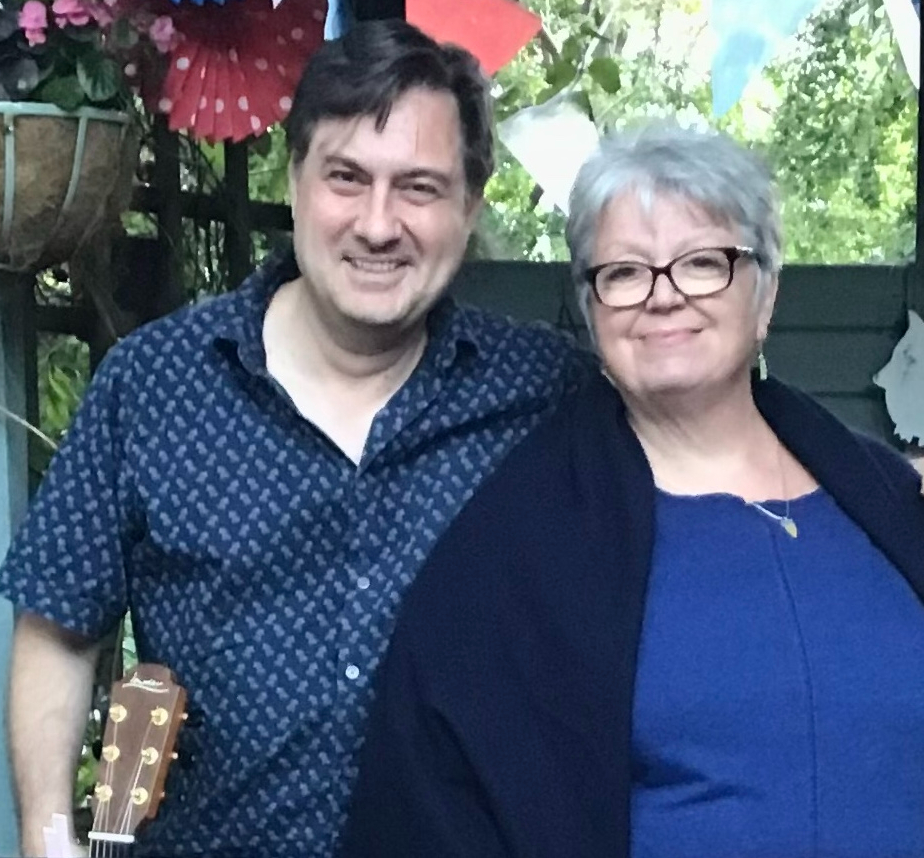
‘Sometimes I feel as though I’m just getting started. I sing whenever I can. This year my musical partner Adam Holden and I have played at The Watch House in Cullercoats, The White Room in Stanley and Cockermouth Festival which were all great. I’m determined not to just bow out because I’m getting older’.
‘I grew up in Wylam in the Tyne Valley, in a house full of music. Both my Grandparents played piano. My dad listened to The Beatles, both parents loved the theatre and musicals and they took me and my brother there – I still love all that’.
‘When I was a kid I told my parents I wanted to be a performer but they were worried I wouldn’t be able to afford a home like them, they wanted me to have a ‘proper’ job. They wouldn’t let me study performing arts so I trained as a teacher’.
‘My first job was in Benwell, Newcastle. Then I went to the Middle East where I spent 10 years teaching in Kuwait and Qatar, before returning to Newcastle. I taught at Walkergate Primary School where I would do all the music shows and drama productions. Loved doing the shows there, I never gave lyric sheets out to the kids, they learned by listening and singing the songs back’.
‘When I left teaching I saw an advert for facilitators for Singing for the Brain with the Alzheimers Society. I really loved doing that. I did that for six years until covid hit. Singing on-line with people on the screen in front of you didn’t work really’.
‘People love stories in whatever form, be it a book, a film or a song. Some people write songs about being in love, and about their feelings. My songs are mostly about people and places. I find stories present themselves to me and I take them and turn them into a song’.
‘There are two songs that I have written that stand out for me. Sally Smiths Lament was written after my husband Chris and I worked on a film about soldiers from County Durham during World War One’.
‘Sally was the wife of miner Fred Smith, who featured in our film. They lived in a tiny terraced house and every day Fred and his sons needed a bath, a clean shirt, a clean bed and a dinner. The kids needed to get to school – how did she cope with all that, especially when Fred was away at war. I wanted to give Sally, and all the women like her, a voice.’
‘When I wrote it the song just seemed to be presented to me, her whole life. I got to sing it at a celebration in West Auckland and her family came to hear it – it was very moving. It travelled well and won three competitions – the Newcastle Folk Club, Rothbury Traditional Music Festival and first prize at Morpeth Gathering’.
‘I can’t just decide to sit down and write a song – some people do and I applaud them for the discipline but I have to wait until they come. Three things happened to me in my life that I put together in a song called Breakdown’.
‘When I was a kid I lived at Chapel House Estate in the west end of Newcastle. One night me, my mother and a friend went for a walk. This woman came out of her house in her dressing gown, she wasn’t in control of herself, didn’t know what time or day it was. I had never seen that behaviour in an adult before. Now I believe she was having a nervous breakdown’.
‘That always stayed in my head and another one was when I was living in Fenham. I went to the shops with my children who were only small then, and a woman came out of her house with a letter and asked if I would read it to her as she was confused and couldn’t understand it’.
‘Then about 30 years ago I went on a blind date in Newcastle with this very nice bloke. He said I need to tell you something before we go any further ‘When I was working in Canada I had a nervous breakdown in the car park of a Burger King’. It was hard to concentrate on anything else after that’.
‘But I remembered those incidents and those three individual people are lodged in my heart for their own traumas. They gave me that song’.
‘This year we went to Kjerringoy a former trading post in the Norwegian Arctic Circle, out in the middle of nowhere, it was beautiful. A family ran it in the 19th century and had 3000 fishermen working for them, catching and processing thousands of tons of cod’.
‘The father and husband died and the wife continued to run it single-handed for many years until she eventually remarried. I asked the locals if there was a song about her and there isn’t. So that’s my next song – Annalisa from Kjerringoy. Her story needs to be told’.
‘I’m also aware we need to start telling more stories about people and their lives and jobs today otherwise in 100 years time there will be no one singing about us!‘
‘What does music mean to me? It’s hard to describe it, it’s so deeply embedded, there’s no life without it. Music is at the core of my being, there is no day without singing and because I have grandchildren now I have a new audience! We sing folk songs and songs from musicals, they’re word perfect when they sing them back’.
‘Music gives such joy, when I was singing with the Alzheimers Society the collective joy and reminiscences of songs from the past and enjoying it together was just so valuable for the families’.
‘We had people who wouldn’t sing at all but liked being there and that was fine. Once, two women brought their mother to a session and she sat between them. She didn’t communicate at all, had her head down, closed off you know. But when we started singing a song, I can’t remember which one, she lifted her head up and actually got up and started moving around in the middle of the circle’.
‘One daughter got up and started dancing with her. When we got to the end of the song the daughter turned round and said to me ‘She’s just said my name for the first time in years’.
‘Music gets right in there (pointing at heart) we’ve got to keep it going and expose our youngest children and oldest adults to music because it really does reach parts that others can’t reach. It’s like hearing the heartbeat in your mother’s womb’.
‘As a child I wanted to do music, as an adult I taught it with kids then people with dementia, despite my age I’m still committed to what I always wanted to do. Women who’ve had careers and families can still chase their dreams’.
Tyne Dock in South Shields was an interesting part of the town to live, with its churches, terraced houses and huge industrial Victorian arches next to the river. It was in the early 80s when a lot of the old housing stock was being demolished and in Porchester Street I watched Ascendency being filmed. Julie Covington of hit TV show RockFollies was the star, not long after that The Machine Gunners was set in Porchester and filmed for BBC TV.
‘Up to when I was 7 year old I lived in Porchester Street. It’s not there now but St Mary’s Church around the corner is where I used to sing in the choir and the scouts’ said Tony.
‘Now I live on the Lawe Top beside the roman fort. It’s almost aspirational for someone who comes from Tyne Dock to wind up being a skuetender’ (native to the Lawe Top).
‘I’m proud of coming from South Shields and when you were young trips to the fort were absolutely mind blowing. The area it’s in is incredible, with the whole vista of the river and parks and beach nearby – we’re lucky here’.
Being a former Tyne Docker now Skuetender he’snot wrong there. Tony featured on the site back in May 2018 talking about storytelling and songwriting and what music means to him.
‘I turned back to folk singing in 2017 after the government education cuts made it too expensive for schools to have extra-curricular practitioners, like me, to come in. Before that I was storytelling in schools for 20 years covering hundreds of issues such as the steelworks when I was in Ebbw Vale, the Romans here in South Shields, the coal industry and iron stone mining in Teesside and Northumberland. It was an extremely successful time’.
‘Storytelling is very important, its communication, social history, emotional control, drama, its use of vocabulary. For me it was learning how to be a performer and developing stamina to be able to do four hour sets a day, then drive 100 miles to go to a hotel, get up next day and do it again’.
‘Cities like Manchester, Oxford, Cambridge, all over the UK. I’d stay in these areas year after year for a fortnight at a time and, unlike a music tour where you could be in Aberdeen one day and Bournemouth the next, I’d plan easy distances to plan a route back home – loved the life.’
‘Then around 2009 I got an email. The message was ‘would you like to tell stories in Argentina?’ I wasn’t sure it was kosher at first but I received a phone call a few weeks later confirming it was. I was given contacts of previous storytellers who recommended it’.
‘Me and my wife went out and ended up over the years going to about 15 countries for six weeks at a time. They were international schools where the kids had already learnt English but mostly from American cartoon shows and they wanted them to hear colloquial language, more English. With my accent, I knew I would have to speak a bit slower – and there’s nothing worse than a posh Geordie!’
‘When we were in a Spanish speaking country, for the youngest ones, you’d have someone to explain the context of the story and then I’d still tell the story in English. Half of their lessons were in English, to make it an immersive experience’.
‘To accompany the lessons it was helpful to use British sign language, or borrow a guitar. I always took a banjo with me as it was such a different instrument for them to hear. Once the banjo was broken en-route and we found the only banjo repairman in Bogota in Colombia’.
‘It was hard work getting up at 5am, into a taxi for a two hour drive to tell stories to 3-400 children in ampitheatres – but what an experience! The last time we went over was Peru in 2016. We’d been to Uruguay, China, South Korea, all over – loved it. Sometimes I look back and think how did that happen – you’ve got to seize every opportunity’.
‘I’ve been songwriting for years and always have a songwriting project on the go. I write about 15 songs per year. Ideas can come from a book, a documentary or what someone says in a street… then I do a lot of research and add some ‘meat’ to the story. Songwriting can possess and obsess you’.
‘Recently I wrote a number of songs about Iron Stone Mining, the workers and how dangerous it was working there, although I do try to stay away from disaster. It’s not all ‘Grim up North’.
‘A friend of mine gave me a diary about his distant relation who had been captured by the Portugese and transported to Portchester Castle in Hampshire! Having lived in Porchester Street I didn’t know about this place. The songs can take you anywhere!’
‘I wrote a song with local playwright Tom Kelly about ‘the seven lads of Jarrow’ who, in the 1830s worked in the mines under diabolical conditions so tried to form a union with union organiser Tomas Hepburn. They ended up being brought up on jumped up charges – 10 were captured 3 escaped. 7 ended up in a kangaroo court and were transported to Australia never to return. It’s such an emotional subject’.
‘In 2019 I was planning to write autobiographical songs, one was about the day they tarmacked the cobbles in Porchester Street and as kids we could roller skate across the street. Another was the times walking through Tyne Dock arches with my dad and me being on his shoulders. Or another about my sister playing with her friends in the backyard in Porchester Street – then covid came along’.
‘I didn’t want to write about the pandemic or what happened around it, like being scared or having a feeling of waiting for death to come. I wrote nothing about that. I just wanted to write about the one’s I love and keep sane’.
‘All the performances I did in South America and all of the daily storytelling work I did in schools I now channel into what I present now as a musician. I still do regular open mics, folk club spots and am a paid guest in clubs and festivals throughout the UK’.
‘I love performing, it’s like an out of body experience. I’m not hippy dippy, mystical or spiritual but enjoy giving people enjoyment, sharing moments with people…and it beats the hell out of singing in the bathroom!’
Tony has placed all of the stories, CPD and instructional DVDs for parents and children on You Tube at ‘Tony Wilson Storyteller.
‘Being an outcast gave me more time to focus on myself, to perfect my act. I’m glad I never fitted in at school, cos this has worked out well for me in the long run’.
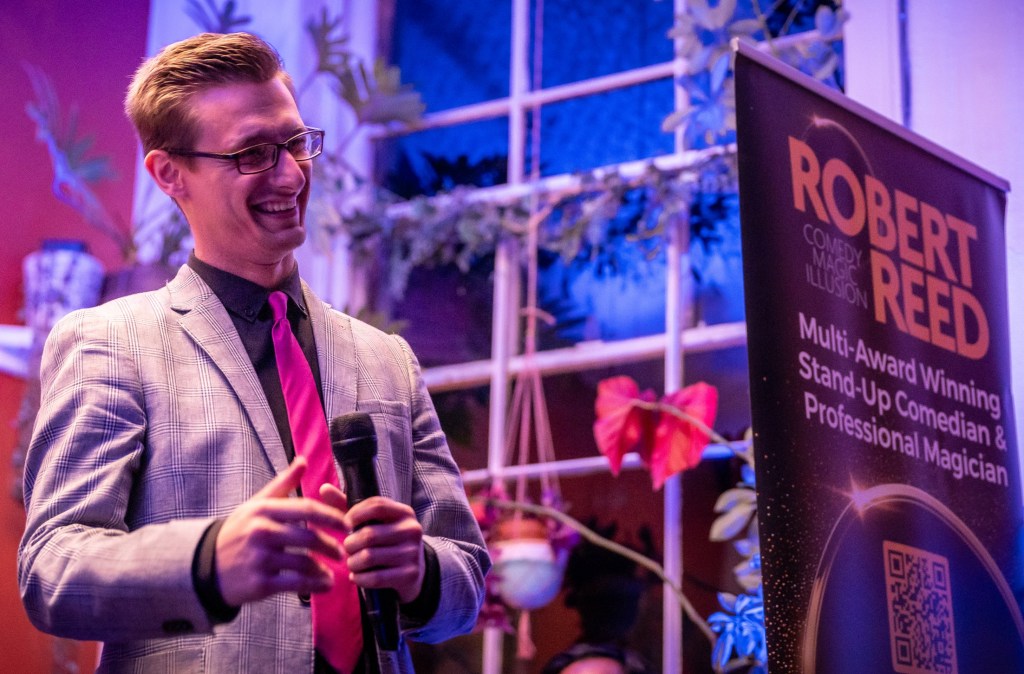
Born in South Shields, Robert Reed is a multi-award winning comedian and professional magician, at 25 I think he’s the youngest contributor to this site.
‘Well, I’m honoured (laughs). I’m a solo performer, my ego wouldn’t stand sharing the stage with anyone else. When I’m on stage I can take the mick out of myself and get the crowd on my side by exploiting my weak points, it shows my vulnerable side and the crowd give me more of a chance. Hecklers? I take them on. I use one-liners to my advantage’.
‘I can be rude but I’m not offensive as say Jimmy Carr. I do find their acts funny but to be honest I haven’t got the bollocks to go down the route of the Jimmy Carr’s or Frankie Boyles. I’m still young for this career so wouldn’t like to shorten it by rubbing people up the wrong way’.
‘I would say I’m like a modern and ruder version of Tommy Cooper (1970s comedian). My magic is more to a professional standard but it’s masked by the silliness and immaturity of the jokes’.
‘I started doing magic as a hobby when I was 10 then started in comedy when I was 17. I was always into one liners and silly dad jokes so I give it a go and came up with 30 one liners and tried them at stand-up gigs – they went down well’.
‘In rehearsal I figure out the magic trick first and the jokes come as I work it out and script the show. I’ll have hundreds of ideas but it’s finding the right seven or eight which will get the audience onside, then engaged, then the final kicker’.
‘After performing the routine around 20 times at restaurants, weddings or corporate events more jokes come along so you perfect the show. Some of the best jokes aren’t scripted they happen on the night’.
‘The end of the show there is a kicker where actually the crowd see a good magic trick. They leave the show having seen a good balance of magic and comedy – hopefully’.
(I never get a telephone call on my landline so was surprised when it started ringing at this point in the interview. We both looked at the phone then back to each other. Robert remarked ‘That’s me, good trick yeh?’)
‘I wouldn’t be around without the help of family, fellow magicians, fellow comedians and some closely trusted friends. But the hour or two on stage has got to be made all about you. There is plenty of time afterwards to thank people. I never forget who helped me get where I am. You’ve got to be respectful and I’m lucky to get assistance from many people in the industry’.
‘There were two people who inspired me – first was Uncle Joe who lived on the Whiteleas estate, South Shields. He wasn’t an entertainer but worked in the Docks. He was well known for his card tricks down the pub. When I visited with my mam he showed me how to play cards, every week would be a new coin trick or a brainteaser. Then I would go to school and show my friends’.
‘The second person to take me under his wing was a physics teacher called Mr Obee at St Joseph’s school. Every break time we would talk about magic and jokes, he would loan me magic books, then he would show me a different trick each time which I would perform for the other kids at dinner time. Now I don’t go anywhere without a deck of cards – you feel naked without one’.
‘We’re still in contact and he came to see my recent show at Durhan Fringe. His motto was ‘work hard and be nice’ which I’ve always followed. It was helpful propaganda about putting the hard work in. He told me that every hour you aren’t working on your dream someone else out there is. I’m very grateful to him’.
‘I stopped sleeping 8 hours a day and cut it to 6 so I could get extra hours at work. It became all about maximising the time I could work it out. I became obsessed with it, it’s the most important thing in my life – I want to be entertaining people’.
‘When I meet fellow professionals, I ask them about their working day and how they structure it. Get up at a certain time, start work, have a break, go back to work and repeat the next day. I recently met author Terry Deary who is noted for the Horrible Histories books and he talked about a similar structure that he was doing so I thought I’m on the right path here’.
‘For new ideas I always have a notebook and pen with me or record on the phone. They can be there for days or months. Sometimes it’s a name of a shop that I can twist around or just talking to myself in the shower and imagining being on stage that sparks off something which I then try out on friends’.
‘If you want it enough you will sacrifice holidays, relationships even sleep. Sometimes you can think of an idea and work through the night to get it. Then when you wake up you have the punchline’.
‘The toughest crowd you ever get is when you perform a new routine. In July I was at the Durham Fringe for five nights on an hour slot. All new material. Over the nights I done rewrites, shaped things, it got there. But looking back it was my first gigs that were the toughest. It was for 300 people in dickie bow ties going round the venue performing magic on tables’.
‘But then I was thrown in at the deep end and asked to perform for 10 minutes on the stage, I didn’t have a routine ready – that was sweaty and scary. Hopefully I got away with it being just a kid. The 10 minutes felt longer than the two hours going round the tables’.
‘I’m heavily involved in the South Tyneside International Magic Festival event which we hold every year at The Customs House, South Shields. This year it’s the 20th anniversary so we have an impressive bill lined up. We get magicians from around the world to come to Shields. The Customs House have been responsible for a lot of creative talent coming out of the area. Ray Spencer (former Director) was pivotal in a lot of this’.
‘After the shows the performers all meet up in the bar of the Littlehaven Hotel down at Shields beach, some stay over there as well. Are we competitive? No, we’re open and all get on really well – honest we do. We are happy to get together. We have midnight shows, plenty drinking and get in some take aways’.
‘I look forward to the socialising because it’s with people you only see a few times a year and you share the same loves, passions and interests. And you spend time with people you’ve looked up to and admired. We’ve always been the kid at school who never fit in, or was odd, or bullied, not the cool one, or never done sports, just desperate to show off their humour or talent’.
‘Don’t think any performer will truly retire, your brains still working you’ve still got the urge to do something. Once you do one gig you’re hooked it’s like a drug. I’m trying to get as many gigs under my belt as I can’.
‘I’m happy doing what I do now entertaining a crowd telling silly dirty one-liners and doing magic tricks. I’m looking to work hard for that TV break, or entertaining at bigger venues for more people where they think I’m worth spending money on a ticket for the show – that’s my measure of success’.
‘We all need money to keep going but the amount isn’t a motivator, it’s hearing the crowd laughter walking off stage, thinking they were entertained tonight – that’s my goal. This is a reason why I don’t want to slow down. I’m programmed to work every day and I love it’.
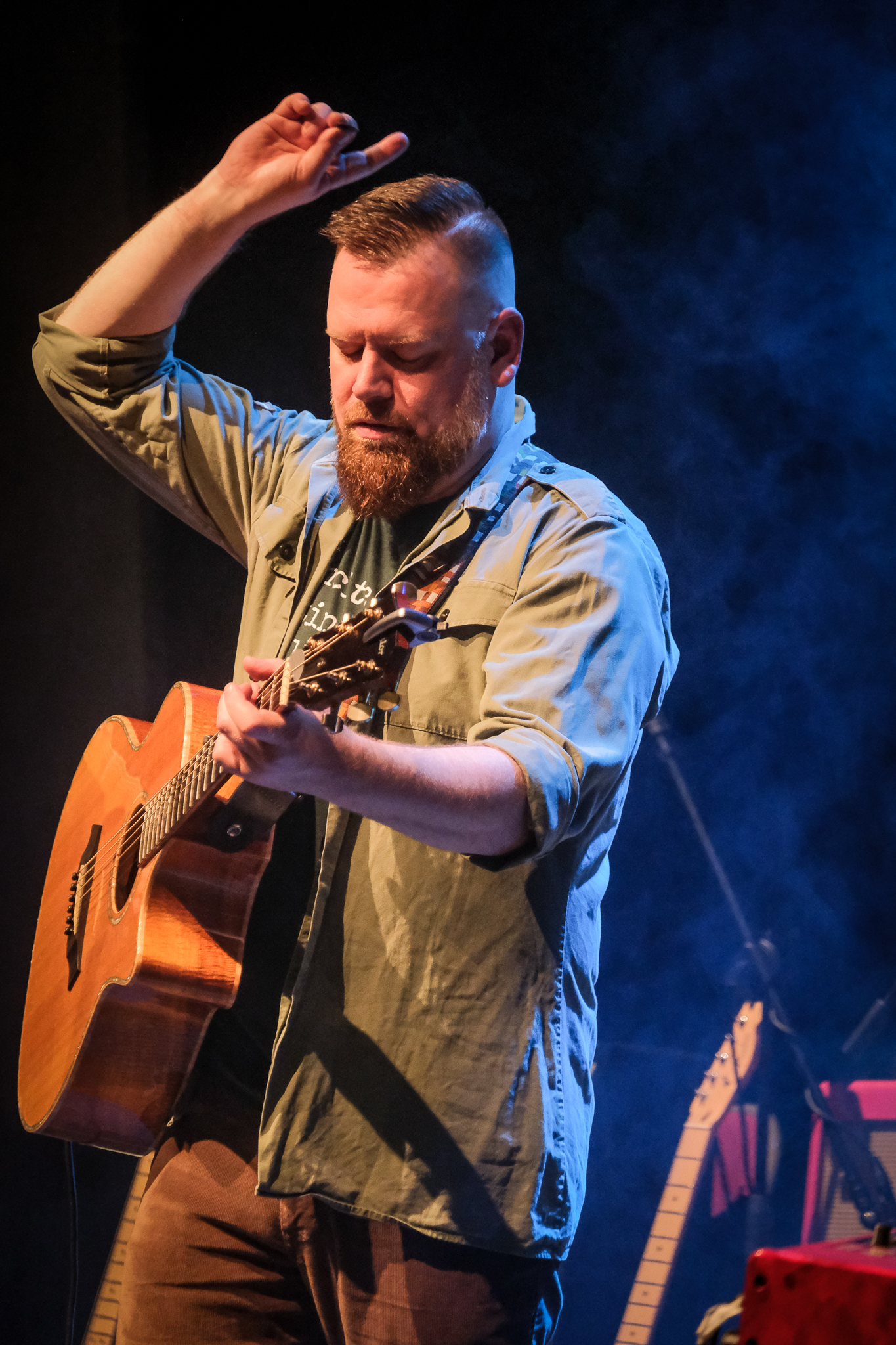
Music is a massive part of our lives. Not only do we want to listen to it, but read about it and talk about it. Tony Bengtsson is no different.
‘Music was around the house when I was growing up. My Dad was a rock n roll fan of the ‘60s, we had the sound of Creedence Clearwater Revival in common. My Mam was a massive Elvis fan and encouraged us to listen to music’.
‘My Mam worked in a news agents shop in South Shields where they had a stack of old jukebox 45’s for sale. One of them was Wages Day by Deacon Blue which I loved. I played it many times – still got it now, although it has a little chip in the record’.
‘One day I walked past Music Maker shop in South Shields with all its instruments and speakers displayed in the window and saw a set of harmonicas. I was around 13 when my parents bought me them. I was just trying to make sounds out of them, plus my Nana had a small Casio keyboard that I played little tunes on, I liked experimenting’.
When he was younger Tony had his eye on being a journalist so he went down to local newspaper, The Shields Gazette.
‘One of their top journalists, Janis Blower, looked after me when I was there on work experience. She got me searching through the microfiche with its old stories from the Gazette, the history of South Shields was all there. Loved it’.
‘I love studying local and family history, my ancestor came over from Helsingborg in Sweden around 1850. He was a merchant seaman who lived in Orange Street, South Shields. My grandfather passed on a family tree which I’ve updated with recent family additions’.
After leaving school and enrolling on a Music Production course at Newcastle College, then slogging away for hours in a factory, Tony saved up enough dosh for a set of drums.
‘I made a good living playing in club bands for a while. There was a Bryan Adams tribute and a punk band called Sound of the Suburbs. Then I played in original band Poker Face who played 80s melodic pop rock around Durham’.
Listening to a wide range of sounds and improving on his songwriting Tony made the move from the back of the stage to upfront – drums to guitar.
‘The UK had such a diverse range of music from different parts of the country, there was Liverpool, there was Manchester, and here on the Tyne we had the blues with bands like The Animals. Unashamedly I’m a bit of a country and western fan and love the Scottish/Irish folk sound, that’s why I like the acoustic music we play’.
A decision to play cover gigs helped finance Tony’s musical career. He also has the small matter of a wedding coming up in October so every little helps.
‘Yeah, at the minute I’m doing a lot of cover gigs cos that’s where the money is and this is my full-time job. At a booking I do two 45- minute sets with a break in between’.
‘Recently I played a wine bar where they talked all through the first half, so if the gig’s going bad like that, I have a shorter break between sets and get on with the second one. But the good gigs are when you get to talk to people beforehand and after’.
‘Having work organised by an agent is great, he just phones me up ‘Can you do this gig’. That’s it, I don’t have to organise anything just make sure I turn up on time’.
‘With the original band I have to decide a lot like where we are playing and how much for, organising transport if it’s outside the North East. There’s a lot of extra logistics and admin to do that people don’t see’.
The single Sometimes a Man from 2020.
‘I started writing my own songs around 2006, I’ve a recent song called These Wars which is anti-war and highlights the problems we have today. Why are we spending money on wars when people at home are struggling to eat, heat and get a job?’
‘If you do have a job like the nurses, who after all they’d done for us during covid, when they decided to strike hoping for a pay rise, they got attacked by the media for being greedy. It’s an unfair situation’.
For a hard-working full-time creative professional isn’t the saying ‘do what you love and you never work a day?’
‘Yep! I also gig with the original band. This August we supported Martin Stephenson & the Daintees at Falloden Hall near Alnwick – that was brilliant. It was a lovely sunny day, we played in a court yard with hay bales, a little festival vibe, and I sold out on cd’s’.
‘It can be hard to keep the band all together in one place. There is violinist and guitarist Niles Kreger who is living here but is originally from Connecticut, USA, and there’s Liam Fender (Sam’s brother) on keys who has his own band so there’s other stuff going on, we’re all busy’.
‘We’ve played a couple of gigs outside the North East – in London and Manchester but would love to play in Ireland. My partners family live in Waterford so when we visit them I take my guitar cos there’s plenty of places to play every day. Live music is in their culture – I love Ireland’.
‘You know I consider myself an introvert, I like staying at home but once I’m out there I love it. I’d be worried if I didn’t get nervous or anxious butterflies before a gig’.
‘I’m now at the stage where if anything goes wrong like a speaker going off well that just happens, can’t do anything about it, just sort it out and play on’.
“I’ve always been fascinated with everything World War Two related and RAF in particular. My grandfather was in the Royal Flying Corps, and both my father and my son were in the RAF” explained Terry.
“I was in the Air Training Corps in South Shields but then a medic came to school to test us all for colour-blindness. I failed the test miserably and was told I would never be accepted by the RAF. I was gutted, as you can imagine”.
Terry lives in Marske on Teesside, but was born in South Shields at midnight 21st– 22nd December 1948…“My mum asked the midwife which day was my birthday. She was told it was the 21st as my head came out on that day. That crosses the Winter Solstice, so my top half is Sagittarius and my bottom half Capricorn. I think this explains why I’ve done so many different jobs in my life”joked Terry.
Throughout his school years his parents moved around the country…
”We lived above a wallpaper shop in Stockton on Tees, then moved to Billingham and later down south to Reading and Mitcham”.
Finally, the Wilkinson family moved back to South Shields where Terry was a pupil at South Shields Grammar Technical School for Boys.
“After leaving school, I worked for the Crown Agents for Overseas Governments in London, thenWise Speke stockbrokers in Newcastle where I became a Member of the London Stock Exchange”.
“From 2000 I ran a successful Theatre in Education company touring schools for 15 years. It won a Best New Business Award but I gave it up in 2015 in order to write”.
When researching his family tree and local history Terry has always been fascinated by one event.
“At midnight on 3 May 1941, the factory and Head Office of Wilkinson’s Mineral Water Manufacturers in North Shields was hit by a single German bomb. It went through the roof, descending through all three floors, taking all the heavy bottling machinery and chemicals down to the basement – which was in use as a public air raid shelter. 107 died, 43 of which were children. Whole families were wiped out.”
“It is written by my good friend, Peter Bolger, who also manages a comprehensive website on the incident”>www.northshields173.org
“Because of censorship and the government’s desire not to damage public morale, little is known beyond Tyneside. It was, however, one of the largest loss of life incidents from a single bomb during the provincial Blitz”.
“Nothing is known of the identity of the plane which dropped the bomb – type, squadron, mission etc – as German records were mostly destroyed in the closing stages of the war”.
“I wanted to write a story that answered all these questions and create a fictional alternative. Having said that, nobody could say with any conviction this is not what happened”.
Terry started on a series of five espionage novels. ‘Handler’ is set in 1941, ‘Sleeper’ in 1942 and is currently working on the third ‘Chancer’ which covers 1943.
“They’re a mix of fact and fiction and trace through the war years of an English-born German spy, Howard Wesley, and his nemesis, MI5 agent Albert Stokes”.
“Wesley is a figment of my imagination. Stokes is based on a real character. And this is the pattern for the other books in the series. I also like to plunder WW2 history for little-known incidents and people who feature against the broader background of what was taking place in the war”.
‘Handler’ won a ‘Chill With A Book’ Premier Readers’ Award just a few months after publication. This spurred Terry on to get others in the series out there as quickly as possible.
“A few of those who have given good feedback have made the point that it would make a good series. I am convinced that it would. I certainly write with a film or TV series in mind”.
“In the shorter term I am hoping to record the whole series as audible books. I recorded an extract from the book that author John Orton is currently writing (link to interview below) and he was happy with it”.
“I’ve spoken to my publisher – UK Book Publishing – and offered them my services as a narrator for others. I’m also an actor, card-holding Equity member and very good at accents and dialects”.
The site has been live since 2017 and now in 2024 is on course to hit 400,000 views so it’s a big thanks to readers from all over the world.
As the years fly by I find myself looking back and remembering film projects I’ve worked on. Memories may be a bit fuzzy but the good stuff comes to the front.
During a recent sort out at home I came across a work diary from 20 years ago. A quick flick through revealed a busy summer starting with dates for a short film I was commissioned to make about public art in the North East.
When discussing the project I was asked how would the film be made? Looking at the map of the art trail there’s quite a few sites located over a large area.
Off the cuff I remember replying ‘Well you can get great angles from above…so why not use a helicopter’. To my surprise my suggestion was met with enthusiasm and I was given the green light. Now I’d never been in a helicopter before and I’m not too clever with heights, when leaving the meeting I asked myself why did I even suggest it?
Back to my office and a quick look through Yellow Pages, yes it was that long ago, I came across Eagle Helicopters based in Newcastle, so put a phone call into them and booked a flight.
One sequence was shooting at Roker Marina in Sunderland, then the Conversation Piece on South Shields seafront and another circling the Angel of the North in Gateshead. To be honest it’s hard to believe it was 20 years ago, but the exhilarating feeling of filming in a helicopter hundreds of feet in the air will always remain.
A couple of weeks after that I flew out to America and enrolled on a film making course at New York Film Academy. Within days of landing at JFK airport and booking into a hotel in East Village, I was shooting a music video on the streets of Manhattan! I picked up some great tips from the Academy’s instructors for future projects.
A month later I returned to South Shields and was approached by South Tyneside Council about making an in-depth documentary recording a regeneration project in the town. Basically, the council tenants were looking to spruce it up. The brief was to document the progress working with the residents. Sounded like a good opportunity to use the techniques I learned in New York. And it was.
I remember first day of filming and a resident asking ‘What do you want to see’? my reply was ‘Show me the worst on the estate and we’ll work up from there’. ‘You’ll do for me’ he said.
He showed me the back of a vacant house where there was a make shift wooden shelter with a sleeping bag and quilt. Obviously, somebody’s bed, somebody’s home.
Years later when reading through those pages it made me realise the highs and lows of documentary film making in one summer. From capturing the celebration of public art from the sky, then brought down to earth by filming real life desperation.
After 500 posts and over 370,000 views, WordPress (who run this blog) have sent their congratulations to the North East culture site after completing its seventh year, aye seven years, can’t believe how quickly time has gone.
From the first post in February 2017, the free site – without any ads, pop ups or clickbait – has gone from strength to strength picking up views not only here in the UK but worldwide, including USA, Japan, Brazil, Sweden, Ireland, Australia and European countries Spain, Italy, France and Germany.
First up were metal bands Fist, Mythra, Raven, Satan, Venom and Tygers of Pan Tang followed by music memories from bands including Beckett, Angelic Upstarts, White Heat, Lindisfarne, Lorraine Crosby, Wildhearts, Dance Class, Kane Gang and Southbound.
Searching the site, you’ll find interviews with authors and photographers, there’s also stories from recording studios Guardian and Impulse.
As well as theatre producer Leah Bell and TV actress Lesley Saint-John, by far the most popular post at 15,000, there are stories from roadies, radio presenters and TV production teams.
During the 2020 covid lockdowns people looked for something new to read so their views added to the regular readers, resulting in monthly numbers of 7,000 with a high of 9,700.
Now the site gets a steady monthly count of 4-5,000, I must say a big thanks to everyone who reads the posts – much appreciated.
How long will it last? Well, the phone’s still ringing and stories keep dropping in my inbox, so I’ll keep gaan until the juice runs out.
North East prog popsters Amateur Ornithologist release new album Hide on 19th January 2024, with the single Time To Talk out on Friday 12th Jan.
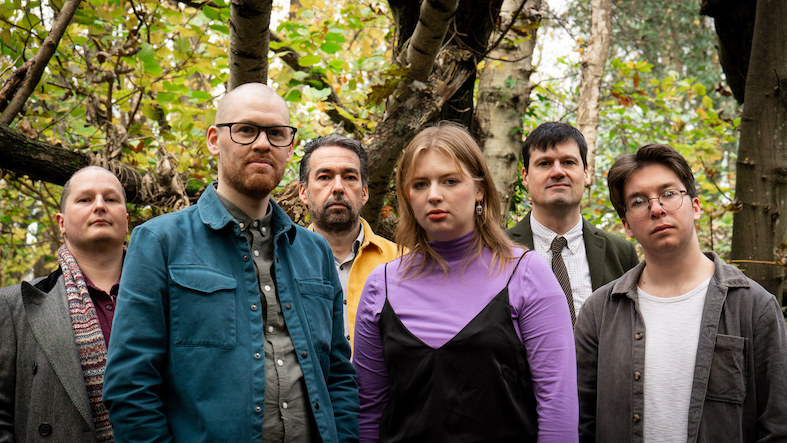
Amateur Ornithologist are a weird pop group. Starting as Daniel Clifford’s solo project, AO has grown to perform as anything from a five-piece to an octet. Due to their adventurous approach to densely-layered, harmony-filled pop the band have earned comparisons to Talking Heads, The Beach Boys and local heroes Field Music
Fusing pop, orchestral, jazz and rock influences to create a grand melodic sound, the band have found a home for their unique musical expressions.
The band have featured on the cover of NARC Magazine, sold-out live shows, BBC Introducing, Amazing Radio, Radio Wigwam and a host of radio stations.
Hide reveals ten adventurous songs they’ve crafted creating an album that’s “widescreen” and “richly melodic” (NARC Magazine) with “lush and varied instrumentation” (Dirge).
First single, If It Looks Like Magic, is a slice of gothic post-punk about the Cottingley Fairies and received airplay from BBC Introducing and Amazing Radio. Follow-up The Word is Love deals with deceivingly simple matters of the heart to an acoustic Latin backdrop. Third single Time To Talk (12th Jan) charts the difficulties of modern communication, reflected in sharp key and time changes, jerky rhythms and squealing sax.
Hide also features collaborations with musicians from across the North East scene. A Hidden Path, Hide and When They Fall feature cello by Marianne Kell (Belle Skies) and violins by Patrick Lawrence (Detroit Tourist Board). Drums were recorded by youngster Harrison Mitchell (The Strands), with rhythm guitar, percussion and backing vocals by regular collaborator Georgia Foster Adams.
AO’s successful crowdfunding campaign saw the band offer handmade crochet birds and avian Lino-prints in return for the money needed to make and release Hide.
In his South Shields studio, Harbourmaster co-produced the album with lead songwriter Daniel Clifford during summer 2023. Gravel footsteps, handclaps and percussion were recorded for a number of tracks by Crowdfunder supporters, who were treated to cups of tea and biscuits with the band as they worked.
Amateur Ornithologist release Hide on 19th January across all major digital platforms, and on limited edition cassette and CD from the AO Bandcamp. They play a sold out show at The Globe, Newcastle, on the same day with Marc Bird and This Little Bird.
AO line up > Daniel Clifford – vocals, Liam Slack – keys & vocals, Maddie Smyth – viola & vocals, Chris Perriman – bass, Louis Young – guitar, Rob Bailey – saxophones, Theo Nolan – drums, Giovanni Onofri – guitar.
Link to interview in May 2021 with songwriter Daniel Clifford talking about the release of the debut album by Amateur Ornithologist >










 ALIKIVI UK : NORTH EAST MUSIC & CULTURE