After researching the life and making a documentary about South Shields historian & photographer Amy Flagg, I was impressed by Amy’s work and thought she deserved recognition so I put forward a nomination for a blue plaque to be placed in the town to celebrate her achievements.
Reported to be a shy and quiet person, Amy was one of only a few female photographers working in the UK when she started photographing the housing clearances along South Shields riverside in the 1930’s.
In addition to her love of photography, she had a passion for researching the town’s history and collated notes about the towns shipbuilding heritage which were later published in 1979.
Amy volunteered at the Ingham Infirmary and South Shields Public Library, she also enjoyed her garden at home in Chapel House, Westoe Village. In 1962, she gave the grounds of Chapel House to South Shields Corporation to enable the expansion of the Marine and Technical College.
On her death in 1965, she left a substantial sum of money to the infirmary and bequeathed her extensive collection of photographs and notes to the towns Library.
Bomb damage after an enemy air raid in South Shields Market Place. pic courtesy of South Tyneside Council.
Amy’s work is most notable for the haunting images she took in the aftermath of enemy air raids during the Second World War, they are an important and unique record of the impact of war on the town.
She was a very courageous woman, at nearly 50 years old she was climbing onto bomb sites and demolished houses to get the picture – where the bombs dropped she captured the scars with her camera.
Amy printed the photographs in her dark room at home and the images are her most precious legacy. When I first came across them back in 2008 in the Local History Library I thought they looked incredible and to find that a lady from South Shields took them was an inspiration.
So it was a great pleasure to be invited to see a blue plaque officially unveiled on 8 March 2022 to celebrate the life and work of Amy Flagg. The Mayor of South Tyneside, Councillor Pat Hay, unveiled the plaque at Chapel House.
“It was a great honour to unveil the blue plaque to commemorate Amy Flagg. She was an incredible photographer and historian. She also dedicated much of her time volunteering in her community”.
“This plaque is a tribute to Amy’s life, her remarkable contribution to the rich heritage of the area and the amazing legacy she left behind. She will be remembered for many years to come.”
The Mayor was joined by the Mayoress Jean Copp, Leader of South Tyneside Council, Councillor Tracey Dixon and Deputy Leader Councillor Joan Atkinson, two actors from Beamish Museum plus residents of Westoe Village also joined the celebration.
To mark the occasion South Shields Museum and Art Gallery is showcasing some of Amy’s photographs and her research, plus the documentary (link below) will be shown. The display is available until June.
There’s also a small display of Amy’s work in South Shields new cultural centre and library, The Word.
Thanks to South Tyneside Council and South Shields Museum & Art Gallery for additional information.
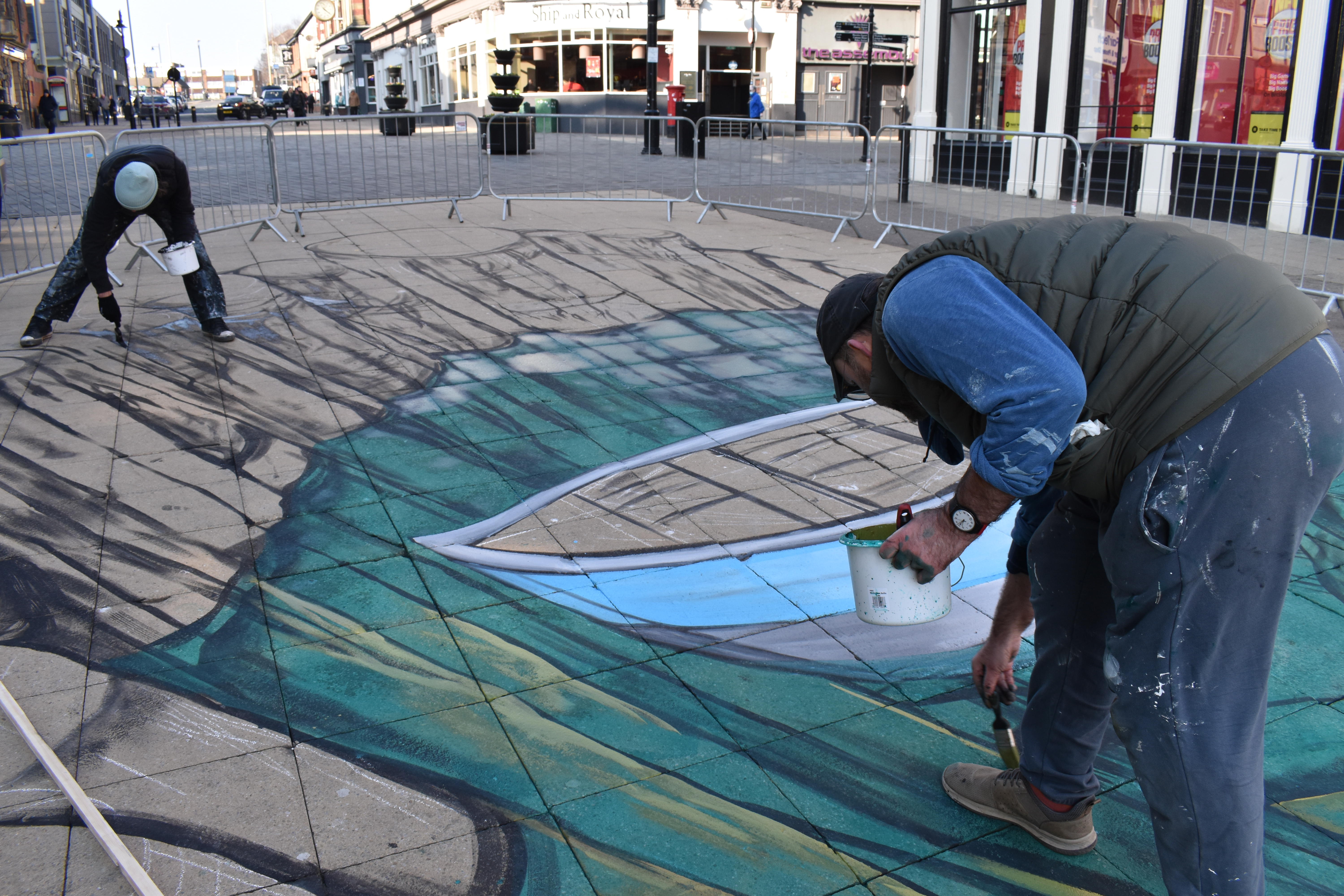
For the next couple of daysSouth Shields town centre is hosting Joe and Gavin two street artists from London, Joe took five minutes out to explain their latest project.
We’re painting a large picture on the ground which is filled up with sea water, lots of sea life and a mini lifeboat, it’s a 3D illusion and the French call it trompe l’oeil meaning a trick of the eye.
Hopefully when it’s finished people will look at it and see a big hole in the pavement and interact with it and get their pictures taken.
If it rains we should be alright as it’s acrylic paint which is pretty durable and we’re going to put a bit of a matt varnish on it at the end so that will keep it looking good for a while.
We’ve done a few of these since 2005, not in this area but we done two pictures in Newcastle in summer last year.
This is part of the Cultural Spring which is to get people interested in art because if you wouldn’t normally go in a gallery you can see it in the street – and we can hopefully get people excited about it and help lift the spirits after the bad times we’ve gone through over the last few years.
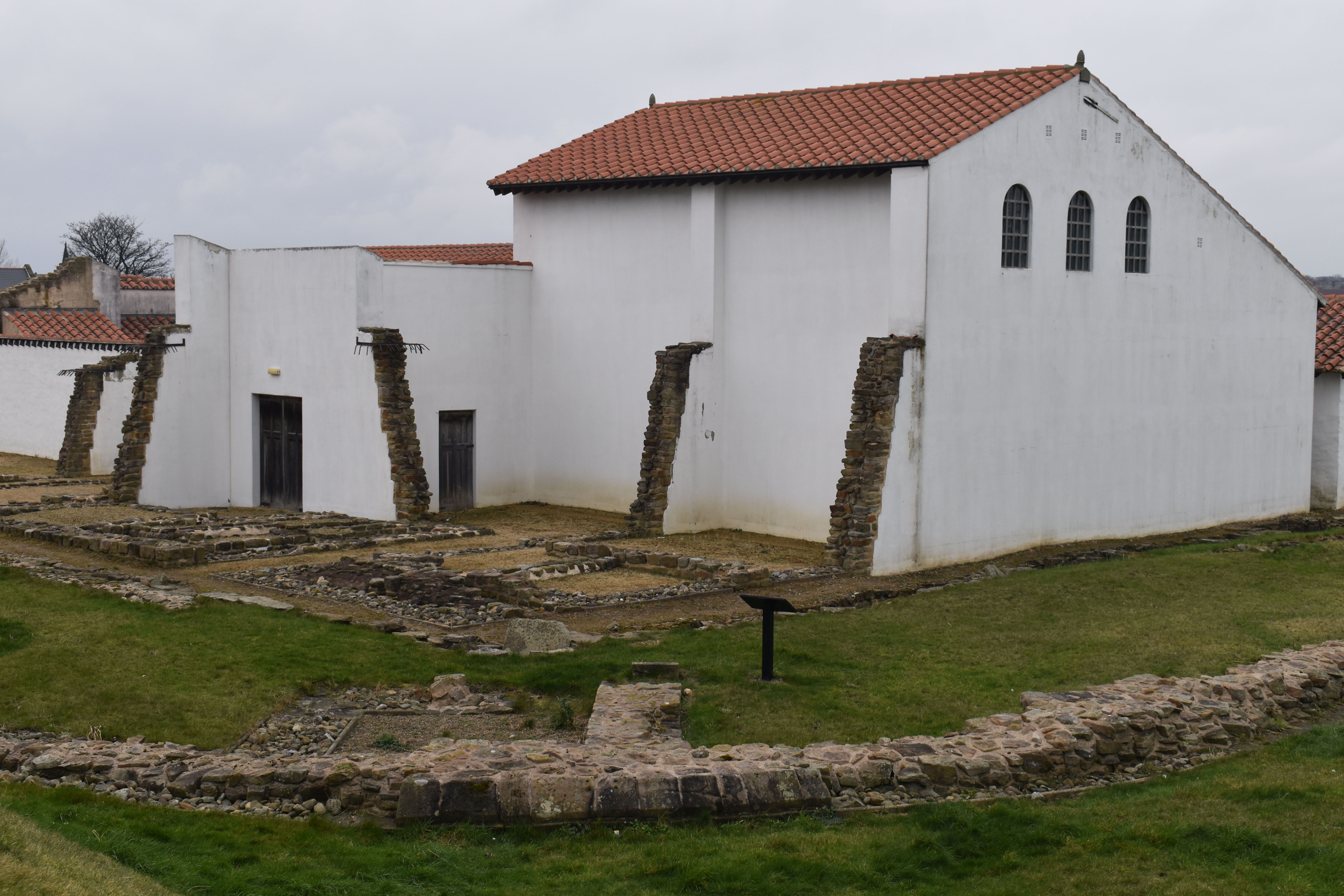
Alexander Croom at Arbeia Roman Fort, South Shields(pic. Alikivi 2022)
By the end of the first century AD, the Roman army was firmly established in the North East.
Hadrian had built an 80 mile long wall by AD128, some years later a fort was built on barren land in what became Newcastle and on the coastlineoverlooking the river Tyne a fort was built in South Shields.
Living a stone’s throw away I’ve been interested in the Roman fort so I popped over to the museum met Alex Croom and asked ‘What did the Romans do for us ?’
When expanding the Roman empire across the world Emperor Septimius Severus arrived in the UK from Rome and started his Scotland campaign so the South Shields fort was converted into a supply base.
He brought over his two sons Caracalla and Geta, we aren’t sure of the reason but it might have been to drag them away from the flesh pots of Rome and learn to be warriors rather than playboys.
After multiple successful military campaigns was Emperor Septimius Severus the first rock star of Rome ?
I’m not sure of that (laughs). Sadly in the middle of fighting Septimius died of sickness in York in 211AD. We think his sons left South Shields quickly after his death to get back to Rome as we have an altar which is inscribed To the gods the Preservers the unit at Lugudunum paid its vow for their safe return.
What attracted you to archaeology ?
I love archaeology and finding out how people lived many years ago, the Greeks and Romans have a lot in common but it’s the Romans I’m more fascinated with.
I’m originally from Berkshire and have worked at South Shields Roman Fort for over 30 odd years now. When I finished studying at Newcastle University I came here and started work as a trainee in 1986.
It was an exciting time as a lot was going on with the reconstruction of the West Gate. South Shields is also unique in the Roman Empire as the only supply base that’s been excavated.
Why is there a fort in South Shields ?
Forty years after Hadrian’s Wall was built a stone fort at South Shields was positioned on the Lawe Top. They would look out to check who’s coming into the North Sea and river Tyne thus making it difficult to get past.
Directly across river is North Shields, there is no evidence of a fort there but you never know.
Roman Fort with surrounding houses and school (bottom of pic) being demolished in 1966 at the Lawe Top next to the river Tyne.
Today the Roman Fort is surrounded by a modern school and housing are there plans to reveal more of the remains ?
There is only one row of houses left that are built on remains, they are near the East Gate, but there is plenty of unexcavated areas inside the fort that we can work on.
Of course outside the fort there are all the other houses built over the civilian settlement, temple, baths, cemetery and training ground.
After the Romans left, the area was open fields until 1875, the Victorians knew there were Roman remains here as pottery, tile and coins were found during ploughing, and there were various bits thrown under hedgerows.
They wanted to dig the fort up because they thought it was going to be lost for ever when housing was built over it. After the dig mounds of soil was placed on top so it preserved the remains, a Roman Remains Park was set up in the 1880’s.
From the 1900’s the Lawe Top was built up by the Victorians, rows of housing, churches and a school were built in the area, after a number of years some houses were demolished in 1966.
As houses were being demolished the remains of the North gate were exposed with a lot of stones surviving, by 1977 the Victorian school was ready to be demolished and the south east corner of the fort excavated.
You never know how much there is until you dig down to the Roman layers, they would have been surprised to see how much was there.
Victorian school ready to be demolished in 1977 with the Roman fort south west corner being excavated.
The curve on the corners of the fort are original, Roman forts always had curved corners although the buildings inside had 90 degree corners.
They may have been built that way for the watchtowers which were two to three stories high and rather similar in size to the reconstructed West Gate, also they were wide enough for soldiers to walk the wall.
I remember in 2005 TV’s Time Team (Tower Blocks & Togas, series 12 episode 12) came in to film a dig and we were in the area of the Lawe Top where the Roman cemetery was.
We knew this because we had dug there before and the Victorians had found graves but Time Team only found one bit of human bone. It was so frustrating because we were in the area where the Regina tombstone was found.
What building would you like to find ?
I’d like to find the bath house. All forts have a settlement outside with a temple, cemetery, houses and bath house but unfortunately we don’t know where it is.
What object would you like to find ?
Any find is a great find on a dig but I would like to find an inscription of the name of the fort. We’ve got an altar here with what we think is the first name but it’s very worn so we would like something to confirm Lugudunum as the original name.
In the third or fourth century the fort was attacked and parts of it were burnt down, it was rebuilt and its new name which remains to this day, Arbeia, means ‘the place of the Arabs’ after the arrival of a unit of Tigris Bargemen.
Reconstructed barracks on the south west corner of Arbeia Roman fort. (pic Alikivi 2022)
What would you like for the future of the Roman Fort ?
What we’d really like is a new museum, our existing museum on the Lawe Top was built in the 1950’s and is limited in exhibition space. We’ve had a lot of excavations over the years and there is a lot of objects that we would love to display.
Arbeia, Roman Fort is open from 28 March – 2 October 2022.
This site has featured highlights from the lives of Newcastle born musician Chas Chandler (the Animals), little known South Shields born musicians Kathy Stobbart and Jack Brymer, also a brave war story from North Shields hero Tommy Brown plus a profile of my Great Uncle, South Shields born Richard Ewart MP, a committed socialist. His story ‘From Coal Mine to the House of Commons’ is in the link below. The latest story researched from a number of sources features the colourful life of South Shields Mayor James Dunlop.
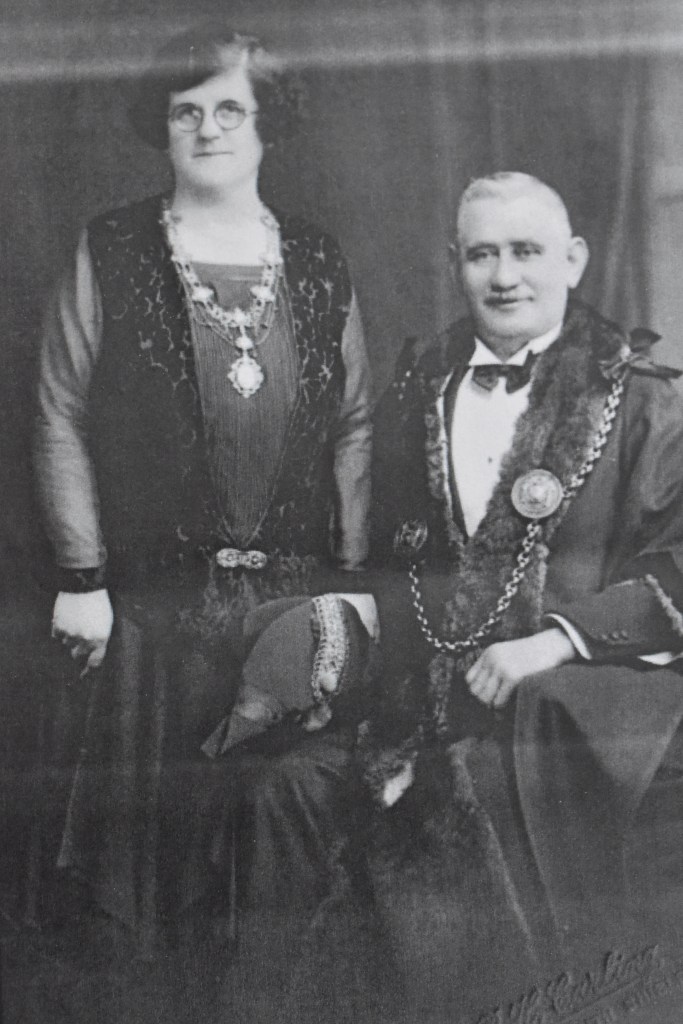
James Dunlop with his wife Marie pic. courtesy South Tyneside Council.
Glasgow born Dunlop spent a short time in Canada then returned to England where he worked in Barrow in Furness and Middlesbrough before moving to South Shields at the end of the nineteenth century finding employment in Tyneside shipyards.
Soon he was an active member of the Independent Labour Party but found their brand of politics a little tame so joined the Social Democratic Federation where he became a leading figure in the South Shields party. Dunlop was quickly gaining a reputation as a fiery character who fought for what he thought was right for the working class people in the town.
Being successful at fighting local elections the Labour party took note and when called in, James agreed to become Tyne Dock ward councillor in 1906. However, he retained strong links with the Social Democratic Federation party who were supported by the Russian Socialist Democratic Workers Party.
Further research is needed for this link. Through political and social gatherings, Dunlop is likely to have met two Russian comrades – Tyneside shipyard worker Heinrich Fischer and my Great Uncle Alexander Alikivi who made the journey from Russia to the North East as a Merchant Seaman. He settled in South Shields.
Family research is yet to point to a definite political affiliation for Alikivi but it was highly likely he was a member of the Russian Socialists, a party speaking his mother tongue would be welcoming to someone so far from home. In an interview with author Vin Arthey who wrote an excellent book, The Kremlin’s Geordie Spy(link below), Heinrich Fischer was a confirmed member of the Russian Social Democratic Workers Party,
Through the early 1900s Russia was in turmoil as a workers revolution raged across the country. To help the struggle in overthrowing the ruling Tsar regime and form a socialist government, arms were smuggled from the river Tyne to St Petersburg using established Baltic trade routes.
Along the riverside the boat building yards of Tyne Dock and Holborn would be suitable access points for smuggling. Were suspicious activities seen and reported? The upshot was that a major police operation was launched on Tyneside leading to a number of arrests being made and Dunlop was held on suspicion of gun running – this won’t look good for a recently elected Labour councillor of Tyne Dock.
After a search of Dunlop’s home a box was found in the cellar which police suspected had previously held guns and bullets. An Edinburgh address was on the box which led them to the ringleaders of the organisation. How much involvement, if any, that Alexander Alikivi and Heinrich Fischer had in the gun running operation isn’t known. Further research is needed. However, in 1907, arrests were made on Tyneside and Wearside and charges followed. Fortunately there was no trial for James Dunlop – he escaped a court date.
Far from this episode being a negative on his political career, during the next decade Dunlop’s career took off. When he was employed as a boilermaker at Readheads shipyard his rallying calls for socialism won a strong following, he was promoted to Chairman of the Housing and Town Planning committee and in 1918 made Alderman of the town. James became a senior member of the Labour council with one of his proudest moments in 1928 becoming South Shields Mayor.
pic. November 3rd 1920 Alderman Dunlop laid a stone at the entrance of Cleadon Park Housing Estate, South Shields.
Sadly, after a 32 year membership and service to the Council, James passed away aged 73.A full council meeting was held to remember a valued colleague, in attendance were Mayor Harris, councillor Gompertz, and my Great Uncle and brother in law of Alexander Alikivi, Councillor Richard Ewart. Another note was that in 1945 after the Second World War, Ewart was elected Labour MP for Sunderland.
Local newspaper The Shields Gazette featured the story of the council meeting >>>
“One could not but admire his courage, persistency and unshakeable belief in what he thought was right. I am sure the working class people of this town will remember with gratitude his fight for better housing conditions” said the Mayor.
Councillor Gompertz added “Alderman Dunlop’s work had a standing monument in the Cleadon Park Estate. People who had travelled the country looked upon Cleadon Park as the finest homes for working people in the whole country”.
“A pronounced Socialist, he laid the foundations of the party and we thank him for the enormous amount of spade work he did. In this Council chamber we miss his voice, which at times was raised against injustice and always in the cause of freedom”.
Further research will be added to the story of James Dunlop and Russian connections in Tyneside.
Research: The Shields Gazette, South Shields Corporation minutes of proceedings July – Dec 1938.
‘We Do Not Want the Earth’ – The History of South Shields Labour Party by David Clark.
In an earlier blog – Framing History, 11 January 2022 – I posted about being invited to add my photographic collection to the South Tyneside History website managed by the library.
The site celebrates the heritage of the borough by preserving photographic and printed history.
For over 25 year I’ve taken photographs around South Tyneside and this first collection that is being added to the site holds over 2,000 images from 2008 onwards – a unique documentary record of a decade of changes in South Shields.
Photographs were taken all year round to capture demolition of buildings and new construction work at different stages. There was also a lot of early morning and evening visits to locations avoiding people and cars.
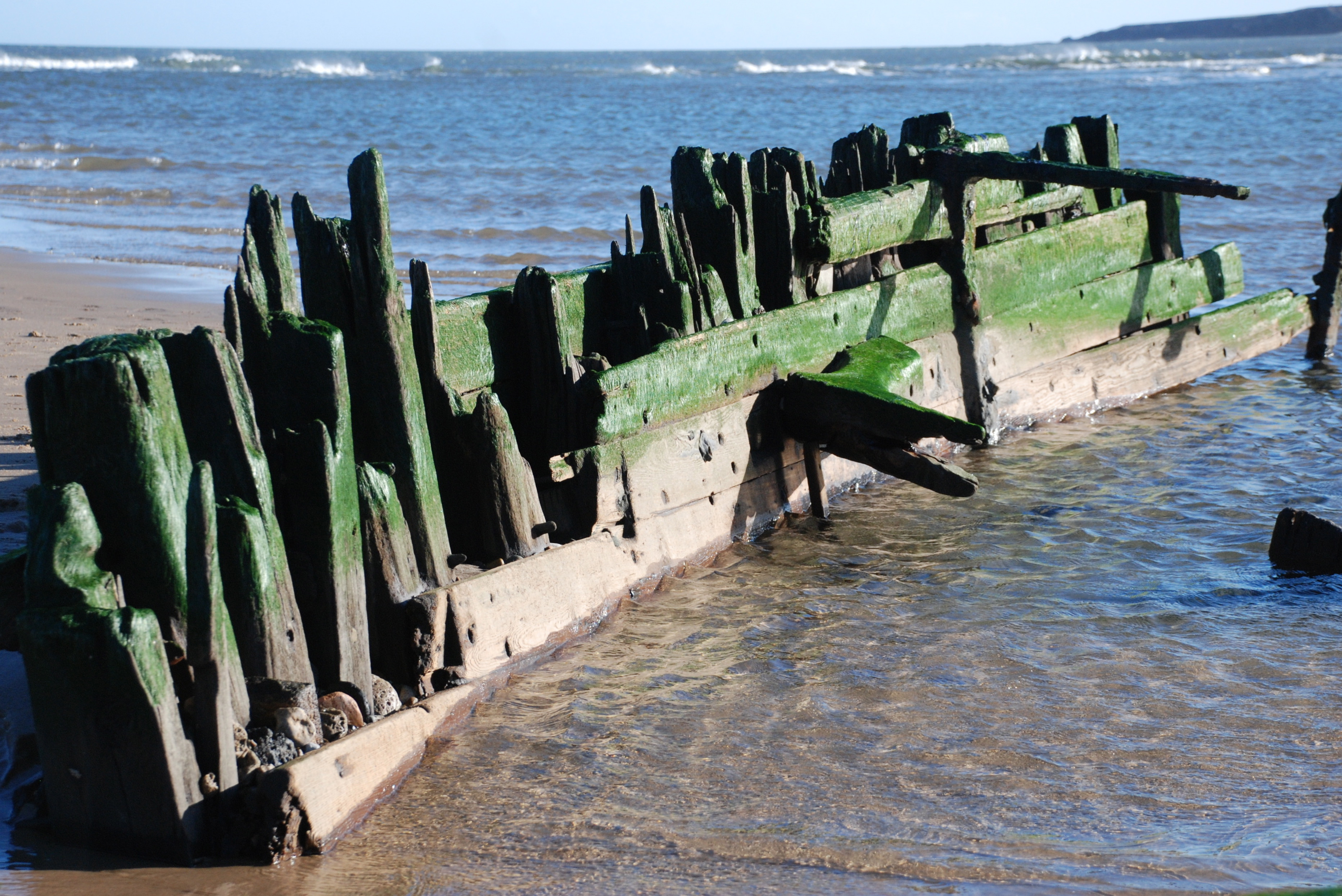
‘Constance Ellen’ shipwreck, Herd Sands, South Shields.
Finding the right angle or getting close to the subject meant climbing a fence or plodging in the sea to get close to the Constance Ellen shipwreck who ran aground on Herd Sands near the South pier over 100 year ago.
On a cold wintry morning you need to get out of your nice warm bed like the time I turned up at the seafront on a bitter December day. Over the past year I’d taken hundreds of images showing a new seawall and promenade being constructed on South Shields seafront.
‘Littlehaven Eye’ being lifted into place with a sunken trawler in the background.
There was a large crane taking the ‘Littlehaven Eye’ off the back of a lorry and putting it in place. Also adding to the landscape, framed by the North and South piers, was a sunken trawler in the sea, plus ten minutes later a large car carrying ship entered the river Tyne.
If I didn’t turn up that morning I would have missed an important part of the development.
Thanks to Catrin Galt, Community Librarian based at The Word, South Shields, and her team of volunteers who work on the project to keep history alive.
South Tyneside History website celebrates the heritage of the borough by preserving photographic and printed history. The images have been digitally recorded from original items held by South Tyneside library.
Included are historical maps, old postcards and thousands of images by notable South Shields photographers James Cleet, Amy Flagg and Freddie Mudditt – recently I’ve been invited to add my collection to the site so I’ll be in good company.
pic by Amy Flagg of South Shields Market bombed during Second World War. Courtesy of South Tyneside Council.
For over 25 years I’ve photographed South Tyneside, the main focus of this collection of images (2,000) were taken over the past decade of the changing face of South Shields.
The collection is a unique documentary record of the demolition of buildings at the sea front and market place, to construction of The Word, Littlehaven Promenade, Harton Quays, Haven Point and more – if it was getting knocked down or built up I was there!
Pic taken 11 March 2013 with South pier in the background and a flooded sea front car park, now the site of Littlehaven Promenade and Seawall.
The images will be available to view soon in the meantime why not check the site
‘I’m particularly fond of watching large ships coming in to the harbour, or being brought down river by tugs. I love the Tyne for that reason. It’s a wonderful river’.
From 1960 until his death in 1976 prolific artist L.S. Lowry frequently travelled from his home in Cheshire to the North East.
He used the Seaburn Hotel as a second home and a base to explore the area, but when his usual room at the front wasn’t available, he would occasionally book in at The Sea Hotel, South Shields.
Pic in the book L.S. Lowry in the North East.
The hotel is based on the seafront near the entrance to the river Tyne. He would sit for hours in the car park between the South Pier and the Groyne, sketching ships and tugs entering the river from the North Sea.
Lowry was fascinated by the relentless power of the sea and subject of one sketch was the Adelfotis cargo vessel who ran aground on the Herd Sands at South Shields in 1963. It’s exciting to think that Lowry was there sketching in the background.
Wreck at South Shields, pencil on paper 1963. The Lowry Collection, Salford.
Always Ready is a film I made in 2016 about the work of South Shields Volunteer Life Brigade, it features excellent archive footage of the Life Brigade’s brave rescue of the crew from the cargo ship. (Check the link below).
Lowry found a number of vantage points to watch the river Tyne – one was the Mill Dam where an episode was filmed of TV programme When the Boat Comes In, and today is where The Customs House theatre & arts centre stands.
From there he walked ten minutes up River drive to the bridge which overlooked the shipyards, a different picture today as the yards have been replaced by housing. On many occasions he travelled on the Tyne ferry between North and South Shields.
Old House in South Shields, oil on canvas, 1965.
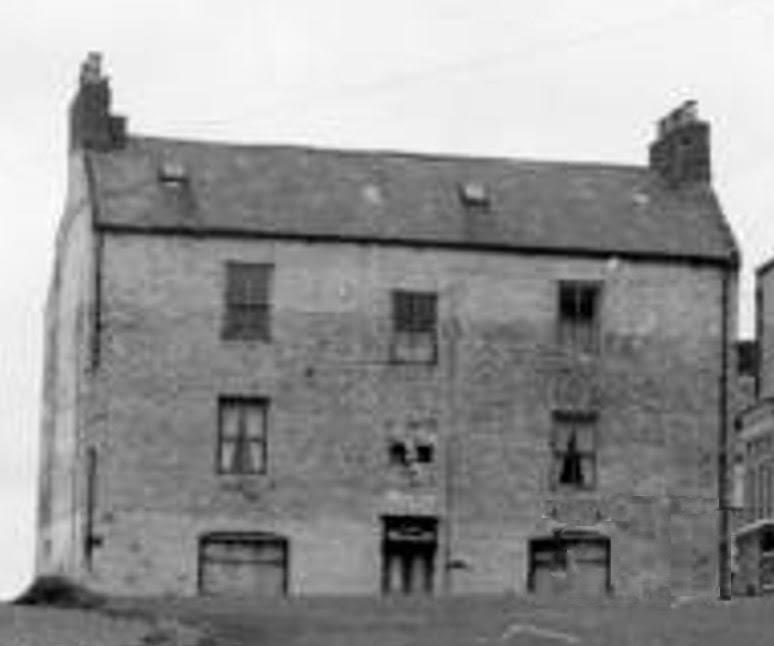
Lowry was drawn to buildings that were old, neglected or about to be pulled down, an oil from 1965 titled Old House in South Shields caught my eye as I recognised the building from a photo in South Shields Library archive. Sadly not there now, it was demolished and replaced by flats.
Old House in South Shields. Note the position of the windows and doorway.
The large house was set on The Lawe – a hill top over-looking the entrance to the Tyne. To get there Lowry would have walked from his favourite spot at the seafront up the steep bank.
With its strong connection to the sea, this area would have been attractive to Lowry, with the old Pilot steps and Watch House nearby and standing tall are two beacons – large brick pillars originally used as navigational aids for guiding ships into the river before the piers were built.
Derelict at the time Lowry was there, the house was originally a barracks for soldiers during the Napoleonic invasion scare, then used as a business man’s club and reading room by the gentlemen of the Lawe.
South Shields, oil on canvas, private collection, 1962.
At the back of Lawe House was a large Roman Remains Park – today it’s a partly re-constructed Roman Fort. Being drawn to old neglected buildings Lowry may have wandered over and sat sketching among the ruins – or was just knackered and needed to rest after walking up the steep hill.
Alikivi December 2021
Notes:
L.S. Lowry by Michael Leber & Judith Sandling
L.S. Lowry in the North East published by Tyne & Wear Museums 2010.
Bri Smith (The Fauves) ‘250,000 views that’s brilliant Gary. You’ve done a great job and proud to be part of it. I’m sure there’s more to come and it’s great for the North East. All the best for 2022’.
Wavis O’Shave (Surreal Entertainer and Global – particularly South Shields – Enigma)‘Here’s hoping for another 250,000 to match the number of pints – give or take the odd hundred – that The Hard has drunk since last New Year’s Eve’.
Dan Green (Author, Broadcaster & Researcher into all things mysterious) ‘It’s no mystery that 250k have dropped by’.
Jan Wilson ‘You know how much my guitarist husband Alan Burke enjoyed visiting his history with Southbound for your interview…you just ‘get’ the importance of our local musical heritage’.
Brian Rapkin (aka Brian Bond, Punishment of Luxury, Punching Holes,Actor)
‘Gary’s blogs are incredible. Great to do and great to read. It’s hard to pinpoint what makes them work so well. Doing a blog with him is liberating and emotionally satisfying – it takes you back to childhood, younger times, important things of life that stay with us forever.
His editing is the work of a master surgeon – he pares it down to the marrow of the bone, the real events and the real consequences. Thank you Gary for the magic lantern show, the time machine that reveals the truth! You done a good job, Gaz’.
Robb Weir (Tygers of Pan Tang) ‘A very big thank you to our ‘Gary’ for keeping the world in touch with ‘Geordie Land’ and all it’s amazing characters. Here’s to the next 250,000 readers !’
Dave King (Battleaxe) ‘Hey ALIKIVI. A BIG thanks for highlighting the great talent of North East bands and musicians who are often disregarded and unappreciated by main stream music mags, and some journalists, especially in the Metal Scene which actually thrives up here in the North East.
With 250 thousand views of your blog, it could be a good idea for a full featured film on the subject? Just look what the Anvil video done for those guys as an example. Anyway cheers again and keep rocking’.
Nev (Punishment of Luxury) ‘It has been a great experience to work with Gary on Punishment of Luxury blogs. His enthusiasm is inspiring and encourages the best possible answers because of the quality of his well-researched, thoughtful and searching questions resulting in such masterful and brilliantly written blogs.
I like the way he creates such interesting themes and explores so thoroughly to bring to life excellent stories and histories about all things musical and creative in the North East.’
Jean Alicia Stokes (Tyneside Historian & Author) ‘What a delight the ALIKIVI blog is, offering such insight to our local culture. A wealth of information for the local historian which I turn to often, continually enhancing my understanding of our North Eastern area. Love the interviews as they offer such a primary resource.’
Will Binks (Photographer) ‘When Gary asked for my inclusion in one of his blogs I jumped at the chance. My ramblings about the ‘seven songs that shaped my world’ were a joy to choose and describe my connection with, perhaps only of a passing interest to some but so incredibly important to me that they were documented and published. Thanks mate, keep up the great work and well done on a quarter of a million views’.
Ray Cooney (Theatre producer) ‘You’re on course to hit 250,000 views! Well done!!It’s been great being involved with you and keep up the good work.’
Tony Wilson (Singer/Songwriter/Storyteller) ‘Gary has covered so much of our local North Eastern life in both written, audio and video form and has created hundreds of hours of informed and informative, entertaining and edifying aspects of our own great part of the world. The man is a marvel!’
Robert Olley (Artist) ‘The informal, light hearted talk with Gary was a great indicator of how my work as an artist has progressed since the first interview we did some time ago. It’s also proved to be an informative and invaluable update for the many people that have followed the progress of my career over some fifty years, thanks Gary!’
Glenn Howes (songwriter/guitarist) ‘My congratulations on this important milestone. 1/4 Million wow! I’m proud to have contributed and grateful to Gary for putting this together and keeping us entertained with all the wonderful stories in his articles of people from the North East UK scene. Well done!!’
Steve Thompson (Songwriter) ‘Congratulations on the success of your blog Gary I can see how much work you’ve put into it. My first chat with you was in the early days and since then you have given me several opportunities to tell more stories. The lifeblood of a storyteller is having a willing listener. Thanks for listening ….and of course you giving me that ‘Godfather of North East New Wave of British Heavy Metal’ moniker has come in handy too’.
There’ll be no idle shilly-shallying here I’ll just push on to the next batch of interviews – who’s next ?
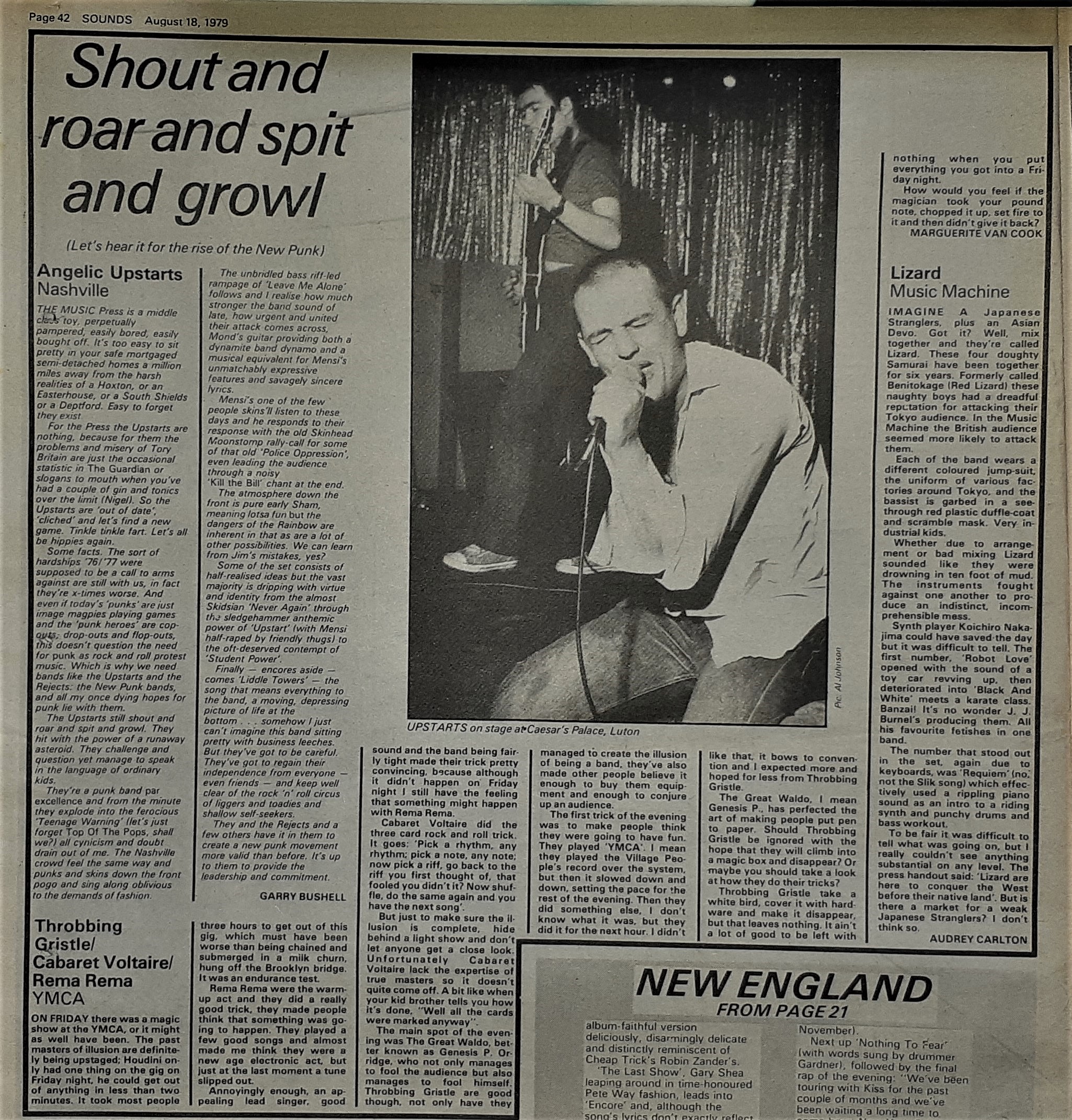
I’ve come across some grand postings on social media by archivist Stig Chivers. He’s added articles from Sounds music paper 1975-80, some featuring bands from the North East.
In the 18 August 1979 edition is a Garry Bushell live review of the Angelic Upstarts gig at the Nashville in London.
Angelic Upstarts in Sounds 18 August 79
In a recent interview with music journalist Phil Sutcliffe, Phil talked about the Upstarts and remembers a gig in Newcastle which was a spin off from the Bedrock programme broadcast by BBC radio Newcastle.
‘Putting the Angelic Upstarts on before North East band Neon at the Bedrock festival proved to be a mis-judgment as a huge fight ensued, a rather one-sided affair given Neon fans were student’ish and Upstarts fans were from South Shields’.
Brian Rapkin from Punishment of Luxury remembers that infamous gig…
‘We were bottom of the bill and during our set someone lobbed a can at the stage. I caught the can and put it in my pocket. Later the Upstarts charged the stage. There was carnage, people beaten up, blood everywhere, the police came and made the rioters walk home to South Shields without their shoes’.
For more articles from Sounds Magazine 1975-80 by archivist, Steve ‘Stig’ Chivers check twitter:@SoundsClips.
For further posts about Sounds type in: ‘Raw Meat in the Sonic Mincer’ in the blog search bar.
Read about the Angelic Upstarts in ‘The Butchers of Bolingbroke’ here:
For his new project looking at the connection between the Tyne and the Thames, former South Shields lad Garry, now based in London, was inspired by a poem written by English poet and writer, John Masefield – you’ll find a Masefield Drive in Biddick Hall where Hunter grew up.
The poem Cargoes is all about sea trade and it starts with the romance of travel by ship, the second verse is of a Portugese war ship full of gold coins, with the third about a collier travelling between the Tyne and Thames full of coal. It’s a beautiful poem.
The main aim of the project is to engage with young people to learn about trade in the late 19th century and we look at innovation and technology from the 1800’s and compare it to now.
Plus highlighting the type of work that William George Armstrong was doing here in the North East producing hydraulic machinery, cranes, bridges, then artillery.
At the eastern end of the Thames River in London are the high-rise buildings of Canary Wharf, in their shadow is Cody Dock, which was operational until the mid-60s.
A lot of colliers from the North East would take coal down there for the coal powered gas stations which are now being redeveloped into housing estates.
I set up a community pub in Poplar in 2018, to honour locally born engineer Tommy Flowers who designed the world’s first computer for Bletchley Park in 1943 and was given an honorary doctorate by Newcastle University in 1977.
THE TOMMY FLOWERS Community Pub, with Colossus operator veterans Betty and Rene in front of Tommy Flowers portrait created by Jimmy C who made the famous Bowie mural in Brixton.
Berkeley Homes have a partnership with the National Grid including Beckton which is where Stanley Kubrick shot scenes for his film about the Vietnam war, Full Metal Jacket. Kubrick didn’t want to go to Vietnam so they changed the east London gas works into Saigon (laughs).
We also look at tin plate photography of the 1850s used by Edward Sheriff Curtis who photographed Native American Indians, to glass plate techniques when Sunderland born inventor Joseph Swan brought his process into photography.
Wet Collodian 10 x 8 inch tinplates using mid 19thC technology.
The different techniques used are really interesting and young people can compare them to today’s mobile phone camera which basically does all the thinking for you.
SNAP HAPPY
When I was about 12 year old I started messing around with a camera taking pictures of street scenes, snap shots, stuff like that. I didn’t get a decent camera with a good lens until ’82 and started taking pictures of bands.
Around this time I went on a year’s course studying Marine Engineering at South Shields Marine & Technical College.
Then a job came up for processing and printing photographs at Tynecolour, South Shields, at the same time a letter arrived from Charles Taylor Foundry offering me a job, but that was for £1 a week less (laughs).
So I was at Tynecolour for over four years which was a great grounding on all the technical side of processing film and using colour, and when nobody was looking I would print my own photos.
PRINT IT
As well as bands I photographed live comedy. I was at Sunderland Empire in ‘83 and had a front row ticket for The Young Ones.
With six frames left on my camera I had to be careful because I didn’t have much money for new film. But ended up with three good shots which I printed.
The next year Rik Mayall was supported by a young Ben Elton, and I got in the soundcheck. I took a few pictures, Rik was really great ‘You gotta come to London’ he said.
So off I went he introduced me to a few people, and I got my first pictures published – £25 for an hours work really, this was when I was only getting £30 a week at Tynecolour.
To be honest that’s when I was looking to get out I didn’t want to be here for the rest of my life. My Dad had gone round the world which gave me a sense of wanderlust.
1985 was a bad time in Shields, the pits had been on strike for a year, shipyards were closing, it was all grey and miserable I just had to get away. I felt it was important to try something new.
PICTURE THIS
So I moved down south and ended in The Lodge recording studio in Suffolk as in house photographer. Basically it was a farm house in the middle of nowhere run by semi classical musicians.
The studio was all analogue with quarter inch tape, and during my time there was a lot of recording done, one time in the studio was a French experimental band Orchestra Rouge, who were really interesting.
But bands were getting into synthesisers and some of them should’ve stuck with what they were doing and not try to be trendy.
I remember coming down to breakfast one morning and punk band The Anti Nowhere League were moaning about their mortgages – even anarchists need a roof over their head (laughs).
At the studio Mal Tootill who designed all the record sleeves and tour merchandise was a lecturer at Swansea University and asked me if I’ve thought of going to art college.
He phoned ahead to check it out while I hitch hiked from Suffolk to Bristol then on to Swansea and saw the head of the Art Department. The course was a really good move for me.
After that about 25 ex-students all moved to London so we weren’t alone there, and these were days when you could still squat and get along without much money, that saved me.
WRITING ON THE WALL
Fast forward to over 30 years later and after a successful career in professional photography, I came back up North in 2013 and started working on a project called Street Art Heroes supported by Cultural Spring for public engagement inspired by the street names of Biddick and Whiteleas.
There was a lot of work bringing international artists over from Brazil, Canada and New Zealand, to create murals in north Sunderland and Shields, when we all stayed at Hillhead Farm on Lizard Lane in Marsden.
They created artworks in the area, one of which is a mural on the side of Chuter Ede training centre, it’s still there now. Chuter Ede used to be the school where I attended and it was great going back because when I was a teenager there I got caned for doing some graffiti (laughs).
Alice at Chuter Ede nearby Carroll Walk on Biddick Hall, South Shields commissioned by Garry Hunter for Cultural Spring mural artist Irony.
SAND DANCER
Next year is the International Year of Glass, that’s an interesting link to the collier ships going down to London and sand being used for ballast on the return journeys.
It is reported that was a different sand from the beaches, it was better for glass making and used in the North East glass factories.
Nearby to where we are now (The Alum House pub, South Shields) was Cookson’s glass factory, half of the chimney is still standing next to The Custom’s House. In the latter part of the 19th century some people from the North East would go down to London and work in the glass works.
I’m really interested in all those industrial innovations and how people have used technology to progress trade and industry and with a successful Heritage funding bid we’ve been given the go ahead for a project.
We’re in the early stages of planning now, I’m working with Graham Carrick, a fine artist from Gateshead who is Director of Digital in our Community Interest Company, Fitzrovia Noir.
Plus, we’re bringing in two other organisations to work alongside us. I find it all very exciting and interesting – we’re making innovations in industry sound sexy (laughs).












 ALIKIVI UK : NORTH EAST MUSIC & CULTURE