TYNE STORIES – from the south bank of the river.

41631471_1998507880207953_6344860911848652800_n

Back in 2010 I made a film along the south bank of the River Tyne, collecting stories from former boatbuilders, tugboatmen – people connected to the river.  These are some extracts from the documentary….

Tom Fenelly: The volunteer life brigades were formed to support the full-time work of the coastguard, using the breeches buoy equipment to rescue life from shipwreck. That continued from the very early day’s right up till 1989 when that equipment was withdrawn.

Not only do we help to save lives and help to find people who are missing, we also get involved in rescuing animals. We were involved in recovering a dog which had gone over the cliffs and the owner was obviously very distressed because the dog sadly died. We were pleased to be able to recover the dog and allow the owner to have closure.

A couple of weeks later we got a letter from the owner of the dog saying thank you very much in your effort’s in trying to save the dog and in particular for recovering the dog’s body which allowed her to take it home and the dog’s companion was able to sniff the dog and then bury it in the back garden.

There was a footnote added to the letter saying p.s. My parents had the foresight to insure the dog Paddy the Labrador. Could you please supply us with a death certificate.

The first time we had been asked to supply a death certificate for a dog, but we duly obliged and were very grateful for a £25 donation which followed.

Ethne Brown: My family are the Whale family who are Tyne Pilot’s. My father was one of six brothers, 5 of them were pilot’s. You couldn’t be a pilot on the River Tyne unless your father or Grandfather had been a Pilot.

This is my dad (showing photo) he worked until he was 70. He was self-employed and if you were fit enough, like he was, you could work until you were 70. My Father used to come home from the watch house, which is just across the harbour there, he would come at lunchtimes sitting in the window having his meal and wait for the ship’s.

They used to go out in the cobles, then climb aboard and bring the ship in. It was always their ship until it left the river.

Duncan Stephenson: Me Father had seen one of the skippers of the tugs ‘Me son’s left school he wants a job’.

So a Mr Headley come to the door ‘Can you join a tug called The Waysider. She’s lying at the Stanhope buoys and can ya’ skull?’ Aye I said and that was the start of me career as a riverman.

A tugboat tugged ship’s in and out of the Tyne. When they were going into dock, we would bring them in from sea, then take them back to sea.

When I started in 1956 there was about 40 tug’s working night and day. All hours of the night, everyday, towing ship’s in, towing ship’s out. Big ship’s used to go up Newcastle Quay. You had all sorts of boats.

Fred Thompson: Me Grandfather was a tugboat man. Me father, uncle’s, the whole family and cousins, we were a whole tugboat family. Mainly I was deckhand and fireman. Eventually I was relief engineer in a big tug called the Tynesider and that’s the one that Duncan was in.

Duncan Stephenson: About 4 o’clock in the morning we had been doing a job and we were coming back to the buoys to tie up next to another tug. It was the lad’s job to jump from your tug to another tug and put on the ropes.

Fred: Course we’re in the Stanhope buoys and Duncan had to jump aboard the other tug.

Duncan: We’re coming alongside this tug and I’m gonna jump from this tug to that tug.

Fred: Course when the ropes were off the tug’s started going off a bit away from each other.

Duncan: I jumped and me self-conscience said ‘You’ve jumped too soon’.

Fred: As he jumped, he missed and went in.

Duncan: In the water, in the drink and I’m swimming about in the water.

Fred: He took a bit of pulling out, he was more than me.

Duncan: Eventually after a long struggle they pulled us aboard the tug.

Fred: He was 18 stone then !

Duncan: I was a big lad. I’m still a big lad.

Susan is sitting with her father, Tom Fenwick…

Susan Fenwick: When did you start in the Foyboats Dad ?

Tom Fenwick: 1948 wasn’t it.

Susan: Who else in the family was in ?

Tom: Sam, William, Tony and me. I had some narrow escapades. I was blown up on a ship called The Firebeam loading coal at Harton Staithes.

Susan: Then you were nearly drowned at North Shields weren’t ya ?

Tom: I was at Smiths Docks on the foyboats to tie a Swedish ship up. And I got jammed between a ship and the quay in me boat. The result was me boat was lifted up in the air with a rope underneath it then it fell back in the water and broke in two. Throwing me and my work mate in the water with it. Anyhow he couldn’t swim, and neither could I but by God’s grace we got out.

Susan: And ya’ came up with yer glasses on and yer cap….

Tom: Aye I still had me glasses on, it was laughable but serious. But never mind we got over it.

Fred Thompson: (Fred sitting at his table painting a ship using watercolours). I’m 80 next month and I finished when I was 65. Mainly the thing now is I paint them. This one is going into Salford harbour.

Interviewer: Anything else you would like to say about working on the river?

Fred: Nah I could go on forever, but I think that is enough for now. Once I start I can’t stop. (laughs).


Inside The Missions to Seafarers with Committee member Fay Cunningham….

Fay: During the Second World War the Mission really did play an important part because there was more people from our Merchant Navy personnel from South Shields signed on from anywhere else in the country, and that is the reason why we have our Merchant Navy memorial down at Mill Dam.

Today we had our Armistice Day service of remembrance for those who had fallen in the First and Second World Wars and all wars since. It was held at the Merchant Navy Memorial. You find that most of the people that attend are mostly ex-seafarers or present seafarers. It’s always a poignant ceremony, it’s always cold because we are right by the river and not far from the sea.

Today we had 60 children from Laygate school who helped lay the wreaths and I’m sure it’s a day that they’ll remember, and they will remember the work that our seafarers do.

Boatyard’s on Wapping Street, South Shields….

Fred Crowell: I started my life as an apprentice boat builder at Robson’s Boatbuilder’s in South Shields. We used to build a lot of wooden lifeboats at that time, rowing boats for Saltwell Park and Hexham. Now it’s mostly restoration of traditional boats and we’ve done several over the last few years. It’s quite rewarding to see them back on the river and it’s preserving a bit of history.

Alan Smith: We heard on Radio Newcastle that a trust was being set up and it would be called North East Maritime Trust and they wanted any volunteers. So myself and a pal of mine, Brian came down. We believed in what the trust was trying to do which is to preserve the examples of the wooden boats that were used on the coast here.

We do have an example what is possible, it’s called the Royal Diadem. Which is a Northumberland fishing coble.

(Boat being lifted by crane into the water). The boat was built in 1950 for two brothers, William and Albert Silk. Registered in Berwick but it fished out of Seahouses. Then comes the day that the boat is actually finished, and all boats are designed to be in the water. We couldn’t use the slipway, so we decided to use the crane.

There’s a point when the boat is in the air but over the water, then it’s in the water and you always feel that’s where it’s meant to be, it goes from being static to alive. It’s just as though the boat has been born. Fabulous day, fabulous turn out. A lot of people here to see the launch.

Extracts from Tyne Stories (50mins, 2010). 

Short version of the film available to watch on the ALIKIVI  You Tube channel.

 Gary Alikivi    August 2019.

NAMEDROPPER – in conversation with freelance author/TV producer Chris Phipps

Being on the dole during the ‘80s had its advantages. We queued up outside Tyne Tees TV Studio every Wednesday to get free audience tickets for the following Friday’s edition of live music show The Tube.

If I was working, I wouldn’t have got the chance to be part of what became a groundbreaking TV programme and something that changed my life.

Looking back, it took a couple of years to seep through, but it was one of the magical moments I experienced that massively helped me in my work today.

In one of the programmes, I was standing on the gantry looking across the studio with the stage and drummer below, another stage was to my left, there was a bar at the back, pink and blue lighting all around, Pat Benatar at the front of the stage – a little lady with a big voice. And cameras on the studio floor catching the buzz.

Something clicked. It was the first time I thought ‘I would love to be involved in something like this’. I knew I was onto something.  

So, a chance to interview a man who was part of that show was a great opportunity and one that I wasn’t going to miss. Take it away Chris…..

It’s interesting you mentioned Pat Benatar because I booked her, the drummer was fantastic and she was incredible.

I was at the Tube from the start in ’82 till it’s full run to ’87. But I started as a journalist in ’74 with three big stories happening on my patch, the Birmingham bombings, the hunt for the Black Panther and the Carl Bridgewater murder – a baptism of fire. After that I was producer at Pebble Mill at One and did a lot of regional TV and radio then.

I was doing rock shows, reggae shows and of course in the ‘70s the Midlands was Dexys Midnight Runners, UB40, Specials, Selector coming out of Coventry. It was like a nuclear reactor in terms of the music coming out of there.

And of course you had the whole New Wave of British Heavy Metal, and I was involved with a band called Diamond Head who came out of Stourbridge.

They were touted as the next Led Zeppelin which was a big mistake. They were phenomenal but for certain reasons they just went on to implode.

How were you involved with Diamond Head ?

I did two TV shows with them, both of which are very rare now. One was on Look Hear an arts programme on BBC Midlands with Toyah Wilcox. I also had them at West Bromich Further Education college, they done a student recording that was found in a loft a couple of years ago.

That whole NWOBHM was fascinating because a lot of those bands were back in their day jobs after a couple of years, apart from Iron Maiden and Def Leppard. Finally, Diamond Head were vindicated because Metallica covered some of their numbers that contributed to their financial coffers.

What are your memories of those first days at The Tube ?

I joined in ’82 as a booker and I became Assistant Producer from ’85-’87. My brief was to find bands that we could agree on to put in the show. A band on the first show that I booked didn’t happen, The Who didn’t do it because their pa system got stuck in Mexico or somewhere.

So, the producer Malcolm Gerrie knew Paul Weller’s father and got The Jam to do it. In a way I’m glad that he did because The Jam playing their last TV gig ever, really said this is what The Tube is all about – that was then, this is now and off we go.

On one show I booked a combination of Green Gartside and his band Scritti Politti, and Robert Palmer which I thought was a good mixture. Then Gartside wouldn’t do it, didn’t want to perform live or something I can’t remember now. But he pulled.

You know my job was to convince really big names to come, particularly in the first six months of the programme because it was based in Newcastle. A lot of record companies would say ‘We’re not sending anybody up there’.

There was a show in December ’82 with Iggy Pop, Tygers of Pan Tang and Twisted Sister, who famously signed a record deal after their performance..…

Now there is a story that I discovered Twisted Sister in a bar in New York when really the truth of it was, I had seen them at Reading Festival. I was just knocked out by them because I love theatrical rock. They were on a label called Metal Blade then, which was run by a friend of Toyah Wilcox.

I was interviewing Def Leppard backstage, then spoke to Twisted Sister’s manager and told him I had a gig on a TV music channel in the UK called The Tube. He said if you can gaurantee us a booking we will finance our own trip over.

So yeah, they turned up in a van outside The Tube studio direct from New York, played the show, and in the audience was Mick Jones from Foreigner, his manager and UK supremo from Atlantic records Phil Carson. Phil signed them the next day.

Actually, I don’t think I was too popular with the Tygers because I had to cut one of their numbers. At the time they had a great album out The Cage, but they were another band that imploded.

Incidentally, first time I saw the Tygers was at JB’s club in Dudley. They were supporting Robert Plant and his rock n roll band The Honeydrippers.

Why did you ask the Tygers to cut a song from their set ?

Lemmy wanted to jam with Twisted Sister at the end. In fact the guy who directed that show and all of The Tube, Gavin Taylor, who sadly died a few year ago, said his two favourite moments he directed were U2 at Red Rocks and Twisted Sister jamming with Motorhead. And this from the guy who directed Whitney Houston, Michael Jackson, Miles Davis.

So, after that every time I saw the presenter Paula Yates she used to impersonate my Birmingham accent and go ‘Chris Phipps Twisted Sister’ (laughs). God love her. They sent me a platinum disc as a thanks which I still have, and a manhole cover with the Twisted Sister logo on it.

Also on that programme was Iggy Pop what are your memories from then ?

Yeah, he was a wild one. No one could find him just prior to his performance, he completely disappeared. I got a call from reception, and they said there was something in the reception area spinning round and looking like a mummy. He was bandaged from head to foot (laughs).

Did the show help the careers of other bands ?

Fine Young Cannibals got signed, although they already had a publishing deal. The Proclaimers got signed and there was a time when a researcher called Mick Sawyer and some of the Tube crew went to Liverpool to film Dead or Alive.

But they weren’t around, then someone in a pub told them to go round the corner to another pub where there is a band rehearsing ‘You might be interested in them’. It was Frankie Goes to Hollywood.

The Tube filmed the original version of Relax, that was shown, and Trevor Horn saw it. He did the deal and re-recorded and produced the single.

Frankie epitomised The Tube and the ‘80s, they got what it was all about. You can never bring The Tube back. It’s of its time. Chris Evans on TFI Friday in the ‘90s near enough had it. The set was just like The Tube, so yeah, it’s had an incredible influence.

Last year I was on the Antiques Roadshow with memorabilia from The Tube and I thanked the BBC for banning Relax because, it not only done Frankie a load of good but The Tube as well (laughs).

Here’s the link: https://www.bbc.co.uk/programmes/p06b19jf

Around the time of going to The Tube I was in the audience to watch a few shows called TX45 filmed in the same studios….

Yes, TX45 ran parallel to The Tube it was a regional series it didn’t go on the network. Actually, a series by Tyne Tees Television called Alright Now got them a commission for The Tube.

When I was producing in Birmingham a lot of bands would say ’We’re off to Newcastle to do Alright Now or Razzmatazz or interviewed by Alan Robson’. He had a formidable reputation.

Newcastle had a reputation for cutting edge shows really, that’s why it got the commission from Channel Four. Back to TX 45 that was co-presented by Chris Cowey who went on to produce Top of the Pops.

What happened after The Tube ?

All the talent from The Tube just dispersed in different directions. Tyne Tees didn’t continue to do any big entertainment. They did attempt to rival Top of the Pops with a show called The Roxy but that fizzled out.

Malcolm Gerrie, the main guy went on to form Initial TV in London and made things like The Pepsi Chart Show. Now he’s got a company called Whizzkid producing big award ceremonies things like that.

Geoff Wonfor who made the films for The Tube, not the studio stuff, he went on and made The Beatles Anthology.

(An interview with Bob Smeaton who worked on the Anthology is on the blog ‘The Boy from Benwell’ Nov.5th 2018)

I went into documentary, feature film making, and my bread-and-butter work for 14 years was working on a series called The Dales Diary, which covered the Yorkshire Dales for Tyne Tees and Yorkshire.

What was interesting was that I was dealing with people who had never been in front of the camera before so I went from five years of people who couldn’t wait to get in front of the bloody camera to 14 years of people who sometimes weren’t happy to do it. Yeah I had some fantastic times working in Yorkshire.

Have you any stories that stand out from interviewing people ?

From 1973-82 I’d done a lot of entertainment stuff at Pebble Mill, but I also interviewed a lot of people with some priceless historical value. Like the 100-year-old woman who made a living from making nails from the back of her cottage near Worcester.

There was a man who helped build a storm anchor for the Titanic. I’ve kept all of them interviews and in fact the storm anchor one went for research to the director James Cameron when he was making the film Titanic.

So, I was no stranger to going to people who just wanted to get on, particularly the farming community who didn’t want people buzzing around with cameras.

Did you work on any other music programmes ?

I’m the sort of person who will come across something and say that will make a fantastic programme. I worked on a series for Dutch TV, it was like your Classic Albums series but for singles. Incredible programme to work on, it was called Single Luck.

It took me all over America tracking down songwriters, producers, and for one song the backing singers were Ashford and Simpson.

Another programme was for the song Blue Moon it profiled The Marceles, who came out of Pittsburg. The song sold I don’t know how many millions and some of them are living on the breadline you know. They got nothing, old story isn’t it.

Well I thought how do I find these people who are living in Pittsburg ? One of the singers was called Cornelius Harp. There might not be too many Harps in the phone book I’ll try that.

The one I called said ‘No I’m not Cornelius Harp, but he’s my cousin, here’s his number’. The guy who was managing them had a restaurant called Blue Moon. The producer was in California and came over to Pittsburg to re-produce the song.

So yeah found all of them and suddenly you have a 30-minute programme.

What have you been working on lately ?

After releasing the book Forget Carter in 2016 which was the first comprehensive guide to North East TV and film on screen, I’ve just released another book Namedropper full of anecdotes and stories of my time in the entertainment world. I’ve hosted quite a few talks including the evenings with Roger Daltrey and Tony Iommi at the Whitley Bay Film Festival.

Currently I’m still working as freelance producer/director based in North East specialising in entertainment and music for network and regional.

Chris is appearing at Newcastle’s Waterstones to sign his latest book ‘Namedropper’ on Saturday August 17th at 12 noon.

 Interview by Gary Alikivi   August 2019.

NEVER MIND THE SEVENTIES – Book Planned on NE Punk Scene ’76-80

nepunk

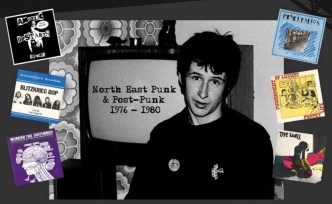
A group of music fans got together five years ago and planned to put together a book about the North East Punk/Post-Punk scene from 1976-80.

Bands featured will include not only big names like Penetration, Angelic Upstarts, Toy Dolls, Punishment of Luxury, The Wall, The Carpettes, Red Alert and Total Chaos but also bands who were only known in the North East.

‘Since we started on the book numerous folks have been involved in one way or another, with interviews and transcribing. There are approximately 300 bands on our list, and we’ve got all of them covered to one degree or another. It’s been quite a task’ said Martin Blank.

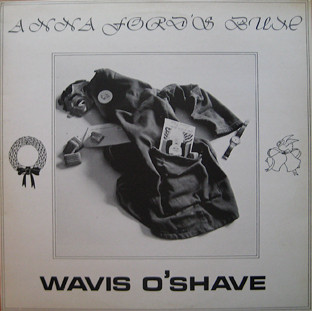
South Shields bands covered so far include Angelic Upstarts, The Fauves, The Letters, The Rigs, Next and of course, Wavis O’Shave….’Although Wavis was never a punk by any stretch of the imagination, due to his album ‘Anna Ford’s Bum’ being on the Anti-Pop label he became known as a sort of punk-cum-loonie-cum-prankster’.

Here’s an extract from Martins interview with Wavis…..

What is your first memory ? I think they told me it was only going to be a nice ride down a slide. Seriously tho’ it was ‘Who’s just kicked me out of this low flying UFO?’

What were your main interests when you were growing-up ? At my first school, the lad who sat in front of me calling Miss Bishop ‘Miss Fish Shop’. Another lad always wetting himself and having to dry his shorts on the radiators. They smelt like fish fingers.

Everybody including the bullies liked me, so I wasn’t getting my head shoved down the bogs and the toilet flushed or thrown over the high wall into the girls school or having crap shoved up my nose on a lolly stick or having ‘**** off’ written on the back of my neck. They had high hopes for me but in what way I don’t know.

Were you ever in a band ?
Yes and no. Around 1975 I formed The Borestiffers although we were never a band in the conventional meaning of the word. Our ‘instruments’ were a suitcase, a bullworker and a kitchen sink. We performed live only once, at a church hall in South Shields. The entry fee was a slice of bread, or a stick of celery. White bread by the way. Brown was a counterfeit ticket.

Kitchen sinks aside, can you play a ‘proper’ instrument ? I can only play the fool. I can play a few chords on a guitar, but who wants to listen to a bloke wearing corduroy trousers strumming his axe? Mind you, I am a dab hand at the Theremin.
annafordsbum

Do you know if Anna got to hear ‘Anna Ford’s Bum’? Yes, Anna listened to the album and she’s confirmed that she still has it safely in a cupboard. This was related back to me years ago when she was asked by Chris Donald (Viz mag.) when they all appeared on a panel show. A lovely lady, good sport and well out of my league.

Although Wavis was (and still is) well-known in the North East, did you receive much national coverage ? I was somewhat surprised when both ‘Sounds’ and ‘NME’ wanted to claim Wavis as their own and both gave him equal coverage for quite some time. There’d be the occasional mention here and there elsewhere but I was a stickler for refusing to make myself available.

The Clive Anderson show sent one of their team to my home and hauled me down for a meeting but when I found out the show was recorded  (I thought it was live) and they were telling me things that I would have to say, I left.

thehard
The Hard became a surprising overnight sensation on The Tube. How did he come about ?
The Hard was a lampoon of the North Eastern stereotypical hard man and I had to be very careful living amidst the real deal. The hardest man in the town was actually a fan of the Hard, which I can never work out especially when everybody swore I had styled The Hard on him. I’d never be that daft, unless of course I did. I do consider myself hard and I can prove it. I once lived off ten quid a week – now that’s hard. 

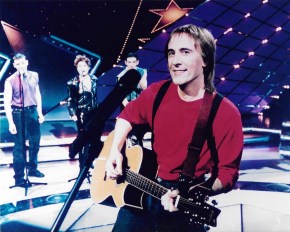
What was it like appearing on Stars In Their Eyes with your impression of Steve Harley ? 
My wife tried to get me to audition for the show for years as I was both a fan and friend of Steve Harley from ‘74-‘77 and she knew I could do a good impersonation of him. I gave in one year when a bloke came on and did Benny Hill. He was atrocious and I thought, ‘Well I can’t do worse than that, pass me the phone’.
wavisstarsintheireyes

Were Wavis and The Hard really closet intellectuals merely poking fun at the absurdity of the world today ? There’s a side of me that very few people know of. One of those facets of the diamond is a very serious, and reasonably well known controversial author, broadcaster, researcher with a sizeable website and a lot of internet coverage. I doubt you’ll know him and only a very few Wavis people do. He’s a cross between a British Indie Jones and Poirot, and that’s the only clue you’ll get. I’ve/he’s been on Sky TV shows a few times, done a lot of USA radio shows and wrote for a high street national monthly mag for a few years.

The full interview with Wavis will be available in the book. The group are now planning to complete the project, but Martin told me there is still time for some bands to come forward…

‘We now have all the interviews in the can but if there are any other North East bands who were active circa 1976-80 who we don’t know about and who’d like to contribute they’re welcome to get in touch’.

Contact: gobonthetyne@hotmail.com

Gary Alikivi    August 2019.

TYNE DOCK BORDERS -stories from the documentary.

11880844_501112830048283_848214020_n

Looking down Slake Terrace, Tyne Dock. Photo by Amy C. Flagg.

It was a cold, damp, windy day. I could hear the foghorn. Looking out the window I didn’t fancy going outside. If it clears up, I’ll go out later. 

First, I’ll have something to eat and listen to the news. I heated up a tin of pea and ham soup and turned the TV on.

Flicking through the channels I came across When the Boat Comes In. Never seen it before but within minutes I’m hooked. The writing was sharp, the story was great and central character Jack Ford, was the man.

Also recognised a few locations around Tyneside so next time in the Local History library I’ll search and see if there is any reference to the program.

There was, not only was the writer, James Mitchell from the North East, he was born in Tyne Dock, South Shields. And this area featured heavily in his and his father’s story, who was also a local councillor for the Tyne Dock ward. 

This was the catalyst for making a documentary about the area. I rang up Jarrow playwright Tom Kelly, we had a get together, threw some ideas around and started work on a script.

Using archive material and personal interviews with people who lived there, we look at the changes made in Tyne Dock. These are short extracts from some of the interviews filmed in 2012.

Tyne Dock Arches….

Kennie Chow: One of the major dare’s that we had was that along the arches was a ledge and above the arches was several little arches which you can get inside. But the only way you could actually get inside was to actually physically shimmy across the ledge.

Stephen Wilson: Used to play in the arches a lot. Was a great playground, very dangerous. We used to climb to the top and go into the little arches at the top. Which were yer access point, you could climb and go down but was quite a big drop. And inside it was chocka block with bricks and rubble.

Sheila Ross: The arches we thought were exciting cos you could get an echo in them. They were long, dark, very dingy. I mean they went for quite a distance. That distance from where Jarrow and Tyne Dock are, is quite a distance.

Paul Freeman: They were quite busy cos they were for taking the railways in and out of the docks. So, the road went through the arches and the railways went over the top, so they were filthy. But as children they were fantastic things to play in.

Olive Pinkney: As you get older you tend to reminisce about when you were young and of course Tyne Dock was a very close-knit community. And the arches were always our familiar focal point. If we had any family come from all over, we used to say you come through the arches and you are at Tyne Dock.

When I retired, I started doing watercolours and painted places of Tyne Dock where I remembered, and the arches was one of the main one’s.

Slake Terrace….

Alex Donaldson: For all the old, dilapidated houses, no bathrooms and outside toilets I think there was still a comradeship, a friendliness about the place. People were very close then, you knew who your neighbours where they were just next door living on top of each other (laughs).

In the ‘60s the River Tyne was still quite as busy as when I lived in Hudson Street. I can remember foreign seaman coming out of the dock’s during the day or later in the evening. They used to board the trolley bus that was stood there. I’ve still got happy memories of old Tyne Dock.

Sheila Ross: But it was all pubs. And they were not pub’s we would go into. Me motha’ wouldn’t even go into them, they were men’s pubs. For the dockers and the sailors who would come from all over the world.

Derek Pinkney: Well, Slake Terrace was one of the busy roads at the edge of Tyne Dock. Actually, it was full of public houses, that was its mainstay. There were pubs like the Green Bar, The Empress Hotel, The Banks of Tyne, The North Eastern. The Grapes which was on the corner of Hudson Street. And then round the corner was The Dock.

The best place where we used to get a good laugh when we were boys was a café called the Café Norge. And it was supposedly a place of ill repute. Because in those days there was lots of Norwegian and Swedish ships used to come into Tyne Dock and the crew’s used to frequent that place.

Paul Freeman: Now if you carried on up Hudson Street you came to another boarded out shop and a house where all these ladies used to live. Me sister Sheila and me used to get pennies off them, they were a lovely set of lasses.

Sheila Ross: So, we used to sit on the step at the bottom of the flat and there was some ladies used to come past, always very nice, give us sixpence each.

Paul Freeman: Just up Dock Street one of the first buildings was the spiritualists.

Sheila Ross: That was a big meeting place on a Saturday night because they used to faint and pass out with all these messages they were getting. And they used to lay them out in the street. Just lay them on the pavements ‘till they come round.

Paul Freeman: You had a right mixture of the one’s that had been talking to the dead and glory to God on high and the other’s stinking of the other spirit’s and beer then you had the other ones who had been looking after more than the spiritual welfare round the corner at the brothel. It was quite a place to be actually.

James Mitchell and When the Boat Comes In….. 

Roz Bailey: I don’t remember meeting him when I was first cast as Sarah Headly. I didn’t think I was going to be in When the Boat Comes In because I remember when they were first casting it, I was going to go up for the part of Jessie. Obviously didn’t get that but a year later my agent rang me up and said there’s a part that they are casting for. I got it but didn’t know how it was going to colour my life.

I remember filming outside The Customs House which is now a theatre it must have been derelict then. They had set it up with the old cobble stones. The characters were so well written by James Mitchell, particularly for the women. Which you don’t often get now. And the attention to detail. Looking at them the great humour in his writing, the calibre of it. Very, very special.

Second Time Around Record Shop…

Alistair Robinson: Shields in the late ‘70s and ‘80s was well off for second hand and collector’s record shops. There was one halfway down Imeary Street in Westoe in the ‘70s, there was the Handy Shop just off Frederick Street in Laygate and there was Second Time Around in Tyne Dock. I didn’t know the guys who run it cos they maybe had a deal somewhere where they could get some quite rare material.

Stewart Cambell: I opened the shop in 1975 until 1985. We sold loads of Jazz in French and German imports. We had big Elvis fans come to the shop, we had imports from the States, Uruguay, most countries. Some people bought the same Elvis album with five different covers.

Tyne Dock Youth Club…

Stephen Wilson: We would play on the railway line from Tyne Dock until it crossed Eldon Street, then all the way up to Trinity High Shields. We played in the old shed’s when it closed down. We used to walk along the lines and play on the lines behind Tyne Dock Youth Club. We used to put screws, nuts and bolts, two pences on the lines and when the trains went past, they flattened them.

Kennie Chow: Tyne Dock Youth Club was a massive part of my life. Through personal reasons my family were split up at the time and I managed to join the youth club and I must have spent about 10 years of my life there. It really helped us pull through the bad times I was going through, and I became club DJ.

Paul Dix: I was a bit nervous coming to the club, but we were welcomed by Jack and Betty Inkster who ran the club then. We knew Kennie he was a great lad, he done the club discos.

I think the French trip was one of the biggest things that the club had done for years. We went in the minibus and piled it with kid’s, tents and sleeping bags and as many tins of beans and sausages as you can get in the back of a van.  Drove off down the motorway, down to Dover and on the ferry. We drove from the top of France through to Paris and Jack was using his cine camera and documenting the whole of the trip from start to finish.

Jack and Betty on the trip were fantastic. They done everything for us, Jack helping putting the tents up and Betty all those sausages and beans. We washed up and everybody chipped in. When you look back at the cine footage you can see how great a care they took of the kids. It was a real privilege to have been on that trip.

DVD copies of Tyne Dock Borders (70mins £10) are available to buy from The Word, South Shields. A short version is available to watch on the ALIKIVI You Tube channel.

Gary Alikivi    August 2019.

WAR STORIES – experiences of World War Two on Tyneside

During spring 2012, Jarrow playwright Tom Kelly and I made a short film about the impact of World War Two on South Tyneside, North East England.

Using archive material and personal interviews we revisited the past and spoke with people who shared their memories and experiences of war. These extracts are taken from some of the interviews.

12004062_975203375871747_1592481803776567623_n

Photograph by Amy C. Flagg

In the air raid shelters….

Doreen Purvis: My cousin Anne who was 3 or 4 year old used to insist on being taken outside to look at the stars in the middle of bombs dropping around and German planes overhead. This child would have to be taken to the door of the shelter and shown the stars to stop her crying.

Derek Hutchinson: We were all sitting in the air raid shelter and the bombs were coming down and everybody’s ducking from the bomb blasts, but I’m rubbing my hand’s thinking well if this air raid goes on after 3 o’clock I won’t have to go to school. If it stay’s this side of 3 o’clock I’ll have to go to school.

Doris Johnson: I was at the Glebe Church and the siren went. So my friend Jean and I decided we’d run home to Hyde Street just a short distance away. So we ran and went into our respective homes and my parents said we would go into the shelter. My neighbour called out to me did I have anything to read. So I ran round into my neighbours shelter and the man of the house moved to let me sit down.

Then the bombs started to fall and I was blown out of the doorway. My mam and dad who I loved dearly, were killed. My dad was found later that night, then died. But my mam didn’t survive at all. That was a day, a night, that I’ll never ever forget.

Derek Hutchinson: The last bomb of the raid was a whoosh, then a (whistle noise) louder and louder. Louder than I’ve ever heard before and then…bam. The wall’s of the shelter shook, the ceiling shook, bit’s of dust came down, the candle fell of it’s rack and went out. Then the all clear went.

So we clambered out the back door, forced it open cos there was stones in front, the air raid shelter was actually in the backyard. We went through the house, through the kitchen, as we walked along the passage a big wall of dust came along the passage. When we finally got to the front door it was leaning off it’s hinges.

Outside where there had been houses there was now a hole. It was a bomb crater, they had bombed our street and six houses had gone. We went into our front room and on the mantelpiece were two ornaments, very delicate. My grandmother’s pride and joy. She was really horrified ‘Oh my God, my ornaments’. She was clutching the ornaments saying they were alright ‘apart from a little strap on one of them was broken by Hitler’.

So these figures survived the war and I went on the Antiques Roadshow with them and I showed them a picture of the bombing which was horrifying. He valued them which wasn’t very much and then said ‘Well you know why they survived don’t you’. I said I had no idea. Well he said ‘They are made in Germany. If you look on the bottom you can see the makers mark’.

Maureen McLaughlin: We were at school and the teachers were trying to persuade everybody to go onto evacuation. But I didn’t want to go and leave my mam cos I was the only daughter and just had one brother. But my friends were all going so I said yes I’ll go.

They gave us a list to get, my mother had a job to get them because you had coupons. I had to have new pyjamas, jumper, skirt, shoes, wellies, slippers, yer case had to be full of these new things. But when it came to going I wouldn’t go, I started crying so she took me home.

Memories of food rationing…

Doris Johnson: My dad was a grocer and food started to get scarcer, you got your ration book and you had to abide by that. There were queues for anything which wasn’t rationed. Then sweets were rationed you were very lucky if a shop had a bar of chocolate in.

Maureen McLaughlin: I’ve been asked where you hungry during the war well I wasn’t as the rations were enough for us. Then again if we were short of butter or sugar some of these people in the street with big families would sell you their coupons. You’d take it to the corner shop and they’d sell you the butter, sugar, meat or cheese.

Doreen Purvis: In those day’s everybody took two or three spoonful’s of sugar in their tea so sugar was a very precious commodity. My mother said a cup of tea got knocked over into a sugar bowl and they were so concerned that they actually dried the sugar out on the top of the stove so they could use it again.

Dave Bell: During the war when there were shortages my Granda loved pea’s pudding and found out there was some available in Ferry Street in Jarrow. Now he lived in Nixon Street which is two or three street’s away and he sent my Aunt Joyce, his youngest daughter to go and get him a bowl of this pea’s pudding.

Well she got it and coming back she was just crossing the square in front of the Empire cinema when a dog fight broke out overhead. A German plane was being attacked by a spitfire and the two of them were swirling about and opened fire.

As the bullets were overhead, in fear she threw herself down onto the cobbles and the pea’s pudding went flying amongst all the horse muck. So that was the finish of me Granda’s pea’s pudding.

Picking up shrapnel…

Maureen McLaughlin: We used to go around in the morning after the air raids had been, that was our past time. All the young ‘uns hunting for bit’s of shrapnel in the street’s. We all had a tin and collected bit’s of shrapnel to see who had got the most, bit’s of bombs and aeroplane an’ that.

Derek Hutchinson: Of course it really was called looting. All the thing’s we picked up off the bombed street’s had presumably belonged to somebody. We had photographs and ornaments, it was stealing but we didn’t know. So a lot of my time was spent running away from long legged policemen.

Doreen Purvis: My Grandmother lived in Thornton Avenue just beside the dock gates and of course there was lot’s of bombing raids during that time. Under the cover of the bombing the docker’s would often liberate various items from the docks, climb over the wall with them and stash them in my Grandmothers house. Usually as a reward she might get a bottle of whiskey or something similar.

One night a German war plane came down over the South Marine Park and lake in South Shields…..

Bob Robertson: My parents then lived in Eleanor Street. One of the plane’s I believe came down in one of the parks. But on it’s way it jettisoned two or three 500lb bombs and did an awful lot of damage.

Derek Hutchinson: A plane flew very close overhead on fire. It crashed at the right hand side at the bottom of Beach Road and blew up. Killed the airmen, blew down the building that houses the little boats. And just created mayhem.

If you could grapple in the lake with bent coat hanger’s and pull something out with German writing on this was a swappable article – well I pulled out a flying boot. ‘I’ve got a flying boot’ I shouted’. So they all came running along ‘Hey that’s great’. Then I put my hand inside the flying boot and pulled out what appeared to be cooked tripe. This wobbly, jellified, whitey creamy skin.

Of course it was the poor man’s foot – it had been blown off. ‘You’ll never do any swaps with that it’ll stink. Chuck it back in’ they said. So I threw it back in the lake.

Doreen Purvis: The radio was a great source of information during the war but the Germans also used it for propaganda purposes. And there was a broadcaster called Lord Haw-Haw who used to home in when there had been a raid the night before.

On one occasion he was talking about South Shields and he was talking about people in the ruins of their houses starving to death, well just at that point me Grandma was dishing up stew. So she thrust a plate of stew in front of the radio and said have a smell of that ya’ bugga’.

I am looking to add to these stories so if anyone would like to share their experience of that time just get in touch at     garyalikivi@yahoo.com

A short version of the film is available on the ALIKIVI You Tube channel.

 Gary Alikivi   August 2019.

ZAMYATIN The Russia – Tyneside Connection film research & script

On the 7th & 21st August 2018 research for a short film about Yevgeny Zamyatin (1884-1937) is featured on this blog. On today’s post I’ve added the script from the film I made about his life.

The narrators were North East actor’s Iain Cunningham and Jonathan Cash. Recorded by Martin Francis Trollope at Customs Space studio in South Shields and excellent soundtrack from North East musician John Clavering.

Yevgeny Ivanovich Zamyatin

Start.

Russian born Yevgeny Zamyatin lived with his wife in Paris until his death in March 1937. Their last few years were lived in poverty and only a small group of friends were present at his burial. His death was not mentioned in the Soviet press.

Zamyatin was an author of science fiction and political satire. Famous for his 1921 novel ’We’ – a story set in a dystopian future – the book was banned in Russia. In his novel ‘1984’ George Orwell acknowledged his debt to Zamyatin.

But how does Tyneside fit in this story ?

Zamyatin was born in a small town 200 miles south of Moscow on 19th January 1884. He had an educated middle-class background, his father was a teacher and his mother a musician.

Zamyatin studied Naval engineering at the St Petersburg Polytechnic Institute. He spent winters in the city and summers enjoying practical work in shipyards and at sea. The Middle East being one destination – a rich experience for the future writer.

He was a supporter of the revolution and joined the Bolsheviks, attending demonstrations and meetings. But he was arrested during the 1905 Revolution – for this he was sent to prison for several months. His time there was spent learning shorthand and writing poems.

He completed his course in Naval Engineering and was employed as a college tutor. He was also writing short stories and essays – his first published in 1908. Zamyatin immersed himself in the bohemian life of St Petersburg and was an important part of the cultural scene in Russia.

At the time of the First World War Russia were having ice breakers built in UK shipyards. Zamyatin was sent to North East England in 1916 to work as a Naval engineer for the Russian Empire.

He supervised the construction of the ships on the River Tyne. While there he lived in Jesmond near Newcastle and during his eighteen months stay, he was reported to travel around Tyneside and improve his knowledge of the language.

“In England I built icebreakers in Glasgow, Newcastle, Sunderland, South Shields, and looked at ruined castles. The Germans showered us with bombs from airplanes. I listened to the thud of bombs dropped by Zeppelins”.

ophn16w copy

Laurence O’Shaughnessy lived in South Shields and worked there as Customs Collector on the River Tyne. His daughter Eileen married the author, George Orwell. Was there a connection to Zamyatin ? Leslie Hurst from The Orwell Society looked at the possibility.

‘Would the Russian ships have been checked by customs before leaving the Tyne ? When Orwell learned of the existence of ‘We’ he might have discussed it with Eileen and heard her say that her father had met its author. When Orwell died, Eileen’s library was found mixed with his.

Might Eileen have read Orwell’s copy of ’25 Years of Soviet Russian Literature’  and mentioned the Russian engineer who visited South Shields in her childhood? It is an intriguing possibility’.

When living on Tyneside, Zamyatin wrote two short stories ’The Fisher of Men’ and ’Islanders’. After a day at the shipyards, he would sit at his desk and write about the blinkered and pretentious world of the middle class.

‘By Sunday the stone steps of the houses in Jesmond had as usual been scrubbed to a dazzling whiteness, like the Sunday gentlemen’s false teeth.

The Sunday gentlemen were of course manufactured at a factory in Jesmond, and thousands of copies appeared on the streets. Carrying identical canes and wearing identical top hats, the respectable Sunday gentlemen in their false teeth strolled down the street and greeted their doubles’.

Both stories were published on his return to Russia. But by then, the 1917 revolution was burning. He regretted not witnessing the start of it.

“I returned to Petersburg, past German submarines, in a ship with lights out, wearing a life belt the whole time. This is the same as never having been in love and waking up one morning already married for ten years or so”.

The famine, war and economic collapse of the country had a major influence on his literary career.

“If I had not returned home, if I had not spent all these years with Russia, I don’t think I would have been able to write anymore. True literature can only exist when it is created, not by diligent and reliable officials, but by madmen, hermits, heretics, dreamers, rebels and skeptics”.

In 1921, ‘We’ became the first work banned by the Soviet censorship board. In 1923, he arranged for the manuscript to be smuggled to a publisher in New York. After being translated into English the novel was published.

With his political satire, a number of essays that criticised the Communist ideology and dealing with Western publishers, Zamyatin has been referred to as one of the first Soviet dissidents. As a result, he was blacklisted from publishing anything in his homeland.

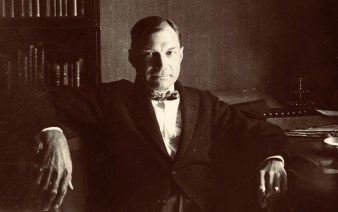
The English writer Harold Heslop had seven books published and his first was in the Soviet Union. In 1930 he was invited to the Ukraine to speak at the Revolutionary Writers Conference. While there he also travelled to Leningrad to meet Zamyatin who he wanted to help promote his latest book.

Harold was born in Durham but for many years lived in South Shields. He was a miner at Harton Colliery before winning a scholarship to Central Labour College in London.

 (Zamyatin to Heslop) “I cannot quite place you. Are you a Geordie may I ask. I catch the Tyneside dialect in your speech. Am I right ? I know Tyneside well. I liked the people very much. I also liked their strange, musical dialect.

Often, I found it most amusing. South Shields… Sooth Sheels! I never learned to sing the Tyneside speech!”

Zamyatin read lectures on Russian literature, served on boards with some of the most famous figures in Russian literature, but by 1931 he was experiencing difficulties.

Under the ever-tightening censorship and becoming unpopular with critics who branded him a traitor, he appealed directly to Joseph Stalin requesting permission to leave the Soviet Union – a voluntary exile.

“I do not wish to conceal that the basic reason for my request for permission to go abroad with my wife is my hopeless position here as a writer, the death sentence that has been pronounced upon me as a writer here at home”.

Eventually Stalin agreed to Zamyatin’s request, and he and his wife left for Paris, where there was already a small Russian community.

While there he wrote new stories, most of his earlier work was translated around Europe, but a notable piece of work was his co-writing of a film with French director Jean Renoir.

Just before his death he had told a friend…“I had to leave Soviet Russia as a dangerous counter revolutionary and abroad I hesitate to approach the Russian community, while they treat me coldly and suspiciously”.

He lived out his last years with his wife until his death from a heart attack in 1937, and a final resting place for Zamyatin can be found in a cemetery south of Paris.

End.

Research:

Zamyatin – A Soviet Heretic by D.J. Richards.

Islanders/The Fishers of Men – Salamander press Fiction.

We – Yvegney Zamyatin.

Out of the Old Earth – Harold Heslop.

 Gary Alikivi  2018.

DESTINY CALLING – in conversation with John Roach guitarist with North East metal band Mythra

On February 13th 2017 an interview with North East heavy metal band Mythra saw the first post on the Alikivi blog.

Over 75,000 views later and for the 250th post is appropriately an interview with John Roach…

Last year our vocalist Vince High left the band for personal reasons, but we’re still mates. I met Vince when I was 16 in the training school at Swan Hunters shipyard in Fisher Street, Wallsend. We liked the same music and hung around together at work.

I was in a band called Zarathustra with Maurice Bates, who was originally the singer now current bass player with Mythra. Vince was in a band called Freeway and eventually he joined us. Pete Melsom was on bass.

53719219_2164098597236599_4408484686087585792_n

Where did the name come from ?

We needed a shorter name really, one that was easier to remember so after a few ideas were thrown in the hat I came up with the name Mythra. We went with that one and around the same time Barry Hopper joined. Our original drummer Kenny Anderson wasn’t really 100% into the band so Barry stepped in.

When Barry first came to audition his brother dropped him off in his car. We took one look at his beautiful silver Tama drumkit and said ‘He’s in’ (laughs).

As the original four piece Mythra, we all went to gig’s together. Not just Purple or Sabbath at Newcastle City Hall but local bands Warbeck and Axe with Keith Satchfield, Southbound and Circus. There were some truly great rock bands around at that time.

Watching them saying ‘this is what we want to do, this is just like Top of the Pops… but real’ (laughs). Axe were probably the most influential band for us they had a huge p.a. and lights and they wrote their own songs, that’s what we wanted.

We were all learning from each other really because we knew the lads in other local bands Saracen, Hollow Ground, Hellanbach.

It was like ‘Dawsa (Steve Dawson, guitarist Saracen) has got a Marshall stack…What, really…let’s go an’ see it. Or ‘Metty (Martin Metcalf,  guitarist Hollow Ground) has got a Les Paul. What, a real one ? (laughs).

The band were all around 18-year-old, we had bought a Bedford van, our own pa and started earning money from workingmen’s clubs in the North East. Getting our own van was a milestone really instead of our dad’s dropping us off in their cars.

We gigged from Hartlepool, Teesside right up into Northumberland. Maurice got us tied up with Ivor Burchill the main agent in Newcastle. We were getting loads of gigs right through ’76-‘80.

We played Sabbath, Wishbone Ash, Humble Pie rock stuff like that. I was earning more money from playing than I was for being an apprentice fitter in the shipyard. You can’t do that anymore (laughs)!

We had a couple of roadies helping out with the gear plus Lou Taylor came along with his homemade lamps, lights, flares all sorts (laughs). He was always singing in the back of the van.

He used to do these Rob Halford screams and they were spot on. I think Vince thought he was auditioning for Mythra. Lou ended up singing in various bands like Saracen, Satan and down London with Blind Fury.

52762406_2024617097652306_4576230401973944320_n

In 1979 Def Leppard released ‘Getcha Rocks Off’, Iron Maiden the ‘Soundhouse Tapes’ and Mythra recorded the Death & Destiny ep at Guardian Studio in Durham making them one of the original NWOBHM bands.

Yes, we never said we were the best, just one of the first. The single was recorded around September or October and we released it in the November. Actually, we just wanted to record a demo at first, put it on cassette, send it around record company’s and hopefully get a deal.

The producer and owner of Guardian Records, Terry Gavaghan, said for the same money you can get it on record and it will look more professional than tape.

So, we bought 200 records at first. We sold them and went back a fortnight later to order more! We sold most of them at Second Time Around Record Shop in South Shields.

Gavaghan got us a distribution deal with Pinnacle Records so it was sold all over the country. Rod MacSween at International Talent Booking agency heard Death and Destiny on the Friday Rock Show hosted by Tommy Vance. That opened a lot of doors and got us bigger gig’s nationwide.

By the time 1980 came around we had done a lot of gigs and recorded the EP but I couldn’t see the band going any further. After five years, I felt as if I had enough, so I left in the February.

The rest of the band got a guy in called Micky Rundle to replace me and he played on the Headbangers Ball in July ’80 at Stafford Bingley Hall with Motorhead, Saxon and a few others.

Looking back on the EP, we are really proud of it because we were the first of the bands like Fist, Hellanbach, Hollow Ground and Saracen to release a record. We were at the front of all that.

Did you work with any other musicians ?

I had a break for a few months then started rehearsing with Saracen. Lou Taylor, Les Wilson, Dave Johnson – and Steve Dawson was the other guitarist. But Steve and I had different playing styles and it didn’t work out. I don’t think Saracen was destined to be a two guitar band.

Around six month after that Harry Hill (Fist drummer) got in touch and I joined them. We played the Gateshead Festival with Diamond Head, Lindisfarne, Ginger Baker and headliner Rory Gallagher.

Did you have a manager in Fist ?

Our management team were based in Manchester and were called Rhino Promotions. I think they had a clothing company making jeans – which were like Geordie Jeans here on Tyneside.

I remember a gig in Manchester when the back window of our hired car got smashed and they pinched everything from the boot including my leather trousers, cowboy boots and skimpy black t-shirt that I wore for the gig. They also took a pair of red shorts and an orange bag belonging to Harry Hill. He was livid!

And I’d only wore the leather pants once. We drove back to Tyneside with Glenn Coates, Norman Appleby and me in the back, freezing our arses off sitting on tiny bits of glass from the back window (laughs).

How long were you in Fist ?

I was in Fist for about a year and a half, originally with a singer called Colin Johnson before Glenn Coates joined. We recorded the album Back with a Vengeance and played a few gigs.

The rest of the guys decided they wanted to be a four piece so after a rehearsal in Felling – Glenn and Norman came to my house and told me I was out. It was a bit of a shock!

We had a side band going called Centrefold – Harry, Glenn, me and a great guy called Peter Scott – who sadly died very young of a brain tumour. This continued for quite a while after Fist so there were no real hard feelings.

After Peter died we were going to start Centrefold up again with another bass player but my heart wasn’t in it – I think Steve Dawson took it on – small town Shields !

61546111_10211159663346540_864351645650124800_n

Bringing your story up to date, what have Mythra planned next ?

Well, we are all just enjoying it. Earlier this year we were at the Grimm Up North festival and Negasonic in Belgium, where we showcased some new material.

We’re currently finishing pre-production on 12 new songs, and we are going to record a new album for High Roller Records with our new singer Kev McGuire later this year. Kev is a great guy with a lot of live experience on stages in the North East and he has a great rock voice.

Our next gig is in France at the South Troopers Festival in Marseille on 21st September.

Contact Mythra on the official website http://www.mythra.co.uk/

or through their Facebook page https://www.facebook.com/mythranwobhm/

 Interview by Gary Alikivi    July 2019.

RUSSIA’S GEORDIE SPY with author & TV researcher Vin Arthey

Searching your family history can throw up a few surprises. My Great Uncle Alexander Allikivi was born in Russia at a time of political and social unrest resulting in two revolutions, the abolition of the monarchy and the establishment of the Soviet Union by the Bolsheviks. Have you ever wondered why some awkward people are called bolshy ? Was it Bolshy Alex ? A name passed round the family so who knows. 

Little is known about the life of Allikivi pictured below. He lived in South Shields during the ‘20s married my Great Aunt Lavinia Ewart and died in 1933. We know he received two Mercantile Marine and British Medal ribbons by 1921, where these from the First World War? Did he first arrive in the UK between 1914-18 and why did he leave Russia ? Was it because of the revolution?

In the search for some clues I read the excellent book The Kremlin’s Geordie Spy the story about father and son Heinrich and William Fisher by Vin Arthey.

Heinrich was born in Russia in 1871 and William was born in 1903 in Newcastle. In 1921 the Fishers were in Moscow. The Spielberg film Bridge of Spies starring Tom Hanks features what happened to William.

Reading Vin’s book I came across this…

’He (Heinrich Fischer) maintained all his political links. He remained a member of the Russian Socialist Democratic Workers Party and in UK politics aligned himself with the Social Democratic Federation members who seceded to found the British Socialist Party, working for the party south of the Tyne, in South Shields, rather than in Newcastle’.

Was Allikivi involved in politics? Were other Russians attending the meetings in South Shields and would he be attracted to gatherings with people who spoke the same language as him? He would look forward to having conversations rather than using a few words or short phrases when meeting friends and family.

Edinburgh-based author Vin Arthey on Fri 12 January 2018.

Vin Arthey photograph by Andy Catlin.

I decided to contact Vin and asked him what was the inspiration behind writing ‘The Kremlin’s Geordie Spy’ ?

When I was freelancing in the ‘90s I was offered an Associate Producer role by Trevor Hearing who’d just had his series, Stranger Than Fiction commissioned by Tyne Tees TV.

This was a series of six half-hour dramas and drama documentaries covering true regional stories such as those of the Darlington MP who turned out to be an international outlaw and leader of an obscure Chinese cult, and the Newcastle auction mart owner and television hypnotist who was jailed for swindling his mother out of thousands of pounds.

Also, the County Durham relief bank manager who correctly foretold that his bank would be robbed and that he would be killed during the robbery.

Another story I researched was of Newcastle born William Fisher who turned out to be a KGB spy, used the name Rudolf Abel and was jailed for espionage in the United States in 1957. Five year later he was exchanged across Berlin’s Glienicke Bridge for the American U-2 pilot, Francis Gary Powers.

Fisher’s birth in Newcastle had been ascertained by Newcastle University historian David Saunders, and I had a number of meetings with David during the pre-production phase.

Trevor Hearing and I were convinced that the story was worthy of a network production, but it was turned down by BBC 2’s Timewatch and Channel 4’s Secret History. However, I kept on researching and writing, because I was absolutely hooked by the story.

You see, I could remember when I was 12 year old watching the news story on my family’s first, rented, TV set, of the KGB spy Rudolf Abel, who was arrested, tried and jailed in New York in 1957. The Cold War was very real to me as a teenager in East Anglia.

My home was close to a number of United States airbases, and there were regular sightings of USAF Sabre, Phantom and Voodoo jet fighters and fighter-bombers.

I remember well the shooting down over the Soviet Union in May 1960 of Gary Powers high flying ‘weather reconnaissance’ aircraft, the ‘U-2’.

As one of our teachers put it the day the news broke, ‘Awfully high weather we’re having these days,’.  Also I was still at school when the famous exchange of Powers and Abel took place.

You might imagine my excitement when I discovered that the Soviet spy at the centre of perhaps the greatest Cold War drama, the man who featured so strikingly in my school years, was a British subject, Newcastle born, at that. I couldn’t let the story go, and when I was approached by St Ermin’s Press to write a book I jumped at the chance.

St Ermin’s published it as a hardback with the title Like Father Like Son: A Dynasty of Spies. Later, Biteback Publishing bought the paperback rights and repackaged it as The Kremlin’s Geordie Spy: The Man They Swapped for Gary Powers.

When the Spielberg movie Bridge of Spies was released in 2015, Biteback reprinted with yet another title, Abel: The True Story of the Spy They Traded for Gary Powers.

Did you do any readings or tour with the book ?

The book or should I say books! have been well received, although I have to be realistic – Fisher was our enemy during the Cold War, a villain of the piece – a villain of the peace even!

Over the last dozen years I’ve given talks on the Fisher story in various places and at a range of venues in Newcastle, North Shields, South Shields, Middlesbrough, Edinburgh, Reading, and there has been great interest in the United States, where the books have been reviewed for the CIA’s ‘Intelligence Officer’s Bookshelf’.

I visited the USA for research and subsequently got to speak at the Brooklyn Historical Society and at the International Spy Museum in Washington DC.

What is your background Vin ?

I was born, brought up and spent my early adult years in Ipswich, and although most of my life has now been spent in the North of England and in Scotland, I still regard myself as an East Anglian.

I follow Ipswich Town football team through thick and thin – thin at the moment as we’ve just been relegated to what I still call the Third Division, and our arch rivals Norwich City have just made it back to the Premiership.

I’ve had a dual career, in education and the media, teaching in schools and a college of education then, when the birth rate dropped and the colleges were closing and merging, I was at Newcastle Polytechnic where I taught drama and media studies.

While this was happening, I started freelance scripting and reviewing for BBC Radio Newcastle and Tyne Tees. In the early ‘80s an opportunity arose to work fulltime at Tyne Tees, so I took it.

Researching and producing across the whole range of the station’s output – current affairs, religious programmes, comedy, arts and features.

I went freelance again in the mid ‘90s, but at the end of the decade went back into university teaching and to heading up the TV Production degrees at Teesside University.

Now, I’m settled in Edinburgh and supplement my pension with income from writing and speaking.

What are you working on now ?

I review books about espionage, the Cold War and Russia for newspapers The Scotsman and Scotland on Sunday. I’ve just finished a piece of ghost writing – a privately commissioned piece for a retired hydroelectric power engineer, and I’m currently clearing my desk, and my head with a view to tackling a new book – still nonfiction, but still under wraps.

To hear from Vin check this link to an interview with Spy historian Vince Houghton at Spycast

https://www.spymuseum.org/multimedia/spycast/episode/the-real-story-of-rudolph-abel-an-interview-with-vin-arthey/

As for my Great Uncle from Russia, Alexander Allikivi, I am still searching for some answers.

Interview by Gary Alikivi   July 2019

WILDFLOWER – South Shields born Eileen O’Shaughnessy 1905-45 timeline.

SEPT 25 1905 copy

In October 2018 I wrote about making a documentary on George Orwell’s first wife Eileen O’Shaughnessy. The short film had a real local interest as Eileen was born just two  minutes from where I live.

Little did I know when I started the search in 2012 that the film would be shown to the Orwell Society and Richard Blair, son of George Orwell, on the Isle of Jura where Orwell wrote the dystopian classic, Nineteen Eighty Four.

Timeline research 2012-13:

In a graveyard in Newcastle, you will find a headstone for Eileen Maud Blair who was married to George Orwell (real name Eric Blair), arguably one of the most controversial writers of the 20th century.

Books included The Road to Wigan Pier (1937), Homage to Catalonia (1938), Animal Farm (1945) and Nineteen Eighty Four (1949).

But who was Eileen?

Eileen’s story starts in Ireland where her father, Laurence O’Shaughnessey, was born in 1866 on the small island of Valencia and Portmagee in County Kerry. His father, Edward O’Shaughnessy was employed in the Royal Irish Constabulary.

Aged 25, Laurence moved to England and boarded at 19 East India Dock Road, Limehouse in London and found work as a clerk for His Majesty Customs.

Eileen’s mother Mary Westgate was born in 1866 in Hempnall, Norfolk, at 24, Mary moved south to Greenwich in London and worked as an Assistant Teacher at Lewisham Hill Road School.

Laurence and Mary met and eventually married in Holy Trinity Church, Gravesend, Kent in February 1900. The couple then travelled to the North East and made a home at 109 Cleveland Road next to the Union Workhouse in Sunderland.

Laurence continued working as a Tax Clerk for HM Customs at Custom House, based at 138 High Street, Sunderland. In 1901 they had a son Laurence who went on to become a distinguished Medical Surgeon.

Six years later the family moved to 3 Park Terrace (re-named Lawe Road) South Shields and Laurence senior was employed as Port Administrator, Collector of His Majesties Customs and had an office in Midland Bank Chambers, 65 King Street, South Shields.

Then on 25th September 1905, Eileen Maud O’Shaughnessey was born and baptised on 15th November in St Aiden’s Church.

After a short time, the family moved to 2 and a half Wellington Terrace, now known as Beach Road. They called the house ‘Westgate House’ after her mother’s maiden name and it’s still visible above the front door of 35 Beach Road.

Eileen was educated at the local Westoe School then attended Sunderland Church High School and finally in 1924 the family moved south when Eileen graduated to read English at St Hugh’s College in Oxford. Sadly, Eileen’s father Laurence died not long after, he was 62 years old.

After leaving education Eileen held various jobs including work as an English teacher and purchased a small secretarial agency. But she returned to education in 1934 for a Masters degree in Educational Psychology at the University College in London.

By 1935 Eileen was a graduate student and living with her widowed mother in Greenwich. One night she was invited to a house party at 77 Parliament Hill in Hampstead where she met the journalist and author George Orwell, real name Eric Blair.

Eric was born on 25th June 1903 in India. The Blair family had returned to the UK, settled in Oxfordshire and Eric received a scholarship to Eton College.

Over the months the couple found they had a great deal in common, a passion for poetry, literature and countryside walks. Eric was attracted to Eileen’s blue eyes, heart shaped face and wavy dark brown hair, her Irish looking features.

They married at Wallington Parish Church in Hertfordshire on the 9th of June 1936 and lived at The Stores, 2 Kits Lane, Wallington.

In Europe, a Civil war had broken out in Spain and in 1936 Eileen’s husband travelled to Barcelona and joined the militia of the Workers Party of Marxist Unification. Orwell wanted to help the revolt against Franco and the Fascists.

Eileen followed in early ‘37 where she stayed in the Hotel Continental on the Ramblas in Barcelona. She worked as a secretary for the New Leader which was a newspaper for the Independent Labour Party.

The party’s General Secretary was John McNair from Tyneside. Orwell was stationed at the front and in battle was shot through the throat. He recuperated in a sanatorium outside Barcelona.

The couple returned to the UK and by 1939 Eileen worked at the Censorship Department of the Ministry of Information. For a time, they lived with her brother Laurence and her sister-in-law Gwen, at their home in Greenwich Park.

Orwell worked at the Empire Department of the BBC as head of cultural programming for India and South East Asia. Unfortunately, during the Second World War Eileen’s brother was killed at Dunkirk while serving in the Army Medical Corp, and her mother died a year later – this was a very sad time for Eileen.

But good news was on the way as Eileen and George adopted a baby boy and named him Richard. Eileen by now had given up her job at the Ministry and taken well to motherhood. Orwell began writing ‘Animal Farm’.

Growing tired of London and feeling unwell for the last few months, Eileen travelled back to the North East with their son, Richard. They stayed with her sister-in-law Gwen at her home near Stockton and with the Second World War nearing its end Orwell was in Germany working as a War Correspondent.

Harvey Evers was a surgeon friend of her brother Laurence, he had a private clinic at Fernwood House in Newcastle a train ride away from where she was staying.

Eileen made an appointment to see him but after the examination tumours were found on her uterus and a hysterectomy operation was arranged for 29th March 1945.

Before the operation Eileen was aware that she might not survive and wrote long letters to Orwell. Sadly, under the anaesthetic Eileen died. Aged only 39, Eileen was buried on 3rd April in St Andrews Cemetery, Newcastle.

With Eileen’s death a deep sense of loneliness overwhelmed Orwell. He put off a return to the family home and went back to Germany to report on the end of the Second World War. Close friends looked after his son Richard at their flat in Canonbury Square, London.

His novel, Animal Farm was published in the summer and in it he credited Eileen with helping to plan the book. In May 1946 Orwell rented Barnhill, a farmhouse on the remote island of Jura in Scotland and wrote Nineteen Eighty Four, the book was published in 1949.

Sadly, on 21st January 1950 George Orwell died of tuberculosis in London aged 46. He is buried in the churchyard of All Saints in Sutton Courtenay, Oxfordshire.

Sources: George Orwell biographies by Gordon Bowker and Scott Lucas. Family history research on Ancestry website. Local Studies in South Shields, Newcastle and Sunderland City Libraries.

Thanks to David Harland present owner of Westgate House, South Shields.

 Gary Alikivi.

PUTTIN’ ON A SHOW – in conversation with North East entertainer Helen Russell

182

First time I worked with a stripper in the clubs. It was a Sunday morning. I walked into the club ‘Are ye’ the strippa or what ?’ said a bloke there. ‘I’m the what’ I replied (laughs).

The stripper walks into the dressing room with just a bag. I walked in with all my gear, microphone, speakers and stage costume. She did a five-minute act then taxi to her next gig. She did four clubs in a morning. Not bad work but I couldn’t do it. I’ll stick to singing.

A few week’s ago the blog featured stories from entertainer’s who performed in workingmen’s clubs. Ned Kelly, Jack Berry and a few more shared some great memories.

Carrying on that theme I spent time with Helen Russell at her home in South Shields. Helen hasn’t been feeling too well lately so I’m very grateful to her for taking the time to share her story….

As a kid I was an autograph hunter, all the stars like Laurence Olivier and John Mills. Great times. We weren’t a musical family but my dad could sing, he was in the Royal Navy.

You see I was born in the heart of London and when I was 15 I went into Entertainment National Service Association or otherwise known as Every Night Something Awful (laughs).

ENSA was an organisation set up in 1939 by Basil Dean to provide entertainment for British armed forces personnel during World War Two.

They held the auditions in the Theatre Royal on Drury Lane in London. They liked me and took me on. I toured all over the UK with ENSA. I was earning £7 per week and that was damn good money. Top act’s and names were getting £10 per week. It was a long time ago, I’m 95 now.

Where did you perform with ENSA ?

We played in the munitions factories when the workers were having their lunch breaks. We entertained in the theatres and clubs.

I sang Hey Neighbour and Sally that was a big number. I did imitations of Gracie Fields but never sang any Vera Lynn songs and I always finished my act with a tap routine.

I gave up when I got married. It was the done thing in those days. We met when I was entertaining in Belfast. Eventually we moved to England, and I got a job performing in the clubs.

The first club I played in South Shields was on Ocean Road which is long gone now.

At this time, we lived in South Frederick Street, and we had no telephone. I used to go down into the street to the telephone box and ring up the clubs to get gigs. I’d ask for the concert secretary, book the show and arrange the fee. I did that for years before the agent’s came in. Plus, we had no transport in those days.

For a show in Stanley, County Durham I’d pack my case with stage clothes, music sheets for the pianist, get the bus up from South Shields to Worswick Street in Newcastle, then carry my case across town to Marlborough Crescent bus station and go to a club in Stanley another 10 mile away. We had to be off stage and out by 10pm to get the last bus all the way back home.

A pianist joined us, he had a car. He charged us one and sixpence each for petrol. I also had to pay a babysitter seven and six a time. The first working man’s club I ever played was Windy Nook and we earned £1 each, there were seven of us.

Johnny Gaffney who wrote for The Shields Gazette, he had a great voice. No stage technique whatsoever but what a beautiful voice.

I went solo after that when agents came in and started working through the Beverly Agency. They got me lots of work around the North East and over to Carlisle a few times, lovely crowds there.

Money was coming through the clubs then, so concert chairman would only deal with agency’s. Which was great for me. No running around telephone boxes, made it much easier and as I was solo the money was much better.

181

Helen second from right. in Balmbras, Newcastle.

Can you tell me about the photo above ?

Yes, that was in Balmbras old time music hall, Newcastle. I had been performing there. Bobby Thompson has played there, also Dick Urwin who was a good writer and great comedian.

You had to put him on in the first half because by the second he had too many drinks and would insult the audience. In Newcastle I also performed on stage at the Mayfair.

Can you remember the story behind this record ?

That was recorded in 1980 over the River Tyne in Impulse Studio, Wallsend. Corrinne Wilde had written a song about Bobby Thompson and she knew I could write, so I added a chorus. It was a lovely thing to do.

But selling records is a lot harder than making them. I sold a few at gigs. Bobby Thompson paid for the photographer which was nice.

Helen starts singing the chorus…..

Bobby T, Bobby T, you’re the Geordie lad for me

With yer ganzie hangin’ doon below yer knees,

You’re as Geordie as the Tyne, and for the sake of Auld Lang Syne,

We’ll tell the world we love you, Bobby T.

Did you record anymore of your work ?

I recorded voice overs for radio and appeared on TV a number of times. I remember a part on a show with Martin Clunes, he was only 18 or 19 playing the part of a punk.

I was in a lot of productions including Emmerdale, that was in 1993, also children’s television and the latest Comedy Playhouse. I also played somebody’s wife in Spender written by Jimmy Nail. It was a nice part and I get paid repeats on some of them.

I have a book full of work and gig’s I’ve done over the years plus the fees. There’s a Spender episode written down in it as a repeat in Sweden, I got £9.56 for it (laughs).

Were you working through an agent ?

Yes Janet Plater, she represents a lot of actors in the North East. The original fee for Spender was very good I remember. The last job I did for Janet was a Tesco advert.

You have appeared at your local theatre The Customs House in South Shields…

I’ve worked on a number of plays at The Customs House where Ray Spencer is now Director and an MBE. I got to know Ray in the ’80s when he was looking for a partner to work alongside him putting on some Geordie entertainment. Somebody recommended me and we worked together for a long time.

Our first gig was the Post House Hotel, Washington in 1988. I have my book here and for the Post House there is a note next to it ‘Ray has the receipts’ (laughs).

The writer Tom Kelly put me in a few shows and that got me and the same team work on Dirty Dusting written by Ed Waugh and Trevor Wood. That was very popular, we did it in about 2002. The show still sell’s today in different countries.

Helen recalls another memory from working in the clubs…

A lot of times I was the only woman because I was entertaining there and these were men’s clubs. I couldn’t get a drink at the bar. I had to give a man the money. He paid the man behind the bar, got the change and passed it to me with my drink !

Tell you what though, I never want to see another bingo card in my life (laughs).

Finally, what has working in entertainment meant to you ?

I wouldn’t still be doing it in my 90’s if it didn’t mean anything to me. I was born to do it.

Interview by Gary Alikivi   July 2019.