NEW KIDS ON THE BLOCK in conversation with Unified Media

image

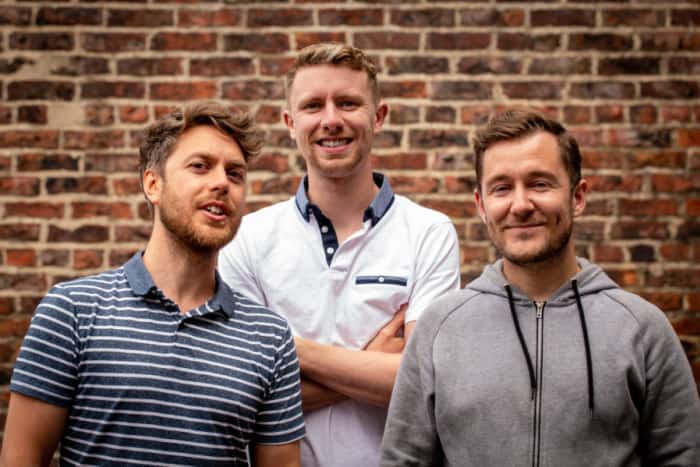
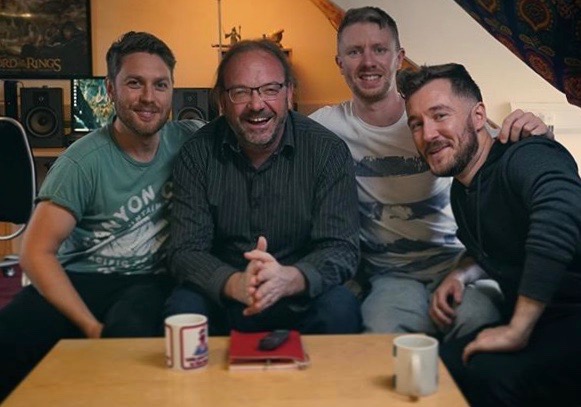
Ryan, Phil and Jon.

Sitting in the HQ of Unified Media at 7 Beach Road, South Shields I’m talking with Jon, Phil and Ryan about how I had an office downstairs in this building over 10 years ago. The stairs didn’t seem as steep then.

I first met Unified Media two years ago when I was looking for a team to help produce a DVD of folk musician Benny Graham and friends singing old Northumbrian songs.

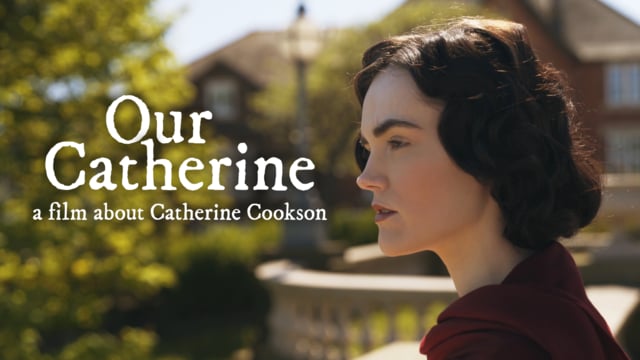
The DVD was screened in The Word, South Shields, as is their latest project about the author Catherine Cookson…

Ryan: ‘South Tyneside Council commissioned Our Catherine. They wanted a film to showcase as part of their new exhibition to commemorate the death of Catherine Cookson, which is twenty years ago this year.

We didn’t want to make a piece with just historical images in a sort of documentary style – instead, we wanted something that was more dramatic, and moving’. 

Phil: ‘Yeah, we wanted to make something that would really pull people in. We worked with playwright Tom Kelly, which he ended up co-writing with Jon in order to adapt his writing for the screen’.

Jon: ‘The intention was to inform people about Catherine but also take them on a journey that as emotional as well as educational. It was important to us that even if you didn’t know who she was, or even if you weren’t from the North East, you could watch the film and still be moved and entertained’.

Ryan: ‘We knew that if we made a historical, documentary piece it may well only appeal to people who knew her, or her existing audience. None of us had any connection to Catherine Cookson and her work when we were commissioned to make the film.

We had to discover her for ourselves when we began pre-production, because up until then we only knew her as someone our Mam’s read when we were kids.

When researching, we were taken on a journey of discovery about a very talented and resilient individual. I think we wanted to take the audience on that same journey of discovery, whilst still appealing to her fans and readers’.
1533117329616

The film has a fairly young cast….

Phil: ‘It does. Catherine left South Shields in her 20s, so we wanted the film to focus on her coming back at that age and seeing her home from a different perspective’. 

Ryan: ‘Fortunately, we found the extremely talented actress and Catherine Cookson fan, Kerry Browne, who did a phenomenal job. It was really important to her that she got it right’.

Phil: ‘She’s from Glasgow but understands how important Catherine is to the people of Tyneside. She wanted to get it right and gave 110%. It was wonderful working with her’. 

Jon: ‘We also had Rachel Adamson, who provided Catherine’s voice. She was brilliant, too. It was a labour of love for everyone. An experience none of us will forget, to be honest’.

Phil: ‘It seems to have struck a chord with a lot of people’. 

Jon: ‘The response to the film has been overwhelming. I think that’s a testament to everyone involved, and how much they gave for us’.   

How long did the whole process take? 

Ryan: ‘We did script amendments and voice overs right up to the wire. It took probably three weeks in total, if you tallied everything together.

Filmmaking is something we’re still working out, as this is the first drama we’ve done together. It’s very much a learning process’. 

You had great weather for the shoot…

Phil: We certainly did. We had scheduled those three days for filming a few weeks beforehand and were blessed with perfect weather conditions. We were very fortunate with that’.

Jon: The blue skies, the sun, swans, insects, mist, you name it – nature was working with us on those days. Nature was working in conjunction with South Shields and Jarrow on those days and showed up for us in a very big way’. 

Have you got a family background in creative work? 

Ryan: ‘Not that I know of’.

Phil: ‘I’ve never been asked that question before, but no don’t think so. Maybe I’m the first’.

Jon: ‘There is a John Burton in the family actually, late 1800 to early 1900’s, and he was a Poet. He was local, didn’t sell millions of copies of his books, but he was certainly creative. That’s the only connection I can go back to’.
banner+full+opacity+contact

Why in one of the most deprived areas of the UK for employment, education etc did you choose a creative job which is way down the list of priority for funding ?

Jon: ‘We didn’t think too much about that. You can make excuses for not taking action, and I certainly have done that before in my life.

We just thought maybe if we do what we love to do, as good as we can, it’ll work out. You could say that was naive, but the proof is in the pudding. I think we just believed in our ability to make it work, if that doesn’t sound too twee’. 

Phil: ‘I think we thought that we might as well risk failing doing the thing we love than carry on doing something we don’t enjoy for the rest of our lives.

Sometimes you can’t help what location you’re in for jobs unless you decide to move, which we couldn’t do. We just let ourselves gravitate to what we love doing and give it our all. We still are. It seems to be working’.

Ryan: ‘I think we had faith and belief that we could do what we wanted to do. There wasn’t a job out there that fit what we wanted, so we just created that job.

We started the kind of business we would want to work for. We were coming across a lot of the advice of successful entrepreneurs and business-owners who suggested as much, and it made a lot of sense’.  

Phil: ‘If it doesn’t work, I can always get a normal job and know that at least I’ve had a good go. Or maybe I’d try creating a different business.

At least then I’d know for sure, and know that I tried, instead of it always being a pipe dream I could never quite bring myself to make a real go of. It could have went that way, but it didn’t, and I like myself a lot for having the balls to do that’.

Jon: ‘It helps we didn’t have kids when we started, and nobody was financially depending on us. I felt it was my responsibility to try it for that reason among others.

I guess also that starting the business wasn’t based too much on blind faith as we observed that despite where you live, it’s a good time to be a filmmaker or a creator of video content because of the absolute surgence of social media.

There’s a huge desire for video content as a result of that. We’re riding a wave it would seem, that you don’t need to move to London to take advantage of’.  

Tell me what Unified Media is, and what the name means?

Jon: Unified Media was about coming together and doing something that would be the combined, unified vision of all of us. We’d already been creative with each other for years prior.

Phil and I made films together at University and Ryan and I were in a band together for a long time. We were always at our best and most fulfilled when creating stuff together.

We wanted to do that as a way of life instead of just something we did on a weekend, or whenever we could get away from our day jobs’. 

Phil: ‘Unified isn’t so much a job in that respect. It’s living your life the way you want to, and being supported for that, financially and otherwise, because you’re good at what you do, and you love it.

You take your work home with you because it isn’t work, it’s just what you do. It can be challenging, but the challenges are always making you better. They’re the kind of challenges that help you learn and improve, in a rapid way’. 

Jon: ‘It’s not like, ‘there’s my job over here and my life over there’ in separate places. It’s broken down the barriers between those things. It’s made them one and the same. That feels more organic and right for us’.

Ryan: ‘It’s not a cakewalk by any means, if this all sounds a little too good to be true. It’s not handed to you. You have to say yes to the responsibility of making something like that work and doing what it takes to make it work.

The challenges come thick and fast, and you’ve got to meet them head on. We’ve realised from that just how much we can take.

Starting a business like this teaches you a lot about what you can handle, what you can endure. There were months where we had no idea where the rent was coming from. We know we can handle that now. We can take the uncertainty.

It certainly chips away at how fearful you are, because you know what you can handle. We stuck together and faced it together. The name Unified came from that, too. We supported each other through those times, which were tricky, to say the least’. 

Phil: ‘We’ve also got amazing partners and family who’ve always supported what we’re doing. Choosing an adventurous, risky lifestyle like this shone a light on those things and made me more grateful in general.

People seemed to believe in what we were doing, and that was amazing. The Unified name then seems to stretch beyond the three of us’. 

Jon: ‘Yeah. There’s a Terence McKenna quote that says “hurl yourself into the abyss and discover it’s a feather bed”. It’s been something like that’.

Ryan: ‘And we’ve just built on top of that since the start. Initially it was all about the passion and creativity, all the gooey stuff – but there’s structure now, which is implied in ‘building’ a business. You can build on that passion, on that principle, on that idea’.

Jon: ‘We’re still building, and the structure is getting stronger. It makes us very proud and fulfils us more than we could have imagined. Unified Media is a dream that is becoming a reality. Let’s say that as a roundup to your question’.

Is it not crowded when you are editing a project? 

Ryan: ‘I prefer when we edit together. That’s what makes something a Unified film. It’s all very dynamic. Editing is never the same process from one job to the next, which I like because it keeps things fresh. It’s not like a factory line thing’. 

Jon: ‘Yeah, it’s very dynamic. You can’t box the process up. For example, if we’re working on something sports-related, Phil will have the initial drive to get it going, because he was inspired to and is the more sport-centric one of us, so we let him go as far as that inspiration took him, then we started co-editing together. But it’s different for every project.

Each of us is good at different things and interested more or less in different areas. The set up helps everyone play to their strengths. Though that’s not to say we never have creative differences, or even… ‘debates’.

Ryan: ‘Learning how to disagree and negotiate in a civil way is a constant challenge’. 

Phil: ‘I can get protective over my work, and I’ve had to let go of that and realise it’s not ‘my’ work, it’s our work. The lads challenge me to be better, and always push me to do the right thing for the project. Jon and I can be pretty stubborn’.

Jon: ‘No I can’t! Haha. Yeah, I absolutely can. We’re always all just trying to do the right thing, though, what the ‘right’ thing is isn’t always obvious, and you get in to the whole subjective/objective thing. Editing is a philosophical quagmire.

Think about it too much and you’ll have a brain-burnout. There are infinite variables, so you often have to learn to balance your intellect with your intuition.

Though of course, you’re balancing all those things with that of two other people! It can get tricky, so it demands that we all be our best and learn how to be more civil’.  

Ryan: ‘We’re reading some books about editing now and it turns out as much about philosophy as the technicalities of editing. In terms of our process, we’ve all got to be happy with something to sign off for the customer to see it, so getting there can be a challenge.

You don’t want a ‘too many cooks spoil the broth’ situation, but you don’t want anyone being dictatorial either. It’s a balancing act, and judging from the response to our work so far, we’re managing well enough! ‘

Phil: ‘We haven’t killed each other yet, so’.  
img_4385

What has been your most challenging project?

Phil: ‘It hasn’t been released just yet, but maybe the project for England Rugby?’

Ryan: ‘Yeah, they hired us after we made a women’s rugby promo video for the Durham County RFU. It did really well, so they approached us to make one for them, but, with a much more specific aim and outcome’. 

Jon: ‘The brief was ‘make a film that makes refereeing rugby appealing to women, and it has to be very emotionally engaging’. That’s the most specific brief we’ve had yet, and it was definitely challenging.

England Rugby wanted to use it for an event in which it had to convince women that authority and rule-keeping was not only appealing, but something they should want to involve themselves in.

In the end, it surpassed the brief and was a massive success for the client’.

Ryan: ‘One of the most fulfilling things yet was getting that right. It might have closed a lot of doors for us if we’d messed it up’. 

Jon: ‘I honestly feel like if we succeeded at that, we can succeed at anything’. 
DUgwp-7XkAAv3xG

Within the three years of Unified Media, have there been any memorable moments?

Phil: ‘Too many to name. Though, perhaps the Home Alone music video for Boy Jumps Ship? We were tasked with recreating entire scenes from the Home Alone films using the band members all within like, two weeks’.

Jon: ‘Yeah, everything miraculously fell into place for that one in such a scant timeframe. We had two weeks to plan, shoot and edit the film, and the prop/location list was massive, and the set ups were elaborate.

We accepted the job with a ‘we’ll make it work’ attitude, but really had no idea how we would. At the time, we needed a music video on our portfolio, so just bit that particular bullet’. 

Ryan: ‘Somehow, one by one, everything we needed just presented itself to us. The two weeks were an absolute whirlwind, and the universe just seemed to let us ride that wave, with each ambitious prop and location serendipitously revealed to us.

It was an absolute adventure from start to finish. People talk about the ‘flow state’, and that’s really what that was’. 

Jon: ‘It was in many a way the embodiment of why we started Unified in the first place. It was us throwing caution to the wind, doing what we love together and having a great time creating stuff as a team. Challenging, yes, but extremely rewarding, too’. 

Ryan: ‘Maybe we could also mention your involvement, Gary, if we’re talking about notable people as well as moments?’

Jon: ‘Yes! It was because of your support and help that we got our first office, and one of our first jobs, and whatever led on from there’.

Phil: ‘Get in, Gary, lad’. 

Jon: ‘Gazza, what a legend’. 

Ryan: ‘That was notable for lots of reasons, but it’s worth mentioning that all of us have worked in the industry before, and encountered a lot of ego, and vibes that almost put us off this work altogether’. 

Jon: ‘Yeah, but when we started Unified, we met people like you Gary, who showed nothing but enthusiasm, support and all-round good vibes’. 

Phil: ‘And here he is again, writing a blog about us and getting us out there!’

Jon: ‘You’d think he was on the payroll’.

 Ryan: ‘Nah, just a class lad with a heart of gold’. 

Jon: ‘What a belter’.
DlsoSo_X4AA-Dqs

To find out more go to the official website : https://www.unifiedmedia.org.uk 

Interview by Gary Alikivi   August 2018. 

TYNE DOCK BORDERS documentary about Tyne Dock in the North East of England.

Growing up in the shadow of Tyne Dock arches, bombing around the streets on my Grifter, playing football on St Mary’s field and as a teenager, a member of Tyne Dock Youth Club in South Shields.

The club had a film night every Sunday. No matter what film was screening I’d get a chair and plonk myself down at the front. The films were projected from a room at the back of the hall. The pictures, colour and sound were gripping. Three films stand out from those nights – Carrie by Stephen King, Monty Pythons Life of Brian and Duel by Stephen Spielberg.  

11741715_490181331141433_1105900592_n

On my Grifter in front of Tyne Dock Arches being demolished in October 1977.

Around 2007 I started researching my family tree with the Local Studies Library in South Shields a great resource. Putting the story together I knew of a family connection to Ireland, but never realised the full impact that the Irish had on the North East and in my case, Jarrow.

The research led to making Little Ireland. The documentary is available to watch on my You Tube channel.

Since then, I’ve filmed a lot around South Tyneside recording stories by local people recalling memories of their hometown. Skuetenders, War Stories, Home from Home, Westoe Rose and Secrets & Lies.

It’s been interesting to uncover and record stories that would have been lost or forgotten.

The documentary Tyne Dock Borders filmed late 2011, includes interviews with residents from this industrial part of South Shields. They remember the railways, arches and ‘colourful’ part of the town.

Also featured are two famous people who were born in the area – author Catherine Cookson and James Mitchell – creator of BBC tv series When the Boat Comes In.

To view the film go to the ALIKIVI You Tube channel and subscribe to watch more.

Gary Alikivi  2018.

SKUETENDERS – documentary about The Lawe, South Shields.

DSC_0165

Over seven years – 2009-2016 – I produced over 20 documentaries around South Tyneside. I never received any funding to produce the films, each DVD was sold to help fund the next one.

Little Ireland’ in 2009 sold well and was sent to ex-pat’s around Europe, Canada and Australia but ‘Skuetenders’ was the most successful. I’ve lost count the number of copies sold, it’ll be around 800. 

The length of any programme can differ from very short adverts to full length films of 100 minutes plus. It depends on the story that you are telling. An interesting documentary on tv can be turned into just a number of soundbites.

They can tell the story but rush over some really good bits with the interviewee talking for less than 10 seconds. I’ve watched a few.

When I had the idea to make a documentary around the Lawe Top in South Shields I didn’t want it to be full of soundbites. I wanted the interviewee’s to have enough time to tell their story. Not only was it important what they had to say but it was all in the Geordie accent.

The idea was to wander around The Lawe Top collecting stories from residents with a narrator explaining the history of this oldest part of South Shields, it even has a Roman fort.  

As with all documentaries made over the seven years, arrangements were made with Hildred Whale at the South Shields Heritage Club to screen the film in the library.

Downstairs had a great theatre with over 100+ raked seats, a stage, large screen, video projector hanging from the ceiling and projection room with VHS and DVD players. It also had an audio mixing desk and mic’s for invited speakers. A great set up.

A date for the first screening on 2pm 19th October 2011 was arranged and that quickly sold out. A later show at 7pm was added. That sold out. Another date was added. Same again, a quick sell out. This was repeated until the film was shown six times.

Further evidence of a thirst that people have to see and hear stories from their hometown. The documentary had a running time of 70 minutes and was repeated in the next documentary ‘Tyne Dock Borders’. Another area of the town with a long history. 

To view the edited film go to the ALIKIVI You Tube channel and subscribe to watch more.

Gary Alikivi August 2018.
LITTLE IRELAND – documentary on Irish immigration into Jarrow, UK

DSC_0313

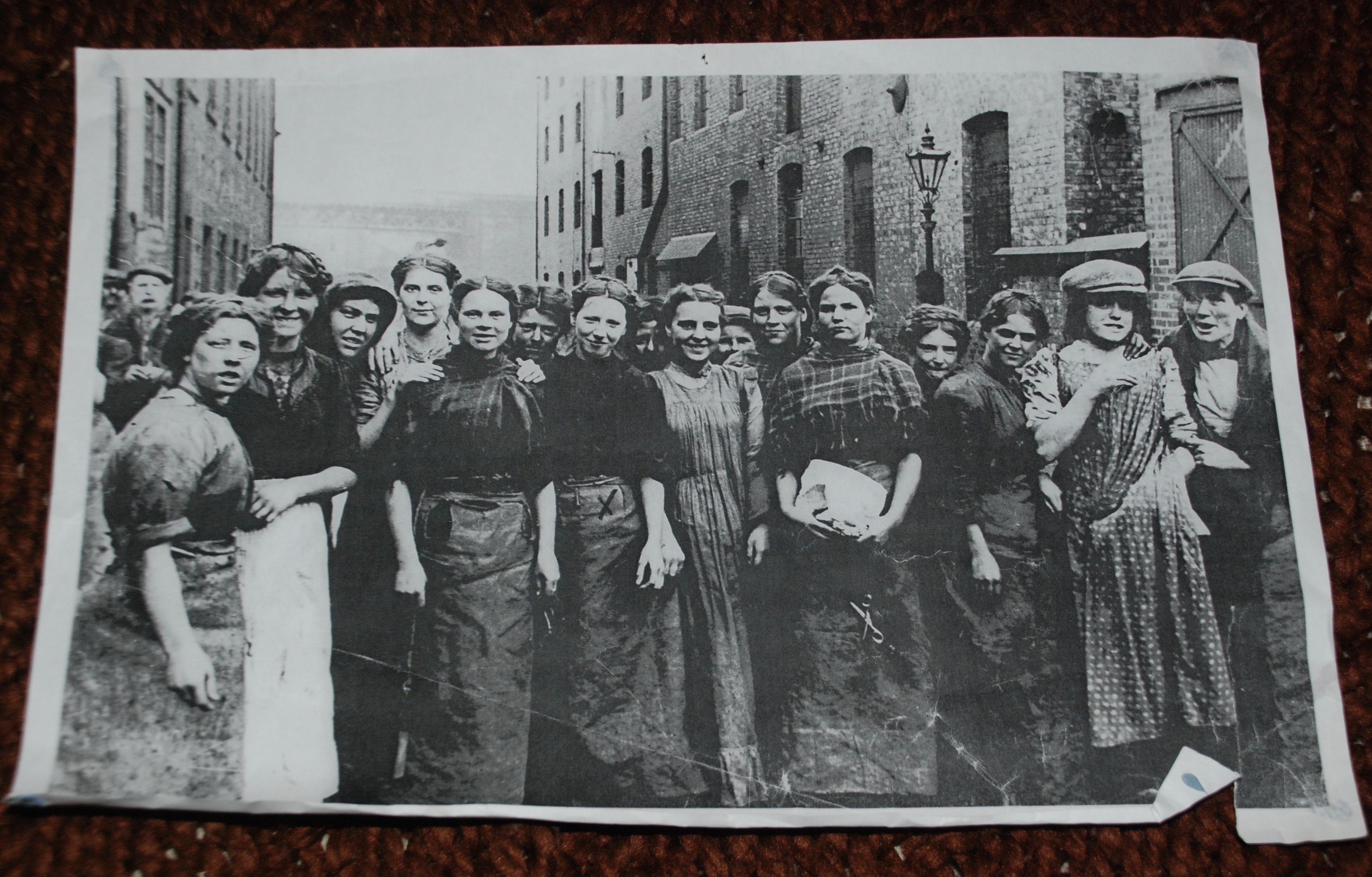
Sarah McFadden, (7th from left) my Great Grandmother, at Haggies Rope Works, in Willington Quay, Wallsend. A long way from Derry.

Little Ireland came about after I’d been researching my family tree in late 2007. I knew I had Irish background but not sure of the exact locations where they lived.

The Local Studies Library in South Shields was a great source for information. The filing system with the old press cuttings and the brilliant photographs by Amy Flagg and James Cleet of Tyneside in the 1930’s of area’s where some of my family lived after travelling from Ireland.

The old maps were really interesting. I could see where my Great Grandfather Dawson Downey from Derry lived. Bell Street, East Jarrow, across the road was the chemical works where he worked, next door was The Alkali pub and just up the road was St Bede’s Church. I thought thousands of families would be exactly the same. Never having to go very far. Living a small life.

I never realised the full impact that the Irish had on the North East and in my case, Jarrow. The population had grown so much around the 1890’s that the village became a small town.

I started to jot down a few notes when I read an article in The Shields Gazette in 2008 about Irish immigration written by Tom Kelly (Jarrow born playwright). I got in touch and we met up at The Customs House in South Shields. Quickly, a plan was made, a structure for a documentary and interviews with Jarrovians with Irish ancestry fell into place.

It wasn’t forced, it was easy to put together. 

We started filming at St Paul’s in East Jarrow. Tripod up, camera ready, Tom reading the opening lines from the script, but it didn’t feel right. We stopped and went back to my studio. Had a cup of coffee, talked about it then went out in his car again to Jarrow.

I started filming in his car and Tom started talking as he drove. This was more like it. Hand held felt more comfortable, being part of the film. As though an old Irishman had come back and was searching for his town ‘Like driving into the past’.

Over the next few weeks, I filmed interviews with people who had Irish relatives. For one interview I arranged to talk to singer Leo Connolly at his home in Jarrow.

I turned up, knocked on the door but got no answer. I knocked again and heard someone in the house. I looked through the front window and there they were. Two blokes with acoustic guitars and Leo in the middle singing his heart out. That was Little Ireland right there.

The documentary was successful it was screened for the first time to two sell out audiences at The Customs House on St Patricks Day 2009.

The film has been shown at various venues including St Bede’s Church Hall where most of the Irish, and my family, attended when they first came to Jarrow over 100 years ago.

Link to the documentary, to check out other films on You Tube subscribe to the channel.

Gary Alikivi   August 2018.
ZAMYATIN – Russian Link to Tyneside. New documentary.

IMG_5077

The Shields Gazette journalist Peter French wrote on 17th August 2018

‘It’s a long way from St Petersburg to South Shields. But it was a journey once made by a young Russian, an author, who not only upset the Communist authorities back home, but whose work may have influenced the writing of one of this country’s most influential novels – ‘1984’ by George Orwell.

His name was Yevgeny Zamyatin and his story is now told in a new video produced by local film-maker Gary Alikivi (Wilkinson). The film, which can be viewed on YouTube, may be less than 10 minutes long, but like much of Gary’s work it is informative as well as thought-provoking.

Read more at: https://www.shieldsgazette.com/lifestyle/nostalgia/the-link-between-a-russian-visitor-to-south-shields-and-george-orwell-s-1984-1-9306630

Gary Alikivi  August 2018.

ON THE FRONT LINE – miners strike documentary

DSC_0154

I was walking down King Street in South Shields when I noticed a group of lads walking up the street laughing, joking and looking as if they didn’t have a care in the world. I wondered if any of them had jobs?

Were they killing time until their next shift at work ? Or their next giro? This led me into thinking about the unemployment problem in my hometown. 

I sat down on a bench where two old men were. I overheard them talking about how they had spent their working lives down the mines. Westoe Colliery used to be nearby. Listening to their banter, made me think back to when the strike began in March 1984.

I was 18 at the time, about the same age as those young lads who passed earlier. It was always on the telly. Scargill, Thatcher, pickets and police. TV footage of the battle of Orgreave. Explosive scenes of a class war. 

Reality was that thousands of men weren’t working. There was no money coming in to pay bills and feed kids. How did their families survive?  Whole communities were brought to their knees due to financial insecurity. Families torn apart.

I thought it would be interesting to find how people coped in that time of crisis. People who were directly involved given a voice to record their cold, hard, bitter truths. 

During research for the film the stories that I heard were laughter, sadness, courage and pride. Some people didn’t want to talk about the strike, or for any of their comments to be recorded. After all these years feelings still ran deep. Emotional scars. 

The years have rolled on and out of the ashes of the pit’s new businesses and housing developments have appeared. But the mining industry will never be forgotten.

Link to the documentary and to check out other films on You Tube subscribe to my channel: 


Gary Alikivi.

SECRETS & LIES – Shields Gazette article on documentary about Baron Avro Manhattan

IMG_4950

As the blog hits 35,000 views Journalist Peter French wrote in The Shields Gazette 7th August 2018….

The life and times of Avro Manhattan, an Italian born Baron whose artwork and writing made him friends and enemies throughout the world, and who chose to spend his final years, living with his wife in South Shields are truly fascinating. But don’t take my word for it – let the man himself reveal to you all about it’.

To read the story go to…www.shieldsgazette.com/lifestyle/nostalgia/hit-man-s-target-settled-in-south-shields-1-9288202

Or watch the documentary ‘SECRETS & LIES’ posted on 17th July 2018.

Gary Alikivi    August 2018.

LIFE IN A NORTHERN TOWN – in conversation with writer and TV producer Peter Mitchell

thumbnail

Peter Mitchell

‘Who shall have a fishy on a little dishy. Who shall have a fishy when the boat comes in’….lyrics to the opening tune from the TV series ‘When the Boat Comes In’ which first broadcast in January ’76.

Hearing the song it had a whiff of a twee sunda’ afternoon show playing straight after The Big Match and before Little House on the Prairie. I never saw it when it first hit our TV screens, was too busy watching The Sweeney.

But after catching it a few years ago the little twee telly show was actually a hard-hitting drama.

It deals with a soldier (Jack Ford played by James Bolam) returning from the 1st World War and his struggles with poverty and politics in the fictional town of Gallowshield in the North East of England.

The first episode ‘A Land fit for Heroes and Idiots’ sets the tone

‘In series one there were thirteen scripts in which my dad wrote seven. His creation, his characters, with other writers during the series. I was 16 and first watched it with my mother.

That first episode was quality drama. My mother turned to me and said, ‘You better go and ring your dad because he’s just done something remarkable’.

The programme was created by South Shields born James Mitchell and now his son Peter is adapting the show for theatre…

’The play is based on series one and begins with Jack returning from the war where he meets the Seaton family, Jessie and Billy trying to get him involved in politics, he falls in love with Jessie and the problems he gets into when dealing with industrial strikes’.

IMG_1667

South Shields born Writer, James Mitchell.

Is there anybody out there today in business, political or celebrity world that you could compare to Jack Ford ? 

‘Do you know nobody has asked me that before. (Slight hesitation)….Well I’m not sure I should say this but…. I would say Donald Trump. (Both laugh)…Because love him or hate him. Trump can hold an audience. Massive ambition. Massive selfishness. What other people might call focus.

Great desire for more to the extent of not really caring about the consequences. A winner, an influencer, a persuader. I would say there’s a little bit of Jack inside Donald Trump’.

7fef8d65a0a6e7801fbee3206739a0b6--susan-jameson-james-bolam

Jack Ford played by James Bolam.

Does the play reveal more about Jack ? 

‘He served all the way through the war and became staff sergeant but still didn’t have enough so signed up again. He joins the North Russia Expidiciary Force where he goes to Murmansk and does an extra year. It tells you a lot about Jack.

He’s alone the minute he comes back. All the friends he’s got are the ones he made in the army.

This is a man who has found a family in war and really the only thing he is good at, is war. He interacts with mates, union men, the upper crusts, politicians, a full spectrum of society. He has learnt to fit in with any group, but I don’t think he knows where he belongs.

All he knows is how to survive in any given circumstance. He sees a chance and takes the opportunity. You know it’s live for today and tomorrow you might die which is something you learn when you are in the trenches for four years’. 

The TV show aired on BBC1 and at its peak reached audiences of 15 million, with all four series available on DVD. Do the actors realise the enormity of what they are taking on ?

‘The cast are great, they are all young, as were the soldiers coming back from war. What is impressive is the energy and passion that they are bringing.

We had research and development, a read through, started rehearsals and in them I have seen new things brought to the play helped with Katy’s vision as director.

This is all Tyneside people, I’ve been massively impressed. There’s a great team working their socks off down there and that makes me feel good on behalf of my dad.

There will be a lot of people like you who have seen it on TV or DVD and there will be an element of expectation. But I want to go on a slightly new journey in the way it’s delivered.

What’s been lovely for me was working with Katy Weir the Director because I’ve seen some of her work before and really enjoyed it.

When we met, I was very impressed with some of her ideas, and I was very keen to have a woman direct because a woman has never directed When the Boat Comes In. In the ’70s when it was made there were no female directors in television and the series is full of very powerful women characters’.

ragklqqiwtylwebkwywe

The Seaton family with Jack in uniform.

I can confirm that. Some of the standout performances of the TV show are with women holding court.

Just check the performances from Jean Haywood playing Bella Seton, her daughter Jessie played by Susan Jameson and Rosalind Bailey who plays Sarah Headley. The writing and performances never drop pace.

In season four episode two contains an outstanding scene with Sarah and Jack where she tells him her husband and his best mate Matt has died….

’Yes, I love her character, Rosalind is a great actress. Excellent on the show. It’s been really interesting to revisit again and work out the characters with the same basic arc of the story but transform it onto the stage.

Mechanics of stage are different to what I’ve been used to as my background is in journalism and television’. 

How did you get interested in writing and eventually working in TV?

‘Well, I’m a Shields lad who went to the Grammar school. Unfortunately, my parents divorced in 1966 so I was travelling down to London on weekends to see my dad who was a published author by then.

My mam Norma was a schoolteacher in Shields and looked after me and my brother Simon. She never re-married, it was her and her boys you know.

My mam was a wonderful, devoted woman and a natural born teacher. Plus, a great actress. She performed at The Peoples Theatre in Newcastle, also at the Westovians and met my father at Cleadon Village Amateur dramatic club.

They both had a love of the arts so there was a bit of showbiz in my life from when I was young.

But I was really interested in journalism so after University I got a job at a weekly newspaper in Chesire, then an evening paper in Carlisle.

A few years later I was in London freelancing for national papers and researching for London Weekend Television. Then I saw an advert for a researcher at Tyne Tees TV, applied and got it.

Great times there and worked on screen drama, mostly documentary then promoted to Director of programmes until I left in 1997.

Then I was at Zenith North where programmes like Byker Grove and Dale’s Diaries were made – loved working on that. Then had my own production company and done a bit of media consultancy work.

My career path has always been about screen work so theatre is a new challenge finding out how it all works’. 

WTBCI-Web-Banner-1024x364

During the TV series some scenes were shot outside The Customs House in South Shields and that’s where the play is being performed…

’Yes, it’s come home in many ways, very pleased about that. Ray Spencer (Director at Customs House) and I talked about the possibility four years ago and I was going to write a treatment for it.

Then a London based production company were interested in buying the rights. While we were negotiating with them we couldn’t go forward with the theatre side.

They took out an option with a time limit but never did anything with it, never commissioned any scripts. So, when the time expired, I rang Ray back up and said how about we look at it again. The timing feels right, it’s 100 years after the war. He said great let’s do it’.

‘When the Boat Comes In’ is on from Thursday 16th – Saturday 25th August for tickets contact   https://www.customshouse.co.uk/theatre/when-the-boat-comes-in/

Interview by Gary Alikivi   July 2018.

ZAMYATIN: THE RUSSIA – TYNESIDE CONNECTION. Making the video.

Yevgeny_Zamyatin-3 copy 2

Diary entry 12th December 2016: Reading a post by Leslie Hurst on the Orwell Society blog, a possible link between Russian Yevgeny Zamyatin, author George Orwell and his wife Eileen O’Shaughnessy.

Zamyatin was an author, he also supervised the building of icebreakers for the Russian Navy in Tyneside shipyards in 1916. Looked into this and found Zamyatin an interesting character and worth following up. 

Monday morning jumped on a metro to Newcastle City Library to check out Zamyatin’s link to Tyneside. Got the lift up to the local history section on the 6th floor asked the library assistant if they had any material about him. She came back from the archive with three pieces of information, dates and index number.

There was a local biography note, a page from Alan Myers book ‘Myers Literary Guide to the North East’ and a date of an article in the Journal from September 19th, 1988. These were all photocopied. 

Within 20 minutes I had found what I was looking for. Normally in local history there is a bit searching, photocopy runs out of paper, the microfiche is difficult to thread and it’s running slow etc., but no it all went very smoothly.

Then went out into the town with grey skies and a spit of rain. Over the road I caught sight of some graffiti. I had my small Canon camera with me so nipped over and took a few pics.

The slogans were on the back of a muti storey car park with small slits for windows. Brutal architecture. Very East European. Amongst the slogans was a red hammer and sickle ! Went straight to Waterstones and bought a copy of Zamyatins novel ‘We’.

51rvVceOveL._SX315_BO1,204,203,200_

While working on this blog during 2017 I put aside the Zamyatin project until I had more time. Then in May this year started to fully research and write the script. 

Diary entry 4th June 2018: Got on the metro to Jesmond and found the address where Zamyatin was living when he worked on Tyneside. As I went to knock on the door the owner walked up the path. That was fortunate. Introduced myself and told her what I was there for.

We talked for 10 minutes about Zamyatin then exchanged contacts. Took photos outside the house and the blue plaque on the wall. Then walked about 5 mins to St Andrews Cemetery to see the headstone of Eileen, Orwell’s wife. The grave is in good nick with flowers planted nearby. Did Eileen have any contact with Zamyatin ?

A short script was put together using A Soviet Heretic by D.J.Richards. The narration was recorded at The Customs Space studio in South Shields.

Tyneside actor’s Iain Cunningham with Jonathan Cash adding the voice of Zamyatin. Again, as on many projects North East musician John Clavering captured the mood.

Gary Alikivi   July 2018.

WRITING ON THE WALL – in conversation with North East music journalist, broadcaster & producer Ian Ravendale

Me17Lawson5crop 

Ian Penman has been a television and radio presenter, researcher, producer and journalist for more than 30 years, generally writing as Ian Ravendale to avoid confusion with the Ian Penman formerly of the NME.

He returned to music journalism (and Ian Ravendale) seven years ago writing for Classic Rock, Classic Pop, Vintage Rock, AOR, Vive Le Rock, Iron Fist, Blues Matters, American Songwriter, The Word and many more.

Ian has interviewed literally thousands of musicians from multi-millionaire rockstars to local indie bands on the dole…

‘I worked in television for Border, Tyne Tees, Channel 4 and also ran River City Productions an independent production company based in Gateshead.

In addition to making lots of local programmes I also worked on national music shows including Get Fresh, Bliss and (to a lesser extent) The Tube. The Tube was shot at Tyne Tees Television’s Studio 5 on City Road in Newcastle. The site is now a Travel Lodge!

It was interesting going to the canteen on recording day for shows like shows like Razzmatazz and The Tube and seeing who was in. I remember standing behind Phil Everly as he got his cod and chips!’ 

‘The music programmes I worked on were mainly produced by Border Television in Carlisle. I spent a lot of time there in the 1980’s. At Tyne Tees I worked mainly in the Arts and Entertainment department. Anything different or off the wall it would usually be me doing it.

We produced a program about rock poetry, presented by Mark Mywurdz, who at the time was a Tube regular. For some reason Mark wanted to present the program just wearing a raincoat. Nothing underneath!

After we finished recording the show one of the camera men came up and congratulated me; ‘That was the biggest load of rubbish I’ve seen in my life!’  I did a lot of alternative stuff. Some was challenging but none was rubbish!’

Talking about alternative stuff, can you remember Wavis O’Shave ?

‘He had a number of names – Wavis, Fofffo Spearjig, Rod Stewart, Pans Person. When I was writing for Sounds he saw me as a way in as the paper liked the off-beat stuff. He was a great self publicist. And still is!

He once told me about getting £1,000 out of the News of the World for a tip-off about a forthcoming witches coven scheduled for Witton Gilbert-or wherever Wavis said it was!’ 

What can you remember about working on Get Fresh ? (kids 1986-88  morning weekend TV show produced by the regional ITV companies taking it in turns for Saturday and Border producing all the Sunday editions).

‘For Get Fresh and Bliss, Border’s 1985 summer replacement for The Tube, most of the guests came up to Carlisle the night before so I’d take them out. People like Rat Scabies and Captain Sensible from The Damned.

We’d go into the music pubs and clubs around Carlisle and people would love seeing them there. Rat got up a few times to play with some of the local bands. When I met him I said ‘What do I call you?’ (His real name is Chris Miller). (Adopts cockney accent) ‘Just call me Rat’. So I did. Nice guy.

At the time he was really hoping to get the drum job with The Who, as Keith Moon had recently died. Didn’t happen, unfortunately.’

me fringed jacket crop.

Bliss was presented by Muriel Grey and produced in Carlisle by Janet Street-Porter. We featured live bands, got them to play for half an hour, used two songs on the weekly show, then repackage the 30 minutes for a Bliss In Concert special.

There wasn’t that much going on in Carlisle at the time, so we had no problem getting local kids in as the audience.

One week we didn’t have a live band and I’d got an advance copy of the famous animated video for Take On Me by A-Ha, who at that point were totally unknown.

Graham K Smith, the other music researcher and I thought it was really good so I rang their record company to see if A-Ha were available and importantly if they could play live. A resounding ‘Yes, they can do it’ was the answer.

Bliss was aimed at a teenage audience so A-ha would have fitted in perfectly. Janet-Street Porter comes in and looks at the video and goes (adopts cockney accent) ‘Oh no, that’s art school stuff, it’s boring. Draggy!’ 

Border TV could have had half an hour of A-Ha playing live in concert for the first time in the UK. But no. The band she booked instead were King Kurt, a well-past their sell-by date punk band.

So up they come in their ratty old bus with dogs on pieces of string and a stage act that consisted of throwing slop at each other. We – or rather Janet – turned down what became one of the biggest bands of the eighties’.

When you were reviewing gigs in the early 1980’s for Sounds were there any bands that surprised you or were disappointed with ?

‘It took me a while to ‘get’ punk. I was never into the boring British blues bands and prog acts which still show-up on the BBC’s compilations of 70’s rock. With the exception of The Sensational Alex Harvey Band who I liked.

When punk came along it started to make more sense. I was also into what is now classed as Americana. Along with more-left field bands like Sparks and Be-Bop Deluxe.’

I’m reading the book ’No Sleep till Canvey Island -The Great Pub Rock Revolution’ the book mentions the early careers of Joe Strummer, Nick Lowe and Elvis Costello…

’There were bands that were like a doorway between punk and the boring rock bands and Brinsley Schwarz, with Nick Lowe were one of them. I saw them play Backhouse Park, here in Sunderland. Dr Feelgood were another.

I saw The Damned support Marc Bolan at Newcastle City Hall and it was a short, sharp, shock. And I thought; ‘OK. What was that…?’

Phil Sutcliffe, my predecessor at Sounds did an interview with The Damned for Radio Newcastle’s Bedrock show that we both worked on. It was 30 seconds long and finished off with someone shouting ‘Oi! Who put duh lights out’!

16649218_1362483373810410_1559256840054276834_n

The big article you wrote for Sounds in May 1980 featured local metal bands Mythra, Fist, Raven, Tygers of Pan Tang and White Spirit. How did that come about ?

‘I was freelancing at Sounds, writing articles and reviewing gigs, some of which were of local bands. I was also working on the Bedrock program and one of my co-presenters was Tom Noble who was managing the Tygers.

I’d already written individual articles about the Tygers, Fist and Raven and Geoff Barton, the assistant editor at Sounds asked me to source a few more bands for a 4,000 word article. The North East New Wave of British Heavy Metal was born!’

NWOBHM had Iron Maiden in London, Saxon in Barnsley and Def Leppard in Sheffield….

‘Yes. As a reviewer I went as far as Redcar. A lot of the local bands I reviewed were from here in Sunderland, Newcastle and South Shields.

Sounds also had a guy called ‘Des Moines’, a pseudonym for a writer from Leeds called Nigel Burnham who is now an agricultural journalist and Mick Middles, based in Manchester. Between the three of us we had the north covered.

One time the Tygers of Pan Tang were supporting Saxon and I’d gone along. I’d previously written a review of Saxon which included something along the lines of ‘in six month’s time they’ll be back playing social clubs’.

At the gig Tygers guitarist Robb Weir came up and said, ‘Biffs lookin’ for you!’. Fortunately, he didn’t find me. Not yet anyway.’

Was there any conflict between watching a band that you weren’t a fan of and writing something positive about them ?

‘Geoff never said to me, ‘We’ve got a big metal readership here can you go easy on them?’ He never wanted me to do that. But I found metal bands easy to take the piss out of – and I did.

This stimulated very angry letters like ‘How dare Ian Ravendale slag off Ozzy. I’ve seen him and he was great’. I remember my opening line of a review I did of Ozzy, ‘What I want to know is how is Ozzy Osbourne so cabaret’.

I interviewed him a few times for Bedrock but my interviewees tended not to click onto the fact that ‘Bedrock’s Ian Penman’ was also sharp-tongued Sounds scribe Ian Ravendale.

One time a few years after the Sounds ‘cabaret’ comment I was working at Tyne Tees and on the Friday Ozzy was playing The Tube. The Arts and Entertainment office was next door and I saw him in the corridor looking lost.

So I went up to him and said ‘Hi Ozzy, The Tube office is just over there’. He thanked me and then said ’I’ve met you before haven’t I’. He still remembered me from the radio interviews we’d done’.

How did you get interested in writing ?

‘As a teenager I was a huge music fan and also into American comics. I wrote for a few comic fanzines then published some of my own which occasionally still turn up on Ebay. That gave me an insight into writing for public consumption’. 

Bedrock pic

The Bedrock team with Ian sitting on the right.

What about radio? You were involved in Bedrock for nearly ten years…

‘Dick Godfrey was producing a program called Bedrock for BBC Radio Newcastle which featured interviews from national and gave local bands exposure which was otherwise very hard for them to get at the time.

I had always been interested in the nuts and bolts of the music industry and how it all worked and listened to programs like Radio 1’s Scene And Heard.

Dick had a feature called Top Track where each week a different listener would come in and play his favourite track and talk about it. ‘Some Of Shellys Blues’ by Michael Nesmith was my choice. This went down well with Dick so I asked if he’d be interested in me contributing features. ‘Yes but there’s no cash involved’.

Nesmith was soon going to be playing in the UK and I was going along to the gig so I asked Dick if Bedrock be interested in me trying to get an interview with him. ‘Definitely’ replied Dick.

So I phoned a record label I’d heard Michael was about to sign to and they gave me his hotel number. As ‘Ian Penman from BBC Radio Newcastle’ I arranged an interview, which I did a couple days later in London, the day after the gig. That was my start in radio’. 

How did you start with Sounds?

‘Phil Sutcliffe, who was the North East correspondent for Sounds, was a friend of Dick Godfrey and also worked on Bedrock. When Phil moved to London he recommended me to Geoff Barton, Sound’s reviews editor, to be his replacement.

Phil wrote a lot about the Angelic Upstarts, he liked the music but also had a sympathetic ear to what they were doing. He wrote the first articles about them. Same for Penetration, Neon and Punishment of Luxury.

I’d also been involved in the music fanzine Out Now which Tom Noble had produced, so I was becoming pretty proficient at interviewing and writing reviews.

I was out at gigs four nights a week and was known enough to be able to walk straight into Newcastle City Hall via the stage door. This put me in touch with Tyne Tees TV and when a researcher vacancy came up, I applied for that, got it and carried on at Sounds for a short while.

I also wrote a few pieces for Kerrang, which Geoff Barton had moved across from Sounds to edit. I wrote the first article on Venom. Yes, I’m responsible for Black Metal (laughs).

Then as now, my attitude was regardless of whether I liked the music or not if I could write something positive about local bands, and it was entertaining. I’ll do that.

If you write something negative about a local band, you could do them major harm. Also, a person in Aberdeen doesn’t want to know whether a band from South Shields are crap. Why would they?’

For the work that you were doing how important do you think research is?

’Some writers think of an idea then write a piece in support of that. I don’t do that. For me it’s about the facts and information presented in an interesting way. Opinions and personal taste are what they are. Maybe you like a band that I don’t. That’s fine.  But facts stand.

I do my absolute level best to write as accurately as possible. It’s really important for me to do that. Sometimes information comes from two or three sources. And if the information is contradictory, I’ll say that’. 

Any memorable incidents in your career ?

’I interviewed Debbie Harry at Newcastle City Hall when Blondie had just broken big. We were in one of the really small dressing rooms. It was tiny. The record rep said ‘Ok Ian you got seven minutes’.

He introduced me to Debbie who was standing with her back to me. She was leaning on a shelf writing stuff down. I said ‘Writing out the song lyrics ?’ She replied ‘Yeah, well I don’t really know them from the new album yet’. It felt a bit awkward.

I literally spent the next three minutes just watching her writing with her back to me, stunning in her jumble sale collection of clothes. Eventually she sat down and off we went.

All of this was fairly new to her, she had just been playing CBGB’s (small club in New York) and now it was to gigs with 2,000 fans like the City Hall. She was trying to get used to all this Debbie-fever that was going on around her.

By minute seven we were finally getting somewhere, and she was opening up when the record rep walked in ‘Right Ian. Times up!’

I did actually interview the solo Debbie on the phone for Get Fresh nine years later and she was much more forthcoming.  (The  City Hall interview is on Rocks Back pages if you fancy a listen. RB is a pay site but there’s lots and lots of great stuff up there).

For more information contact : http://ianravendale.blogspot.com

Interview by Gary Alikivi July 2018.