MANTRA FOR THE MASSES with Nod the Geordie Poet

These days semi-retired university lecturer Alan Clark is married with two grown up kids and lives near BBC studios in Borehamwood, London. But back in the late ’70s he was on the dole living in a house full of punks in Jesmond, Newcastle…

We lived in Chester Crescent which must have been grand at one time but some of the houses were decaying, and the council took them over and let them out cheaply.

One of the first Northern punk bands, the Big G used to practice in our living room. I think we lived next door to a vicar and he may have complained from time to time.

When the Big G split in 1979, The Weights formed and played Newcastle, the Edinburgh festival and gigs in London

I used to perform at their gigs and then got opportunities all over the place, including the telly.

Who were your influences ?

I was really interested in the Liverpool Poets, especially Adrian Henri. I thought that punk needed poetry as Adrian Henris generation of freaks and hippies did. I was also reading Allen Ginsberg poems and in fact met him at Newcastle Uni when he did a gig there.

I always liked writing at school and wrote daft things just to amuse my mates. About ‘78 I wrote a poem about Daz and one of my housemates Walter from The Weights said I should come and do a gig.

Where was your first gig ?

That was at The Guildhall on the Quayside. It was a Weights gig with other bands on too. They played backing for some of my poems, including 12 bar blues for Daz and a trippy poem about magic mushrooms.

We were all into Frank Zappa. Micky Emerson aka Red Helmet was the experimental lead guitarist. Norman, his brother, was the drummer, Walter aka Peter Howard was and still is a well-known man about the Toon and Anth Martin was the singer and main songwriter. He went on to do a literature degree at Oxford.

As for my experience, well I was quite nervous, but the alcohol and herb helped. I remember I nearly got in a fight with some squaddies for being critical of the government and the army!

You supported The Clash at Newcastle City Hall in 1982. Was this the highlight ?

I enjoyed doing the gig with The Clash and meeting and joking around with them afterwards. But they were strange times for me. I was badly beaten trying to get in to the City Hall. I explained on the door that I was the support act and they didn’t believe me.

I saw one of the roadies and lurched in to get his attention but was set upon by a mob of City Hall stewards. They got me on the floor and kicked the shit out of me.

By the time I got on stage I was bruised and bewildered. I performed mostly with a backing track. One poem was War On The Scroungers, and in parts, I mimicked a posh Tory accent. I had a distinct impression that people didn’t really get the satire!

Curiously, I’d worked at the City Hall as a steward in the early ’70s and knew the head guy Ivor, who looked very apologetic afterward, but wouldn’t say so. I took a case all the way to the council committee in charge of the Hall and explained to them I had done some non-violence training.

The stewards said I was foaming at the mouth and that was their excuse. The council committee agreed and I never got an apology.

You mentioned TV opportunities…

I was on John Walters programme on BBC Radio 1, you may remember him as John Peel’s producer. I was on local culture programmes for BBC North East and Tyne Tees around 1980-82.

I performed Daz on location in Wallsend. They filmed me in front of an old washing machine with Swan Hunters shipyard in the background.

Then I recorded some work in the BBC studio, and a performance for Come In If You Can Get In on Tyne Tees. I was pursued by The Tube at one stage, but didn’t have a manager and was a bit too disorganised to follow up.

What were your poems dealing with ?

I was quite political and involved in anti-nuke politics. I was fascinated by nuclear issues and went to CND meetings in Newcastle, but also got involved in the campaign to stop Torness nuclear reactor which is just over the England-Scotland border.

I lived as part of the occupation for a while and travelled up and down to Newcastle. I also went on big marches in London and actually got invited to play at the women’s peace camp at Greenham Common.

What was the attraction to nuclear issues ?

I had a strange experience when I was young. I was standing at a bus stop waiting to go to school when the whole sky lit up bright pink. I traced the date and it looks like I was seeing effects from what is called the Tsar Bomba. The 50 megaton largest nuke ever let off in Russia.

Tyneside is nearly 2,000 miles from where it was set off on Novaya-Zemlya island. Neither the UK nor any other European nations set off a nuke in Europe.

The Tsar Bomba was the only explanation I could ever find for what happened. I have yet to meet another person who can confirm that they saw it.

Was performing taking a back seat to protest ?

I moved to Whitby in pursuit of love, then after falling out of love, moved to Corbridge. I was living in an old pottery and used to practice guitar and singing in the large kiln chimneys. I was busking all over the North East, and made good money in the Monument Metro in Newcastle.

I kept on performing in various venues and events and would regularly work at The Cooperage and did some recording with The Weights.

By 1984 the rock and roll lifestyle was taking its toll. I decided to give up the material world and ran away to join Hare Krishna who I’d met when doing a gig in Suffolk. I went cold turkey working in a restaurant at the Krishna temple in Leicester.

Being a Hare Krishna involved a lot more than chanting on Oxford Street and I was eventually involved in the running of the movement in the UK. I met some very kind and thoughtful people, but also, some people for whom the religion seemed to be a cover for extreme selfishness.

I was lucky to make friends with some of the original devotees who came to the UK in 1968. Through them I met George Harrison a few times at his house in Henley and we had a few chats about gardening.

I began to have doubts about the philosophy of the movement and after an extended period in India I stopped being so involved. One of the main benefits was meeting my wife Akinchana, who is Indian. We have a daughter who is 27 now and a son who is 21.

When I left the movement, I ended up doing a degree, as a very mature student and then an MA, getting work as a lecturer in media at the University of Hertfordshire.

What are you doing now ?

I’m still teaching, although cutting back as I’m close to retirement. It means I have more time for writing and recording. I’d like to do some performing one day. The most recent track I recorded and mixed was just over a year ago and is on soundcloud.

Interview by Gary Alikivi   February 2019.

TWO YEAR LATER…. Alikivi blog in the news.

A 2 year milestone for the blog is four articles which featured in local newspaper The Shields Gazette in the last few weeks. Included in the articles are extracts from some of the interviews I’ve done with musicians.

https://www.shieldsgazette.com/lifestyle/nostalgia/hair-raising-adventures-of-a-south-tyneside-musician-1-9573698

https://www.shieldsgazette.com/lifestyle/nostalgia/hanging-bed-sheet-from-south-shields-bridge-to-promote-gig-1-9560464

https://www.shieldsgazette.com/lifestyle/nostalgia/how-guitar-present-led-to-a-life-of-music-1-9547817

https://www.shieldsgazette.com/lifestyle/nostalgia/when-south-shields-had-a-thriving-rock-scene-1-9535098

Gary Alikivi  February 2019


SOUNDS ALIVE: The Power of Music

The adrenalin rush of the thunderclap from Icelandic football fans. The guitar intro to Alternative Ulster by Stiff Little Fingers. Kurt Cobain’s anger on the Nirvana anthem Smells Like Teen Spirit.

And what about John Bonhams bombastic drums on When the Levee Breaks ? Sound has a real strength and songs have unforgettable moments. What’s yours ? 

Music has a power to ignite and heal. Rewind to the ’80s. A charity single aimed at raising money for famine relief in Ethiopia. Pop and rock stars of the day including the Durans, Spandau, Quo, Sting, Bono and not forgetting Bananarama crammed into Sarm West studio in London.

Songwriters Bob Geldof and Midge Ure realised they didn’t have a nice little charity single on their hands but a major pop record when George Michael and Boy George laid down their vocal tracks on Do They Know it’s Christmas.

The song raised millions and the Live Aid concert at Wembley Stadium followed. Bono becoming Bono. Freddy’s Big Night Out. And Geldof salutes ‘The lesson today is how to die’. History was made. The power of music.

The shelves in my local library are full of music related books. Lately I’ve read biographies by Judas Priest guitarist K.K. Downing and the Russian classical composer, Prokofiev. Complete contrasts ? Prokofiev has his lighter moments but listen to Dance of the Pagan Master. That’s Heavy Metal from way back.

You’ll also find a bit of Prokofiev in Greg Lakes I Believe in Father Christmas. Check out the horse drawn sleigh in Troika. Wonderful sound. What am I saying here ?

Well, not only do we want to listen to music, but read about it and talk about it. That’s the power of music.

Of course, we all have our own tastes and top ten lists. But music is a leveller, and it can be used to sum up our feelings at any given moment.

After the England football team were beaten in the Euro ’96 semi-finals Walk Away by Cast was played on TV over pictures of the manager Terry Venables head down, hands in pockets walking down the touch line knowing this was probably his last match in charge.

In that team Geordies Gazza and Shearer stood tall. But football didn’t come home that day. 

The internet in the late ’90s. Is that when music started to lose its value? I’m not talking about value that rings the till. More of a value that can be considered important. Even cherished.

In interviews guitarist Noel Gallagher talked of Oasis not being the most popular band in the ’90s, but the most important. Blur might have something to say on that one, but they never had quarter of a million at Knebworth.

What is the attraction of music? Some songs have great stories. You’ll have your own favourites like the first records you bought. The songs that marked important moments in your life. The inspiration behind them, who wrote the lyrics and what it means to you.

And finally, your funeral song. Yep, some people have their favourites ready for when they finally check out. Music really is the soundtrack to our lives. From beginning to the end.

Well the music is your special friend. Dance on fire as it intends 

Music is your only friend. Until the end.  (Jim Morrison, When the Music’s Over). 

Gary Alikivi   October 2018.

ALIKIVI

Recommended:

1980 The Year Metal was Forged on Tyneside   11th Feb. 2018.

Rockin’ All Over the Toon  22nd May 2018.

Rockin’ All Over the Toon Again  14th Sept. 2018.

When the Music’s (not) Over 24th Sept. 2018.

For more Tyneside stories why not subscribe to the ALIKIVI You Tube channel.

BOMBS IN THE BLACKOUT – with author John Orton

This is the third blog on a series of books written about South Shields by author John Orton.

The first appearing on 1st October ‘Bobbies, Bookies and Beer’ and a second installment last week ‘Bread, Jam and Cow Heel Pie’…John takes up the story…. 

‘I had just published the Five Stone Steps: tales of a Policeman’s life in 1920s South Shields. I was writing a sequel and wanted a last story about the War years. Sergeant ‘Jock’ Gordon whose memoirs inspired the book does not say a lot about the war and most of that is taken up and criticising the War Reserve Police.

I started doing my own research. I had no idea how bad things became for everyone during the War, and in particular how much the town of Shields had suffered during the Blitz. There was enough material for a book let alone one story.

When people think of the War their first thoughts are of the heroes on the front line but the battle at home during the German blitzkrieg was in its own way just as tough.

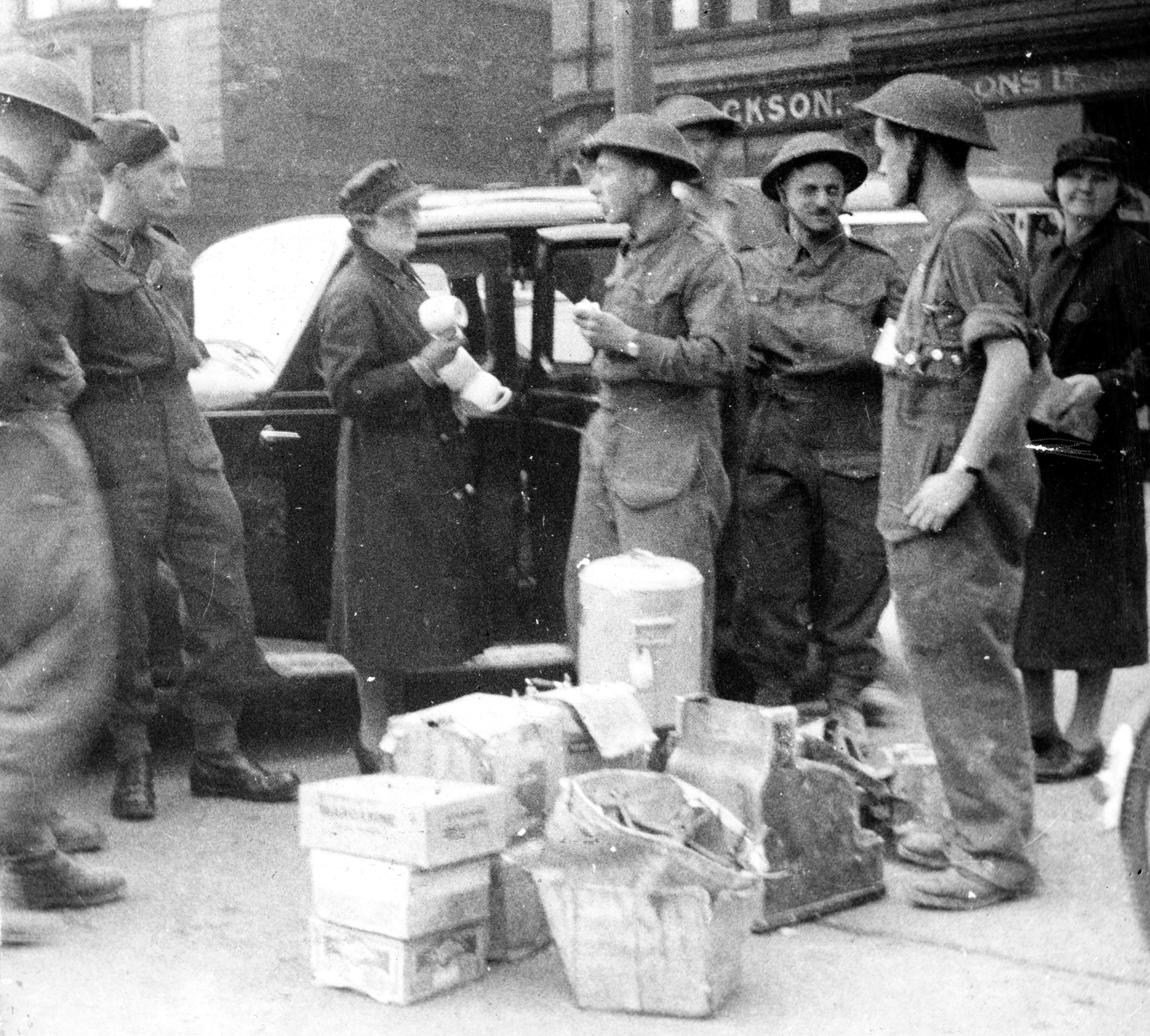
There was a whole army of young and old, men and women, who became ARP Wardens, street firewatchers, auxiliary fire-fighters, and ambulance crew, war reserve police, rescue squads and the WVS who took out the mobile canteens for the rescue workers’.

National Fire Service Mobile canteen STH0000228

National Fire Service

‘Then I discovered the PAMs – police auxiliary messengers – lads between 16 and 18 with their own bikes who would go out during and after raids to deliver messages – when the phone lines were down they were the only way of getting messages through.

The thought of young lads riding their bikes in the blackout, with bombs flying round their ears, was the inspiration behind Blitz PAMs.

Once I’d got the idea and finished my research I found the perfect voice for the story – Mossie Hamed, a 16 year old delivery boy, of mixed English and Arab stock, who speaks with a broad Shields accent.

The story told itself and sometimes I had a job keeping up with it! The book was finished in about 6 months which is quick for me’.

How much of the book is fact or fiction ?

’The story of the book is how six young PAMs, Mossie, Davey, Jimmy, Freddie, Mattie and Jackie, who turns out to be a lass, live through the blitz on Shields, and cope with life knowing that their name might be on the next bomb.

Their adventures, scrapes and adolescent fumbling’s with lasses, paint a vivid picture of what life was like for teenagers in the war.

The PAMs are all fictional characters but their exploits – uncovering a black market racket, exposing a Policeman who is looting bomb sites, and rescuing a budgie from the ruins, are all things that happened during the war. 

The descriptions of the air raids themselves, the death and damage they caused are all based on fact.

A German Henkel did crash land on the seafront and the German pilot who baled out was killed when he landed on the live trolley bus wires.

A 1000kg bomb did crash through the roof of the power station landing on the top of one of the boilers without exploding; a direct hit on the underground shelter in the marketplace killed at least 12 people who were sheltering inside.

The foreman of a rescue squad was awarded the George Medal for bravery’.

Did researching the book effect you in any way ?

Where you saddened or shocked at the amount of war damage done to Shields ?

’I was really moved by the resilience of all the emergency services and their auxiliary/volunteer helpers in the face of the German bombing. These were people who for the main part had full time jobs but still turned out at night if there was a raid.

On Wednesday 9th April 1941 a major raid targeted the riverside. About 6,000 incendiary bombs were dropped. Once The Lawe Top area lit up it was a perfect target for the bombers. Mile End Road and the surrounding streets were hit hard’.

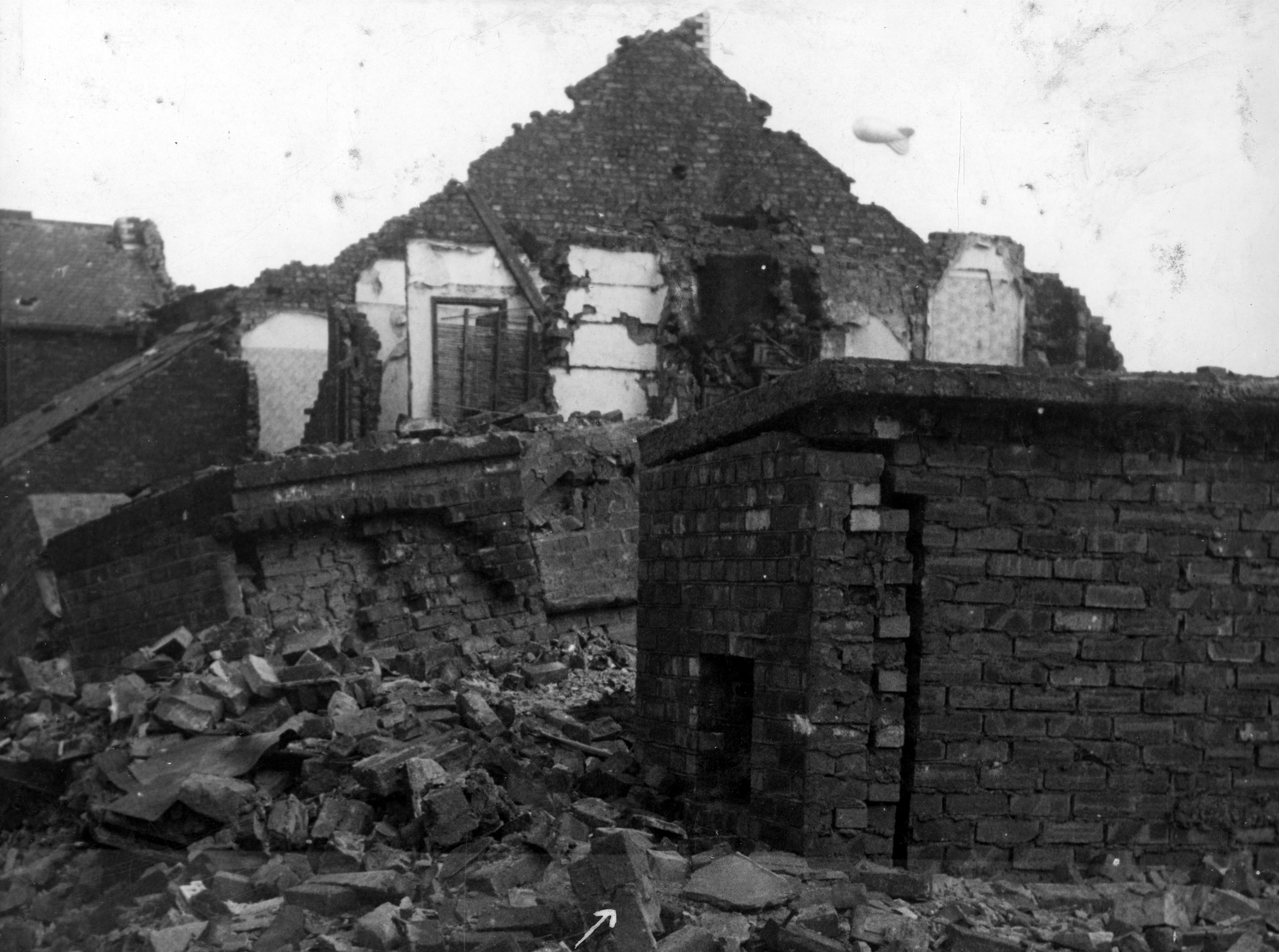
Surface Shelter Mile End Road STH0001089

Mile End Road, South Shields

‘This shelter was surrounded by houses – they were all blown to smithereens but the shelter stood firm – you can see the six inch crack that went from the ceiling to the ground but all inside were kept safe.

The unsung heroes in this case were the corporation brickies who built the shelter – thank heavens they didn’t have a team of cowboys who are putting up modern houses!

During this raid the Shields ARP called for mutual aid from surrounding towns. Sunderland sent their fire-fighters who took on the fires at the dockside. The ferocity of two other raids did shock and sadden me.

They were only a couple of days apart and left a lot of the town in ruins’.

Can you tell us a story from the book ?

’There are many humorous passages but here is one that brings home how dangerous life could be for the PAMS. The action takes place during the raid on the Market Place on 2nd October 1941.

Mossie and Freddie have been sent out on their bikes to the Market Place to see what help is needed. Freddie has had an on and off relationship with Gertie, one of the auxiliary ambulance drivers.

As they near the Market Square Freddie sees Gertie in her ambulance. Mossie takes over the account of what happened next…..

“I’ll cut them off,” Freddie called oot as he tore strite across the Market Place standing on his pedals. I was way behind, and riding ower cobbles is bad enough when you’re gan’ slow.

He was past the auld Town Hall and took one hand off the handle bars to wave to the ambulance driver, and then the bombs came doon. I dain’t kna’ how many there were but the last thing I saw was Freddie flying through the air, and then the blast caught me. I was oot for a couple of minutes and didn’t kna’ where I was.

I came to, feeling a bit sick, and couldn’t hear owt. I was just behind the auld Town Hall and that must have saved me from the full force of the blast. All I could see was flames all roond.

Me bike was on top of me and I pushed it away and got to me feet. I had a stab of pain in me left leg and had a job putting any weight on it, but that was all. A trolley bus ootside the Tram was alight.

I then saw Gertie get oot of the ambulance. You couldn’t mistake her. She was running towards where I’d last seen Freddie. Then she was doon as there was a geet big explosion from Dunn’s Paint stores, and blazing tins of paint and oil were gan’ up like rockets and then coming doon like fire bombs.

She got up and ran forward and I limped across as quick as I could. I saw her bend ower and pick something up – it looked like a pile of rags.

I was nearly there and realised that it was Freddie – I was reet beside her but she was strong enough and then something dropped doon. I bent ower to pick it up and it was the bottom part of a leg with a boot on.

Gertie had stopped as well. “What should I de with it?” I started puking. “Bring it with you, Mossie. We’ll keep him all together. He’s still breathing”.

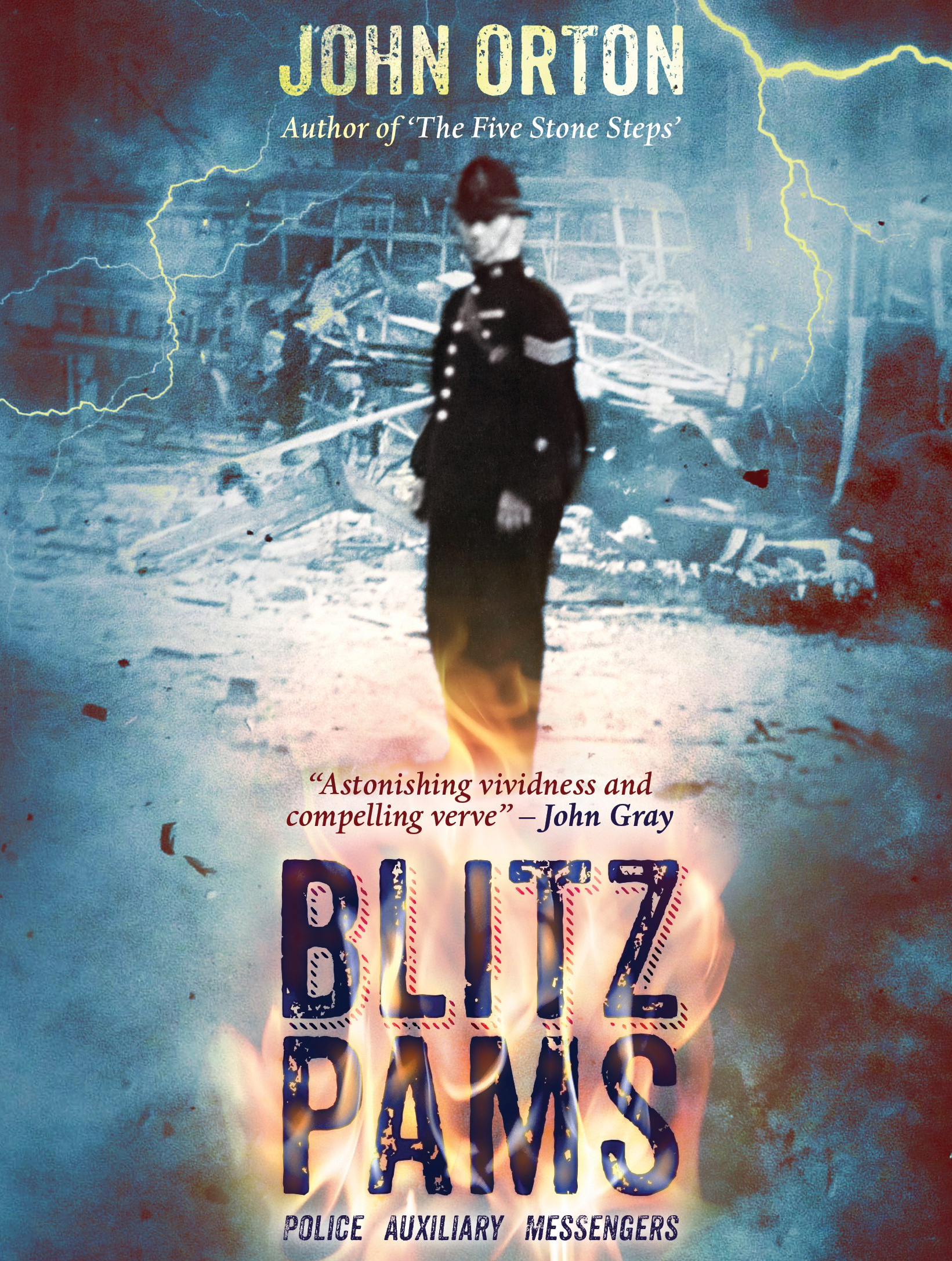
blitz pams cover

If you want to know what happens to Mossie and his marra’s read ‘Blitz PAMS’. Out now on e-book or paperback through Amazon or you can order copies at The Word bookshop, South Shields.

What else have you been working on John ?

’After I’d finished Blitz PAMs I started on ‘A Chill Wind off the Tyne’. My sequel to the Five Stone Steps had been put on hold while I wrote Blitz PAMs.

I went back to it but it was one of those works that you’re never really satisfied with and I rewrote it several times.

It tells the lives of the working class in South Shields in the first half of the twentieth century. The harsh working conditions, the pit lock-outs of 1921 and 1926, the riots in Shields when Arab and white seamen fought over jobs in the streets.

Life on Tyneside during the depression of the 20s and 30s was hard but folk got on with it, laughed and loved, liked a pint and a bet.

Bought their shopping on tick and ate bread and dripping, tripe, brawn and even cow heel pie… ‘Well, you’ll eat owt when you’re hungry’.

Photographs courtesy of South Tyneside Libraries.

Interview by Gary Alikivi   September 2018.

Recommended:

Secrets & Lies, Baron Avro Manhattan documentary, 17th July 2018.

Westoe Rose, Amy Flagg documentary, 19th July 2018.

Zamyatin, Tyneside-Russia documentary, 7th August 2018.

Peter Mitchell, Life In a Northern Town, 9th August 2018.

Ray Spencer MBE, That’s Entertainment 6th September 2018.

John Orton, Bobbies, Bookies & Beer 1st October 2018.

John Orton, Bread, Jam & Cow Heel Pie 17th October 2018.

Why not subscribe to the ALIKIVI You Tube channel for more Tyneside stories. You will find the link on the ‘About’ page.

BREAD, JAM & COW HEEL PIE – Hard times in Shields with author John Orton

After posting on 1st October ‘Bobbies, Bookies & Beer’ featuring the work of author John Orton. I caught up with John again and we talked about his new and third book ‘A Chill Wind Off the Tyne’.

He described it as a companion volume to his previous books about South Shields, ‘Five Stone Steps’ and ‘Blitz PAMs’.

What led you to write it John ?

‘It took ages to write and I sometimes nearly gave up on it. After I’d finished The Five Stone Steps. I didn’t get very far trying to get it published, so put it to one side, and thought that I’d work on a sequel.

The problem was that I’d already used up most of the material in Sergeant Jock Gordon’s memoirs and was having a job finding inspiration for new fictional stories. 

I’d finally got something I was reasonably happy with and then wrote Blitz PAMs, which was originally intended to be a final chapter on the war years but turned into a new book.

After Blitz PAMs was published, I looked again at the sequel and basically re-wrote it. I then decided that rather than concentrate on the stories from a police angle I should tell the story of the characters in The Five Stone Steps and also delve into the life of ordinary working class folk during the great Depression of the 20s and 30s. 

This involved a lot more research but it was worth it. I also wanted to tell a bit more about some of the characters who’d appeared in The Five Stone Steps. 

In telling the story of Geordie Hussain who appeared in A Pair of Blue Eyes in The Five Stone Steps I went back to his birth in Shields in Holborn in 1904.

I then added more stories in the late 1930s about the burning down of the Casino, the raid on the Trow Rocks pitch and toss schools and was finally happy with the result.

Tom Duncan who told his own stories in The Five Stone Steps was not about in Shields in the early 1900s and was a peripheral figure in some of the later chapters, so I needed a new narrator.

‘Titch’ Foster who first appeared in The Five Stone Steps in A Sure Thing,  a pathetic specimen who’d been in and out of Durham and who’d do anything for money but work for it’ came in very handy’.
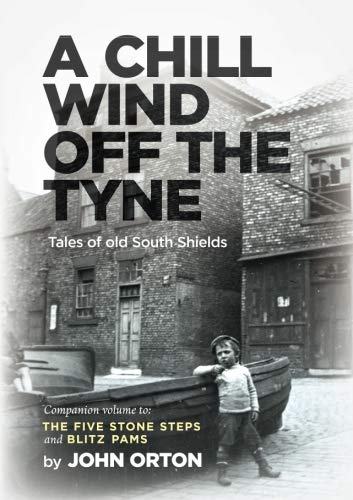
frontcover

The first chapters are set in the early 1900s before the Great War – you give detailed descriptions of the riverside areas of Holborn, Wapping Street and Shadwell Street and the people who lived there – what research did you have to do ?

’A lot and it was not easy. I had an idea of what life was like in the Laygate area from the tales told by my Nan who had lived in Maxwell Street but the original riverside areas had all been cleared in the ’30s and was just ancient history to me.

The town of Shields owes its prosperity to its location. Salt pans were in operation from medieval times in the Holborn area – salt preserves fish – put them together and you have a roaring export trade.

The clinker from the salt pans and the ballast from the ships made the hills where Holborn was built. 

My main difficulty was getting an idea of the street layout. The main roads were East and West Holborn, Nile Street, Cone Street and Laygate Street and in between were many little Banks, Courts and Places.

I spent hours going over old maps and looking at the hundreds of old photos of Holborn on the website http://www.southtynesidehistory.co.uk  before I was familiar enough to start writing. 

One of the problems was that pubs and shops changed hands and were often renamed. Many pubs in Holborn were taken over as Arab lodging houses, or cafés.

The Yemeni seamen who settled in their hundreds in Holborn and Laygate did not drink so there was less need for pubs.

Wapping Street, Shadwell Street and the Lawe Top were the home of the ‘Townenders’, or as the locals would say the ‘skeuytenders’ – this was probably the first part of the town to be lived in by fishermen and sailors. 

It is now the area around River Drive but used to be a warren of quays and courts, the oldest house in Shields dated from Tudor times. Conditions were basic. In Holborn there was no running water until the later part of the 19th century.

Women would carry a ‘skeel’ of water on their heads to have it filled at a ‘pant’ (private well). The skeel carried about three and a quarter gallons and would cost a farthing to fill’.

Two main storylines concern the depression of the 1920s and how it affects the mining and shipping industries, with tales about the 1921 and 1926 pit lockouts and the Mill Dam riots.

How much of the stories in your book are based on fact and how much is fiction ? 

’Shields was a major seaport and also a coal mining town. In 1921 over 2,000 men worked at St. Hilda’s, 3,400 at Harton, and 3,500 at Marsden collieries.

Lloyd Geroge had nationalised the mines for the war effort and pitmen had been earning good money but in 1921 he gave the mines back to the private owners.

They cut wages and increased the working hours – a hewer who had been earning nearly four pounds a week would now take home just over two pounds.

The colliery owners locked the pit gates and you only got back in if you accepted the new conditions – no one in their right mind would and the 1921 lock-out started. 

These troubles continued through the 20s ending with the National Strike of 1926. The three Shields collieries were out for between six to ten months, but the miners were starved into submission. Similar difficulties hit the shipping trade.

Yemeni seamen had been recruited in their thousands during the war and many gave their lives at sea. Many sailed from Shields, and after the war the returning demobbed ex-servicemen who were after a job at sea found themselves in competition with the Arab seamen.

There were riots in 1919 in Shields and also in Cardiff and Liverpool for the same reasons. 

The Yemeni seamen were unmarried; they did not drink and were bringing in good money – many local lasses fell for them – some wed their man, but others were unlucky and gave birth out of wedlock.

By the late twenties the Arab seamen had all but taken over Holborn and pubs gave way to lodging houses and cafés. The simmering tensions and the continuing difficulty of finding work at sea resulted in the Mill Dam Riots of 1930. 

This is the factual background – to create authentic tales of how life still went on I developed the characters from my previous book the The Five Stone Steps, brought in some new ones and weaved their lives into the stories of hardship and humour’.
Smart Touch TIFF File

There is a lot of humour in the book but also a lot of hardship – hard times and hard people – bare knuckle fights in the back lanes and pitch and toss at Trow Rocks.

Do you think that your book accurately describes the poverty, hardship and the way folk stuck together ?

’To put it into perspective, young people today might think that my life in the early ’50s was hard. No heating upstairs; no duvets on the bed – which meant ice cold white cotton sheets – bed socks and hot water bottles were the norm.

My mam or dad had to come downstairs to light the stove in the kitchen first thing in the morning. A bath once a week; one telly with only one channel to start with – get up to turn it on or to turn up the volume ! 

Life in the early 1900s, by comparison, was not only hard it was brutal – in 1906 there were 465 shoeless children in the town.

The Council did what it could – the Police set up the Shoeless Children Fund. Boots were provided – probably having learnt the hard way, the Police ensured that the boots had holes made in the leather at the top to prevent them ending up in the pawn shop. 

There was no such thing as five fruit and veg a day – bread and jam or dripping was a staple for many – folk ate tripe, brawn and even cow heel pie – as Titch Foster says, ‘When you’re hungry you’d eat owt.’

My Grandfather went down the mines at the age of twelve – the work was hard and dangerous. Fatalities and serious accidents were common particularly among the young lads who might have been thinking of something else and been hit by a tub, or got hooked to a cage as it was going up the shaft. 

All the pits had their boxing champions – unskilled, bare-knuckle sluggers for the most part. Drinking and gambling were common place which explains why there were so many pawn shops –  not necessarily a last resort for the housewife when the wages had gone over the bar counter, or lost an a Sunday morning at the pitch and toss schools at Trow Rocks. 

There was a hardness about people, men and women, which you probably don’t find now, but in the long terraced streets you’d know all your neighbours and folk would help each other out. They really were all in it together in those days’.
self

John Orton

Is ‘A Chill Wind off the Tyne’ the final book in the series, or can we expect another ?

A ‘Chill Wind does complete the series, Tales of Old South Shields. I’m taking a breather at the moment and certainly don’t have any immediate plans for another prequel or sequel. I do like writing so something else may crop up.

I’ve just had an email back from one of my friends who’s just finished A Chill Wind he said he didn’t want it to end and could I write a fourth! 

All images courtesy of South Tyneside Libraries.

A Chill Wind off the Tyne, on UKBookPublishing along with The Five Stone Steps and Blitz PAMs is on sale at The Word bookshop, South Shields.

You can also get it as a kindle or paperback from Amazon. The Book Depository offers free worldwide delivery if you’re an expat.

Interview by Gary Alikivi    October 2018

Recommended:

John Orton, Bobbies, Bookies & Beer, 1st October 2018.

Secrets & Lies, Baron Avro Manhattan documentary, 17th July 2018.

Westoe Rose, Amy Flagg documentary, 19th July 2018.

Zamyatin, Tyneside-Russia documentary, 7th August 2018.

Peter Mitchell, Life In a Northern Town, 9th August 2018.

Ray Spencer MBE, That’s Entertainment, 6th September 2018.

Why not subscribe to the ALIKIVI You Tube channel for more North East stories.

You will find the link on the ‘About’ page.

WILDFLOWER – making a documentary about George Orwell’s wife, South Shields born Eileen O’Shaughnessy

SEPT 25 1905 copy

In May 2012 I was in the Local Studies library when the librarian Anne Sharp showed me a South Shields birth certificate with the name Eileen O’Shaughnessy who was born at 3 Park Terrace, now known as Lawe Road. Anne wasn’t sure but thought Eileen was the wife of author George Orwell. (real name Eric Arthur Blair).

A few weeks passed and I was doing some research in the library when I saw a display at the back of the room that Anne had put together. There were three large boards.

On the left was a birth certificate and census records. To the right was a photo of George Orwell, a newspaper cutting and a picture of a cemetery in Newcastle. This looks interesting.

In the middle was a large black and white photograph from the Spanish Civil War, featuring about a dozen men standing near sandbags and a machine gun.

Then I noticed a dark-haired woman crouching behind the gun. I looked closer. Is that Eileen ? I got goose bumps looking at the photo. What was it about the image? I needed to know more. 

close up copy

There wasn’t much information out there about O’Shaughnessy, just a few bits and pieces that had been mentioned in Orwell books.

So, there was extensive research over the next year or so. Phone calls, letters, checking and re-checking details. Interviews on camera were arranged around the country – one led to another and to another.

It felt like being gently nudged along to find more about her. Weeks and months passed, and I never come across any obstacles. Everybody who was asked wanted to be part of the documentary and were only too happy to help.

Then I put the research to one side as I was also working on another couple of projects, this helps in the film making process. Spending time on something else gives you space away from a project and then you can return to it with fresh eyes and ears.

Autumn 2013 came, and DVD sales of previous documentaries funded more time to start piecing together the film about Eileen.  

Who knew that a library visit in 2012 would take me and my camera, from South Shields to Sunderland, Newcastle, Stockton, Warwickshire, Oxford, London and finally Barcelona.

I remember with the camera in my backpack walking through Barcelona Airport thinking ‘how did I get here?’ It seemed so effortless, the whole process just fell into place.

On 26th March 2014 I screened for the first time the documentary about Eileen O’Shaughnessy in the theatre of South Shields Central Library where I first met Eileen in that photograph taken during the Spanish Civil War.

The Orwell Society, and Eileen’s son Richard Blair, who is interviewed in the documentary, came up North to South Shields to watch the film. The Society also arranged a screening of the film on the Isle of Jura where George Orwell wrote his masterpiece ‘1984’.

Gary Alikivi    June 2018.

Recommended:

Secrets & Lies, Baron Avro Manhattan documentary, 17th July 2018.

Westoe Rose, Amy Flagg documentary, 19th July 2018.

Zamyatin, Tyneside-Russia documentary, 7th August 2018.

Why not check the ALIKIVI You Tube channel for more North East stories.

BOBBIES, BOOKIES & BEER – author John Orton talks about the stories of police in 1920’s South Shields

FSScover

In times of hardship when people had next to nothing, they were forced into a world of low-level crime. Burglary, prostitution and gambling all appear in ‘The Five Stone Steps’ a fictionalised account of life in South Shields Police Force during the 1920’s.

I asked author John Orton, who is originally from South Shields but now lives near Bristol, where did he find the inspiration and how long did it take to write the book ?

’A long time, Gary. After I’d retired from work due to stress I’d started writing as a hobby – just to keep myself occupied, really. I’d taken up family history and become fascinated by the story of my forbears who’d arrived in Shields in the 1890s.

My Grandmother, a real Geordie Hinny, used to come round to our house every afternoon for tea – once she started talking, she never stopped.

Her family had come from Norfolk and landed in Maxwell Street. I had an idea of writing a whodunit set in Shields in the 1900s. I needed some info about the police in Shields and thought that my very good friend, Tommy Gordon might be able to help.

His father had served in Shields Police and Tommy told me some of his stories.

Tommy rummaged around on his bookshelves and pulled out a dog-eared manuscript of his dad’s ‘Memories’ of his days in the Shields Police. Tommy’s Dad, Jock, had gone to live with his son when he was too old to look after himself.

He was depressed and at a loose end. Tommy and his wife Marilyn suggested that as he was always telling old stories then why didn’t he write them down as ‘memoirs’.

So, he did. Of an evening, sitting at a table by his electric fire, a glass of whisky at hand, he’d write down his reminiscences’.

THOMASRENTONGORDON

Thomas Renton Gordon.

‘When I started reading them, I could almost hear the gravelly voice, and smell the whisky fumes, as I discovered the lost world of 1920s Shields – pubs galore where Bobbies got their pint, bookies and runners on every street corner, working girls who used to hang out at the Market Place, and so on.

It was the same world that my grandmother used to talk about – apart from the girls !

At that time, I had no idea of writing a book but thought that this very important piece of social history ought to be preserved. The ‘Memories’ themselves were just that – a couple of pages a night, not in any particular order, just what came into Jock’s mind.

I set about transcribing them, putting the stories into some sort of order, cutting out the duplication, and doing some very light-handed editing’.

With attention to detail of real locations in Holborn, Laygate and Tyne Dock. How much research did you do ?

’Looking back, the research probably took a lot more time than the actual writing. In transcribing Jock’s handwritten memoirs, I would sometimes have difficulty in reading proper names, like streets and pubs.

I’d bought some old 1900’s Maps of Shields to help with my family history research and these were often my first source of reference.

I was born in 1949 at Wayside on the Marsden council estate and knew the general layout of the old parts of Shields on the Lawe Top, Laygate and Tyne Dock before the slum clearances of the 60s and 70s.

The very old parts of Shields along the riverside, Holborn, Wapping Street and Shadwell Street had all been demolished in the thirties.

Looking at a map did not give you much of a feel for these old places and that’s where old photographs came in. When I last visited Shields some fifteen years ago, I went to the local history library where they have thousands of old photos and postcards.

This invaluable archive is now available online at 

https://southtynesidehistory.co.uk  and was one of the major tools in my research’.

Holborn

Holborn, South Shields.

‘Census returns for 1911 and the Kelly Street Directories, were all useful in getting an idea of life in the cobbled terraced streets of Shields. I would research each story as I went along.

I am not a writer who plots everything out in advance from beginning to end. I start with an idea and then develop this as the story progresses through the eyes of the characters. What would he or she have done next ?

This sometimes caused a problem when I needed to check something. For example, were Woodbine tabs smoked in the 1920s ? (I learned the hard way never to make assumptions.)

In checking that out I might come cross something else which would mean that I needed to make some changes in an earlier chapter’. 

How much of the book is fact or fiction ?

I met Tommy’s father once. Just a quick hello and goodbye although he left a distinct impression. He still spoke with a Glaswegian accent and was quite a character.

But when I started writing the book with him as the narrator, I realised how little I knew about him. So, I decided to give him a fictional name mainly to give me free rein to develop his character as each chapter progressed.

For the same reasons I gave all characters in the book fictional names apart from one or two who only make the odd appearance. Some of them were criminals or shady characters who might still have family in the town.

The fictional Doyle family, for example, was based on a real Shields family of villains.

The father was a pimp, the mother a prostitute, the older brother and sister were sent down for incest and the youngest lad ran away to join the Foreign Legion. This is very much the pattern of the book’. 

market-place2.jpg

Market Place, South Shields.

Are the stories based on real events ?

‘All the stories are based on events that really happened, but I have created some characters, and changed some story lines to carry the tale along.

I always strove to ensure that what the narrator was saying sounded authentic. For example, in a Pair of Boots young Billy Ruffle is caught up in a hunger march from Jarrow to Shields.

He steals a pair of boots, he is chased and caught by the mounted officer and marched back to the station, he is birched, finally he is encouraged by the Station Sergeant to take up boxing.

In the ‘Memoires’ there was a hunger march in Shields and the Police charged the demonstrators with truncheons drawn.

On another occasion a thief was caught by the mounted Polis who threatened to take his horse up the back stairs and through the flat where the culprit was hiding unless he was handed over.

Jock Gordon did witness the last birching in Shields, and boxing was a popular sport. The character who I call Billy Ruffle was the thread that brought all these events together into one chapter’.

Did any of Jock’s stories stand out ?

‘One of the tales that caught my eye centred on the fact that around the Market Place, publicans would leave out a little pot of whisky by the back door for the bobby on night shift.

It had been known for a young bobby not on a whisky beat, to ‘poach’ a pot – the worst trick in the book, according to Jock, and one that would have repercussions.

I thought that with a bit of work it could become a good little story, and I wrote A Nip of Whisky.

It was then that the idea of The Five Stone Steps was born. Each story was free standing, but together they told the story of Tom ‘Jock’ Gordon’s early years in the Police in the 1920s.

The title ‘The Five Stone Steps’ was a no brainer – it was a legend in Shields that whenever a culprit came up in court with black eyes, broken bones, the explanation given was that he’d accidentally tripped down the five stone steps that led into the building.

Each story presented its own problems. Jock only ever gave the bare minimum, and I would have to fully research the background, and create the odd character, or story line to fill out a tale.

It took well over a year before the first draft was finished. It then went through several major rewrites before I had a version I was happy with’.

Mill Dam

Mill Dam, South Shields

How much do the stories reflect the times ?

’The old photos are black and white – as well as helping the reader to visualize Shields as it then was, this also gives a period feel.  Life was a lot harder in those days and so were the people.

They would have a laugh and although they would suffer when times were hard, they just got on with it. Jock Gordon had served three years in the trenches and survived.

He would have seen needless death, and the agonies of the wounded. He told things as they happened, without any pathos or melodrama.

Ordinary working people in Shields in the twenties and thirties lived lives that we would find extremely harsh if not unbearable. A pitman would work an eight-hour shift in the pitch dark with only his lamp, or his pit pony for company.

His wages would not always feed his wife and children. Most families lived in two rooms in a flat with a cold tap in the yard and a netty they shared with the neighbours.

Street betting was rife, as punters dreamt of the big win and men would spend their wages in the boozers to forget their troubles. Families and neighbours stuck together and shared good times and bad.

The stories in the Five Stone Steps do not deliberately dwell on the light and shade of life 100 years ago, they merely reflect it’.

There is a story of a fire in a pub near the station where the police manage to ‘rescue’ a large quantity of alcohol… it found its way back to the station. Did you find yourself laughing along with the stories and characters ? 

‘Yes, and I still do when I re-read a chapter. The ability to laugh at someone else’s misfortune is a natural way of lightening the load of everyday life. Like Inspector Mullins, a stickler for the correct writing up of incidents in a PC’s notebook, is on the lookout for mistakes. 

Ruth Lunn was editor and proof-reader. She rung me up after a few days of receiving the manuscript and said that she was enjoying the book and had disturbed the others in the office with her laughing.

In my serious voice I told her off: ‘You’re not allowed to laugh when you’re proof reading, Ruth – you have to take it seriously’ and then laughed with her’. 

Were there many stories that you left out of the book ?

’Jock Gordon was a Scot who joined the Shields force after the Great War and his take on Shields is that of a newcomer to the town. His memories include first impressions not only of the Police but also of the town itself.

He reflects a lot on his early days and the bulk of his early stories appear in The Five Stone Steps – covering the period from 1919 to about 1924.

He did of course continue his accounts through the twenties and thirties and made a brief mention of the War, but it was clear to me that his fondest memories were of his early days on the beat’.

What else you been working on ?

‘After I’d completed the first version of The Five Stone Steps several years passed before I took the plunge and published the book. During this time, I put my hand to writing a sequel using Jock’s later stories.

I was never really happy with it and it went on the back burner until after I’d published The Five Stone Steps and then Blitz PAMs – the blitz on Shields through the eyes of a Police Auxiliary Messenger.

I then took it up again, but it took a long time, with several complete re-writes, before the sequel evolved into A Chill Wind off the Tyne which is both a prequel and a sequel, completes the stories begun in The Five Stone Steps, but as seen through the eyes of characters from the book, or new ones that appear for the first time’.

self

John Orton

Where is the book available to buy ?

The Five Stone Steps on UK Book Publishing is available on paper back and Kindle at Amazon. It can also be obtained at the Book Depository which gives free postage worldwide on all sales.

You can order a copy from The Word. It’s also available for loan at The Word and other libraries in South Shields.

The two other books that are companions to the Five Stone Steps, Blitz Pams and my latest A Chill Wind of the Tyne are also on UK Book Publishing’. 

All images courtesy of South Tyneside Libraries.

Interview by Gary Alikivi    September 2018.

Recommended:

Secrets & Lies, Baron Avro Manhattan documentary, 17th July 2018.

Westoe Rose, Amy Flagg documentary, 19th July 2018.

Zamyatin, Tyneside-Russia documentary, 7th August 2018.

Peter Mitchell, Life In a Northern Town, 9th August 2018.

Ray Spencer MBE, That’s Entertainment 6th September 2018.

Why not check the ALIKIVI You Tube channel for more North East stories.

ROCKIN’ ALL OVER THE TOON AGAIN -Alikivi blog makes the news.

IMG_5252

On the blog in June this year, Roksnaps featured photo’s of bands playing live over 30 years ago. The rare pic’s were taken by music fan Paul White. Photo’s which capture the atmosphere and excitement at Newcastle City Hall. 

20170929_110031

Music fan Paul White

On Wednesday September 12th journalist David Morton wrote an article and featured the photo’s in The Chronicle newspaper and on it’s website.

Newcastle was becoming a rock music powerhouse. Black Sabbath, Scorpions, Whitesnake, Motorhead, Thin Lizzy, UFO among others all trod the boards of Newcastle City Hall’. 

The blog is coming up to 40,000 views, plus this is the 175th post, so a great way to mark that milestone is with a double page in the local newspaper.

Gary Alikivi September 2018

Recommended:

Roksnaps #1 18th February 2018.

Roksnaps #2 22nd February 2018.

Roksnaps #3 27th February 2018.

Roksnaps #4  4th April 2018.

Roksnaps #5  20th June 2018.

1980 The Year Metal was Forged on Tyneside   11th February 2018.

Rockin’ All Over the Toon  22nd May 2018.

Don’t forget to check the ALIKIVI You Tube channel.

THAT’S ENTERTAINMENT in conversation with Ray Spencer MBE, Director of South Shields Theatre, The Customs House.

MAIN

Ray didn’t have the traditional arts related background associated with most theatres….

‘I was born in Biddick Hall and my dad was a caulker burner who worked in the Middle Docks (Next to The Customs House where we are sitting). My mam worked in Wright’s biscuit factory. We didn’t have a big library of books in the house but my dad liked the Readers Digest.

My first experience of showbiz was I went into a television studio I was 3. That was for the 1 o’clock show for Tyne Tees. A charabanc from the street went up to Tyne Tees and there’s a shot of me sitting on the stairs eating Spanish omelette. My first taste of Theatre was watching The Scottish Children’s Theatre at The Marine & Tech. 

My first taste of Panto probably seeing the Happy Go Luckies at St Aidians Hall doing Puss in Boots. The first professional pantomime I saw was at The Sunderland Empire my brother worked at Cigarette Components and got me on their trip. My first performance was at Biddick Hall Infants as the inn keeper in the Tinder Box I moved on to shepherd in the nativity.

At Secondary school there was always a big end of year show. Eddie McNamee was one of the teacher’s there and when I was 16 he suggested that I go and join the Westovians. (Amateur stage group) I appeared in my first panto with them in 1974 and met Bob Stott who became my partner in panto the following year.

When I was 20 I appeared in a show with musician Alan Price and his drummer Theodore Thunder asked me what my next job was. Well I was training to be an accountant at the hospital, so I said I was going back there. But he said I should be out there doing this.

Anyway the show went out on a programme called Arena on BBC1. The play was written by Tom Kelly and that was the first time our paths crossed. Tom encouraged me and I went off to do a degree in drama and stayed in the area.

There were opportunities to join companies outside the area, but I wanted to stay here’.

R&B

Ray Spencer and Bob Stott.

Can you remember any funny moments on stage ?

‘I was working with Bob Stott who was my panto mother for many years, and we were doing a panto back in the 80’s. I was dressed as a teenage ninja mutant turtle bouncing up and down and I mentioned to the stage manager that the thrust stage, the extension bit, was flexing as I was jumping up and down shouting ‘cowabunga cowabunga’. And he said, ‘well it’ll last it’ll be ok’.

A fortnight into the show and I jumped up, landed, and it snapped. Went straight through. The audience could only see my head and shoulders, they were roaring with laughter. Bob looked at me, then looked at the audience and said ‘Don’t laugh at him, it’s only a stage he’s going through’. I’ve never forgotten that ad-lib. Brilliant. Wish I’d said it’.

Did you do any other jobs then ?

I started selling video tapes. I used to drive down to the distributors near Crystal Palace in London for the latest films. Whip back here and go around nearly every mining community in the North East and sell them to the shop’s. The shop’s would then hire them out.

Now say a video like Superman 3 was around £54 per tape, we got a margin of around 15%. The miners worked funny shifts and could afford video recorders but during the strike of ’84-’85 buying a video was the last thing they wanted to do.

So, I walked into South Tyneside College in ’84 and asked to train as a teacher.  When I put my qualifications down, they said have you really got a degree in drama ? Ended up seven hours a week doing drama. I also had an HNC in business studies, so they asked me to do a bit of this and that. So, I ended up being a part time lecturer and within six months, full time’. 

Did you enjoy your time at South Tyneside College ?

‘I was there over 15 years starting in Vocational Preparation and then teaching performing arts working with Tom Kelly and Carole Cook. I was aware Tom (with Ken Reay) had written, a musical with John Miles called Machine Gunners. With the group of students we had I said we can do this.

So, we did and took it to Edinburgh Festival for 3 weeks. While we were there, we talked about what to do next. Catherine Cookson had just died. So, we thought of a musical of their lives together rather than an adaptation of one of her books.

We launched in February ’99, Tom and I went on Tyne Tees TV and played the first song that John Miles had written, which made the presenter Mike Neville quite teary. We had forgotten to tell The Customs House we were going on telly and they were inundated with calls for tickets for the September dates for Tom and Catherine – it sold out’. 

You took on the role of entertainer Tommy the Trumpeter for 25 years, how did that come about ?

‘South Tyneside council wanted a mascot for the Summer Festival. There were no guidelines, no job description or blueprint. Nobody knew what he was going to be. Tommy’s theme tune was written by Tom Kelly and the team behind Tommy were Richard Jago, Brian, Michelle, Kari and Andy – great team.  It all developed along the way.

At first they said can you do it for a fortnight. By the end thousands of people came, we had 25 summers down at the amphitheatre’. 

gazette3

Tommy the Tuba was the original name and there were two people in for it but as time approached they both couldn’t do it so I got a call. I got shown a picture of what they wanted. I went to Tom Kelly’s wife, Carol, showed her the image and asked her to knock up a uniform for us. And she did.

I borrowed a tuba from the Salvation Army went along to the press launch and was put in a box in an empty room. There were press camera’s there and local TV. They said they would tap on the box when they were ready and I would pop out.

I could hear speeches outside, droning on. I was getting bored. I was making tuba noises inside the box. Eventually they tapped, I burst out said hello my name is Tommy the Tuba and if you come down to South Tyneside this summer you’ll have a magical time.

Paul Frost who presented ITV then, said ‘Bizarre press conference today when even the central character didn’t even know his name’.Because between being told and the press release going out somebody, somewhere had changed it to from Tuba to Trumpeter. 

I remember I’d walk the length of the harbour telling tourists what was on. I bumped into a guy on the beach and said ‘By the way Jimmy Cricket’s on at the Bents Park at 2 o’clock if you want to see him’. He turned around and said ‘I know’. It was Jimmy Cricket sitting on the beach with his bairn.

I went through the Marine Park telling people what was on, and they would get up and go to the Bents Park. I remember I had to stay away from the fairground. One day some lads from the fairground came over and said, ‘What’s red and blue and floats in the marine park lake?’….. You!!! 

They didn’t like me taking their customers away. That was in the early days but as I become more established I was more accepted’.

In the late 90’s I remember filming at an event, Tommy turned up and the look on kid’s faces

’Yes I know. I once got a call from a mother who said can you call in and see my daughter in the Ingham Infirmary. She’s been knocked down. I also got a call from the Children’s Centre about a girl who had been through a hell of a lot.  ‘She’s wrote down her good things and bad things on two lists. Tommy the Trumpeter is on her good list so can you come and see her’.

I went to see her and it fill’s me with emotion because it was such a touching thing. But also a positive thing and I didn’t realise how important he’d become to many people. The final two Tommy parties were attended by a couple from London who took the time off to come up and see the shows.

I got letters from New Zealand, Italy, big boxes full of cards full of lovely messages. I hadn’t realised how important he’d become’. 

Before you became Director at The Customs House you had a successful career at South Tyneside College, Tommy the Trumpeter was going well, you were compering at Summer Festivals, but I remember The Customs House was dying on its arse, what happened next ? 

‘In the September we were in rehearsal for Tom and Catherine the musical. Gordon Bates, who was Interim Director here at The Customs House, called me into his office and said ‘You’re going to want to pay your company aren’t you ? But I gotta tell you there’s no money’.

What ? we’ve sold all the tickets’ I said. They had used all that money to keep the place open. Gordon got the council to intervene and keep the place sustainable. Then I was asked for lunch by the Arts Council, they had never asked me for lunch before. We chatted about what was happening and ultimately I applied for the job.

I was interviewed by a panel, and they appointed me as fifth Director of The Customs House in five years. I remember the Arts Council representative saying “I don’t know how I’m going to go back to the office and tell them we’ve appointed Tommy the Trumpeter to do the job!’

1998YAW

Ray compering at Youth Arts Week 1998 held at The Customs House. 

What was your first job at The Customs House, was it to build a team around you?

‘Well I have to say Trish, my better half, was remarkable because when I think back, we had one child and I was saying I was going to give up the security of college, a pension and holidays, to come here on a temporary six-month contract to turn it around.

The first thing on my desk was a strategic stock take report written by the Arts Council. It said many things but the thing that struck me was the phrase ‘The Customs House has neither a regional or national significance and is not worthy of our support.’ That really resonated in my head and I had to write a recovery plan.

We got around £250,000 to start to change things here. Which we did. Some people felt that being Tommy the Trumpeter was a hindrance to the doing the job, but it was the most positive thing. The place had been programmed for the community not with them.

When Tommy was running the place, they felt comfortable coming in. ‘Let’s support Tommy’ kind of thing. We needed to talk more to people what they wanted to see rather than assuming who knew best. What’s been a passion of mine is to tell stories about people that are local a bit like yourself and your documentaries. Our stories aren’t shared enough.

Getting back to your question I’ve always been very cautious with The Customs House. I didn’t do a massive clear out. A lot of people come and go but that’s the same in any organisation. But the building was unloved, unwelcoming and only five years old.

So, the money we got was to invest in the place. It gave us the computers we needed, gave us the box office that we needed, we wanted better carpets, clean the seats that sort of thing rather than move the old staff. The staff change is continual as it always has been over the years.

The big change was when we started to win Arts Council contracts. At one time we delivered arts in schools all around North and South Tyneside.

We were the first independent trust to deliver Creative Partnerships and  Find Your Talent a Gordon Brown PM initiative. So for a brief moment we had signed contracts worth £1.6 million. But then a change of Government and I got an email saying ‘make staff redundant & close the programmes down”.

These were tough days and have remained tough for the last decade South Tyneside Council have kept faith and we have retained our position as a National Portfolio Organisation with the Arts Council, but our public funding has reduced by over half’. 

Have you seen any changes in audiences over the years at The Customs House ?

‘In terms of music programming the thing that impacted most was The Sage. When Customs House opened there was no Gala in Durham, there was no Exchange in North Shields, there was no Sage or Baltic in Gateshead and no 10 screen multiplex up the road in Boldon. So we were a venue to do all things for all men – and women.

When The Sage opened it just destroyed our guitar festival, a lot of musical acts that used to come here simply stopped. They were going there to play a big shiny building. So our music content has been damaged. We still get musicians to play here but we are not known solely as a music venue, but neither should we be because we are an arts centre.

Sometimes we get people here who wouldn’t normally play a theatre. I have to say if they’ve come from that tradition of pub’s and club’s they love playing here. Not only are they lit correctly and the sound’s good, but the audience sit and listen to them.

So, their sound is not background, people come here and buy a ticket because they want to see them. The driver here is what’s on stage that’s why people come in. In pubs and clubs the driver was people going for a beer and meet up with friends.

That’s why they were such a good training ground because if you could hook an audience who didn’t really turn up to see you then you were halfway there. You must be doing something right and be good at what you are doing’.

What are you doing different compared to other Arts managers ?

‘The measure of success is that we are open, and we’d be missed if we were shut. So, there’s an ownership of the building. I feel the community love the place now.

We are out on our own we aren’t a place in the centre of town where people walk by you have to make the journey here. Some of the new shiny buildings are loved because they are shiny but the organisation inside isn’t necessarily loved’. 

panto-success

With the regeneration of the town centre of South Shields how does The Customs House fit into those plans ?

‘I had this radical suggestion that The Customs House should move to King Street back to where the theatres originally were. Let us run the multiplex, let us have the state-of-the-art space, which would be the theatre.

In doing that you would immediately bring 200,000 people a year to King Street. That’s how many people use this building. So your night time economy would happen because people would be going to the theatre.

At the minute 4,000 people are coming to see the latest show When the Boat Comes In. They would be walking down King Street. Half ten this morning people are in to see the film they’d be walking down King Street. Then back again when it’s finished.

I think it’s really exciting what’s happening in South Tyneside because we never had that Millennium project. But with The Word, Haven Point, Jarrow hub, Hebburn hub there’s been quite a lot of investment and it’s because of bold, brave leadership by officers and elected members.

It reminds me so much of what happened in Gateshead – Newcastle in the ’80s. I hope it adds to what we have and not in direct competition to, so we have a bigger menu of cultural events.

Just up the road St Hilda’s Pit head is opening up as a cultural space which is good. And I don’t just mean our immediate area of the Mill Dam to flourish, I would like our relationships with Jarrow Hall, Souter Point, Arbeia and the museum to blossom’.

How important are the arts as an outlet here in South Tyneside ?

‘Well, I’m biased really. A lot of people will say more money should be spent on nursing homes or transport you know I can’t really argue with that. There are so many good things you can spend money on that are important but there is something about having a centre for celebration.

A centre for people to see themselves and hear their stories, there is something important about that. However much technology we have there is a primeval need for people to get together and share things.

When I was a kid the population got up together, got the buses to the factories, mines or shipyards. All came home together and all went to the pubs and clubs together. So, there was a lot more togetherness and that’s why the Great North Run, the many festivals we have are so important now.

I remember people lining the riverbanks for ship launches, celebrations for Westoe Pit doing 1 million tonnes of coal one year, we don’t have those to focus on now. I like to think we put on shows for people to come together, celebrate and feel positive about where we are’.

Performers from South Tyneside like Joe McElderry, Jade and Perrie from Little Mix, Sarah Millican, Chris Ramsey, all on a certain level now. Is that because they fight harder to reach that level ?

’I think talent will out wherever you are born and whatever you do. Brilliant performers like Bobby Pattison and Bobby Thompson, best seller in the North East. I remember he knocked Grease off the number 1 North East chart for best-selling record when his act came out on LP. But he never made a breakthrough.

I just think there are a lot of talented people who are from the North East, is it the magic of South Tyneside? Perhaps the sea air and the river, but there’s certainly something here.

There was always a very long tradition of amateur theatre. A big, big thing was to become part of South Shields Amateurs, or the Gilbert and Sullivan Society, Westovians or Jarrow. There was Hebburn Operatics and Jarrow Male Voice Choir.

Don’t forget the brass bands and Richard Thornton who started the Moss Stoll Empire, born in South Shields and buried in Westoe Cemetery. There has always been that strong performance element in this borough and that still comes through if you look across all the different drama and dance schools.

When I was a kid working in arts and entertainment wasn’t seen as a proper job, digging roads and building ships was a proper job but now people can see a route forward’.

‘Joe McElderry performed here in 2008, he was just a little lad but what an enormous voice and you just went wow, this is the genuine thing here. He belonged performing and that’s what he does so well. Why here though ? I don’t know. Jason Cook who wrote Hebburn has just shot another film, and Peter Flannery from Jarrow who wrote Our Friends in the North – he’s coming here soon.

At The Customs House we have an Honorary Fellowship from film to opera, stand up to acting, singing to visual arts we have and will produce brilliant performers and creatives. we’ve got a lot to honour. A lot to celebrate’.  

Check out what’s on at http://www.customshouse.co.uk

Alikivi   August 2018. 

To check ALIKIVI films go to You Tube and subscribe to the channel.

WE SOLD OUR SOUL FOR ROCK N ROLL documentary on South Tyneside rock music.

DSC_0172

In February 2017 I transcribed interviews from the documentary and decided to put them out on a blog. I added some new interviews and updated the originals. Then more musicians got in touch.

The blog has snowballed from North East bands like Beckett to worldwide musicians like John Dalton in California. To date it has reached nearly 40,000 views.

But how did I tackle this documentary and pull it all together? Firstly, I talked to a few musicians who passed over some of their archive of demo tapes, videos and photos. Plus, I already had a number of photographs I had taken through the ’90s.

Then a lot of research was done in the Local Studies Library, South Shields. I remember during the ’80s reading a feature called Young Weekender in the Saturday edition of local newspaper The Shields Gazette. It featured interviews, releases by local and national bands, plus a list of gig dates around Tyneside.

The library had all the Gazette’s on microfilm. It took a few visits but in all it was a good start.

Then during May 2007 filmed interviews were arranged at The Cave in South Shields, formerly Tyne Dock Youth Club, where in the 1970’s some of the bands had rehearsed and performed as teenagers. 

I was surprised at the amount of people who turned up to tell their story, and what excellent stories they were. The title of the documentary is from a Black Sabbath compilation album and sums up the feeling I got when people were telling their story.

Some bands even got back together after 30 odd years. After working on a few other projects, finally in 2010 a 30-minute version of the documentary was screened in South Shields, it was shown a few months later at The Cluny in Newcastle along with a film about the New York Dolls.

In September 2011 a full version was shown at the Central Library Theatre in South Shields. 

‘We Sold Our Soul for Rock n Roll’ is on the Alikivi You Tube channel.

To check out other films why not subscribe to the channel.

Gary Alikivi  2018.