CLOSE ENCOUNTERS ON TYNESIDE Dan Green investigates Mysterious Tyneside

‘There’s a starman waiting in the sky
He’d like to come and meet us
But he thinks he’d blow our minds’.

Sang Bowie in ’72. Over the years there’s been many songs written about UFO’s and aliens. Back in the ‘50s Bill Buchanan and Dickie Goodman wrote The Flying Saucer which landed at no.3 in the American charts.

In the ‘60s The Byrds sung of a Mr Spaceman and in the ‘80s the Ramones ripped through Zero Zero UFO about aliens visiting earth.

Some Native American tribes believe they have gained knowledge through extra-terrestrial contact with their star ancestors. But when you find a mystery closer to home, it can add more interest.

This was the case for former South Shields resident Dan Green. Dan is a British author, broadcaster and researcher, he recently got in touch and told me some interesting stories that he researched when living in the town. One of them reminded me of an experience I had back in Summer 2013.

I was walking on South Shields beach around 6pm, above was bright blue sky with a few clouds.  I was enjoying the sun and listening to the gentle waves – my mind was just wandering.

Out of the corner of my eye and way up high, I saw a small silver disc moving slowly. I thought it might have been a plane because there is a flight path nearby. I watched the disc move slowly for a minute or two, looking around for maybe a reflection off something else in the sky.

It was silent and moving very slowly then suddenly it shot off very fast and didn’t leave a trail. What was it?

In 1988 author Dan Green wrote an article for The Shields Gazette chronicling close encounters in the town including incidents now referred to as ‘Unidentified Aerial Phenomena’. He found that in 1967 the UK was besieged with a flurry of strange lights appearing in the skies.

The newspaper reported ‘A bus driver said he saw a cigar shaped object surrounded by a bright green glow over the coast near Brighton. Sparks were coming from its tail and for a short time it travelled parallel with the bus’.

Not to be outdone was our own South Shields, with the Gazette reporting some boys claimed to have seen a bullet shaped object hovering over Horsley Hill electricity sub-station.

One boy glanced up and saw the glowing green outline of an 8ft long cigar shaped object hovering 100 yards away – ‘It must have spotted us, cos it just shot back up into the sky’.

Below is part of Dan’s article in The Shields Gazette from 1988.

‘I was an impressionable 10 year old when the Shields Gazette popped through my letterbox with a page reading ‘UFO over Tyne Dock’.

‘On the night of October 21st 1967 residents living near the river had been invited to the spectacle of three dazzling white triangular lights stationary in the sky. They had been hanging for a full half hour before vanishing’.

‘People craned necks out of their windows to witness it, and one in particular had called the police. This enterprising fellow, later nicknamed Ronnie Rocket – took his enquiry as far as the Ministry of Defence who eventually sent him a reply that ‘Everybody had seen a weather balloon that had blown over from Liverpool!’ 

‘That October week saw more puzzling sights in the skies of Shields, as early morning workers catching the ferry viewed a host of fiery ‘Flying crosses’, and a sighting of a cigar shaped object was reported by a couple walking their dog in the Bents Park during the day’.

‘Residents in Whiteleas saw an object streaking across the sky ‘like a bullet’. The 1967 UFO flap was never given any plausible explanation, but I’m sure as hell it wasn’t a scousers balloon’.

For further information about the work of Dan Green contact –  www.dangreencodex.co.uk/

Gary Alikivi October 2019.

MIND GAMES ? Dan Green investigates Mysterious Tyneside

Mysteries of the world are fascinating subjects and we rely on scientists, archaeologists and storytellers to bring them out of the dark. Finding a mystery closer to home can add more interest.

This was the case for former South Shields resident Dan Green. Dan is a British author, broadcaster, researcher and writer, he recently got in touch and told me some interesting stories that he researched when living in the town.

fa

I came across a genuine fairy story in the small area of woodland behind the football and rugby playing fields of South Shields Marine and Technical College. I’m no psychic, but I had been drawn to this location after playing football there for years, used to have the odd pee in the bushes.

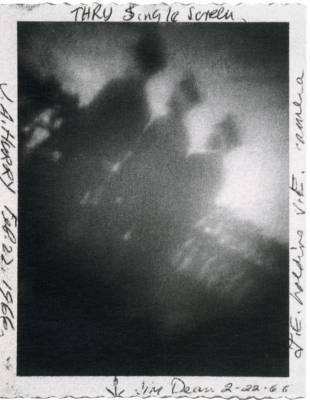
Anyway, in 1983 I was curious at the suggestion that not only could images imperceptible to the human eye be picked up on camera, but that great mystery of mind could even imprint them onto film with enough effort.

A controversial claim by the much-tested American Ted Serios and his ‘thoughtography’ experiments.

A-thought-image-created-by-Ted-Serios

A thought image created by Ted Serios.

As ever a true scientist, I thought I’d try some experimentation of my own and took some pictures in the forestry area behind the fields with the strong thought of traditional fairies being there.

When the pictures where developed it was hard not to notice some representations of diaphanous semi-opaque figures of the established fairy variety. Surely this was just imagination or the brain forming patterns ?

I repeated the experiment with similar results and decided it high time to involve an independent investigator. I sent the negatives to the newly formed Association for the Study of Anomalous Phenomena, and they passed them over to their expert the very credible and respected Vernon Harrison, former President of the Royal Photographic Society.

He could see exactly what I was pointing out and suggested he came to South Shields to take his own photos with his own equipment. He would take the photos at intervals of one minute apart and if the entities were seen to move about, then we might have to consider the unthinkable!

Vernon sent his report to the ASSAP but was puzzled when they refused to fund his venture. I later found out on an 1855 map of Shields that this precise area had once been called ‘Fair Fields’. A corruption from a far distant recollection of ‘fairy field’ perhaps ?

Later in the decade Shields had a prestigious private visit from my friend university lecturer and journalist Joe Cooper of Leeds, who came to my home in South Shields with a big problem.

It was Joe who had finally revealed the case of the Cottingley Fairies whereby two cousins had fooled the world for almost 70 years having faked photos of fairies at the small beck at Cottingley.

For year after year Joe had visited the girls asking them how they had done it, but they always insisted the fairies were real. They weren’t, they had been cardboard cut outs with hat pins and the truth only finally came out in 1983 when the girls fell out and one decided to spite the other with a confession to Joe.

Under normal circumstances Joe would have been delighted with the scoop he had patiently waited years for, but not when the manuscript for his book defending the photos as genuine sat with his publisher and was about to be published!

What should he do, he asked me and my wife? Look the other way and just have the book come out? The girls confessed to The Times newspaper the following year and the game was up, but they claimed the very last photo they’d taken was genuine, so Joe went with this to cut his losses. But experts later found out it wasn’t genuine.

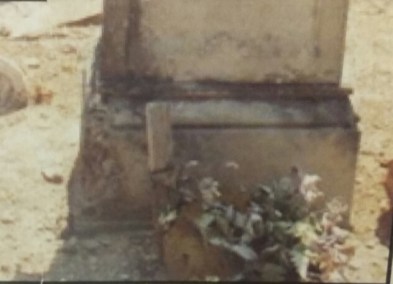
My interest in the camera picking up fairy images invisible to the eye continued for a while after. Here’s a pic of my favourite taken in France, a fairy figure lazing from left to right at the bottom of a tomb. Real or simply imagination?

fairyat-tomb

And there you have it, for those who consider belief in such things – Fairies in South Shields – who needs to go to Glastonbury!

For further information about the work of author Dan Green contact:

www.dangreencodex.co.uk/

Gary Alikivi October 2019.

HIDDEN TREASURE on Tyneside with investigator Dan Green

Mysteries of the world are fascinating subjects, and we rely on scientists, archaeologists and storytellers to bring them out of the dark. Finding a mystery closer to home can add more interest.

This was the case for former South Shields resident Dan Green. Dan is a British author, broadcaster, researcher and writer, he recently got in touch and told me some interesting stories that he researched when living in the town.

I lived in South Shields for over forty years, and this is one of my better investigations, originally introduced to the public as a centre page article in the Shields Gazette in 1989.

I’d come across ‘The Cuthbert Code’ first told to me by a retired Benedictine monk who was living in the town. He told me how St Cuthbert was originally buried at Lindisfarne and eventually found a resting place in Durham Cathedral, only to be disturbed by Henry VIII’s marauding commissioners looting for treasure during the Reformation.

While orthodoxy tells us that he was reburied at this shrine in 1542, the Cuthbert Code records that his loyal monks looked to safeguard his body against any further attempts at sacrilege, so reburied him in a secret location.

A substitute skeleton was placed in the tomb. The secret of his reburial location is closely guarded by no more than 3 monks at any one time.

I discovered an 1895 manuscript tucked away in the safe of St Hilda’s Church in South Shields, called ‘The legend of the Fairies Kettle’. It mentioned Cuthbert and how a gold cup had been stolen from its fairy guardians at Trow Rocks on the coast at Marsden. Then it was whisked away to Westoe, then taken to Durham Cathedral to be buried alongside Cuthbert.

Knowing a bit about Freemasonry I deduced that there was a broader message here and that a treasure linked to St Cuthbert was telling us that something thought to be in Durham Cathedral was in fact at Westoe.

This ‘treasure’ being Cuthbert himself – bear in mind that during medieval times the monks of Durham owned Westoe Village.

I set off on the scent of the saint and a hunch led me to Westoe Village. In 1989 there stood a derelict Nunnery once owned by The Order of The Poor Sisters of Mercy. At the time of my interest the Nunnery had just started to be re-developed and the ground was disturbed.

The builders allowed me access and on the stone floor under inches of dust and grime I found a five-pointed star mosaic.

By now I had my centre page in the Shields Gazette newspaper, and they promised they would carry a follow up. I’d accumulated a lot of evidence including a curious plaque high up on a wall in the village stating, ‘Follow the Paths of the Lord and you will find him’. Was this telling us to follow some subterranean path or tunnel under the Nunnery leading to Cuthbert?

The new owner of the land was intrigued by my Gazette article and allowed us three days to nosey below the site before it would be filled in. Hurriedly I took two burly ex-Westoe miners, plus a stonemason friend of theirs and entered an accessible dark mazy passageway that led to another sealed off passage.

I hadn’t told the owner that my crew were armed with lump hammers, they smashed a hole through the passage wall.

Using plasticine we took an imprint of a Freemasonry mark on a brick in the wall. We were now under a stairwell and a hollow cavity. Our stonemason accomplice told us that there should be something below – the perfect place to hide something of value. Cuthbert?

Frustratingly, our time was up, with no chance of being able to return or continue. At least, with photos we had taken each step of the way, we had the follow up Gazette article.

But then the Editor took fright at the implications and refused to print it. I also did a short phone interview for The Sunday Times.

What happened next is a mix of comedy and tragedy. My Cuthbert Code resurfaced in 1997, just before I left South Shields when new evidence again cast doubt on the final resting place of another Catholic saint, Thomas Beckett at Canterbury Cathedral. A similar situation to mine then.

I arranged to meet up with the latest Gazette editor and try again to see if what had been my intended second article could at last be presented to the awaiting Shields’ population. I took a dossier in and after studying the work he broke his silence with, ‘Is this a wind up?

I found the question disappointing and assured him it wasn’t, and we continued talking for some time. He concluded he’d think about running a feature and be in contact in a few days.

He did and said that he couldn’t possibly run it. I pressed him why and here’s his reply which I still remember clearly, ‘Because I live in the flat above your location!’

What was the odds of that? I didn’t know whether to laugh or cry, but it was true, his flat was right above the location. Perhaps, if he’s still there, with lesser odds, St Cuthbert and his treasure is also there below him.

More mysterious stories from Dan will be posted soon, for further info contact:

www.dangreencodex.co.uk/

Gary Alikivi  October 2019

NAILS – world exclusive interview with The Hard.

Following on from talking with some of the team who worked on ‘80s live music show The Tube, I contacted someone who appeared on the programme. Wavis O’Shave wasn’t available.

Mrs O’Shave telt me he was on holiday so this otha bloke stood in for him.

‘Are ye hard enuff to intaview me’. He’ll put me windas in if I daint post this he sed. I telt him to wind his neck in but he wudnt listen. Here’s the world exclusive interview with The Hard.

hqdefault-2

Mee Thu Hard hear. Ah woz hard befour ah woz hard, mee lyk. Ah woz bourne wihth ah hundrud and sicks tatooz and bye thu tym ah woz fower ah hahd thaht mennie ah hadd tuh ware thum onn mee maytz bak.

Ah woz ah sizaireeun berth anhd thu hahd tuh saw uz oot ov mee hard muthaz syde. Ah slepht inn ah Pytt boote. Mee fatha wud putt broon ail inn mee hoht watta bottel. Mee kot woz ah kayj fytaz riynng.

Noo ah sleap onn ah watta bed wihth naylz innit. Onn mee forst borthdae ah hahd dinamight onn mee borthdae kake innsted ov kandlz.

Mee pairentz thort ah woz hard ov heering til thu foond oot mee hard granda hah filld mee lugz upp wihth Pollyfilla sows ah cuddnt heer mee dadd snoahrin coz hee wud putt kracs inn thu seeling.

Ah hahd mee forst harecutt onn ah frensh polisha.

Wen ah woz ah hard bairn ah yoused tuh plahy marblz yousing cannunballz and ah lornt tuh sphell yousing payvmeant slahbs tuh rite onn four Scrabl.

busking

Heerz mee hard granpappie givvn sum coppaz ah lyft

Ah used tuh plahy hopp skotch onn lhanddmynes befor ah stahrud jumpyn onn peepl frohm Skotlynd. Mee pairentz wud tek uz tuh thu beech and ahd gan roond nuttin everiewon. Thu naymd ah chuwing gum afta uz – Beach Nutt.

Ahd gan and dek everywon hoo wehr sittn doon, sow theer chairz gott carled dek chairz. Ahd mek sanned kaslz oot ov sement anddh wen ah dyd ah hard farrt thud bee ah sanhd storem.

Onn mee forst hollydae ah warked tuh thu noarth poal wihth mee sleevz roalled upp. Ah forst stahrtd swarin wen me dahd purriz inn anne armie tanc. Ah cudnt stohp swareyn.

Ah thinc ahv gohht turretz sindrum. say iht happund wen ah meetyouryte hirruz onn mee heed. Ah felt nowt. Ahm thaht hard ah kan fynd thu ehnd ov Sellataype eaven wen ahv noced meesell oot.

Ahd geht hoyed oot ov thu synmma four havin thu hardest sylhoett inn thear and ah gott nyked four thu forst tyme four shohplifftinn. Naybodie hahd eva scene ah sicks yor owld lyft ah shop owa itz heed befor.

grandadin acion

Hearz mee hard granpappie with hiz remedeez four indeejestshun

Wen ah gott olda ah ghot bahrrd frohm ahl thu pubs. Thu wud hirruz ower me heed wihth ah barr. Felt Nowt. Noo ah hav aboot nyntee pients befor ah gan oot tuh thu pub ahnd hava lok inn. Kidz sed ah woz reet hard. Orr aht leest thu carled uz a reethard.

Wen a woz ah hard bearyn ah ofton hahd ah saw throte sow ah stoppd slahsyn meesel wihth ah saw. Ah youst tuh plahy drafts. Ahd doon aboot nighntee pynts ov draft beehr.

Ah startudd deeing wayts. Ahd wayt four mee Jiro tuh cum four oors. Ah bort ah dumm behl tuh dee mee wayts and wen yu rhang itt yud heer nowt.

Ah starrtud tu doo traynin – ah gan four ah wark allongg thu trayn trak wen ah intasity tayn iz cumin heed onn.

granpappi

Hearz mee granpappie with too moar remedeez four ah saw throte.

Ah lyk tuh realacks having ah dyp in ah volkanoz lrva in mee shortz and ah lyk ah gud kurrie iff itz dun reet – boyled inn thu mikrowayve four fyftean oors in thu dezzat wihth mustad onn itt andh ah hot watta bottle onn mee heed.

Ah belleev inn thyng thaht gan headbutt inn the neet. Mee mam woz ah meedyum bhutt mee dahd tuk ah larj. Aktshooly shee woz ah sydkik meedyum and wud kik aniebodie woo stud allongsyd herr.

Shee wud tekkuz tuh thu spyritchooliszt choorch anhd wud bryng threw peepl fromm thu hard Beyond.

Shud gan intwo ah trans anhd ah arhm restl thu hard buggaz hoo kame thru. Thu wons sed ah woz ah hardvaak in ah prevyuss hard lyf. (See YouTube; ‘Dead Hard – The Hard’s animated adventures in Muvizu’)

granpaps

Hearz mee granpappie with too moar remedeez four ah saw throte.

Mee dahd styl givz uz thu bhelt iff ahm norty – ahn atey nyn thousand vholts shokk. Sumwear inn Switzalahnd ascd uzz iff ah wudd trie oot thear woshin mashyn four them. Summitz carled Sern attom krusha. It woz a bit smahrl inn thear burra felt nowt.

Ah wons tried mee heed at bean ah sayf kraka nuttin sayfz burra moovd onn tuh bean ah lone sharc. Ahd lone mee pett sharc oot uv me swimmyn pool. Ah trydah runnyn ah protekshun rakit oot ohn tennys playaz. Iff thu dydnt giz ah kwid ahd busst thear rakit.

hardsgran

Hearz me hard granmah havvin hor peeanna lessonz

Ahv fehl oot wihth mee peht hard dog coz heez started tarkin inn hyz sleap anhd hee sez ahm knot rely hard. Welll, yuh naar wot thay sahy – yuv gora let sleepyn dog lye.

Ahm gannyn ower tuh Eyeland noo. Summitz tuh dee wihth wontyn ah hard borda. Ahl tek mee dogg – heez ah hard borda colly.

Ann iff yuh edditt thys intavyoo ahl giv yee ah hed ah hit an punsh yuh innyuh besst frendz mustash anarl.

Nuff sed for now. He’s back in his box.

Gary Alikivi  August 2019.

WRITE FATHER, WRITE SON with author Peter Mitchell

ophn16w copy

Did you watch ‘When the Boat Comes In’ or catch the world premier of the play at The Customs House last year ? There are two events during September in South Shields that will interest you.

David Whale is host of Heritage Talks at The Word and he’s invited writer Peter Mitchell to be guest speaker on Wednesday 4th September…. 

‘I’m really looking forward to this event. It’s an opportunity to talk about my dad’s work and his life as an extremely successful writer as well as my own career in broadcasting. David has asked me to look at this from a very personal perspective and I’m keen to share the story.

My Dad left Shields when I was six-years-old to concentrate on a new life and career in London. I spent much of my childhood travelling between Shields and the capital on ‘access’ visits. They were very different worlds and, obviously, had a profound effect on me growing up’.

Peter will also be talking about his career in the media…

After leaving Tyne Tees I joined Zenith North – first as Director of Production and, later, as Managing Director. That company produced Byker Grove and The Dales Diary. A little while later, I formed my own production company and were able to take ‘The Diary’ with us.

We continued to produce that until the final series was aired in 2008. They were fantastic days allowing us to explore and film some of the finest locations the Northern Hill Country has to offer’.

At The Customs House is ‘When the Boat Comes In: The Hungry Years’ written by Peter as a sequel to last year’s successful play…. 

‘The first play focussed mainly on the aftermath of the Great War and a love story between two strong characters: Jack Ford, a man determined to be successful in the new Land Fit For Heroes and Jessie Seaton, a feisty, intelligent, young woman who wanted to change the world through politics.

The Hungry Years finds the two of them trying to come to terms with life without each other. The focus shifts to the politics of change but the legacy of world conflict is never far away’.

Tickets for the Wednesday Heritage Club, 4th September 2pm are £1.50 from The Word, Market Place, South Shields.

Tickets for The Customs House, South Shields 

https://www.customshouse.co.uk/theatre/when-the-boat-comes-in-part-2%3A-the-hungr/

 Interview by Gary Alikivi   August 2019.

SKUETENDERS – stories from South Shields.

LT16

In the North East of England, the Lawe Top is an area that runs parallel to the River Tyne and looks out to South Shields harbour and North Sea. It was once an island, and in some ways it still is.

Some residents I interviewed in summer 2011 were proud to talk about the Lawe being ‘a little village up on the hill’ away from the town of South Shields.

The documentary included narration by local historian and former museum worker Angus McDonald with music by North East musician Martin Francis Trollope.

This a short extract from some of the interview’s…

Janis Blower: It still has to a certain extent the same old identity that it had with the river and the sea, although the pilots have moved away from the area. It’s like a little village with its own unique identity.

Dave Slater: It’s an area which I’ve always liked and a lot of people living in Shields have this affinity with it. They think it’s like a special place. And the houses are nice they have their little quirks.

On Fort Street and the corner of Roman Road is Crawfords Newsagents….

Bob Crawford: (owner) I’ve been here 28 years it’s always been a newsagent’s, on the deed’s it say’s from 1920. Enjoy living on the Lawe Top. Made a lot of friends. Lot of nice people live on the Lawe Top. Hopefully be here a bit longer.

Jane Price: I’ve been working here about 10 years now and its quite handy cos I live on the street. Literally fall out the door into work. And it’s lovely living up here it’s like a village separate from Shields. Like a really close community. I also work in the pub at the end of the street. The Look Out pub. It’s really nice I enjoy it, my kid’s had a good upbringing here.

Living on The Lawe people are known as Skuetenders. But what is a Skuetender ?

Janis Blower: Well there is various theories to what a Skuetender is. One of them is that if you look down on the area from above the Lawe is in the shape of a skate. But probably the most reliable one is that this is the end of the river where the original fishing hut’s where, the fishing Shiels from which South Shields took its name. And it’s where they would salt the fish, and skuet is an old word for ‘to salt’. So if you were born at this end of the river, you were a Skuetender or it’s become Skitender over the years.

Ethne Brown: Well I’ve always lived on the Lawe Top, I was born on the Lawe Top in Trajan Avenue so I’m a Skitender born and bred.

Mel Douglas: Skitender is someone who has lived in this locality within a certain distance of the river. Yes I’ve always been one of them but not as much as Duncan Stephenson as he’s a proper Skitender.

Duncan Stephenson: A Skitender ? You’ve got to have a ring around your bottom end where you sat on a bucket when you were a kid. That’s where a proper Skitender came from, if ya’ haven’t got a ring round yer bottom end yer not a Lawe Topper.

Janis Blower: Well I was born and brought up in Woodlands Terrace so as a child you would just have to walk down Woodlands Terrace and you were straight on to the hilltop. If the weather was good, you literally spent all yer time out on the hilltop or down onto the beach. What our mothers didn’t see what we got up to was a good thing.

Mel Douglas: When I was young I lived in George Scott Street. That was my impressionable time, but we eventually moved up to this house (Lawe Road) which I’ve enjoyed. On the hilltop area when I was a boy there was the gun encampments and Trinity Towers – a sort of radar station which was all fenced off.

Janis Blower: Trinity Towers was a magical place to play because it was so much like a castle or a fort. It had been originally built in the 1830’s by Trinity House, as a pilot look out. It stayed that until the early part of last century when the new pilot house was built at the top end of the park. By the time we were playing in it, it was the radar station for the college. You couldn’t actually get in it but it had bushes around it and little nooks and crannies.

Mel Douglas: The encampment where the gun’s where for example a lot of people aren’t sure where they were. But looking out of my window if you catch the time of year when spring is starting to come through, realising that the guns and the fence had some sort of foundations, well there wasn’t much soil on top of that and the rest of the area in deep soil. So when the grass started to grow it would grow quickly where there was plenty of soil. But where the foundations of the encampment was, there was no soil to speak about.

Janis Blower: By the time I was a child playing on the hilltop the actual gun’s themselves had gone but you could still see where the gun emplacements had been the big round pits had been there. They had been fenced off originally but I’m sure that I can remember sitting on one of them dangling my leg’s inside. You were always being warned off them.

On the Lawe Top is Arbeia Roman Fort…

Dave Slater: I noticed when we moved here when we walked up Lawe Road is on the wall, name plaques of Roman emperors like Julian Street etc.. and the one round the corner is the name of his wife. So you can always learn something new as old as you are and as many times you been up here.

Janis Blower: The fort was very open in those days, and we used to play in it as children you wouldn’t think about doing that now. I don’t suppose as a child you really appreciated what a heritage monument it was.

There used to be a caretaker’s house attached to it which has been demolished long since, and when you used to play on the green between the hilltop and the pilot house, if ya dug around you could find bits of stoneware. I remember the red samian ware that you see in the fort, and we would find these bits of things and we would take them to the caretaker’s house and knock on the door ‘Is this a bit of roman pottery’ and he would say ‘Yes look’s like it is’. But I think after we had done it after the fifth or sixth time it was ‘No it’s a bit o’ brick’.

The Lawe Top used to be home to St Aidens and St Stephens Churches….

Joan Stephenson: When a lot of the houses were pulled down around this area and people moved to other parts of Shields and they want their children baptised or anything they still say St Stephen’s is their church and they come back.

Ethne Brown: I was born up here and I was christened at St Stephen’s Church and all my family and father’s brothers were in the church choir. My Grandma Whale on more than one occasion opened the fete at St Stephen’s church. It’s always been the pilot’s church and nice that they were in the choir. I was also married at St Stephen’s Church.

Mel Douglas: With respect to that I was very fortunate when sadly they pulled the church (St Aidens) down that I was in a position where I could buy the pew that I sat on as a boy and have in a room upstairs. The pew used by people getting married, my father, Grandfather, myself, all male members of the family had sat on that pew when getting married. Very proud of it.

Joan Stephenson: When St Aiden’s closed, they amalgamated with St Stephen’s, it was sad because St Aiden’s was a lovely church. In the 1970’s we decided to make this building into a multi-purpose building to make it more economic to run and it stayed up while unfortunately St Aiden’s closed. Once the chairs are put to the side we hold dances, mother and toddlers, young kids come into dance, social evenings, it’s a really good venue for anything like that.

The street that overlook’s the Tyne is Greens Place where I spoke to Karen Arthur and her father George…

Karen: When you were little what did you used to see around here ?

George: We used to go to the shop along there beside the Turks Head pub. Shrybos you called here. We nicknamed her Fanny Mossy. Everyone knew her around here. She was an eccentric, she was an old maid and owned that shop.

Karen: Did she only let one person in at a time Dad ?

George: Yes if two of you went in she would say ‘Get out one of ya’. Cos she knew if she was serving one the other one would be helpin’ themselves with the sweets an’ that.

Lenonard Smith: We moved to 23 Greens Place in 1947 and that was great because at one time 17 lived in four flats. There was one tap outside and one toilet. Me happy days of the Lawe Top was I used to go to the Corporation Quay and I spent all my school holiday’s going away with the inshore fishermen. With the net’s it was driving, then crab pots and longlines.

We used to bait up in the cabins on the Corporation Quay and the light was done by carbine. The only thing with carbine was that when you went home you had black tash’s where the smoke would get up your nostrils.

On Baring Street is the art shop Crafty Corner….

Trevor Dixon: We purchased this property eight years ago now and it used to be Crabtree’s the Bakers. Where I’m sitting now there used to be a massive oven that came right from the back of the shop. Took six months to cut it out and skip after skip. Our shop is a craft shop and ceramic studio.

It’s a very old building that we are in and it’s reckoned that we have ghosts. They’re all friendly. We’ve had a few local ghost groups bringing all their instruments in here and in the basement. They reckon we do have a lot of ghosts and we have things moved around now and then, disappear for a few days then turn up again.

I don’t think we could have picked a better place to be cos as you know The Lawe Top goes back in history as a creative place and I feel we’ve meant to be here.

Final words about The Lawe Top….

Mel Douglas: If it was up to me I would live in this house for the rest of my life. It’s a beautiful house and I love the community that I live in. Fantastic neighbours, nice people, I’d live nowhere else.

Ethne Brown: I just love living here on this Lawe Top. The house is a bit big nowadays, but I don’t know where else I would go in the town. This is the only place to live.

Janis Blower: Everybody knows everybody else, yeah, it’s a fabulous area to live. I can’t imagine to be living anywhere else to be honest.

Joan Stephenson: Just a lovely place to live.

Duncan Stephenson: Got everything here, beaches, parks. Home is where…

Joan: Your heart is.

To read more about the film go to the blog  Skuetenders Aug.25th 2018.

 Gary Alikivi   August 2019.

HOLBORN – stories from a changing town

Like many towns in the UK, South Shields is changing, and in 2010 I made a documentary to capture those changes, in particular the area of Holborn, once called the industrial heartland of South Shields. 

These short extracts are taken from interviews with workers and ex-residents of Holborn. 

41350858_1994449860613755_6815155342519828480_n

Readheads Shipbuilders docks photo by John Bage.

The shipbuilding industry was a big part of Holborn…

Alex Patterson: My very first memory was going to a ship launch. There was a massive cloud of dust and rust, and smells of oil that left an impression on me that stayed all my life. I was a Naval Architect by profession and retired about 10 years ago.

John Keightly: I started in the Middle Dock in 1959 straight from school, the boys High school in South Shields. I was a carpenter. We used to hang all the staging of the big centre tanks an’ like I say no health and safety, no harnesses, no ropes, just walking along 9 inch planks 70 foot up.

Malcolm Johnson: Well I started in Readheads Dock when I left school. The noise was tremendous, you couldn’t hear yersel speak at one time. There was no ear protection like there is now. There was about 4 or 5 guys in every riveting squad, the riveter, the holder up, the catcher, the heater, I mean you can imagine the number of people that was in the yard at the time.

As I say the noise was tremendous you just had to live with it, it was part and parcel of yer day’s work.

John Bage: I started work in Readheads August 1964 three weeks after leaving South Shields Grammar and Technical school. I always wanted to be a draughtsman so applied to Readheads and was accepted for a 5 year apprenticeship as an outfit draughtsman.

Richard Jago: Me dad went into the Middle Docks, I think in the 1940’s when Sir Laurie Edwards owned it. He was there right up until he was made redundant in the ‘80s.

Liz Brownsword: Me Grandfather he worked in Readheads from the age of 14 until he was 77. Worked there all his life. He had to go into the docks because his parents couldn’t afford for his education no more you know. Me mother had lots of cleaning job’s when we were little.

Dignitaries that used to come into Readheads Docks used to admire the dark mahogany staircase and panels. Me mother used to say ‘Well they admire them but we’ve got to keep the bloomin’ things clean, keep them dusted you know’.

John Bage: There was almost a thousand people working there at the time because we got a lot of orders for building ships and the dry docks also had a lot of work. They were almost queuing up to go into the docks for work on them.

John Keightly: Well there was British tankers, Shell tankers, Coltex, every tanker you could name was in and out of the Middle Docks. As well as cargo boats, molasses carriers, grain carriers they covered all sorts of ships.

John Bage: Readheads built quite a few ships when I was there and a few of them returned to dry docks for survey. But one in particular was the Photenia, which belonged to a local shipping company, The Stag Line of North Shields. They used to bring the ship back to dry dock for conversion to a cable layer.

The ship would then go off to New Zealand and lay power cables from North Island to South Island, and then return to the docks about a year later to have all the equipment removed which would then be stored until a year later the ship got another contract for cabling. It would come back to the dock again, and the equipment would be put back on the ship again. A lot of equipment and work for the dry docks.

John Keightly: People in the market used to know when the ferry was in with all the smoke. Well they knew when the whalers were in with the smell, it was horrendous. When you got home yer ma wouldn’t allow you in the house. Used to have to strip off in the wash house, have a rub down before you were allowed anywhere near the door. I just loved the place, (the docks) it was hard work, and they were strict, but the camaraderie was just fantastic.

Immigrants arrived from many different countries and settled in Holborn….

Hildred Whale: My Great Grandfather was Karl Johan Suderland who was born in Sweden in 1855. He came to this country I believe, in the 1870’s. He did try his hand at a number of job’s, such as ship’s chandler, mason, he was a butcher at one time but eventually all these skills came together when he decided to run a boarding house at 67 West Holborn.

Yusef Abdullah: The boarding house was run by a boarding house master who was an agent for the seaman and the shipping companies where he got them employment. Also, the Arab seaman didn’t drink so there was no kind of social life only the boarding house where they used to have a meal, play dominos, card’s, meet friend’s etc…

Photographer James Cleet captured the housing clearences in Holborn during the 1930’s..….

Ann Sharp: I work with an invaluable collection of photographs here at South Tyneside Central Library and one of the area’s we have been focusing on along the riverside area of South Shields is Holborn. Where conditions have changed considerably, industry and housing have changed over time. We are particularly looking at the photographs by Amy Flagg and James Henry Cleet.

We secured some funding from the Heritage Lottery Fund to work with the community and volunteers and they’ve been helping us to retrieve the photographs from the collection to scan the photograph’s and looking at the images to find out historical information.

From that information they are compiling, others are actually inputting that information into a database. Then liberating the photographs onto the internet so that other people can find out what life was like for people along the riverside.

Bob Overton: (Owner, Rose and Crown pub) In the mid ‘90s someone turned up in the bar with some black bag’s and asked if I was interested in some old photos of the docks. I said yes and give him some money and in the bag were photographs of warship’s that were repaired during the Second World War. All the photograph’s had been taken by James Cleet and they are all marked on the back, Top Secret not to be published.

Norma Wilson: Just after the war there was a lot of housing done and they built the Orlit houses in Laygate Street there was 24 of them and that was a new development, and my family were rehoused there. We were the first people to move in there.

Alex Patterson: I live in Canada now and moved there in 1962. Most familiar memory is moving into West Holborn. These were brand new houses, and we moved from single room houses with 4 toilets in the street with a tap at each end. So it was relative luxury moving into a house that had a bathroom, water inside and a garden.

Liz Brownsword: Me Grandfather lived in West Holborn at the top of the street it was a 2 bedroomed house with a garden, living room and a scullery at the back. He loved his garden when he retired, growing cabbages, leeks, lettuce, you name it he loved growing vegetables.

Alex Patterson: We had an avid gardener at the end of the street, Bill McLean. Who provided vegetables and flowers for a little bit of pocket money. But he had a fabulous garden and everybody who lived in the street went there.

Norma Wilson: Me mam used to send us down on a Sunday morning to buy a cabbage or a cauliflower for Sunday dinner.

At one time there was 33 pubs in Holborn, but one pub that survived was The Rose and Crown…

Bob Overton: (Owner) We had our opening night on November 30th 1983 and the guests to open it was Terry McDermott and John Miles, it was meant to be with Kevin Keegan as well, but he had some contractual difficulties with the breweries, so we ended up with just Terry and John.

Richard Jago: Probably during the ‘90s it was at its peak with music happening. There was a big roots scene and all sorts of people played here.

Bob Overton: A lot of local bands and artists would turn up and play for reasonable fees. We had Tim Rose play one month and the following month we had Chip Taylor. I suppose a claim to fame was that Tim Rose wrote Hey Joe and Chip Taylor actually wrote Purple Haze which were the first hits for Jimi Hendrix in the UK.

Richard Jago: Think I’ve drunk here since the late ‘80s so I’m an apprentice really. Great bar, friendly people from all walks of life drink here.

‘Hills of Holborn’ (30mins, 2010) are available on DVD to buy from South Shields Museum and The Word, South Shields.  There is a short version to view on the ALIKIVI You Tube channel.  

Gary Alikivi   August 2019   
TYNE STORIES – from the south bank of the river.

41631471_1998507880207953_6344860911848652800_n

Back in 2010 I made a film along the south bank of the River Tyne, collecting stories from former boatbuilders, tugboatmen – people connected to the river.  These are some extracts from the documentary….

Tom Fenelly: The volunteer life brigades were formed to support the full-time work of the coastguard, using the breeches buoy equipment to rescue life from shipwreck. That continued from the very early day’s right up till 1989 when that equipment was withdrawn.

Not only do we help to save lives and help to find people who are missing, we also get involved in rescuing animals. We were involved in recovering a dog which had gone over the cliffs and the owner was obviously very distressed because the dog sadly died. We were pleased to be able to recover the dog and allow the owner to have closure.

A couple of weeks later we got a letter from the owner of the dog saying thank you very much in your effort’s in trying to save the dog and in particular for recovering the dog’s body which allowed her to take it home and the dog’s companion was able to sniff the dog and then bury it in the back garden.

There was a footnote added to the letter saying p.s. My parents had the foresight to insure the dog Paddy the Labrador. Could you please supply us with a death certificate.

The first time we had been asked to supply a death certificate for a dog, but we duly obliged and were very grateful for a £25 donation which followed.

Ethne Brown: My family are the Whale family who are Tyne Pilot’s. My father was one of six brothers, 5 of them were pilot’s. You couldn’t be a pilot on the River Tyne unless your father or Grandfather had been a Pilot.

This is my dad (showing photo) he worked until he was 70. He was self-employed and if you were fit enough, like he was, you could work until you were 70. My Father used to come home from the watch house, which is just across the harbour there, he would come at lunchtimes sitting in the window having his meal and wait for the ship’s.

They used to go out in the cobles, then climb aboard and bring the ship in. It was always their ship until it left the river.

Duncan Stephenson: Me Father had seen one of the skippers of the tugs ‘Me son’s left school he wants a job’.

So a Mr Headley come to the door ‘Can you join a tug called The Waysider. She’s lying at the Stanhope buoys and can ya’ skull?’ Aye I said and that was the start of me career as a riverman.

A tugboat tugged ship’s in and out of the Tyne. When they were going into dock, we would bring them in from sea, then take them back to sea.

When I started in 1956 there was about 40 tug’s working night and day. All hours of the night, everyday, towing ship’s in, towing ship’s out. Big ship’s used to go up Newcastle Quay. You had all sorts of boats.

Fred Thompson: Me Grandfather was a tugboat man. Me father, uncle’s, the whole family and cousins, we were a whole tugboat family. Mainly I was deckhand and fireman. Eventually I was relief engineer in a big tug called the Tynesider and that’s the one that Duncan was in.

Duncan Stephenson: About 4 o’clock in the morning we had been doing a job and we were coming back to the buoys to tie up next to another tug. It was the lad’s job to jump from your tug to another tug and put on the ropes.

Fred: Course we’re in the Stanhope buoys and Duncan had to jump aboard the other tug.

Duncan: We’re coming alongside this tug and I’m gonna jump from this tug to that tug.

Fred: Course when the ropes were off the tug’s started going off a bit away from each other.

Duncan: I jumped and me self-conscience said ‘You’ve jumped too soon’.

Fred: As he jumped, he missed and went in.

Duncan: In the water, in the drink and I’m swimming about in the water.

Fred: He took a bit of pulling out, he was more than me.

Duncan: Eventually after a long struggle they pulled us aboard the tug.

Fred: He was 18 stone then !

Duncan: I was a big lad. I’m still a big lad.

Susan is sitting with her father, Tom Fenwick…

Susan Fenwick: When did you start in the Foyboats Dad ?

Tom Fenwick: 1948 wasn’t it.

Susan: Who else in the family was in ?

Tom: Sam, William, Tony and me. I had some narrow escapades. I was blown up on a ship called The Firebeam loading coal at Harton Staithes.

Susan: Then you were nearly drowned at North Shields weren’t ya ?

Tom: I was at Smiths Docks on the foyboats to tie a Swedish ship up. And I got jammed between a ship and the quay in me boat. The result was me boat was lifted up in the air with a rope underneath it then it fell back in the water and broke in two. Throwing me and my work mate in the water with it. Anyhow he couldn’t swim, and neither could I but by God’s grace we got out.

Susan: And ya’ came up with yer glasses on and yer cap….

Tom: Aye I still had me glasses on, it was laughable but serious. But never mind we got over it.

Fred Thompson: (Fred sitting at his table painting a ship using watercolours). I’m 80 next month and I finished when I was 65. Mainly the thing now is I paint them. This one is going into Salford harbour.

Interviewer: Anything else you would like to say about working on the river?

Fred: Nah I could go on forever, but I think that is enough for now. Once I start I can’t stop. (laughs).


Inside The Missions to Seafarers with Committee member Fay Cunningham….

Fay: During the Second World War the Mission really did play an important part because there was more people from our Merchant Navy personnel from South Shields signed on from anywhere else in the country, and that is the reason why we have our Merchant Navy memorial down at Mill Dam.

Today we had our Armistice Day service of remembrance for those who had fallen in the First and Second World Wars and all wars since. It was held at the Merchant Navy Memorial. You find that most of the people that attend are mostly ex-seafarers or present seafarers. It’s always a poignant ceremony, it’s always cold because we are right by the river and not far from the sea.

Today we had 60 children from Laygate school who helped lay the wreaths and I’m sure it’s a day that they’ll remember, and they will remember the work that our seafarers do.

Boatyard’s on Wapping Street, South Shields….

Fred Crowell: I started my life as an apprentice boat builder at Robson’s Boatbuilder’s in South Shields. We used to build a lot of wooden lifeboats at that time, rowing boats for Saltwell Park and Hexham. Now it’s mostly restoration of traditional boats and we’ve done several over the last few years. It’s quite rewarding to see them back on the river and it’s preserving a bit of history.

Alan Smith: We heard on Radio Newcastle that a trust was being set up and it would be called North East Maritime Trust and they wanted any volunteers. So myself and a pal of mine, Brian came down. We believed in what the trust was trying to do which is to preserve the examples of the wooden boats that were used on the coast here.

We do have an example what is possible, it’s called the Royal Diadem. Which is a Northumberland fishing coble.

(Boat being lifted by crane into the water). The boat was built in 1950 for two brothers, William and Albert Silk. Registered in Berwick but it fished out of Seahouses. Then comes the day that the boat is actually finished, and all boats are designed to be in the water. We couldn’t use the slipway, so we decided to use the crane.

There’s a point when the boat is in the air but over the water, then it’s in the water and you always feel that’s where it’s meant to be, it goes from being static to alive. It’s just as though the boat has been born. Fabulous day, fabulous turn out. A lot of people here to see the launch.

Extracts from Tyne Stories (50mins, 2010). 

Short version of the film available to watch on the ALIKIVI  You Tube channel.

 Gary Alikivi    August 2019.

NAMEDROPPER – in conversation with freelance author/TV producer Chris Phipps

Being on the dole during the ‘80s had its advantages. We queued up outside Tyne Tees TV Studio every Wednesday to get free audience tickets for the following Friday’s edition of live music show The Tube.

If I was working, I wouldn’t have got the chance to be part of what became a groundbreaking TV programme and something that changed my life.

Looking back, it took a couple of years to seep through, but it was one of the magical moments I experienced that massively helped me in my work today.

In one of the programmes, I was standing on the gantry looking across the studio with the stage and drummer below, another stage was to my left, there was a bar at the back, pink and blue lighting all around, Pat Benatar at the front of the stage – a little lady with a big voice. And cameras on the studio floor catching the buzz.

Something clicked. It was the first time I thought ‘I would love to be involved in something like this’. I knew I was onto something.  

So, a chance to interview a man who was part of that show was a great opportunity and one that I wasn’t going to miss. Take it away Chris…..

It’s interesting you mentioned Pat Benatar because I booked her, the drummer was fantastic and she was incredible.

I was at the Tube from the start in ’82 till it’s full run to ’87. But I started as a journalist in ’74 with three big stories happening on my patch, the Birmingham bombings, the hunt for the Black Panther and the Carl Bridgewater murder – a baptism of fire. After that I was producer at Pebble Mill at One and did a lot of regional TV and radio then.

I was doing rock shows, reggae shows and of course in the ‘70s the Midlands was Dexys Midnight Runners, UB40, Specials, Selector coming out of Coventry. It was like a nuclear reactor in terms of the music coming out of there.

And of course you had the whole New Wave of British Heavy Metal, and I was involved with a band called Diamond Head who came out of Stourbridge.

They were touted as the next Led Zeppelin which was a big mistake. They were phenomenal but for certain reasons they just went on to implode.

How were you involved with Diamond Head ?

I did two TV shows with them, both of which are very rare now. One was on Look Hear an arts programme on BBC Midlands with Toyah Wilcox. I also had them at West Bromich Further Education college, they done a student recording that was found in a loft a couple of years ago.

That whole NWOBHM was fascinating because a lot of those bands were back in their day jobs after a couple of years, apart from Iron Maiden and Def Leppard. Finally, Diamond Head were vindicated because Metallica covered some of their numbers that contributed to their financial coffers.

What are your memories of those first days at The Tube ?

I joined in ’82 as a booker and I became Assistant Producer from ’85-’87. My brief was to find bands that we could agree on to put in the show. A band on the first show that I booked didn’t happen, The Who didn’t do it because their pa system got stuck in Mexico or somewhere.

So, the producer Malcolm Gerrie knew Paul Weller’s father and got The Jam to do it. In a way I’m glad that he did because The Jam playing their last TV gig ever, really said this is what The Tube is all about – that was then, this is now and off we go.

On one show I booked a combination of Green Gartside and his band Scritti Politti, and Robert Palmer which I thought was a good mixture. Then Gartside wouldn’t do it, didn’t want to perform live or something I can’t remember now. But he pulled.

You know my job was to convince really big names to come, particularly in the first six months of the programme because it was based in Newcastle. A lot of record companies would say ‘We’re not sending anybody up there’.

There was a show in December ’82 with Iggy Pop, Tygers of Pan Tang and Twisted Sister, who famously signed a record deal after their performance..…

Now there is a story that I discovered Twisted Sister in a bar in New York when really the truth of it was, I had seen them at Reading Festival. I was just knocked out by them because I love theatrical rock. They were on a label called Metal Blade then, which was run by a friend of Toyah Wilcox.

I was interviewing Def Leppard backstage, then spoke to Twisted Sister’s manager and told him I had a gig on a TV music channel in the UK called The Tube. He said if you can gaurantee us a booking we will finance our own trip over.

So yeah, they turned up in a van outside The Tube studio direct from New York, played the show, and in the audience was Mick Jones from Foreigner, his manager and UK supremo from Atlantic records Phil Carson. Phil signed them the next day.

Actually, I don’t think I was too popular with the Tygers because I had to cut one of their numbers. At the time they had a great album out The Cage, but they were another band that imploded.

Incidentally, first time I saw the Tygers was at JB’s club in Dudley. They were supporting Robert Plant and his rock n roll band The Honeydrippers.

Why did you ask the Tygers to cut a song from their set ?

Lemmy wanted to jam with Twisted Sister at the end. In fact the guy who directed that show and all of The Tube, Gavin Taylor, who sadly died a few year ago, said his two favourite moments he directed were U2 at Red Rocks and Twisted Sister jamming with Motorhead. And this from the guy who directed Whitney Houston, Michael Jackson, Miles Davis.

So, after that every time I saw the presenter Paula Yates she used to impersonate my Birmingham accent and go ‘Chris Phipps Twisted Sister’ (laughs). God love her. They sent me a platinum disc as a thanks which I still have, and a manhole cover with the Twisted Sister logo on it.

Also on that programme was Iggy Pop what are your memories from then ?

Yeah, he was a wild one. No one could find him just prior to his performance, he completely disappeared. I got a call from reception, and they said there was something in the reception area spinning round and looking like a mummy. He was bandaged from head to foot (laughs).

Did the show help the careers of other bands ?

Fine Young Cannibals got signed, although they already had a publishing deal. The Proclaimers got signed and there was a time when a researcher called Mick Sawyer and some of the Tube crew went to Liverpool to film Dead or Alive.

But they weren’t around, then someone in a pub told them to go round the corner to another pub where there is a band rehearsing ‘You might be interested in them’. It was Frankie Goes to Hollywood.

The Tube filmed the original version of Relax, that was shown, and Trevor Horn saw it. He did the deal and re-recorded and produced the single.

Frankie epitomised The Tube and the ‘80s, they got what it was all about. You can never bring The Tube back. It’s of its time. Chris Evans on TFI Friday in the ‘90s near enough had it. The set was just like The Tube, so yeah, it’s had an incredible influence.

Last year I was on the Antiques Roadshow with memorabilia from The Tube and I thanked the BBC for banning Relax because, it not only done Frankie a load of good but The Tube as well (laughs).

Here’s the link: https://www.bbc.co.uk/programmes/p06b19jf

Around the time of going to The Tube I was in the audience to watch a few shows called TX45 filmed in the same studios….

Yes, TX45 ran parallel to The Tube it was a regional series it didn’t go on the network. Actually, a series by Tyne Tees Television called Alright Now got them a commission for The Tube.

When I was producing in Birmingham a lot of bands would say ’We’re off to Newcastle to do Alright Now or Razzmatazz or interviewed by Alan Robson’. He had a formidable reputation.

Newcastle had a reputation for cutting edge shows really, that’s why it got the commission from Channel Four. Back to TX 45 that was co-presented by Chris Cowey who went on to produce Top of the Pops.

What happened after The Tube ?

All the talent from The Tube just dispersed in different directions. Tyne Tees didn’t continue to do any big entertainment. They did attempt to rival Top of the Pops with a show called The Roxy but that fizzled out.

Malcolm Gerrie, the main guy went on to form Initial TV in London and made things like The Pepsi Chart Show. Now he’s got a company called Whizzkid producing big award ceremonies things like that.

Geoff Wonfor who made the films for The Tube, not the studio stuff, he went on and made The Beatles Anthology.

(An interview with Bob Smeaton who worked on the Anthology is on the blog ‘The Boy from Benwell’ Nov.5th 2018)

I went into documentary, feature film making, and my bread-and-butter work for 14 years was working on a series called The Dales Diary, which covered the Yorkshire Dales for Tyne Tees and Yorkshire.

What was interesting was that I was dealing with people who had never been in front of the camera before so I went from five years of people who couldn’t wait to get in front of the bloody camera to 14 years of people who sometimes weren’t happy to do it. Yeah I had some fantastic times working in Yorkshire.

Have you any stories that stand out from interviewing people ?

From 1973-82 I’d done a lot of entertainment stuff at Pebble Mill, but I also interviewed a lot of people with some priceless historical value. Like the 100-year-old woman who made a living from making nails from the back of her cottage near Worcester.

There was a man who helped build a storm anchor for the Titanic. I’ve kept all of them interviews and in fact the storm anchor one went for research to the director James Cameron when he was making the film Titanic.

So, I was no stranger to going to people who just wanted to get on, particularly the farming community who didn’t want people buzzing around with cameras.

Did you work on any other music programmes ?

I’m the sort of person who will come across something and say that will make a fantastic programme. I worked on a series for Dutch TV, it was like your Classic Albums series but for singles. Incredible programme to work on, it was called Single Luck.

It took me all over America tracking down songwriters, producers, and for one song the backing singers were Ashford and Simpson.

Another programme was for the song Blue Moon it profiled The Marceles, who came out of Pittsburg. The song sold I don’t know how many millions and some of them are living on the breadline you know. They got nothing, old story isn’t it.

Well I thought how do I find these people who are living in Pittsburg ? One of the singers was called Cornelius Harp. There might not be too many Harps in the phone book I’ll try that.

The one I called said ‘No I’m not Cornelius Harp, but he’s my cousin, here’s his number’. The guy who was managing them had a restaurant called Blue Moon. The producer was in California and came over to Pittsburg to re-produce the song.

So yeah found all of them and suddenly you have a 30-minute programme.

What have you been working on lately ?

After releasing the book Forget Carter in 2016 which was the first comprehensive guide to North East TV and film on screen, I’ve just released another book Namedropper full of anecdotes and stories of my time in the entertainment world. I’ve hosted quite a few talks including the evenings with Roger Daltrey and Tony Iommi at the Whitley Bay Film Festival.

Currently I’m still working as freelance producer/director based in North East specialising in entertainment and music for network and regional.

Chris is appearing at Newcastle’s Waterstones to sign his latest book ‘Namedropper’ on Saturday August 17th at 12 noon.

 Interview by Gary Alikivi   August 2019.

TYNE DOCK BORDERS -stories from the documentary.

11880844_501112830048283_848214020_n

Looking down Slake Terrace, Tyne Dock. Photo by Amy C. Flagg.

It was a cold, damp, windy day. I could hear the foghorn. Looking out the window I didn’t fancy going outside. If it clears up, I’ll go out later. 

First, I’ll have something to eat and listen to the news. I heated up a tin of pea and ham soup and turned the TV on.

Flicking through the channels I came across When the Boat Comes In. Never seen it before but within minutes I’m hooked. The writing was sharp, the story was great and central character Jack Ford, was the man.

Also recognised a few locations around Tyneside so next time in the Local History library I’ll search and see if there is any reference to the program.

There was, not only was the writer, James Mitchell from the North East, he was born in Tyne Dock, South Shields. And this area featured heavily in his and his father’s story, who was also a local councillor for the Tyne Dock ward. 

This was the catalyst for making a documentary about the area. I rang up Jarrow playwright Tom Kelly, we had a get together, threw some ideas around and started work on a script.

Using archive material and personal interviews with people who lived there, we look at the changes made in Tyne Dock. These are short extracts from some of the interviews filmed in 2012.

Tyne Dock Arches….

Kennie Chow: One of the major dare’s that we had was that along the arches was a ledge and above the arches was several little arches which you can get inside. But the only way you could actually get inside was to actually physically shimmy across the ledge.

Stephen Wilson: Used to play in the arches a lot. Was a great playground, very dangerous. We used to climb to the top and go into the little arches at the top. Which were yer access point, you could climb and go down but was quite a big drop. And inside it was chocka block with bricks and rubble.

Sheila Ross: The arches we thought were exciting cos you could get an echo in them. They were long, dark, very dingy. I mean they went for quite a distance. That distance from where Jarrow and Tyne Dock are, is quite a distance.

Paul Freeman: They were quite busy cos they were for taking the railways in and out of the docks. So, the road went through the arches and the railways went over the top, so they were filthy. But as children they were fantastic things to play in.

Olive Pinkney: As you get older you tend to reminisce about when you were young and of course Tyne Dock was a very close-knit community. And the arches were always our familiar focal point. If we had any family come from all over, we used to say you come through the arches and you are at Tyne Dock.

When I retired, I started doing watercolours and painted places of Tyne Dock where I remembered, and the arches was one of the main one’s.

Slake Terrace….

Alex Donaldson: For all the old, dilapidated houses, no bathrooms and outside toilets I think there was still a comradeship, a friendliness about the place. People were very close then, you knew who your neighbours where they were just next door living on top of each other (laughs).

In the ‘60s the River Tyne was still quite as busy as when I lived in Hudson Street. I can remember foreign seaman coming out of the dock’s during the day or later in the evening. They used to board the trolley bus that was stood there. I’ve still got happy memories of old Tyne Dock.

Sheila Ross: But it was all pubs. And they were not pub’s we would go into. Me motha’ wouldn’t even go into them, they were men’s pubs. For the dockers and the sailors who would come from all over the world.

Derek Pinkney: Well, Slake Terrace was one of the busy roads at the edge of Tyne Dock. Actually, it was full of public houses, that was its mainstay. There were pubs like the Green Bar, The Empress Hotel, The Banks of Tyne, The North Eastern. The Grapes which was on the corner of Hudson Street. And then round the corner was The Dock.

The best place where we used to get a good laugh when we were boys was a café called the Café Norge. And it was supposedly a place of ill repute. Because in those days there was lots of Norwegian and Swedish ships used to come into Tyne Dock and the crew’s used to frequent that place.

Paul Freeman: Now if you carried on up Hudson Street you came to another boarded out shop and a house where all these ladies used to live. Me sister Sheila and me used to get pennies off them, they were a lovely set of lasses.

Sheila Ross: So, we used to sit on the step at the bottom of the flat and there was some ladies used to come past, always very nice, give us sixpence each.

Paul Freeman: Just up Dock Street one of the first buildings was the spiritualists.

Sheila Ross: That was a big meeting place on a Saturday night because they used to faint and pass out with all these messages they were getting. And they used to lay them out in the street. Just lay them on the pavements ‘till they come round.

Paul Freeman: You had a right mixture of the one’s that had been talking to the dead and glory to God on high and the other’s stinking of the other spirit’s and beer then you had the other ones who had been looking after more than the spiritual welfare round the corner at the brothel. It was quite a place to be actually.

James Mitchell and When the Boat Comes In….. 

Roz Bailey: I don’t remember meeting him when I was first cast as Sarah Headly. I didn’t think I was going to be in When the Boat Comes In because I remember when they were first casting it, I was going to go up for the part of Jessie. Obviously didn’t get that but a year later my agent rang me up and said there’s a part that they are casting for. I got it but didn’t know how it was going to colour my life.

I remember filming outside The Customs House which is now a theatre it must have been derelict then. They had set it up with the old cobble stones. The characters were so well written by James Mitchell, particularly for the women. Which you don’t often get now. And the attention to detail. Looking at them the great humour in his writing, the calibre of it. Very, very special.

Second Time Around Record Shop…

Alistair Robinson: Shields in the late ‘70s and ‘80s was well off for second hand and collector’s record shops. There was one halfway down Imeary Street in Westoe in the ‘70s, there was the Handy Shop just off Frederick Street in Laygate and there was Second Time Around in Tyne Dock. I didn’t know the guys who run it cos they maybe had a deal somewhere where they could get some quite rare material.

Stewart Cambell: I opened the shop in 1975 until 1985. We sold loads of Jazz in French and German imports. We had big Elvis fans come to the shop, we had imports from the States, Uruguay, most countries. Some people bought the same Elvis album with five different covers.

Tyne Dock Youth Club…

Stephen Wilson: We would play on the railway line from Tyne Dock until it crossed Eldon Street, then all the way up to Trinity High Shields. We played in the old shed’s when it closed down. We used to walk along the lines and play on the lines behind Tyne Dock Youth Club. We used to put screws, nuts and bolts, two pences on the lines and when the trains went past, they flattened them.

Kennie Chow: Tyne Dock Youth Club was a massive part of my life. Through personal reasons my family were split up at the time and I managed to join the youth club and I must have spent about 10 years of my life there. It really helped us pull through the bad times I was going through, and I became club DJ.

Paul Dix: I was a bit nervous coming to the club, but we were welcomed by Jack and Betty Inkster who ran the club then. We knew Kennie he was a great lad, he done the club discos.

I think the French trip was one of the biggest things that the club had done for years. We went in the minibus and piled it with kid’s, tents and sleeping bags and as many tins of beans and sausages as you can get in the back of a van.  Drove off down the motorway, down to Dover and on the ferry. We drove from the top of France through to Paris and Jack was using his cine camera and documenting the whole of the trip from start to finish.

Jack and Betty on the trip were fantastic. They done everything for us, Jack helping putting the tents up and Betty all those sausages and beans. We washed up and everybody chipped in. When you look back at the cine footage you can see how great a care they took of the kids. It was a real privilege to have been on that trip.

DVD copies of Tyne Dock Borders (70mins £10) are available to buy from The Word, South Shields. A short version is available to watch on the ALIKIVI You Tube channel.

Gary Alikivi    August 2019.