WAR STORIES – experiences of World War Two on Tyneside

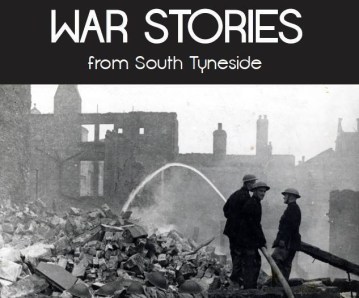
During spring 2012, Jarrow playwright Tom Kelly and I made a short film about the impact of World War Two on South Tyneside, North East England.

Using archive material and personal interviews we revisited the past and spoke with people who shared their memories and experiences of war. These extracts are taken from some of the interviews.

12004062_975203375871747_1592481803776567623_n

Photograph by Amy C. Flagg

In the air raid shelters….

Doreen Purvis: My cousin Anne who was 3 or 4 year old used to insist on being taken outside to look at the stars in the middle of bombs dropping around and German planes overhead. This child would have to be taken to the door of the shelter and shown the stars to stop her crying.

Derek Hutchinson: We were all sitting in the air raid shelter and the bombs were coming down and everybody’s ducking from the bomb blasts, but I’m rubbing my hand’s thinking well if this air raid goes on after 3 o’clock I won’t have to go to school. If it stay’s this side of 3 o’clock I’ll have to go to school.

Doris Johnson: I was at the Glebe Church and the siren went. So my friend Jean and I decided we’d run home to Hyde Street just a short distance away. So we ran and went into our respective homes and my parents said we would go into the shelter. My neighbour called out to me did I have anything to read. So I ran round into my neighbours shelter and the man of the house moved to let me sit down.

Then the bombs started to fall and I was blown out of the doorway. My mam and dad who I loved dearly, were killed. My dad was found later that night, then died. But my mam didn’t survive at all. That was a day, a night, that I’ll never ever forget.

Derek Hutchinson: The last bomb of the raid was a whoosh, then a (whistle noise) louder and louder. Louder than I’ve ever heard before and then…bam. The wall’s of the shelter shook, the ceiling shook, bit’s of dust came down, the candle fell of it’s rack and went out. Then the all clear went.

So we clambered out the back door, forced it open cos there was stones in front, the air raid shelter was actually in the backyard. We went through the house, through the kitchen, as we walked along the passage a big wall of dust came along the passage. When we finally got to the front door it was leaning off it’s hinges.

Outside where there had been houses there was now a hole. It was a bomb crater, they had bombed our street and six houses had gone. We went into our front room and on the mantelpiece were two ornaments, very delicate. My grandmother’s pride and joy. She was really horrified ‘Oh my God, my ornaments’. She was clutching the ornaments saying they were alright ‘apart from a little strap on one of them was broken by Hitler’.

So these figures survived the war and I went on the Antiques Roadshow with them and I showed them a picture of the bombing which was horrifying. He valued them which wasn’t very much and then said ‘Well you know why they survived don’t you’. I said I had no idea. Well he said ‘They are made in Germany. If you look on the bottom you can see the makers mark’.

Maureen McLaughlin: We were at school and the teachers were trying to persuade everybody to go onto evacuation. But I didn’t want to go and leave my mam cos I was the only daughter and just had one brother. But my friends were all going so I said yes I’ll go.

They gave us a list to get, my mother had a job to get them because you had coupons. I had to have new pyjamas, jumper, skirt, shoes, wellies, slippers, yer case had to be full of these new things. But when it came to going I wouldn’t go, I started crying so she took me home.

Memories of food rationing…

Doris Johnson: My dad was a grocer and food started to get scarcer, you got your ration book and you had to abide by that. There were queues for anything which wasn’t rationed. Then sweets were rationed you were very lucky if a shop had a bar of chocolate in.

Maureen McLaughlin: I’ve been asked where you hungry during the war well I wasn’t as the rations were enough for us. Then again if we were short of butter or sugar some of these people in the street with big families would sell you their coupons. You’d take it to the corner shop and they’d sell you the butter, sugar, meat or cheese.

Doreen Purvis: In those day’s everybody took two or three spoonful’s of sugar in their tea so sugar was a very precious commodity. My mother said a cup of tea got knocked over into a sugar bowl and they were so concerned that they actually dried the sugar out on the top of the stove so they could use it again.

Dave Bell: During the war when there were shortages my Granda loved pea’s pudding and found out there was some available in Ferry Street in Jarrow. Now he lived in Nixon Street which is two or three street’s away and he sent my Aunt Joyce, his youngest daughter to go and get him a bowl of this pea’s pudding.

Well she got it and coming back she was just crossing the square in front of the Empire cinema when a dog fight broke out overhead. A German plane was being attacked by a spitfire and the two of them were swirling about and opened fire.

As the bullets were overhead, in fear she threw herself down onto the cobbles and the pea’s pudding went flying amongst all the horse muck. So that was the finish of me Granda’s pea’s pudding.

Picking up shrapnel…

Maureen McLaughlin: We used to go around in the morning after the air raids had been, that was our past time. All the young ‘uns hunting for bit’s of shrapnel in the street’s. We all had a tin and collected bit’s of shrapnel to see who had got the most, bit’s of bombs and aeroplane an’ that.

Derek Hutchinson: Of course it really was called looting. All the thing’s we picked up off the bombed street’s had presumably belonged to somebody. We had photographs and ornaments, it was stealing but we didn’t know. So a lot of my time was spent running away from long legged policemen.

Doreen Purvis: My Grandmother lived in Thornton Avenue just beside the dock gates and of course there was lot’s of bombing raids during that time. Under the cover of the bombing the docker’s would often liberate various items from the docks, climb over the wall with them and stash them in my Grandmothers house. Usually as a reward she might get a bottle of whiskey or something similar.

One night a German war plane came down over the South Marine Park and lake in South Shields…..

Bob Robertson: My parents then lived in Eleanor Street. One of the plane’s I believe came down in one of the parks. But on it’s way it jettisoned two or three 500lb bombs and did an awful lot of damage.

Derek Hutchinson: A plane flew very close overhead on fire. It crashed at the right hand side at the bottom of Beach Road and blew up. Killed the airmen, blew down the building that houses the little boats. And just created mayhem.

If you could grapple in the lake with bent coat hanger’s and pull something out with German writing on this was a swappable article – well I pulled out a flying boot. ‘I’ve got a flying boot’ I shouted’. So they all came running along ‘Hey that’s great’. Then I put my hand inside the flying boot and pulled out what appeared to be cooked tripe. This wobbly, jellified, whitey creamy skin.

Of course it was the poor man’s foot – it had been blown off. ‘You’ll never do any swaps with that it’ll stink. Chuck it back in’ they said. So I threw it back in the lake.

Doreen Purvis: The radio was a great source of information during the war but the Germans also used it for propaganda purposes. And there was a broadcaster called Lord Haw-Haw who used to home in when there had been a raid the night before.

On one occasion he was talking about South Shields and he was talking about people in the ruins of their houses starving to death, well just at that point me Grandma was dishing up stew. So she thrust a plate of stew in front of the radio and said have a smell of that ya’ bugga’.

I am looking to add to these stories so if anyone would like to share their experience of that time just get in touch at     garyalikivi@yahoo.com

A short version of the film is available on the ALIKIVI You Tube channel.

 Gary Alikivi   August 2019.

ZAMYATIN The Russia – Tyneside Connection film research & script

On the 7th & 21st August 2018 research for a short film about Yevgeny Zamyatin (1884-1937) is featured on this blog. On today’s post I’ve added the script from the film I made about his life.

The narrators were North East actor’s Iain Cunningham and Jonathan Cash. Recorded by Martin Francis Trollope at Customs Space studio in South Shields and excellent soundtrack from North East musician John Clavering.

Yevgeny Ivanovich Zamyatin

Start.

Russian born Yevgeny Zamyatin lived with his wife in Paris until his death in March 1937. Their last few years were lived in poverty and only a small group of friends were present at his burial. His death was not mentioned in the Soviet press.

Zamyatin was an author of science fiction and political satire. Famous for his 1921 novel ’We’ – a story set in a dystopian future – the book was banned in Russia. In his novel ‘1984’ George Orwell acknowledged his debt to Zamyatin.

But how does Tyneside fit in this story ?

Zamyatin was born in a small town 200 miles south of Moscow on 19th January 1884. He had an educated middle-class background, his father was a teacher and his mother a musician.

Zamyatin studied Naval engineering at the St Petersburg Polytechnic Institute. He spent winters in the city and summers enjoying practical work in shipyards and at sea. The Middle East being one destination – a rich experience for the future writer.

He was a supporter of the revolution and joined the Bolsheviks, attending demonstrations and meetings. But he was arrested during the 1905 Revolution – for this he was sent to prison for several months. His time there was spent learning shorthand and writing poems.

He completed his course in Naval Engineering and was employed as a college tutor. He was also writing short stories and essays – his first published in 1908. Zamyatin immersed himself in the bohemian life of St Petersburg and was an important part of the cultural scene in Russia.

At the time of the First World War Russia were having ice breakers built in UK shipyards. Zamyatin was sent to North East England in 1916 to work as a Naval engineer for the Russian Empire.

He supervised the construction of the ships on the River Tyne. While there he lived in Jesmond near Newcastle and during his eighteen months stay, he was reported to travel around Tyneside and improve his knowledge of the language.

“In England I built icebreakers in Glasgow, Newcastle, Sunderland, South Shields, and looked at ruined castles. The Germans showered us with bombs from airplanes. I listened to the thud of bombs dropped by Zeppelins”.

ophn16w copy

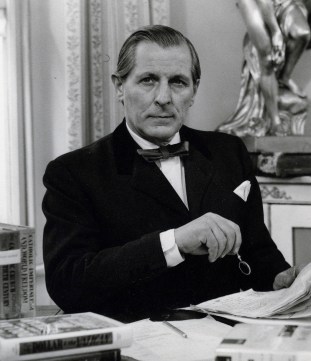
Laurence O’Shaughnessy lived in South Shields and worked there as Customs Collector on the River Tyne. His daughter Eileen married the author, George Orwell. Was there a connection to Zamyatin ? Leslie Hurst from The Orwell Society looked at the possibility.

‘Would the Russian ships have been checked by customs before leaving the Tyne ? When Orwell learned of the existence of ‘We’ he might have discussed it with Eileen and heard her say that her father had met its author. When Orwell died, Eileen’s library was found mixed with his.

Might Eileen have read Orwell’s copy of ’25 Years of Soviet Russian Literature’  and mentioned the Russian engineer who visited South Shields in her childhood? It is an intriguing possibility’.

When living on Tyneside, Zamyatin wrote two short stories ’The Fisher of Men’ and ’Islanders’. After a day at the shipyards, he would sit at his desk and write about the blinkered and pretentious world of the middle class.

‘By Sunday the stone steps of the houses in Jesmond had as usual been scrubbed to a dazzling whiteness, like the Sunday gentlemen’s false teeth.

The Sunday gentlemen were of course manufactured at a factory in Jesmond, and thousands of copies appeared on the streets. Carrying identical canes and wearing identical top hats, the respectable Sunday gentlemen in their false teeth strolled down the street and greeted their doubles’.

Both stories were published on his return to Russia. But by then, the 1917 revolution was burning. He regretted not witnessing the start of it.

“I returned to Petersburg, past German submarines, in a ship with lights out, wearing a life belt the whole time. This is the same as never having been in love and waking up one morning already married for ten years or so”.

The famine, war and economic collapse of the country had a major influence on his literary career.

“If I had not returned home, if I had not spent all these years with Russia, I don’t think I would have been able to write anymore. True literature can only exist when it is created, not by diligent and reliable officials, but by madmen, hermits, heretics, dreamers, rebels and skeptics”.

In 1921, ‘We’ became the first work banned by the Soviet censorship board. In 1923, he arranged for the manuscript to be smuggled to a publisher in New York. After being translated into English the novel was published.

With his political satire, a number of essays that criticised the Communist ideology and dealing with Western publishers, Zamyatin has been referred to as one of the first Soviet dissidents. As a result, he was blacklisted from publishing anything in his homeland.

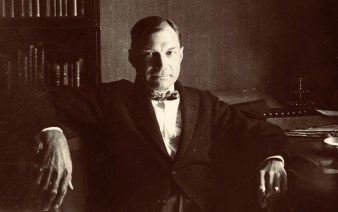
The English writer Harold Heslop had seven books published and his first was in the Soviet Union. In 1930 he was invited to the Ukraine to speak at the Revolutionary Writers Conference. While there he also travelled to Leningrad to meet Zamyatin who he wanted to help promote his latest book.

Harold was born in Durham but for many years lived in South Shields. He was a miner at Harton Colliery before winning a scholarship to Central Labour College in London.

 (Zamyatin to Heslop) “I cannot quite place you. Are you a Geordie may I ask. I catch the Tyneside dialect in your speech. Am I right ? I know Tyneside well. I liked the people very much. I also liked their strange, musical dialect.

Often, I found it most amusing. South Shields… Sooth Sheels! I never learned to sing the Tyneside speech!”

Zamyatin read lectures on Russian literature, served on boards with some of the most famous figures in Russian literature, but by 1931 he was experiencing difficulties.

Under the ever-tightening censorship and becoming unpopular with critics who branded him a traitor, he appealed directly to Joseph Stalin requesting permission to leave the Soviet Union – a voluntary exile.

“I do not wish to conceal that the basic reason for my request for permission to go abroad with my wife is my hopeless position here as a writer, the death sentence that has been pronounced upon me as a writer here at home”.

Eventually Stalin agreed to Zamyatin’s request, and he and his wife left for Paris, where there was already a small Russian community.

While there he wrote new stories, most of his earlier work was translated around Europe, but a notable piece of work was his co-writing of a film with French director Jean Renoir.

Just before his death he had told a friend…“I had to leave Soviet Russia as a dangerous counter revolutionary and abroad I hesitate to approach the Russian community, while they treat me coldly and suspiciously”.

He lived out his last years with his wife until his death from a heart attack in 1937, and a final resting place for Zamyatin can be found in a cemetery south of Paris.

End.

Research:

Zamyatin – A Soviet Heretic by D.J. Richards.

Islanders/The Fishers of Men – Salamander press Fiction.

We – Yvegney Zamyatin.

Out of the Old Earth – Harold Heslop.

 Gary Alikivi  2018.

SECRETS & LIES – script of the film based on the life of Baron Avro Manhattan

A5

Sometimes it feels like they find you. I was in the local studies department of South Shields Library flicking through files containing information about local personalities and subjects of the North East.

I was looking for South Shields born Eileen O’Shaughnessy, as I was making a documentary about her life with the author George Orwell.

The files are in alphabetical order and before the O’s I landed on the M’s. I came across a file labelled Manhattan and thought that was a strange name to be connected to Tyneside.

From all the research that followed I wrote a script for the film Secrets & Lies (below). A blog in July 2018 adds details on how I put the film together.

If you want to check out the 12 min film, go to my You Tube channel at

https://www.youtube.com/watch?v=AITGzGiC-yU


START

Secrets & Lies

Have you heard about the devil having the best tunes ? Well, he also has the best stories. This is a story about my journey, my obsession… my destiny. You could say it was written in the stars.

It was 1990 when I died at our home in South Shields, my friends had a service for me at the local church, and they buried me in a cemetery in Durham. In my will I left over half a million pounds, with bank accounts in London, Switzerland and California.

I also had a few titles to my name, including a Baron and Knights Templar. I was an accomplished writer and artist; I have authored over 30 books. My first was published in 1934. My close friends included other artists, poets and a Princess. I had property in London and Spain and a plot of land in the Bahamas.

So, I hear you ask, why end my days in a small terraced house in a seaside town? Let me explain.

My name is Avro Manhattan I was born in Italy on 6th April 1910. My parents were wealthy and we travelled around Europe. I was educated at the Sorbonne in Paris, where as a student I met the artist, Picasso.

This was a great time in my formative years, I used to get, what I called little explosions in my head, idea’s, sounds and colours just popping in, and I knew I had to do something with them.

So in the 1930’s when I went back to Italy and rented an art studio at Lake Maggiore I started to put my idea’s down on canvas. But while there the authorities told me that I had to serve in Mussolini’s fascist army, I refused, so they put me in jail.

While imprisoned in the Alps I didn’t waste my time, in my small prison cell I learned to harness my little explosions and wrote a book on astronomy, a subject I was getting really interested in.

They say prison can break some people, but not me, after the experience it made me more determined to make something of my life. I left Italy behind and went to London.

During World War II, I worked in radio and was broadcasting to occupied Europe and also wrote political commentaries for the BBC, for this service two things happened, the British awarded me a Knight of Malta, and the Nazi’s put a price on my head. A feeling that would follow me all through my life, the feeling of dodging a bullet.

While in the UK I was living between London and the North East, where I was invited to important functions, foreign embassies, and film premiers. I worked with HG Wells and helped draw up a bill of human rights. I met with Ian Paisley, the loyalist politician from Northern Ireland.

I held an art exhibition on the riverside in South Shields attended by the very flamboyant son of the Marquis of Bath. The Viscount bought two of my paintings, but he confessed his only ambition was to try Newcastle Brown Ale.

I met Dr Thomas Paine, the head of NASA. As I’ve said it was a subject I was really interested in and became a passion of mine, I was very interested in space and what else was out there in our universe.

I was a very good friend with the scientist Marie Stopes. She had just read my latest book and came to an exhibition of some of my paintings in London. We got on well and our friendship grew, there were strong rumours of a love affair.  At the time I was thirty-nine, she was 72.

But my little explosions kept me really busy and by now my main work was writing. I talk of the obscenity of some very wealthy world organisations co-existing with poverty.

My titles deal with topical issues and are controversial; they deal with current religious and political problems affecting the USA and the Western world.

I researched the subjects thoroughly and my style is not to be judge or jury; but to be the prosecuting counsel. In the ‘Vatican Moscow Washington Alliance’ I talked with the Yugoslav General, Milkovich, himself an opponent of Nazism and Communism.

During research I came across a story of a squadron of bombers planning to flatten the Vatican, this was foiled only 24 hours before the attack was to take place.

Revealing this brought me many readers across the world, but also many enemies. Ozark Books, one of my publishers, said I risked my life daily to expose some of the darkest secrets of the Papacy.

Many of my books have been translated into a number of languages from French, German and Spanish, to Hebrew, Czech and Russian.

‘The Vatican in World Politics’ ran to fifty editions. One review said that a copy of ‘The Vatican’s Holocaust’ was hurled across St Pauls Cathedral in London, the book was criticised, condemned, banned, destroyed and even burned as frequently as it has been recommended and praised in many parts of the world.

In 1983 Chick Publications in America published ‘The Vatican Billions’ where I explain how the popes stole the wealth of the world through the centuries. I expose the incredible tricks played on kings, and papal involvement with the Bolsheviks. I reveal the story of how millions are missing from the Vatican Bank, the suicide of the banker Calvi under a London Bridge, and the jailed Vatican Bankers.

As I’ve said the subject matter of my writing had brought me many readers across the world but also people who would like to see me silenced.

In 1986 I was in America to deliver a speech and promote my book ‘The Vatican’s Holocaust’ when I was caught in the cross hairs of one organisation. The Ustasha was a revolutionary movement from Croatia, they specialised in the assassination of prominent people.

After my speech I was standing at the bar when I was approached by a man, and he whispered to me in a matter-of-fact tone of voice “I came to the convention to kill you”. He departed as other people came up to me for signed copies of my book.

One of these men was my bodyguard and when I told him of the incident he froze and told me that he recognised him as one of the most ruthless Usthasa killers. Something had changed his mind; you could say I had dodged a bullet – again.

But the love of my life and best friend was Anne Cunningham – Brown. She was very loving, caring and kind. We were never apart for more than a few days, it was like we were meant to be together.

I first met Anne at a cocktail party in London in 1963; she worked in a hospital there. She was originally from Shotley Bridge, a small town in the North East but her mother was living on the coast in South Shields and Anne invited me up there.

I was greatly surprised by it – especially the beauty of the parks and the seafront. It is a real pleasure to be able to look out and see the horizon. It is where I can work in peace and quiet, or just sit in the house that my dear wife decorated, with its heavy drapes, antiques, cherub figures and a piano in the corner, all very bohemian. Some days I just take our dog for a walk, buy fish and chips, and sip Newcastle Brown Ale.

I remember during the 1970’s Anne was commuting to work at a hospital in London. I used to phone and write to her.  

‘Dearest Love, I miss you very much after you left last week the house seemed so empty. It was a strange sense of absence and void. Which proves that when I’m near you I love you very much, and that you are part of my life and work. I love to hear your voice on the telephone. Somehow it completes my day’.

registry office nov 86

We were together nearly 30 years, and our life was fantastic, we loved to holiday, especially in the United States. We spent time in Los Angeles, California and Utah with its beautiful canyons.

From time to time, we stayed in Kensington and sometimes fly over to our flat in Sitges in Spain but lived mostly in South Shields.

We used to go to the local theatre and enjoy watching the shows and regularly hosted dinner parties and barbecues. As a couple we were always together, when my dear wife died in 2008, she was buried with me.

But there was a time in my life when I took a break from writing as I felt I had put myself under so much pressure with the amount of research I was doing plus trying to meet deadlines, it all got too much and I needed to stop, or at least slow down.

Anne gave me guidance, extra confidence in my writing, but I felt the work was getting to me, the stories that I was finding out and revealing to my readers were suffocating me, at times I felt that I couldn’t breathe.

I was carrying important information around with me, and it was getting heavier. It felt like my head was going to explode.

Ann was very worried about the effect it was having on my health, I always said it was the nurse in her, wanting to take care of me. I really needed to take a vacation, and recharge my batteries, but I felt compelled to look further, to progress and soak up more of the stories then let my readers know what is going on in the world around us.

I really felt I was doing the right thing by exposing all these secrets and lies.

A38

Since coming to Britain 40 years ago, I had been working on a book about an imaginary god invented by primitive man to give himself courage and hope in his struggle for survival, The Dawn of Man is better than the garden of Eden….my hero, Azor is better than Adam.

I talk about how a new world will emerge, and the start of a brighter future for mankind. I thought it was my finest work so I got in touch with Lyle Stuart one of my publishers in the USA asking if he would like to release it.

But the irony was that as soon as it was ready, to my surprise I had a heart attack on my 75th birthday. After a short stay in hospital, I made a recovery and was straight back to work, and we released the book.

To say the least, Anne was very disappointed in me putting my work, my passion ahead of my health. It will kill you in the end she used to say.

I was still working to my last days, I was planning a new book and my research was leading to a links with The Vatican, the CIA, and murders of very prominent people in the western world.

This was a conspiracy which would shake the foundations of these organisations. There is no proof – yet. But the truth will come out in the end, believe me my friend. Someday it will be known.

So that’s it, that’s my story. I ended my days here in South Shields where I produced my best work living close to the sea and where I could see the stars more clearly.

END.

That’s it, for now.  A story of a fascinating character who ended his days in a small seaside town. The research is on-going and new information has come to light.

Part two of his story is being written revealing more about the man who called himself Baron Avro Manhattan.

Further reading about Manhattan on earlier blogs:

https://garyalikivi.com/2018/07/17/secrets-lies-documentary-based-on-the-life-of-baron-avro-manhattan/

https://garyalikivi.com/2018/08/13/secrets-lies-new-documentary-about-baron-avro-manhattan/

Gary Alikivi  2019.

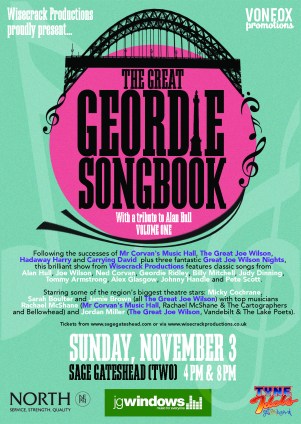
THE GREAT GEORDIE SONGBOOK – in conversation with North East playwright Ed Waugh

poster web

Ed’s company Wisecrack Productions have booked a November date at The Sage in Gateshead. The show features classic North East songs and comedy…

Not much working class history is documented so we try our best to help in a little way said Ed.

The Great Geordie Songbook is a celebration of local songwriters including Lindisfarne’s Alan Hull and Billy Mitchell, 19th century concert hall entertainers Joe Wilson and Ned Corvan…

Ned would have been great to talk to. I think I would of got on really well with him. In the 1800’s he had his music hall next to the old South Shields ferry landing on the river Tyne.

Apparently it was a den of iniquity and the magistrates were constantly trying to close him down (laughs). But yeah he was a fantastic singer-songwriter and it’s brilliant being in this game because you come across some great stories.

How did the songbook idea come about ?

I was approached by Ray Laidlaw of Lindisfarne and Brian Mawson boss of Windows music shop in Newcastle. Brian has a real passion for Geordie comedy and songs.

The Geordie heritage really comes across when you talk to him. He has recorded all the stand up comedians like the Little Waster himself, Bobby Thompson.

They had just seen my play Hadaway Harry about the rower Harry Clasper. After the show they asked if I’d heard of Ned Corvan and Joe Wilson, both singer-songwriters performing in the North East during Victorian times. Much to my shame I hadn’t and they asked would I write something about Ned.

How much research did you do for the project ?

For the Ned Covan play I done about 40 talk’s with Dave Harker, he’s a North East historian who wrote a book Catgut Jim. The play was based on that. I couldn’t have done it without him. His research was fantastic.

Ned’s songs had great lyrics like the Cullercoats Fish Lass and Mally by the Shore, these were testaments in the 19th century to working class women. He also wrote songs about workers on strike supporting seafarers.

Songs with lyrics about day to day working class life. The more research we done we found it was a good story and it’s all about the story isn’t it.

It was a huge success and got a fantastic response which led us onto a play about Joe Wilson. That toured last September and that also got a great response. Both Joe and Ned shows played at The Sage so after the success they asked us ‘what you got next ?’

The Great Geordie Songbook was put forward, along with a tribute to Alan Hull so there will be a few Lindisfarne songs.

The show features some of the region’s biggest theatre stars, Micky Cochrane, Sarah Boulter and Jamie Brown who all appeared in The Great Joe Wilson with Jordan Miller from Sunderland band The Lake Poets

Top musician Rachael McShane from English folk band Bellowhead who also appeared in Mr Corvan’s Music Hall plus musical comedy from Gavin Webster and Josh Daniels.

We work with top professionals, we have a really good team and work well together and enjoy it. To be fair we don’t have the time or the money to muck about. But yes it’s a laugh from start to finish.

Our last show was Carrying David about the boxer Glenn McCrory. I told him it was really good to work on a play about someone who isn’t dead (laughs).

Off the back of all this we worked with Newcastle Council and got some blue plaque’s put around Newcastle. They’re all about leaving a legacy for what was achieved.

There is one for Harry Clasper on the Guildhall over-looking the Tyne, one for Joe on Stowell Street where he was born and a plaque on the Central Station where 2,700 people came to see Ned at the Olympic Theatre. That was the venue where Joe saw Ned, where he was inspired to write about working class life.

When the chips were down they really nailed their colours to the mast. We want to keep their legacy going for young people and for the next generation to be inspired. I think for protest songs young songwriters will go and raid the songbooks of Alan Hull, Joe Wilson and Ned Corvan. And that’s what we want, we need to hear those great songs again.

Tickets for The Great Geordie Songbook are on sale now only £20. There are two performances on Sunday 3rd November 2019 with the first curtain up at 4pm and then 8pm.

Contact www.sagegateshead.com or

www.wisecrackproductions.co.uk

 Interview by Gary Alikivi July 2019.

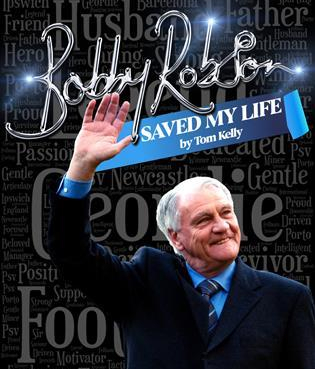
BOBBY ROBSON SAVED MY LIFE – a New Play by Tom Kelly

Theatre and football come together in a new play about the life of one of football’s most successful and well-known personalities. Sir Bobby Robson’s story has been written by North East playwright Tom Kelly (Geordie the Musical, The Dolly Mixtures, Nothing Like The Wooden Horse)….

‘The play looks at three characters and how Sir Bobby has had a real and lasting influence upon their lives’ explained Tom. ‘This is not only about football and Tyneside but hopefully underlines we each have a responsibility to care for one another.’

701a93cc-d214-436f-8f67-c3d3c2e1d686

Former Newcastle United number 9 and England international, now Match of the Day pundit, Alan Shearer has added his support. In a video message he is really looking forward to seeing the play’ and described Sir Bobby in three words ‘passionate, committed and professionalism’

A footballer who played for Sir Bobby at Ipswich Town was George Burley. The former Scotland international full back revealed in his message to describe Sir Bobby ‘Father-figure, determination and enthusiasm’.

I asked Tom what research he did for the play… ‘I read a great deal about Sir Bobby’s life and discovered he often sent messages of support to a wide variety of people which had a positive impact on their lives: It gave them hope. He had a real empathy for others. His life underlined, for me, the way we treat others is not just important but crucial.’  

Tickets are available for the play at South Shields’ favourite theatre, The Customs House. A portion of each ticket sold will go to the Sir Bobby Robson Foundation, a charity he and his wife, Lady Elsie, founded in 2008 to help find more effective ways to detect and treat cancer.

Curtain up on the first night is Tuesday 16th July at 7.30pm, running through to Saturday 20th with matinees at 2.30pm on Wednesday 17th and Saturday 20th.

Telephone 0191 454 1234 or check on-line for details https://www.customshouse.co.uk/theatre/bobby-robson-saved-my-life/

 Other shows are on July 31st at the Regent Theatre, Ipswich

https://apps.ipswich.gov.uk/en-GB/shows/bobby%20robson%20saved%20my%20life/events

And 2nd & 3rd August at the Tyne Theatre, Newcastle.

https://tynetheatreandoperahouse.uk/events/bobby-robson-saved-my-life/

 Interview by Gary Alikivi June 2019.

FOOTING IT TO EUROPE with Tyneside poet Keith Armstrong.

In the week of the 50th anniversary of Newcastle United’s victory in the Fairs Cup, a 6-2 win on aggregate against Ujpest Dozsa in the final. Tyneside poet and lifelong supporter of the Magpies, Keith Armstrong, reflects on their journeys through Europe.

Bobby Moncur, Newcastle United, with the Fairs Cup

I hate to give away my age, but my dad took me piggy-back to see Stanley Matthews play at St James’s Park in the days when peanuts were only a tanner a bag and the ground capacity was well over 60,000.

Since then, I’ve followed the lads through thick and thin, usually thin, across Europe and back home.

It might surprise you, but United in Europe isn’t new you know. They toured Italy, Czechoslovakia, Hungary, and Austria, in 1929 – just after the last time they won the League, with the legendary top-scoring Hughie Gallacher at number 9.

In Milan, full-back Tommy Lang had a nasty set of bite marks on his neck when he left the pitch and the club’s bus was hit with bottles and stones and the players had to barricade themselves in their hotel room.

Not to worry, the team was guarded by the stalwart men of Mussolini’s black shirts!

After an 8-1 defeat in Czechoslovakia, the lads were accused of not trying by the Czech officials and then it was off to Budapest for another ‘friendly’ where Gallacher was sent off after a punch-up and the locals spat and threw coins at him as he was escorted through the crowd by armed soldiers.

The Hungarians accused Gallacher and the rest of the team of being ‘drunk and disorderly’ on the field and withheld the guaranteed fee. United left the country quickly.

A Football Association enquiry exonerated the team after Gallacher had explained that he and some of his teammates had been so thirsty in the heat that they ‘rinsed their mouths out with a drop of Scotch’.

The Hungarians spotted them passing the bottle round and jumped to the surprising conclusion that the boys were on the piss! European sporting ambassadors, don’t you know!

1969-05-29

And, just so’s you really know how old I am, I have to say that I was ‘on the hoy’ as well in Hungary, with the Supporters’ Club back in 1969, belting out the ‘Blaydon Races’ on Budapest High Street when we last won a major trophy, the Inter-Cities Fairs Cup.

It never seemed to be part of a plan to win then, they just stumbled into the Final, and, with Wyn ‘The Leap’ Davies nodding the ball down to Bryan ‘Pop’ Robson, and no real midfield to speak of, we had those continentals, used to playing the ball on the ground (the mad fools!), completely baffled when faced with our Geordie ‘laeng baell’ game.

A one-off but the toon went crazy when the lads came back with that Fairs Cup.

It worries me a bit just how crazy the toon will gan should we ever bring another bit of silverware home – not that that’s likely, let’s be honest, a trophy is never on the packing list, if you’re following Newcastle United.

Soccer - Newcastle United Parade The Inter-Cities Fairs Cup

Captain Bobby Moncur with the cup in Newcastle.

Tyneside poet Keith Armstrong was born in Newcastle. He has travelled throughout Europe to read his poetry and is widely published and broadcast. He is available for events and functions.

tel: 0191 2529531.

Interview by Gary Alikivi    June 2019.

PRESSING ISSUES with Peter Dixon & Keith Armstrong

Peter Dixon & Keith Armstrong.

Northern Voices Community Projects were set up in 1986 to give people who are denied a voice, a platform to express their views and experiences of living in the North East.

Peter Dixon and Keith Armstrong are behind NVCP and we arranged to meet in a pub along the River Tyne to find out more. The Alum House sit’s next to South Shields ferry, a handy place to meet as they are both from the North side of the Tyne.

I recently talked to Keith and featured his interview on this blog, in it he talks about his writing and poetry. In this new blog Peter pick’s out some highlights and tells a few stories from his background.

I mentioned that the last time I interviewed anyone here it was Antony Bray, drummer of black metal band Venom…

I remember Tygers of Pan Tang and all that heavy metal said Peter. But I’ll tell you about the time I worked during the day’s of the last gasps of hot metal (laughs).

From 1975-80 I worked for Northern Press newspapers which included the Wallsend News, Whitley Bay Guardian, Blyth News and where I was based, The Shields Gazette art department.

We produced the graphics for adverts and things like that. This was in the day when old presses were still being used, it really was the last gasp of hot metal!

What people tend to forget is that in The Shields Gazette you had a major employer situated right in the town centre that produced the whole newspaper under one roof.

About 250 people were working there with proper jobs and getting proper money. All buying their sandwiches, birthday cards and whatever in the shop’s right there in the centre of town.

There was a little squad of us would regularly get in The Stags Head and the Dougie Vaults spending our money on a few beers. Sadly, all those workers have gone now.

Before Northern Press I done some stuff for Vince Rea at The Bede Art Gallery in Jarrow and also designed single and album record covers for the Newcastle band Punishment of Luxury.

How did you get involved with them ?

I was doing background scenery for The Mad Bongo Theatre Company and a member of the band, Brian Bond got in touch. Then I met Neville Luxury and the drummer Red Helmet.

They done a single called Puppet Life and Tony Visconti (Bowie, Bolan & Morrissey producer) reviewed it for Sounds newspaper. He described the sleeve that I done and said I was sick (laughs).

I also co-edited a monthly magazine called The Informer. That was distributed around the North East from Hexham, up to Blyth and down to Tyneside. We done around 10,000 copies a month and it ran from 2000-2010.

It was originally for The Tyne Theatre but it became too expensive to run so became a magazine in its own right. It was a What’s On and live performance mag. It was meant as a gig guide that you could roll up and put in your pocket.

I ran it with my co-editor. He collated the live dates and information where I designed and wrote the press releases and interviews. We both used to sell advertising. Again, running it became expensive, so it folded.

What is the background to the Northern Voices project ?

I worked with Keith who was a Community Arts worker in Peterlee, and we always had some kind of publishing activity going on. It was an end result to our work in design, poetry and writing.

Back in the ‘70s we were involved with Tyneside Street Press which was a bit radical. There was a whole collective of people working on it. A bit like your punk fanzines, printed on A4 but it was news stories we were doing.

Yeah, it was a time when people could make their own papers and booklets said Keith. The idea was we could control the whole process from writing, printing and publish it all ourselves.

It was a place where people could express themselves in their own words. We had connections with other city’s that were bringing out alternative newspapers.

Peter added A lot of poetry was going on then plus the art stuff. It was part of the pop culture, challenging the existing order and critical of what was happening. But there was always an interest of the indigenous population and what was going on.

Yeah, said Keith it was the spirit of the ‘60s and ‘70s, the alternative idea’s sprouting up a bit like the music that was around then. There was a distinct northern voice, we always had something to say. It’s a fundamental idea and very democratic.

Keith talked about an earlier version they produced called Strong Words he said it lasted a few years and done a number of publications…

It sold around 3,500 copies which was really good for us then, we sold it worldwide (laughs)…including South Shields. We used to go around interviewing people rather like what you are doing now for your blog.

Some people were quite chuffed you know…’Somebody’s bothered to knock on my door and asked about my life’. Otherwise, it would go unrecorded.

DSCF0918

Did you receive any funding ?

We didn’t go to funding bodies then, we were autonomous. It gave us a freedom. We put together a publication called Missile Village which was about Spadeadam, a military test base, and it’s impact on the village of Gilsland in Northumberland. The Blue Streak Missile was tested there and at Woomera in Australia during the ‘70s.

The general ethos is to give people a voice, so we talked to the local villagers about the idea that the Government had decided to have a missile on their doorsteps. A farmer told us that ‘it’s nowt but a puff of smoke’.

Peter brings the story up to date and talks about work they are doing now…

Mostly its history books funded by North Tyneside Council. Things on The Hartley Pit disaster, George Stephenson, the Wooden Dollie’s of North Shields and writer Jack Common.

To an extent it’s easier now to do the whole thing yourself rather than farming it out to someone else. Not like the old days of laying it out for typesetting.

The difference from the old days to now is that we are doing full colour. Back then a lot of it was single colour. To an extent there is a satisfaction of producing it yourself.

Keith checks his watch Well we’ve missed the ferry we’ll have to wait for the next one, might as well get another pint in. As for Northern Voices, yes, we’ll keep plugging away.

For further information contact

http://www.northernvoicescommunityprojects.co.uk/Northern_Voices_Community_Projects/Welcome.html

Interview by Gary Alikivi    May 2019.

NIGHT OF THE TUBE with former TV music producer Chris Phipps

How Frankie Goes to Hollywood were discovered by default, why Tina Turner was nearly not on, what was a life changing career appearance for her. Also, what was Ozzy doing in a coffin on City Road ?

Hear all the backstage stories from ‘80s music show The Tube at a free talk by Chris Phipps.

The Tube was broadcast from Tyne Tees Television Studio 5 in Newcastle and hosted by Jools Holland and Paula Yates. It showcased everyone from Madonna, French and Saunders to Frankie Goes to Hollywood.

I was in the audience for the early shows and watched some great bands including Thin Lizzy, Big Country, The Alarm and American rock singer Pat Benatar.

Chris will be talking about the sights and sounds from behind the scenes when he worked on the show. ‘As an ex-BBC producer, I initially only signed up for three months on this unknown programme and it became five years! I was mainly hired because of my track record for producing rock and reggae shows in the Midlands. On the night I’ll be telling of my Jamaican exploits’.

Chris will also have copies of his new book ‘Namedropper’ for sale at a special price.

Newcastle City Library (opposite Trillians Bar) 8pm Saturday 18th May 2019. Free entry.

Namedropper Cover

Interview by Gary Alikivi    April 2019.

MORE THAN WORDS with North East poet Keith Armstrong

I’m standing at the bar in The Bridge Hotel in Newcastle waiting for poet and writer Keith Armstrong. If you imagine someone looking like the actor Bill Nighy, you’re not far wrong.

He breezes in and before you know it we are sitting in a quiet corner and after his first sip of cider he tells me a story…

I took the train down to London with a mate of mine, it was 1977. We had third row tickets for the Rainbow Theatre to see Bob Marley and the Wailers.

We were frisked as we went in, everyone was, but through a heavy fog of ganja smoke we saw a fantastic show. He had such a presence on stage. It was pretty much the best concert I’ve been to in my life.

First time I travelled abroad was in 1966. I went with a friend, we took a Melody Maker trip to the Berlin Jazz Festival. Flew over there then got a coach past Checkpoint Charlie to the venue. It was afternoon gigs, avant garde stuff and the big jazz guys of the day like Miles Davis, Stan Getz and Sonny Rollins were on the bill.

We got back to London and walking down Carnaby Street we bumped into two of the Beach Boys who we went to see in concert that night at Hammersmith Odeon.

313343_10150279462417234_211706092_n

What is your background ?

I was born and bred in Newcastle and my father worked in the shipyards. Absolutely steeped in the tradition. School days were spent at Heaton Grammar and it taught me to be a rebel because I couldn’t stand the confinement of the place. Just being edgy, wanting things to change – haven’t lost it.

First job I ever had was at Newcastle University Library I got paid six pounds 14 shillings and threepence a week. I was always bookish at school, so libraries were good to get into. Plus, I was the only boy amongst 15 women librarians – I learnt a lot.

Gateshead College was another library I worked at in the early ‘70s. Within that I was developing an interest in the arts and arranged events with poets and theatre.

From 1980-86 I was a Community Arts worker in Peterlee, County Durham then went freelance as a writer. I was glad to escape the 9 to 5 into an alternative prison of freelance (laughs).

I was interested in people like Dylan Thomas, the rhythm of his poetry. Actors like Richard Harris, hell raisers like Oliver Reed – all good role models! Yeah, in my early days I loved the old bohemian lifestyle of reading poetry and getting tanked up (laughs).

Listening to The Beatles, Bob Dylan, they were all there and I wrote poetry but always felt that I wanted to make them song-like. That’s why I ended up working with Gary Miller and The Whisky Priests. (Featured on the blog March 23rd 2019).

20108676_10212751378275783_1952693382877553180_n

Keith with North East musician Gary Miller.

How did that come about ?

I was writing lyrics and I see very little difference in poetry to song lyrics. Around the early ‘90s I cottoned on to The Whisky Priests. I was looking for a band that had an edge, a bit of anger, you know a bit of an attitude. Also one steeped in the working class tradition of the North East.

So, I asked this guy Ross Forbes who was press officer at the NUM and he mentioned The Whisky Priests. I found they were playing at The Rose Tree in Durham. I went along and I knew this was what I was after, even I got up dancing (laughs).

It was really important for me and my poetry as it’s a different audience for what I write. And they weren’t playing in just the backroom of a Folk Club. They were taking it forward, for a younger audience. We also travelled a bit to Germany, Holland and Ireland.

I always admired the fact Gary could write songs and was quite prolific about it as seen on The Whisky Priests anthology box set. But yeah, I wrote some lyrics, they recorded Bleeding Sketches and it came out in 1995.

What does writing mean to you ?

When I do write it’s to express my emotions and follow my heart. That’s why I like Gary Miller because he is like that. We worked on a project together called The Mad Martins. They were three brothers one of which has his paintings in the Laing Art Gallery in Newcastle.

I researched the story and asked Gary to write some stuff for it, that’s how it kicked off. It’s a special story that we put out on a triple CD. But writing, I couldn’t live without it.

Henshaw cd front jpeg

What you working on now ?

Well, I’m just forcing myself to write at the minute. Emotionally I’m a bit sapped with things going on around me you know, personal stuff.

There are plans to go out to Tuebingen near Stuttgart with Northumbrian piper Chris Ormston as part of a Cultural Exchange arranged with County Durham. That’ll be in July.

Originally, they sent me over there in ‘87 as Poet in Residence and I’ve been going back there ever since. Then in October it’s same again for Limerick over in Ireland, fell in love with the place and they keep inviting me back.

But I could still be reading my poetry to 10 people in the back room of a pub in Penrith. Why do it? I don’t know. But I’m keeping my options open (laughs).

Interview by Gary Alikivi    April 2019.

LOST IN THE SUPERMARKET – What price music ? ask North East musicians Carol Nichol, Paul Binyon & John Clavering.

What price music ? Is it just another product on the shelf ? Is the value of music being overlooked, and do we need to handle it with more care ?

Three North East musicians, Carol Nichol (Lowfeye/The Relitics), Paul Binyon (Mandora) and John Clavering (Cortney Dixon band) are passionate about music and reflect on what it means to them today.

Carol Nichol: Being creative, writing and recording your own material is worth nothing now in society. It’s a struggle for any working class artist or band to survive. Apart from middle class students from the Brit Acadamy and their connections in the music industry, does anyone have a voice now ?

Paul Binyon: Tyneside has always been a hot bed for musical creativity and over the years has produced some outstanding musicians/bands. I do however feel more concerned for originality these days. Original music has always been of the utmost importance to me.

Although I’ve been involved with cover bands too it’s always the shear buzz of creativity that excites me most. To see an audience enjoy and respond to songs that you’ve written is the ultimate reward and of course I thoroughly enjoy being in the audience appreciating other bands original music.

John Clavering: Up here in the North East you’ve got The Cluny, The Star and Shadow who promote original stuff. But there is hundreds of pubs who would only pay for a cover band. I’ve been offered gigs on keyboards with cover bands but I’m just not interested.

Bands playing Queen covers at a wedding – it’s an industry itself. That is ok there is a need for that but I don’t think it encourages creativity and new music. Pubs don’t want to take the risk of a band playing it’s own stuff.

Carol Nichol: When you hear of the venues closing which had character especially the decor of old ballrooms, it’s heart breaking.

The independent music scene is extremely important for the survival of original bands to exist and be discovered. For decade’s this has always been a great platform for a lot of bands. There is nothing more exciting than a small intimate venue when a band are level with a crowd.

Paul Binyon: My concern is the lack of independent venues. They seem few and far between these days. Even the few that we have tend to lean more toward the covers and tribute scene than original. I understand that there’s a risk involved with booking original bands for fear that there’ll be a small turn out and the venue won’t make any profit or lose money. But this is catch 22 because more venues need to support original bands so that they can build a following and fill rooms.

Carol Nichol: I think the future of independent venues looks very bleak especially with a younger generation who are more obsessed with social media and computer games. Kids don’t venture out as much and are too obsessed with reality music programmes on tv or should I say karaoke shows. People are more into mainstream and cover bands so aren’t willing to discover something new.

Paul Binyon: With it getting harder to secure gigs and with the amount of pub closures I’m afraid one day, originality on the local scene will become a thing of the past.

Without working together to try and fix the current situation, I gotta say it looks bleak. But I live in hope that sooner rather than later it goes back to somewhere close to what it was like in the mid 80’s where the choice was a difficult one to make as to which venue you went to, and to see which band because there was so many.

John Clavering: There are original bands out there who use the internet as their only outlet. A lot of niche stuff getting heard on Soundcloud and Spotify. But there is nothing like standing in the front row of a gig. You will never get that feeling from watching You Tube on your phone (laughs).

Got a music story to tell ? Get in touch and leave a message.

Interviews by Gary Alikivi January 2019.