WESTOE ROSE – The story of Amy Flagg, South Shields Historian & Photographer 1893-1965

STH0001974

Research and script I wrote for the 2016 documentary ‘Westoe Rose’.

Amy Flagg is fondly remembered as the lady in a hat and trench coat, who quietly went about photographing buildings and recording the history of a town she loved. But who was Amy ?

This is a story of courage and determination of a very unique woman who captured some of the most devastating images of South Shields in the 20th century.

At the end of the nineteenth century the North East was the industrial heartland of the UK. Collieries, Shipyards and Steelworks covered the landscape. Small villages dotted around the area offered their residents some clear breathing space away from the hazy smog of the town.

Westoe Village in South Shields was home to many notable people of the town. The shipbuilding family the Readheads, Robert Ingham MP, and in Chapel House was the Flagg family. In this grand 20 roomed house was Ambrose, his wife Annie and their only child Amy who was born on 30th of September 1893.

Amy’s father originally came from South London, and was educated at Cambridge University. In 1889 he married Annie Broughton of Westoe and was appointed Headmaster of the Marine School in the town.

He was also member of the Ancient Vestry of St Hilda’s where he rubbed shoulders with influential people. He arranged for Amy’s private education.

The young Amy had a brief romance with a neighbour in the Village but sadly like many men from the town he went to fight in the First World War and never returned, throughout the rest of her life she never married.

There is no record of her being employed so what did she do with her education ? This was a time when women had just fought for the vote, was she involved in the Suffragette movement ? Reports describe Amy as a shy, quiet and gentle woman willing to help others.

There is accounts of her spending hours in the garden of Chapel House and having an active role volunteering in the local hospital and library. Whether helping someone find information about the town or reading to a patient in hospital, was Amy now becoming aware of her surroundings and her purpose in life ?

By 1930 she was a member of the local photographic society. At a time when only a few female photographers worked in the UK, a woman behind the camera was very unique.

This is the time when Amy blossomed and began to see the world around her in a different light. She was fascinated by the changing landscape of the town and photographed the housing clearances along the riverside.

But the camera techniques that she had been using were brought into sharp focus in a period that would be Amy’s defining moment in her creative life. She captured the town’s suffering through one of it’s most traumatic episodes: the Second World War.

When the bombs dropped, she captured the scars with her camera.

Amy’s father had died in 1936 and her mother died during the war, plus the town she loved was falling apart from the German air raids. Her life was crumbling around her. These were her darkest days.  

But Amy was determined that these events would not destroy her, having a purpose and remaining active helped strengthen her. She gained recognition for her work and became the town’s official photographer during the war.

After receiving permission from the Ministry of Information and the Chief Press Censor, Amy produced a series of booklets of the Air Raid Damage.

An intelligent, determined and very courageous woman, at nearly 50 years old, she was climbing into demolished houses and onto bomb sites to capture the photographs.

To accompany the photographs, she documented as much information as possible about the areas and streets which were hit by bombs. She also recorded in great detail the time of the air raids and if there were any casualties or deaths.

‘On January 11th 1940 shortly after 10.00 hours South Shields felt the first impact of warfare by the Luftwaffe. The Air Ministry announced: Enemy air craft crossed the coast near Newcastle today. No bombs were dropped. Fighter patrols were sent up and Anti-aircraft guns opened fire’.

The pictures are haunting and as time passes they take on a new meaning for a wider audience. It is as if she was aware of the effect and importance they would have in years to come.

In her dark room she printed every photograph herself of the devastation caused by air raids on the town. With the traumatic events revolving around her, Amy would go to the darkroom where she could feel warmth and security in her own home as images she had taken that day were revealed by the mix of the chemicals.

She would watch the magic happen in front of her eyes.

Even the Flagg family home didn’t escape from the German bombs.

‘At zero 45 hours on the 16th April four bombs fell in the grounds of residential property in Westoe. The first on the edge of a field at Seacroft failed to explode and was dealt with by the bomb disposal unit at a later date. The second and third fell in the gardens of Fairfield and Eastgarth respectively.

The last one on the lawn ten yards from Chapel House. No casualties were reported but considerable damage was done to a large number of houses in the neighbourhood, including over forty roofs of houses in Horsley Hill road which were penetrated by lumps of clay thrown up by the explosions’.

These incredible photographs are considered to be her most valued and precious legacy. In her very extensive diary notes of October 2nd 1941

‘At daylight on Friday morning the Market Place looked like the ruins of Ypres; nothing could be seen but broken buildings; the square was littered with debris and a tangle of fire hose; all the remaining windows in St Hilda’s Church were shattered, the roof dislodged and the old stone walls pitted and scarred with shrapnel.

The Old Town Hall suffered heavy interior harm and none of the business premises were left intact. All the overhead wires were down and it was not until the afternoon of October 9th that buses were able to pass along King Street’.

Experiencing the two world wars, a changing landscape to her town, and both parents recently deceased, creatively and emotionally events of this magnitude would have tested the resilience of most people.

But she picked herself up and threw herself into a frenzied period of her life.

Recording information from parish records, researching family tree’s from notable people in the town, collecting various reports and photographs from the local paper that she would then cut out and paste in scrap books.

She was continually surprising librarians by asking to see little known documents, and then by hand she would record facts then type them up at home.

Amy was tireless in her thirst for knowledge about the town she loved, and with a lot of buildings disappearing during the war she thought it important to record as much information as she could.

Sadly this lead her to the last piece of work which was published by South Tyneside Library Service in 1979. It took Amy eight painstaking years of research to produce the book ‘Notes on the History of Shipbuilding in South Shields 1746-1946’.

‘Shadwell Street and Pilot Street. It is very fitting that these two streets should be the first section in these notes; the eastern extremity of the old township of South Shields was the birthplace and for long the nursery of shipbuilding in our town.

John Readheads story is that of an extremely successful industrialist in South Shields, from being a practical blacksmith, he built up one of the most prosperous shipbuilding firms on Tyneside. He made his way from wood and iron tugboats to large steamers for every part of the world.

John Readhead died on the 9th March 1894 at his home Southgarth, in Westoe Village; he had been in failing health for some time but had visited the West Docks almost daily until the last few weeks’.

Amy also noted the huge effort by Readheads during the First World War. Amongst the constant procession of merchant vessels which needed repairing after being torpedoed or mined, they supplied 20 cargo vessels, 3 armoured patrol boats and one vessel which was converted into an oil tanker for the Admiralty.

Amy noted in the book that nothing better illustrates the importance of Readheads than the genuine rejoicing when local newspaper the Shields Gazette announces in large headlines ‘ANOTHER ORDER FOR READHEADS’.

In her later years it was reported that Amy put as much work into her garden as she did of her house. She spent countless hours planting unusual flowers and plants.

Family, friends and neighbours were constant visitors to it, and she delighted in showing them the statues and conservatories. Even turning the crater caused by a world war two bomb into an ornamental garden.

Amy lived in Chapel House until 1962 when she gave the house and grounds to South Shields Corporation to enable the expansion of the Marine College. This was a heart breaking decision as she lived there most of her life.

‘I have not the slightest idea about the value of the house, but I shall not leave yet. I intend to spend one more summer here’.

But it was something that would of pleased her father as he devoted his life to education in the town. The Marine and Technical College being the successor to the Marine School where he worked for most of his life.

Amy stayed in the village for another three years until her death from stomach cancer on the 22nd February 1965. Her body was cremated and the ashes buried in the family grave in Harton Cemetery.

Amy requested a quiet affair but her popularity meant her funeral was attended by over 200 people including the Mayor of South Shields, her close friend and Librarian Miss Rosemary Farrell and a contingent of medical staff and nurses from the Ingham Infirmary.

In a last generous gesture Amy left a substantial amount of money in her will to Ingham hospital. A small remembrance in the town is Flagg Court, and the local photographic society where she was a member hold a yearly competition where the winner receives the Flagg Cup.

Amy’s extensive papers, research and photographs were all placed with the local library and are still held there to this day. Amy Flagg will be remembered as one of the town’s most important photographers and local historians.

To watch the 12min film check the You Tube channel at https://www.youtube.com/watch?v=gB1a3Y-yFhM

 Gary Alikivi  2019.

HOME NEWCASTLE – snapshot from the life of musician, manager and record producer Chas Chandler 1938-96.

For many Tynesiders 1st February 1967 was a defining moment in music history. A packed New Cellar Club in South Shields saw the Jimi Hendrix Experience live on stage, a unique musician from New York who had been brought over to the UK by Chas.

An audience member told me ‘After watching Cream with Eric Clapton play the opening night at the Cellar people picked up the guitar, but after Hendrix played, loads of bands formed on Tyneside’.

Brian James Chandler was brought up in Heaton, Newcastle, and after leaving school he worked in the shipyards. His early years as a musician were spent playing bass in local bands like The Kon-Tors.

Another band on the scene were Kansas City Five, one of their member’s was Alan Price.

The Club a Go-Go in Newcastle was the venue, for bands like The Yardbirds, Rolling Stones and John Lee Hooker. Also getting regular gigs were the Alan Price Rhythm & Blues Combo formed by Chandler and Price.

They were joined by Eric Burdon on vocals. Three down two to go.

With regular gigs at The Old Vic in Whitley Bay and Club a Go-Go, Chas asked drummer John Steel to join… ‘You’ll make £14 per week’.

Next up was North Shields guitarist Hilton Valentine and finally by September ’63 the Animals line-up was complete – Burdon, Price, Chandler, Steel and Valentine.

In 1964 the band opened a UK tour for Chuck Berry and Carl Perkins. By the summer of ’66 The Animals were hugely popular after many TV appearances and hit’s including House of the Rising Sun and We Gotta Get Out of This Place.

‘We toured non-stop for three years but hardly got a penny’. But on their last American tour things were about to change.

Chas walked into a Greenwich Village club in New York to watch a young guitarist. It took one look for him to decide he wanted Jimi Hendrix to come to the UK.

After helping him arrange a passport Chas phoned the airline ‘I’d like two first class tickets to London. One way’.

The UK capital in 1966 was aptly called ‘Swinging London’ and Chas thought it was the perfect launch pad for Hendrix’ new career.

At his expense, Chas rushed the Jimi Hendrix Experience into a studio to record Hey Joe which opened the doors for them. Purple Haze followed and the rest is history.

Through the ’70s Chas bought Portland Studio in London and ran a number of record labels including Barn Records, Six of the Best and Cheapskate Records.

He was also very successful as manager and producer of ’70s chart regulars Slade who had a run of hit singles, before he briefly played in a reformed Animals.

By the 1980’s Chas was manager and producer of 21 Strangers, a North East band that had two UK singles on the Charisma label.

By the ’90s large entertainment centres were springing up around the UK where live music and sporting events were held in the same venue.

Chas and his business partner Nigel Stanger were the brains behind a new venture. They secured financial support and on the 18th November 1995 the 10,000 seater Newcastle Arena opened for business.

Sadly, on 17th July 1996 Chas died in Newcastle General Hospital. But he left behind a rich musical history including The Animals, Jimi Hendrix, Slade and Newcastle Arena.

Gary Alikivi    June 2019.

THE LAMPLIGHTER’S SON – Richard Ewart M.P. 1904-53. The long hard road from North East coal mines to the House of Commons.

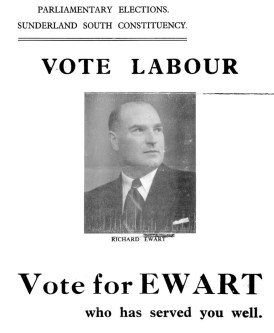
VOTE EWART copy

It’s a rare post when any politics touch this blog but this is about a relation of mine, so I’ll make an exception.

Watching news programs in 1984 about the miner’s strike brought politics to my attention. The Battle of Orgreave ? I knew whose side I was on. But this is a story about a young politician that asks, would he have got anywhere near the House of Commons today ?

My Great Uncle Richard Ewart was born on 15 September 1904 in Livingstone Street, South Shields, County Durham. He was the only son in a family of seven daughters.

His mother’s family were from County Derry, Ireland and his father’s family were from Longtown on the Scottish border.

His father worked as a fishmonger’s assistant, hawker, knocker-upper and lamplighter. The family also lived in the Holborn and Laygate area’s of the town.

Richard was educated at St Bede’s Roman Catholic School in South Shields. He left school at 14 and worked as a hewer in Whitburn Colliery. But at the age of 21 he suffered a back injury and left the mine.

During his employment at the Colliery, he was a member of the Durham Miner’s Association and when he left the pit, he immediately joined the National Union of General and Municipal Workers (NUGMW).

Unemployment was very high in South Shields in the 1920’s, and the only work he could find was a marker in a local billiards hall in Cuthbert Street, Laygate. He eventually became manager of the hall.

Richard joined the Labour Party in 1925 and on 1 November 1932 was elected to the South Shields Town Council for the Holborn Ward to become its youngest member at that time.

From 1936-39 he was Chairman of the Housing Committee and Vice Chairman of its Public Assistance Committee. In December ’36 he became full-time branch secretary of the NUGMW and in August ’38 was appointed Union Organiser.

Apart from his Trade Union and Council work Richard was a keen billiards player and a member of Robert Monteigle’s Studio Players who performed at the Alexandra Theatre in South Shields.

When the Second World War started he served on the South Shields Council until 1943 then transferred to the Cleveland District to help Union Officials cope with the wartime expansion of trade union work on Teesside.

In 1945 he successfully stood as Parliamentary Labour Candidate for the double member constituency of Sunderland as a sponsored candidate of the NUGMW. Along with his Labour partner F.T. Willey they defeated the two sitting members, a National Liberal and a Conservative.

Richard lived in Kensington, London and his first parliamentary duty after his election to the House of Commons was to join the British Parliamentary delegation to Germany in 1946. For most of his Parliamentary career he confined himself to regional and industrial affairs.

He also pressed in Parliament for the North East to be given it’s own radio service and urged the extension and completion of television services to the Pontop Pike transmitter.

On 8 June 1951 Richard was appointed parliamentary private secretary to Sir Hartley Shawcross, President of the Board of Trade.

Sadly at a young age, just 48, Richard died on 7 March 1953 in St Andrew’s Hospital, London. His death was announced on BBC radio.

In memory of his life there was a Dick Ewart reading room in Sunderland Labour Party Headquarters, also a street in his birth town of South Shields, Ewart Crescent.

Information taken from Hansard, Electoral Rolls, Sunderland Echo, The Shields Gazette and personal papers.

Gary Alikivi   July 2019.

THE GREAT GEORDIE SONGBOOK – in conversation with North East playwright Ed Waugh

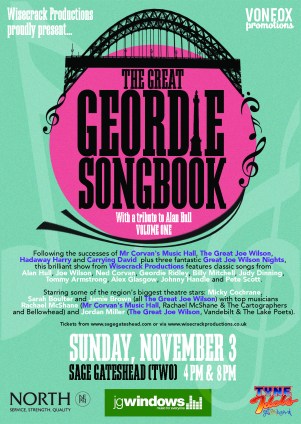
poster web

Ed’s company Wisecrack Productions have booked a November date at The Sage in Gateshead. The show features classic North East songs and comedy…

Not much working class history is documented so we try our best to help in a little way said Ed.

The Great Geordie Songbook is a celebration of local songwriters including Lindisfarne’s Alan Hull and Billy Mitchell, 19th century concert hall entertainers Joe Wilson and Ned Corvan…

Ned would have been great to talk to. I think I would of got on really well with him. In the 1800’s he had his music hall next to the old South Shields ferry landing on the river Tyne.

Apparently it was a den of iniquity and the magistrates were constantly trying to close him down (laughs). But yeah he was a fantastic singer-songwriter and it’s brilliant being in this game because you come across some great stories.

How did the songbook idea come about ?

I was approached by Ray Laidlaw of Lindisfarne and Brian Mawson boss of Windows music shop in Newcastle. Brian has a real passion for Geordie comedy and songs.

The Geordie heritage really comes across when you talk to him. He has recorded all the stand up comedians like the Little Waster himself, Bobby Thompson.

They had just seen my play Hadaway Harry about the rower Harry Clasper. After the show they asked if I’d heard of Ned Corvan and Joe Wilson, both singer-songwriters performing in the North East during Victorian times. Much to my shame I hadn’t and they asked would I write something about Ned.

How much research did you do for the project ?

For the Ned Covan play I done about 40 talk’s with Dave Harker, he’s a North East historian who wrote a book Catgut Jim. The play was based on that. I couldn’t have done it without him. His research was fantastic.

Ned’s songs had great lyrics like the Cullercoats Fish Lass and Mally by the Shore, these were testaments in the 19th century to working class women. He also wrote songs about workers on strike supporting seafarers.

Songs with lyrics about day to day working class life. The more research we done we found it was a good story and it’s all about the story isn’t it.

It was a huge success and got a fantastic response which led us onto a play about Joe Wilson. That toured last September and that also got a great response. Both Joe and Ned shows played at The Sage so after the success they asked us ‘what you got next ?’

The Great Geordie Songbook was put forward, along with a tribute to Alan Hull so there will be a few Lindisfarne songs.

The show features some of the region’s biggest theatre stars, Micky Cochrane, Sarah Boulter and Jamie Brown who all appeared in The Great Joe Wilson with Jordan Miller from Sunderland band The Lake Poets

Top musician Rachael McShane from English folk band Bellowhead who also appeared in Mr Corvan’s Music Hall plus musical comedy from Gavin Webster and Josh Daniels.

We work with top professionals, we have a really good team and work well together and enjoy it. To be fair we don’t have the time or the money to muck about. But yes it’s a laugh from start to finish.

Our last show was Carrying David about the boxer Glenn McCrory. I told him it was really good to work on a play about someone who isn’t dead (laughs).

Off the back of all this we worked with Newcastle Council and got some blue plaque’s put around Newcastle. They’re all about leaving a legacy for what was achieved.

There is one for Harry Clasper on the Guildhall over-looking the Tyne, one for Joe on Stowell Street where he was born and a plaque on the Central Station where 2,700 people came to see Ned at the Olympic Theatre. That was the venue where Joe saw Ned, where he was inspired to write about working class life.

When the chips were down they really nailed their colours to the mast. We want to keep their legacy going for young people and for the next generation to be inspired. I think for protest songs young songwriters will go and raid the songbooks of Alan Hull, Joe Wilson and Ned Corvan. And that’s what we want, we need to hear those great songs again.

Tickets for The Great Geordie Songbook are on sale now only £20. There are two performances on Sunday 3rd November 2019 with the first curtain up at 4pm and then 8pm.

Contact www.sagegateshead.com or

www.wisecrackproductions.co.uk

 Interview by Gary Alikivi July 2019.

THE FLAME BURNS ON for Davy Little ex- guitarist with NWOBHM band Axis

Davy was guitarist with Axis, who along with Fist, White Spirit, Mythra, Raven and Tygers of Pan Tang were at the forefront of the North East New Wave of British Heavy Metal.

Axis released their first single in 1980 on Neat Records and appeared on various Heavy Metal compilations. He also played with The Pauline Gillan Band, Kashka and now his latest project Lies of Smiles….

I bumped into former Axis guitarist Mick Tucker at Crash Crallans funeral in 2008. Mick worked with Crash when he was drummer for White Spirit plus working together on Tank’s Honour and Blood album (released 1984).

It was a terribly sad occasion, but we chatted about old times and new. In fact it was Mick who kick-started the Lies of Smiles project, he suggested bringing in his nephew Pat O’Neill (Black Rose guitarist) and Tony Thurlow (vocals, Berlyn, Panama). He said he would contribute to the album as well.

The opportunity to work with him and the other guys was certainly an incentive. So, I got in Chris Wing on bass and keyboards and Keith Naylor on drums from my Pauline Gillan days and we started writing.

Pat O’Neill already had the basis of four tracks. We then completed the other songs, which became Cross and Claw released 2010. Absolutely brilliant that I got to play with these great players. Mick guests on a track called Fallen, a beautifully crafted solo.

Pat is an outstanding guitarist as is his Uncle Mick, but Mick trained us both, while I am not in any way in that category of guitar player, I was trained well, and I know how to get the job done.  

The album was produced by Fred Purser at Trinity Heights studio. Fred used to be guitarist with Tygers of Pan Tang so we knew each other from back in the ’80s. He is a great producer, great musician, a joy to work with.

Do you look back on your time in Axis ?

Well back in 2011 Jaap Wagemaker and the MD Steffen Boehm from High Roller Records got in touch with Mick Tucker about an Axis album. I believe their thing is releasing stuff from the NWOBHM era.

They already acquired the rights to the single Lady/Messiah and asked if we had any old recordings. I gave them three live and three studio recordings.

What a job they did of the vinyl and cd Flame Burns On, with an eight page booklet and the original Axis poster for Lady.  They were a great company to deal with, no arsing around, just did the job in spectacular fashion.

What is the story behind Axis getting involved with Neat records ?

After a year of gigging, we had some interest from Neat Records. They had seen us twice in Sunderland, and then Newcastle Mayfair. I say interest but I always got the impression they weren’t interested at all.

I can’t say it was great working with them. Everything was an information fog, if you didn’t see it, it wasn’t true. So my first impressions of record companies wasn’t a good one.

They didn’t think we were heavy enough for the Neat label so put us on a subsidiary label Metal Minded – go figure. Anyway, I didn’t really care, it was a way to get something out.

The single Lady did really well. Although it seems to be the B side Messiah that gets the more favourable press.

We did go back in the studio later with a couple of changes to the line-up. This time Sam Blue was vocalist (Emerson, Samson, Ya Ya) and on bass was Phil Brady (White Spirit). We recorded Flame Burns on, You Got It and One Step Ahead, they have appeared on various compilations.

I’ve only two good memories of Neat. Meeting Chronos from Venom, before he was Chronos of Venom. He worked there and was friendly, articulate, mad on drawing, and he did tell me his band were going to be the heaviest ever!

I also met Fist guitarist Keith Satchfield and had seen him play with Warbeck, Axe and then Fist. Great player and writer.

When I was in the studio and keeping to the Neat sound of tinny reverby guitar, he told us how to set our amps up, so we didn’t get the tinny reverby guitar! Rather kind I thought.

When did you first get interested in music ?

I was 15 when I started listening to the first Sabbath and Uriah Heep albums. When I was 16, I started work at the shipyard so had some money. We would go to Redcar Jazz Club and see Mott the Hoople, Atomic Rooster, Hawkwind and Curved Air.

I also met a great blues player in the shipyard, Kenny Relton. He had a band that did clubs, the White Folks Show band, he used to let me go to gigs with them.

They covered some great tracks, Mountain, Cream, Fleetwood Mac. I think that is really the point I thought this was a good idea.

Ken would give me pointers and let me play his Gibson SGs, and L6S guitars. Ken is a great player still, I think he despairs that I play heavy metal (laughs). So, I had a basic lesson in all the good things, work ethic, presentation, he was a ‘get it right’ sort of lad.

I also caught UFO and Priest early on at Sunderland Locarno. I actually saw the classic Schenker/Chapman line up. Plus of course one of my great loves Blue Oyster Cult. They influence me lyrically.

I don’t think many British bands have the humour, the satire, razor sharp observations, the out there poetry. So my paltry attempts at conjuring images of Sci-Fi wastelands and Starscapes usually falls a bit short of the mark (laughs).

Can you remember your first band ?

I had seen Axis live with their original line up. They were great musicians. I always thought Axis were principally a good blues band, lots of Hendrix, Robin Trower, Wishbone Ash.

In 1979 I was looking for a band to join, I was 23 so late as a guitar player. I went to audition as second guitarist and I remember having to learn a couple of Scorpions, Deep Purple and UFO tracks.

However, it must be pointed out that I did arrive with a fair amount of cash from my welding job. There were probably better guitar players than me that applied, but I was older and had a decent job.

I suspect I bought my way in. You know, give me the job please and I will buy this massive PA (laughs).

The chemistry was good, and I got the job and Axis were the first band I was in. Mick Tucker was and is a ferocious guitar player. I knew I could work and learn from him, try to create something different. We had a darker design for Axis.

Who else was in the band ?

I was surrounded by great musicians. Mick already had the line-up he wanted. Marty Day (drums) Paul McGuire (keyboards) John Cunningham (bass) Neil Grafton (vocals). They were all very patient with me as I had a pretty steep learning curve.

Initially we did lots of covers, Blue Oyster Cult, Scorpions, UFO, Montrose, but our main aim was to have our own stuff as the main part of the set, it just took time.

Can you remember your first gigs ?

First gigs were Thornaby Cons club. Lots of the NWOBHM bands played there like White Spirit, Limelight, Son of a Bitch who went on to become Saxon, Tygers of Pan Tang and Vardis.

The circuit was pretty good, the Warrington Lion, Sunderland Locarno where I sat on every toilet seat in the dressing room so I could have my arse where Michael Schenker once sat (laughs).

Me and our manager John Lancaster were big pals with White Spirit’s manager Mike Sanderson, so we supported them a few times. Gigging was always fun with Axis. I was in a band that is all that mattered. We travelled the length and breadth of the country.

Any road stories from that time ?

A memorable one was when supporting former Thin Lizzy guitarist Eric Bell at a local gig. We’re in at midday to set up a huge wall of Marshalls, drum riser, lights, smoke bombs the whole nonsense. Hey we were local heroes (laughs).

Then Mr Bell and band arrived. You can imagine the headliner walking in and seeing this mountain of shit on the stage. But what a gentleman, we were young and full of it.

He was very gently spoken and just said ‘This isn’t really the way it works lads’. Then much to our relief he said ‘but it’s fine, we don’t need much room, not bothered about a sound check’.

I remember it was packed to the rafters for Eric Bell, not for us, but we did ok. His drummer set up after us. Bass player rolled his amp on, Eric Bell rolled either a Vox AC30 or a Fender Twin on to the stage and blitzed the place.

No arsing about, no demands, just played like true pros. What a lesson, what a professional.

Of course, we thought he was brilliant, his band were brilliant, his last words… ‘Pleased you enjoyed it, now you know there is no need for all that shit on stage, and don’t ever fucking set up before the main band gets there’ (laughs). 

A year later went to see him at the Redcar Bowl and he introduced us to his new band with ‘These are the cheeky bastards who set up before we even got to the gig’ (laughs).

Another time our bus had broken down, so we had to hire a Luton van to get us to a gig in Wales. We were on the road to Tonypandy when the Luton stopped, back doors opened, and we get out looking at a battered bridge over a gorge in Wales.

If you were a sparrow, you wouldn’t have landed on it! Apparently there had been a lot of storms that caused structural damage so there was a sign that read something like ‘Safe load..?’

Well, this Luton with all the kit and us in it must’ve been well over the limit. To turn back would take hours, so our manager John Lancaster and soundman Paul Cleugh said… ‘Just jump in the back lads, we’ll turn round and find another way’. So, we did, like fools.

Back door shuts, van revs like it’s in a drag race, sets off with wheels screeching and us holding on to anything. We go 200 yards then stop and the back doors open. We have just gone over the bridge of death.

Mr Lancaster and Mr Cleugh crying laughing to shouts of ‘Are you fucking mental’. I asked why they didn’t just let us walk across the death bridge. The answer was… “That would have been no fun at all”.

What happened to Axis ?

The story ends with guitarist Janik Gers leaving White Spirit to join Gillan and Mick Tucker leaving Axis to join White Spirit. We found it hard to replace a guitar player like Mr Tucker, plus we had too many line-up changes in a short time.

Axis called it a day. Mr Tucker later joined Tank and is still touring and putting great albums out now, they have a really healthy following.
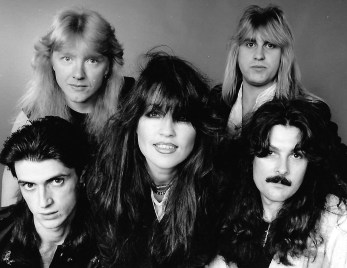
Pauline Gillan Band

Where did you go then ?

I joined the Pauline Gillan Band who were initially signed to Mausoleum Records, but then Powerstation got us out of that deal, so we signed to them. They were good people I liked them. They had Chrome Molly on their roster and later Little Angels.

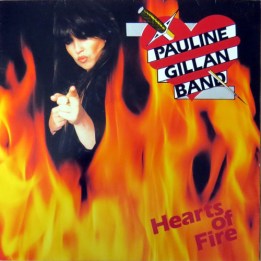
A couple of singles came from the album Hearts of Fire and we took it out on the road touring extensively around the UK and Europe.

I brought John Lancaster the former Axis manager in as road manager. He was and is a great fixer. We also had decent management, a guy called Jim Sculley, also Black Rose’s manager. He worked his ass off for us and spent a lot of money.

We did a Tyne Tees TV live music show called TX45 and that was good fun.

R-7630918-1454763533-1596.jpeg

What studio did the band use to record the album ?

We went into Fairview studio in Willerby near Hull. It was like Club Paradise compared to Neat. In reality we did what we could, but we weren’t great writers.

Powerstation did bring in some outside writers and we recorded some of that stuff. Not sure what happened with it, may have appeared on a compilation.

Have you any road stories from your time in the Pauline Gillan band ?

I remember playing in Watford and we had a very famous guest backstage, the drummer from The Sweet, Mick Tucker – not to be confused with Mick Tucker from Axis/White Spirit/Tank.

He was very straight with us.. ‘I’m looking for bands to produce, I want to take you into the studio and record that song you do, it has hit written all over it’.

The song in question unfortunately was Eric Martins Just Another Pretty Boy and it had been a hit for Mr Martin in the USA. We covered it in the set, and he could obviously spot a tune, but unfortunately, we couldn’t write one. He didn’t finish his beer (laughs).

Whilst on tour we had a particular Spinal Tap incident in Scotland. We stayed in a great hotel for a few days in a place called the Bridge of Allan and got to meet Jack Bruce (Cream) – he lived there. We bought the biggest bass cab you have ever seen off him. This particular night our management had got us a fill in gig, rather than sit on our arses in a nice hotel we had to get out and work.

It was a workingman’s club, and we knew we were in trouble when we looked at the juke box. All country and western, the stage had silver and gold tassels at the back.

They told us to do two 45-minute sets. Which we didn’t ever do, I mean the night before we had played Glasgow Apollo a real hard rock venue.

Anyway, we set up, sound checked and you could see the bar staff with their mouths open at the sheer volume. Lots of shuffling from the committee men. That night we emptied the place in around 5 minutes, but like troopers we carried on at full tilt.

I noticed two white haired old dears sat right at the back, drink in front of them, just staring at the stage. Between a break in a song, I said to Pauline ‘When we’re finished I’m going to buy them a beer. Who would have thought the two oldest people would stay through this’.

We came off stage, got changed and were told by the committee that our services would not be required for the second 45 minutes, fine by me.

I went to ask the two old people what they wanted to drink just as their carers arrived with their wheelchairs… they couldn’t get out if they wanted to (laughs).

But it was hard for Pauline being constantly compared to Ian (Gillan) who is one of the greatest rock singers of a generation in one of the greatest bands of a generation. But in Pauline’s defence she never wanted to call it The Pauline Gillan Band that was the record company insisting.

But it worked and we got great gigs, festivals in Europe, great hotels. Oh we also got backstage passes for some spectacular Deep Purple gigs on the Perfect Strangers tour.

We did our best as Pauline did, she was great to work with, fun, articulate and liked to party. I enjoyed that time immensely.

I only have good memories of the Pauline Gillan Band. We seemed to gig forever, that made us a tight band and we had fun wherever we went.

Did you work in any other studios ?

After Pauline Gillan I recorded with a band, Kashka. That was for Curain Records who put us in Fairview Studios, the producer was John Spence. We had Dave Bell, guitar, Chris Wing, bass/keyboards from the Pauline Gillan Band and our friend Mick King on drums.

We worked with two great girl singers Lorraine Crosby and Jackie Fox, and we really found our thing as writers.

The usual thing tons of interest. Isn’t there always? Even from the Queen management, they called and said Brian May was interested. We got a lovely letter off him saying he had crashed his car whilst listening to the tracks! He particularly liked the two girl’s voices.

So, story goes he took it to America with him. However, the view from their company in the USA was that they had factories churning out great girl singers and this type of AOR.

As it happened neither of the girls could commit to gigging. They both had decent well-paid careers as singers, we couldn’t afford them and they understandably didn’t want to do anything on a flimsy promise of stardom.

What are you doing now ?

I always think Lies of Smiles is what I wanted Axis to develop into. You know the Starscapes, Warscapes, God as an Alien, Lucifer misunderstood. Aliens as controllers of the human race and all that heavy metal bollocks in all its glory.

On both albums Cross & Claw (2010) and Dreams of the Machinoix (2015), Lies of Smiles have produced two huge granite slabs of classic ’80s hard rock enhanced by Ronnie James Dio ‘Mob Rules’ era vocals.

Both album’s benefit from slick, solid, meaty production courtesy of Fred Purser at Trinity Heights studio in Newcastle. Ticking all the boxes of any respected heavy rock/metal album.

There may be another Lies of Smiles album, three is a good number, it’s enough to tell a story! Dependant entirely on the boys in the band, we have the means to do it so it’s just time and commitment, and for no other reason than to create. Simple as that.

What does music mean to you ?

Maybe it’s mathematical, the laws of physics and mathematics apply to the planet, the Solar System, the Universe. ‘There is geometry in the humming of the strings, there is music in the spacing of the spheres’. (Pythagoras).

Thing is music is entirely intertwined with mathematics, even a basic major chord can be described mathematically.

But just listening to it is one of the most important things in life. It touches people and has a deeply profound effect on people’s emotions. It elevates people, makes them happy or sad, brings back vivid memories of times and places.

The creativity, comradeship and feeling of creating something from absolutely nothing. Looking back it was all fun, still is. I wouldn’t have had it any other way.

Contact the band on their official website:  https://www.liesofsmiles.com/home

Interview by Gary Alikivi    June 2019.

ALL THAT JAZZ – snapshot from the life of professional musician Kathy Stobart (1925 – 2014).

kathy-stobart-1970s

What’s the connection between Radiohead and South Shields ? In 2001 at an outdoor concert held on Radiohead’s home turf of Oxford, the South Shields born jazz musician Kathy Stobart appeared on stage with the Humphrey Littleton band.

After opening the show, they were quickly followed by Iceland’s Sigur Ros, fellow Oxford band Supergrass, California’s Beck, before headliners Radiohead closed the show. Music throwing up some strange and fantastic surprises from around the world. Now back to Tyneside.

In 1925 Florence Kathleen Stobart was born into a musical family, both her brothers were saxophonists and her mother an experienced pianist. With music in the home, Kathy studied piano and learned how to play saxophone.

At the young age of just 14, Kathy started her musical career joining the Don Rico Swing band touring UK theatres. Along with playing saxophone she added singing, dancing and impressions to her act – Gracie Fields being one of them.

The air raids and bombings of the Second World War put an end to this, resulting in the closure of many theatres. But the show must go on, so she returned to Tyneside to entertain audiences in the Oxford Galleries in Newcastle.

Through the 1940’s Kathy moved to London and got regular gigs at the Embassy Club on Old Bond Street, guests included Bob Hope, Bing Crosby and Glenn Miller. She was the only female saxophonist in Art Thompson’s Swing band.

At the end of the war Kathy travelled to America and played in jazz clubs from New York to L.A. and had a residency in Palm Springs, establishing her international reputation.

By the ’50s Kathy had moved back to London and continued playing in the capital, for many years touring the UK extensively with the Humphrey Littleton and Vic Lewis big bands.

The ’70s saw the Kathy Stobart Quartet formed and a performance at the Nice jazz festival. Along with numerous solo gig’s she found time to teach saxophone and hold Big Band workshops.

By now living in Devon, the ’90s through to the noughties saw Kathy continuing her jazz teaching and re-joining the Humphrey Littleton Band, who she first joined in 1957. A gradual move into retirement followed, but sadly on 6th July 2014 Kathy died.

Starting her musical journey from a small coastal town in the North East of England, to keeping the show going as bombs dropped on England, extensive touring throughout the UK and finally sharing a stage with one of the most influential bands of our generation, this is a snapshot of the life of professional musician Kathy Stobart.

Gary Alikivi   June 2019.

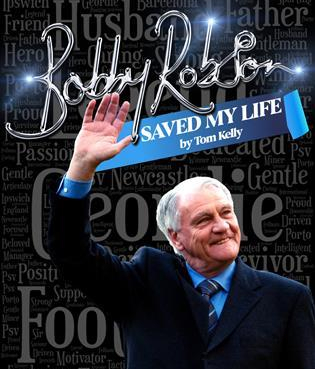
BOBBY ROBSON SAVED MY LIFE – a New Play by Tom Kelly

Theatre and football come together in a new play about the life of one of football’s most successful and well-known personalities. Sir Bobby Robson’s story has been written by North East playwright Tom Kelly (Geordie the Musical, The Dolly Mixtures, Nothing Like The Wooden Horse)….
‘The play looks at three characters and how Sir Bobby has had a real and lasting influence upon their lives’ explained Tom. ‘This is not only about football and Tyneside but hopefully underlines we each have a responsibility to care for one another.’

701a93cc-d214-436f-8f67-c3d3c2e1d686

Former Newcastle United number 9 and England international, now Match of the Day pundit, Alan Shearer has added his support. In a video message he is really looking forward to seeing the play’ and described Sir Bobby in three words ‘passionate, committed and professionalism’

A footballer who played for Sir Bobby at Ipswich Town was George Burley. The former Scotland international full back revealed in his message to describe Sir Bobby ‘Father-figure, determination and enthusiasm’.

I asked Tom what research he did for the play… ‘I read a great deal about Sir Bobby’s life and discovered he often sent messages of support to a wide variety of people which had a positive impact on their lives: It gave them hope. He had a real empathy for others. His life underlined, for me, the way we treat others is not just important but crucial.’  

Tickets are available for the play at South Shields’ favourite theatre, The Customs House. A portion of each ticket sold will go to the Sir Bobby Robson Foundation, a charity he and his wife, Lady Elsie, founded in 2008 to help find more effective ways to detect and treat cancer.

Curtain up on the first night is Tuesday 16th July at 7.30pm, running through to Saturday 20th with matinees at 2.30pm on Wednesday 17th and Saturday 20th.

Telephone 0191 454 1234 or check on-line for details https://www.customshouse.co.uk/theatre/bobby-robson-saved-my-life/

 Other shows are on July 31st at the Regent Theatre, Ipswich

https://apps.ipswich.gov.uk/en-GB/shows/bobby%20robson%20saved%20my%20life/events

And 2nd & 3rd August at the Tyne Theatre, Newcastle.

https://tynetheatreandoperahouse.uk/events/bobby-robson-saved-my-life/

 Interview by Gary Alikivi June 2019.

GATESHEAD GET RHYTHM with drummer Steve Laidlaw

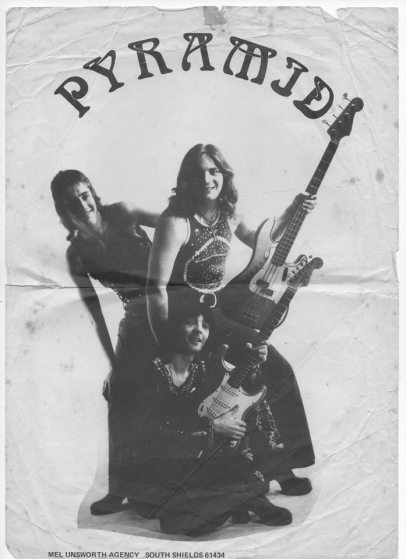
One of our strangest gigs was when Pyramid supported the Welsh heavy rock band Budgie at the Newcastle Guildhall. They and the crowd were all denim and long hair.

But we were playing Glam Rock, Bay City Rollers, Mud, that sort of stuff… but went down a bomb!

From the 1960’s to the late 80’s Steve played for many North East bands including Pyramid, Busker, Backshift, Flicks and Smokestack. Recently he has returned to the stool…

Last year I got back together with Chris Batty from one of my first band’s. We done some busker nights, got my mojo back, and we are getting a band going.

My son Andrew is a record producer and is signed to Slam Jam Records owned by Chuck D from Public Enemy. Chris and I are doing drum and bass tracks for his new album. Can you believe it. Talk about being down with the kids (laughs).

When did you first get interested in music ? 

My dad was a commercial artist who played guitar and piano at home, things like New Year parties. So, when growing up music was around the house.

When I was about 14 I got friendly with two lads who lived on the next Gateshead estate, Richie Close and Steve Davidson. Richie was already an accomplished musician playing piano and guitar. He later played with major bands such as Camel and was MD for Tony Christie.

We started messing around and Richie suggested I try drums. One day we went to his mate’s house and he had a kit. I got on and found I could separate my hands and feet and whack out a rhythm. We used to record little tapes, it was a hobby.

I remember being influenced by listening to straight four on the floor players like Mick Avory and Mick Fleetwood. No fancy complex stuff for me ! I was never technically gifted as a drummer.

I was influenced in my early days by watching the great John Woods from the Junco Partners, Ray Laidlaw (no relation) with Downtown Faction and Brian Gibson of Sneeze, later with Geordie.

Later I met a lad called Peter Chrisp who played bass. He was a blues man, and we formed a band with John Gormley (vocals), Ronnie Harris (guitar) and me on drums.

Can you remember your first gig ?

My first gig was at the Wesley Memorial Church Hall in Low Fell in 1967. Ronnie could play the John Mayall album ‘Beano’ note for note, so were ostensibly a blues band. We did The Quay Club, Bay Hotel in Sunderland loads of youth clubs and schools.

But the band sort of lost interest so I formed my own called Tycho Brahe, with my mate’s Chris Batty, George Curry and Stan Rankin. This was late 1969.

We did the Bowling Alley in Gateshead and the usual round of schools, but only lasted a few months. Then in 1970 I got a call from a guy called Jim Campbell. He was managing a club band which became The Paul Dene Set.

I got Chris Batty from my previous band in on bass, but we were only 19, and the other guys were 26/27, a lot older and very experienced. I went from playing Cream/Mayall to Tom Jones and Elvis with dickie bows and velvet jackets.

18012669_10154262986992085_2045594719_o

Did you have a manager or agent ?

Most of my time in bands we were managed by Ivan Birchall or Mel Unsworth who were always fair with us. We started getting regular work in the clubs, and had a van and good PA. We got gigs like the Airport Hotel, Top Hat, Guildhall, these were really decent clubs.

That lasted until ‘73 until I formed a band called Smokestack featuring Stu Burns and Steve Daggett. He played a blinder by stepping in at the last minute with no rehearsal, it worked out great.

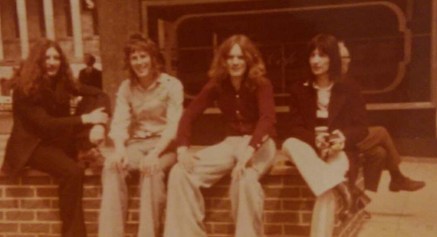
Then I answered an advert in local newspaper The Chronicle, that was for a band called Pyramid who had been on the go for a while.

At first, we just rehearsed in a basement in Gateshead as one of the members was ill, so the band were off the road. At first the agents didn’t want to know but eventually we got a couple of gigs and literally tore the places apart with comedy and chart music.

Straight away we got repeat bookings and our agent Mel Unsworth started giving us work. Subsequently we started to build up what became a huge following and some people had seen us a hundred times.

15894458_10153991538337085_7274884893360001968_n

Have you any stories from the road ?

We auditioned for TV talent show New Faces in 1974 – and got on. The panel were made up of Micky Most, Tony Hatch and Clifford Davis who were not keen on us. Arthur Askey was there, and he was a lovely gentleman.

I remember the night we were on. We recorded the show in Birmingham on a Tuesday and the night it was broadcast we were booked for a club in Ashington, The Central I think, and we watched the show before we went on stage.

There were no videos in those days. We got a load of gigs after that and the work went off the Richter scale, doubling our pay from £40 to £80 a night (laughs).

The band went full time but I continued to work. I was working in sales through the day and got very little sleep. We would be doing a club then maybe The Sands which was above the bus station in Whitley Bay or the Burgundy Cobbler also in Whitley Bay.

We’d get to Palace of Varieties over in Prudhoe, then a few places in Newcastle like the Cavendish, Stage Door and the Rainbow Rooms.

I’d fall into bed around 3 or 4am, then back up at 7 (laughs). We once did 93 consecutive one nighters, but by this time we had two full time roadies, and we went in our cars.

36711030_1311155892354062_5895211650234974208_n

In 1975 I got married so left the band as my new wife wanted to see me (laughs). But re-joined a couple of year later and did a tour of Germany with the comedian Chubby Brown.

I remember being stopped at the East German Checkpoint and they got really funny with us. To get to Berlin we were told to ask for a Russian Officer, who we had to pay off to get through (laughs).

A story from one night involved Allen Mechen, who was the front man and guitarist Brian Pick. We used to start the act with me and Brian on stage and Allen used to run out of the gents.

One night we started playing and were going over and over the song with no sign of Allen. After five minutes our roadie went to find him. He was asleep on the bog with the door jammed (laughs). John poured some water over him.

Incidentally Brian used to be in well known Tyneside band The Sundowners and Allen ended up playing the character Terry in the Tudor Crisps adverts. After recording an EP I left the band again, then went back for their last gigs in 1983.

What studio did you record in ?

We recorded the EP at Soundlink in Newcastle and sold it in the clubs, but I haven’t got one cos I gave my copy away.

We also recorded a couple of tracks at Impulse Studio in Wallsend. That was for North East TV show Geordie Scene, but in the end, they decided not to put us on. We recorded a new single at Impulse, but it was scrapped at the last minute for some legal issues.

Not long after Pyramid I played in a band called Flicks. Terry, the keyboard player, was asked to join another recording band called Busker who had a huge hit with Home Newcastle. The song was a massive hit locally and is still played at St. James’ Park.

The band didn’t really exist, but songwriter Ronnie Lambert wanted to put a band on the road. He also played guitar and harmonica. He asked us if we could get a few of our old mate’s in and do a few gigs, so we did.

We also recorded a new single, and a new version of Home Newcastle with a few different lyrics but the band drifted apart. I think Ronnie just wanted to be a recording entity.

After that I joined Backshift, who became an eight-piece soul band, fronted by legendary Junco Partner, Ronnie Barker. This went on for several years, we done some good gig’s and had a great laugh but finished about ‘88.

I always meant to go back to playing but had two kids and things just drifted. I had 23 years in bands by then.

What does music mean to you ?

I always felt music should entertain and not educate. The general public are bored shitless by drum solos. As Brian Gibson from Geordie always said, get the girls dancing then you are ok (laughs).

 Interview by Gary Alikivi    June 2019.

FOOTING IT TO EUROPE with Tyneside poet Keith Armstrong.

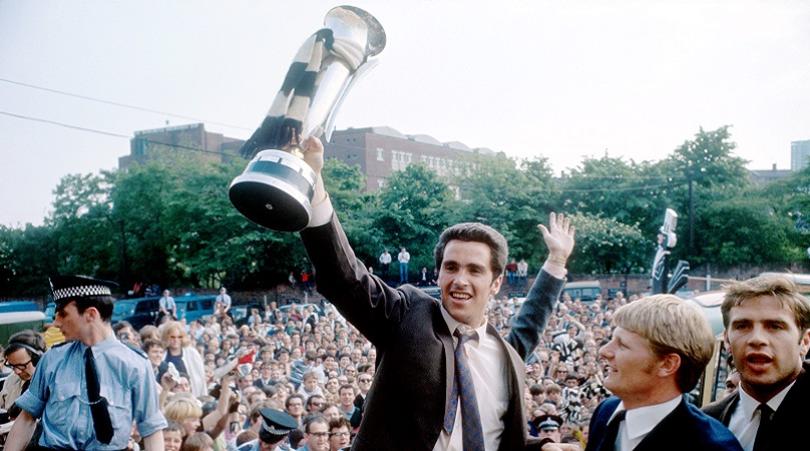
In the week of the 50th anniversary of Newcastle United’s victory in the Fairs Cup, a 6-2 win on aggregate against Ujpest Dozsa in the final. Tyneside poet and lifelong supporter of the Magpies, Keith Armstrong, reflects on their journeys through Europe.

Bobby Moncur, Newcastle United, with the Fairs Cup

I hate to give away my age, but my dad took me piggy-back to see Stanley Matthews play at St James’s Park in the days when peanuts were only a tanner a bag and the ground capacity was well over 60,000.

Since then, I’ve followed the lads through thick and thin, usually thin, across Europe and back home.

It might surprise you, but United in Europe isn’t new you know. They toured Italy, Czechoslovakia, Hungary, and Austria, in 1929 – just after the last time they won the League, with the legendary top-scoring Hughie Gallacher at number 9.

In Milan, full-back Tommy Lang had a nasty set of bite marks on his neck when he left the pitch and the club’s bus was hit with bottles and stones and the players had to barricade themselves in their hotel room.

Not to worry, the team was guarded by the stalwart men of Mussolini’s black shirts!

After an 8-1 defeat in Czechoslovakia, the lads were accused of not trying by the Czech officials and then it was off to Budapest for another ‘friendly’ where Gallacher was sent off after a punch-up and the locals spat and threw coins at him as he was escorted through the crowd by armed soldiers.

The Hungarians accused Gallacher and the rest of the team of being ‘drunk and disorderly’ on the field and withheld the guaranteed fee. United left the country quickly.

A Football Association enquiry exonerated the team after Gallacher had explained that he and some of his teammates had been so thirsty in the heat that they ‘rinsed their mouths out with a drop of Scotch’.

The Hungarians spotted them passing the bottle round and jumped to the surprising conclusion that the boys were on the piss! European sporting ambassadors, don’t you know!

1969-05-29

And, just so’s you really know how old I am, I have to say that I was ‘on the hoy’ as well in Hungary, with the Supporters’ Club back in 1969, belting out the ‘Blaydon Races’ on Budapest High Street when we last won a major trophy, the Inter-Cities Fairs Cup.

It never seemed to be part of a plan to win then, they just stumbled into the Final, and, with Wyn ‘The Leap’ Davies nodding the ball down to Bryan ‘Pop’ Robson, and no real midfield to speak of, we had those continentals, used to playing the ball on the ground (the mad fools!), completely baffled when faced with our Geordie ‘laeng baell’ game.

A one-off but the toon went crazy when the lads came back with that Fairs Cup.

It worries me a bit just how crazy the toon will gan should we ever bring another bit of silverware home – not that that’s likely, let’s be honest, a trophy is never on the packing list, if you’re following Newcastle United.

Soccer - Newcastle United Parade The Inter-Cities Fairs Cup

Captain Bobby Moncur with the cup in Newcastle.

Tyneside poet Keith Armstrong was born in Newcastle. He has travelled throughout Europe to read his poetry and is widely published and broadcast. He is available for events and functions.

tel: 0191 2529531.

Interview by Gary Alikivi    June 2019.

TYGER BEAT with former Tygers of Pan Tang drummer Chris Damage Percy

Previously on this blog was an interview with former Tygers of Pan Tang guitarist Glenn Howes.

As I’m tracking down former members of the Tygers, Glenn put me in touch with Chris Percy. Chris was drummer around the same time Glenn was in the band….

1930228_41742241320_2901_n

I joined the Tygers in 1999. I was asked by bassist Gav Gray, as by then we’d played in a few bands together often joining as the rhythm section. I was with the band up until the time just after the Wacken Festival.

We only played the one gig, Jess Cox had been asked to do something as it was the 20th anniversary of Don’t Touch Me There so that was the focus at the time.

Don’t Touch Me There was their first single released in 1979 on NEAT record label and produced by Steve Thompson at Impulse Studio, Wallsend.

What are your memories of the gig ? (pics above)

The Wacken gig for me was fantastic. I had my birthday out there so we had a little celebration. It was great as there was a shuttle of cars every half hour that went from the hotel to the gig so you just got in and travelled to and from the gig whenever you wanted.

I think at the time, the biggest gig I’d played was the bikers festival Stormin’ the Castle with a Guns n Roses tribute band. Now here I am being flown to Germany to play a gig attended by tens of thousands of people!

When did you get interested in music and who were your influences ?

I’ve always been interested in music from as far back as I remember. I started drumming from a very early age. My earliest memory is from when I was 5 years old, mimicking drummers I’d watched on the tv.

I was 8 years old when I started getting lessons from a guy called Bill Tennant who was a jazz drummer around the North East. I didn’t enjoy it very much until I was 11 or 12 when I was introduced to The Meteors, and I was hooked. I joined my first band at 14 called The Dead Travel Fast but we never played any gigs.

When did you play your first gigs ?

I was 18 and my first gig was at a pub called Images in South Shields with a covers band called Van Goghs Ear. The band featured guitarist Dave Burn, a very good local guitarist who has released loads of solo stuff. He recently played guitar for Paul Raymond of UFO fame who sadly passed away not long ago.

On the night we supported a band called Frenzy and I think Gunslinger might have been there. I was so nervous I drank six pints of snakebite before I went on and could hardly remember the songs!

Did you record any of your music ?

I ended up in the studio with a few bands. The first time was with my first originals band around ‘93 called FND with Dave Hills (guitar) Gav Gray (bass) Paul Nesbitt (vocals) and myself. It was completely free as Hilly had his studio in his house and we would just stay at his and drink and record songs.

Have you any stories from the Wacken Festival gig ?

The first day we get there and I was sharing a room with Gav Gray. Well this bloke turns up at the door, he asked us in this Brummie accent if we had a cigarette so we replied ‘Aye, whey aye, mate’. Which as we all know means ‘yes’ in Newcastle.

He looked at us puzzled and asked very slowly ‘Do you speak English?’  He turned out to be the singer from metal band Jaguar (laughs).

When we were setting up for our slot, I was working with the drum tech on my set up which literally took 5 mins as I just played a five-piece kit, unlike some of the bands who’d had double kits with cymbals and drums all over.

I started playing this kit and someone from out front came running back and started shouting ‘Stop playing, we can hear you out front’. Saxon were on stage at the time!

Why did you leave the Tygers ?

We only planned to play the one gig. Jess had no intentions of doing anything after that. Rob mentioned doing something but I don’t think anyone took it serious. We just went back to what we were doing, our day jobs, bands and waited for the release of the Live album.

 Check the official Tygers website for set list and album http://www.tygersofpantang.com/official/discography.html

holliemcmillan

What are you doing now ?

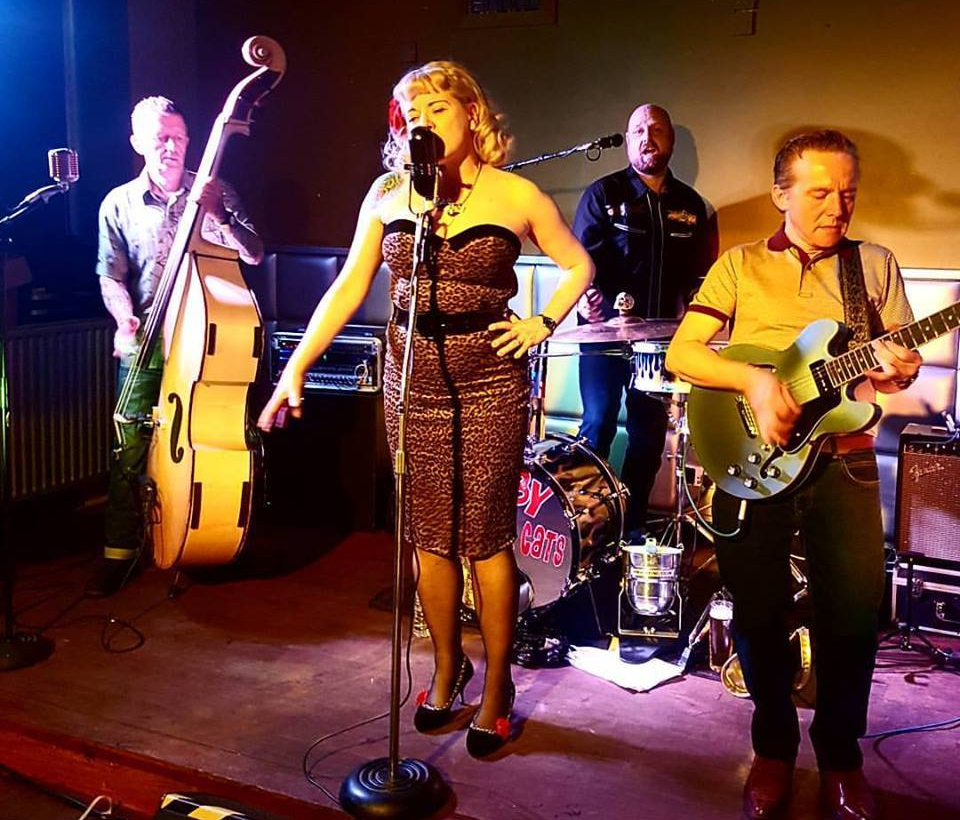
I’m playing in a fantastic ‘50s rock n roll band called Ruby & The Mystery Cats with Ruby Soho (vocals) Ray Vegas (upright bass) and G-Man (guitar). I absolutely love it.

Interview by Gary Alikivi    May 2019.