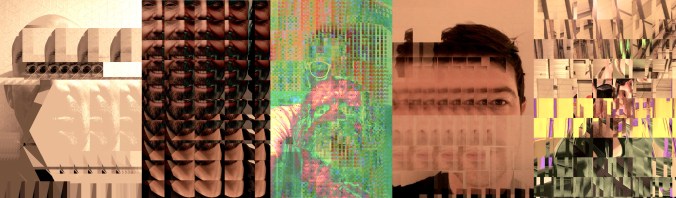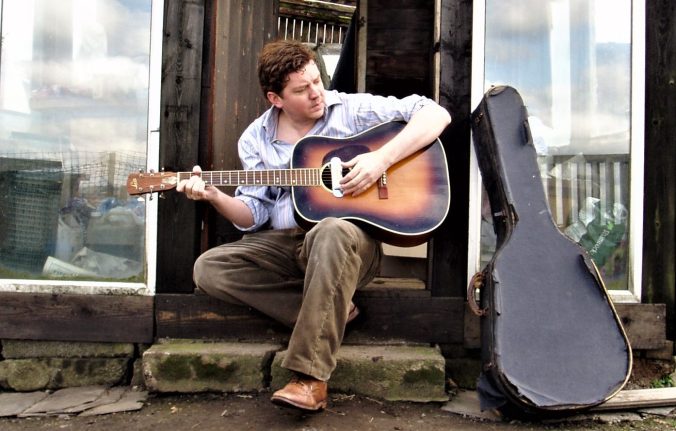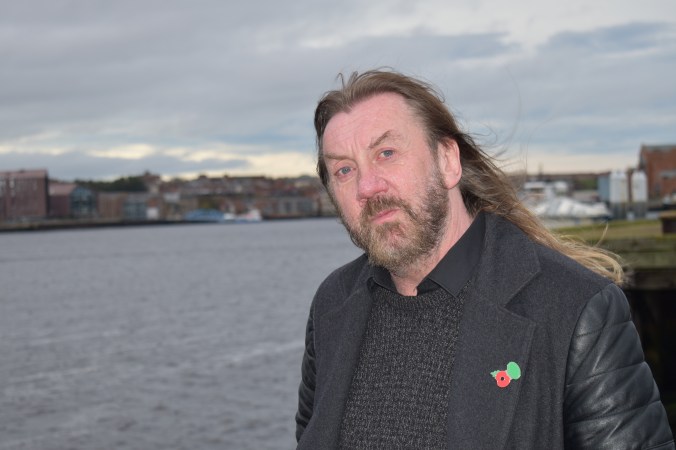
Neville’s music has attracted attention from the BBC and the specialist music press. Stuart Maconie featured him on BBC 6 Music’s Freak Zone, Electronic Sound magazine praised his debut album The Edge of Destruction which established Consett born Neville (53) as a distinctive voice in contemporary British music. The critically acclaimed debut featured on this site in July 2023.
“I’m hoping to build upon the success of the previous two albums, which certainly found an audience, at the same time this album has a different approach. I like the idea of doing something slightly out of the ordinary each time” explained Foster.
What or who was your inspiration when you were young?“As a child I’d a neighbour who had an old 78 gramophone. I still remember the smell of the thorn needles. That was my first musical experience, it seemed like another world with its own smells and sounds. My dad who like a lot of other men in the 1970s took up guitar so I recall him playing.”
“My first record I bought from Woolworths in Durham as a child was Mike Oldfield’s Blue Peter. My dad played Tubular Bells around the house so I’d have heard that and Oxygène by Jean-Michel Jarre. So, Oldfield and Jarre would be my earliest exposure to modern music.”
“Having played guitar myself for many years when I began making this kind of music I remembered Jarre and Oldfield but also discovered I had in my record collection the likes of Terry Riley, Hans-Joachim Roedelius and Michael Rother without really having ever joined up the dots of who these people were or what they were doing.”
Is music in your family? “Not at all. My grandfather was in the navy and played the accordian, he always told me as a child that if I wanted to be popular at parties I should learn to play the piano. My father had a few attempts at playing the guitar which didn’t work out, but it did mean there was a guitar around the house when I was growing up.”
“It’s important to remember, this period in time and in the north east, most families were not affluent enough to have the luxury of a musical instrument in the house let alone a musical education.”
Are you planning any live dates? “The nature of this album makes live dates challenging, I’m against the electronic approach that works with pre-recorded loops and is effectively only live mixing rather than a live show. In the case of this album a live show would mean running several old Windows 98 computers at once, working over the top of them and hoping the results resembled the album, but would in fact be a re-creation.”
“There’s certainly a half way house and I’ve done a few small scale live experiments with other material to test the waters which proved effective musically – which is the main thing, so you can expect more live works in the future.”
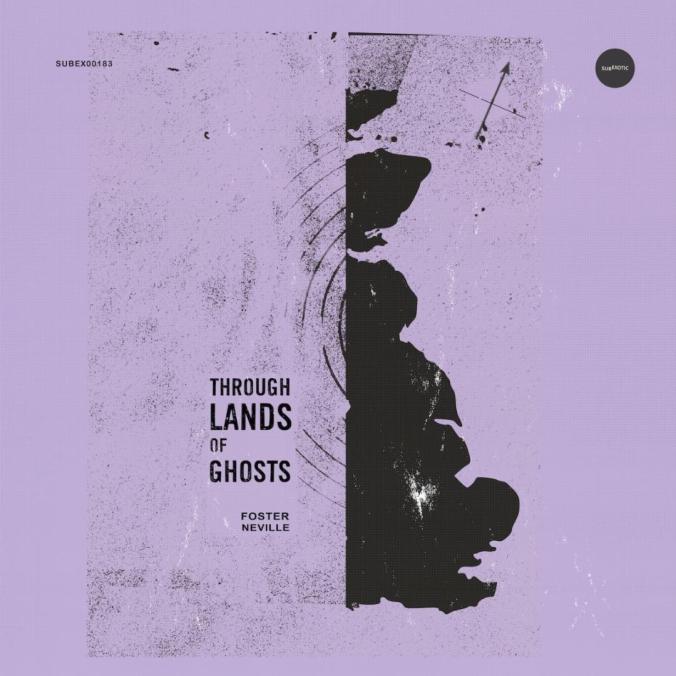
Produced by Ciarán Cahill (Van Morrison, Elvis Costello) and John Pilgrim and featuring an appreciation by writer and filmmaker Iain Sinclair ‘Through Lands of Ghosts’ will be released 16th January 2026 on Subexotic.
A lot is made of being in the right place at the right time to help bring success. But you can’t get past the sheer amount of hard work put in, every time giving 100% and never complaining. There is no substitute for rehearsal and when the opportunity presents itself you’ve got to be ready to take it. A snapshot of a story taken from Sting’s autobiography Broken Music hits the mark. This all happened within a few heady months during 1978.
The Police went out on a UK tour to open for Spirit led by guitarist Randy California. They won over a hippy audience and released their single Roxanne. Their record company A&M fully supported the record but money wasn’t rolling in yet.
To pay rent on his London flat Wallsend born Sting was still filming a few adverts and bit part in films. The Great Rock n Roll Swindle was one, although his scene ended up on the cutting room floor. ‘I was grateful, however, for the 125 quid at the end of the day’ said Sting.
He also went for a part in Quadrophenia filmed in Brighton. ‘I know that they’re seeing half of London for this role, but somehow I know it’s mine’.
After finishing on the film set in Brighton the record company hired a private car to whisk Sting off to Gatwick airport and jump on a flight to Manchester, finally arriving at the BBC TV studios where The Police were due to appear on the Old Grey Whistle Test. Sting remembers ‘It’s still raining when we land in Manchester. Yet another car and driver waiting to take me to the studio, where we have a sound check. The performance tonight is live’.
After a successful TV appearance a tour of the east coast of America was booked. Second night of the tour The Police are in Poughkeepsie theatre with only six people in the audience. Do they cancel? No. Sting brings the audience down to the front and introduces each other. Then ‘give a blistering set we will ever manage, encore after encore’.
The audience are invited back stage where it turns out three of them are DJ’s. The next day Roxanne makes its debut on USA radio. Within a couple years The Police are one of the biggest bands in the world. Now how did fellow Tynesider Mark Knopfler and Dire Straits knock them off their perch?
Singer/songwriter Terry Gorman Nov.25 pic. Alikivi
Now based in North Shields, Terry Gorman was born in Colne, Lancashire and has been playing guitar for over 50 years. Music has taken the 66 year old around the UK and Europe including Ireland, Amsterdam and Lanzarote.
I’ve done thousands of gigs maybe more than anyone you’ve met! said Terry after he had taken a short ferry journey over the river Tyne from North Shields to South Shields. We met in The Customs House for a cuppa and talked about music.
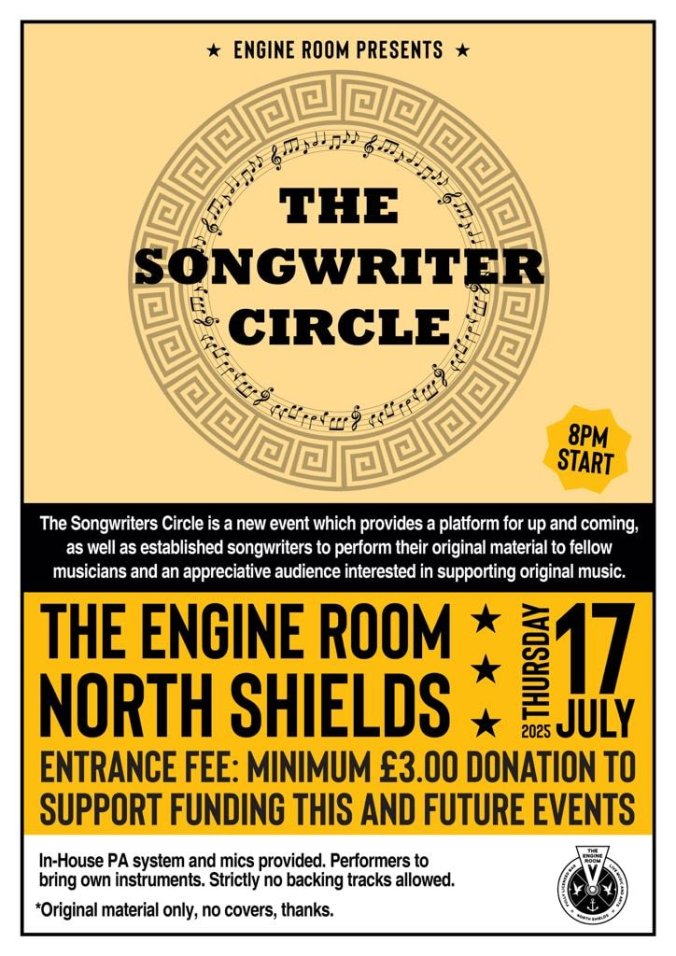
In North Shields there’s a nice music scene going on. We currently run a monthly ‘Songwriter Circle’ event every month in The Engine Room on Tanners Bank. It’s ran by myself and a few friends Steve McVay, Larry Page, Steve Rudd and Lyndon Phyliskirk.
You see live performance of singer songwriters all playing original songs. We encourage all levels of talent leading to paid gigs and possible festival spots. It’s been very successful so far and has been going since June said Terry.
Have I ever held down a proper job? I tried working 20 hours a week but found it hard working for idiotic managers. I thought I could earn enough money playing guitar and singing. I wasn’t interested in chasing fame.
I liked Ralph McTell, Alan Hull, James Taylor people like that telling a story. I watched Lindisfarne who were ordinary blokes, really down to earth but well known at the same time – that was for me. It was all about the music.
My introduction to music was my grandparents who had a piano in the front room. A lot of people did. I was around 10 year old when I picked up a guitar. It was a Hofner with a scratch plate. A Catholic priest who was a friend of the family knew I loved singing and writing poetry so he gave me his acoustic as he was off to the missions in Africa.
I lived in Brampton, Cumbria until I was 8 year old that’s where I saw the first singer who made an impact on me. It was Elvis when he sang on our black and white TV although I couldn’t make out the words or what he was singing about. The Beatles and Stones were good but I really liked storytellers, folk music where you could hear the words. I love lyrics.
Then I heard Lindisfarne and Isaac Guillory who made a G chord sound interesting. My first public gig performing was as a teenager in Durham I think, I was nervous and pretended to be confident.
Terry supporting the Devan Allman band at Newcastle Cluny.
North East venues Terry has played over the years include Bents Park and Amphitheatre in South Shields, Sunderland Empire, in Newcastle he performed at the Live Theatre, Journal Tyne Theatre and The Cluny. He also played in Durham City Hall and Gala Theatre, Washington Arts Centre and Darlington Arts Centre.
I won a songwriting competition in 1990 and thought it would lead to bigger things. A lot of radio play came off the back of that and a slot at the Cambridge Folk Festival and a headline at Dungeon Ghylls Music Festival in Cumbria. Again, I thought that would lead to more so I kept plodding along.
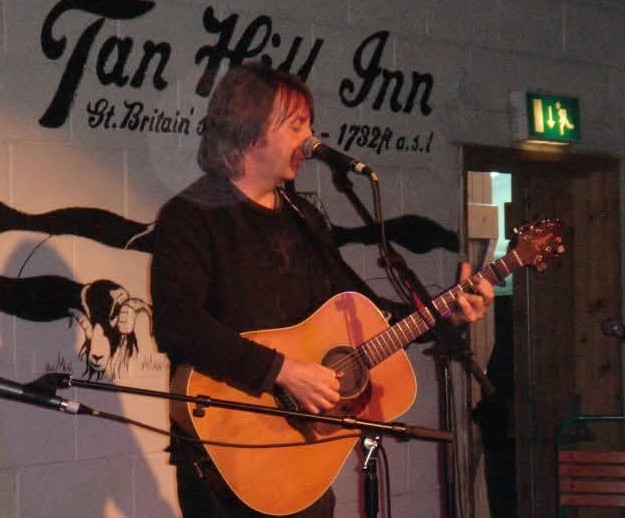
I played support to the Levellers at Tan Hill, Yorkshire, the highest venue in England. It went great playing my own songs, really grabbed the crowd by the scruff of the neck and went down well with an encore. The Levellers didn’t like that so I wasn’t asked back! Opening for Ralph McTell was a good gig and I’ve worked with Prelude a lot, I liked your interview with the singer Brian Hume earlier this year.
Terry supporting The Levellers at Tan Hill, Yorkshire.
I remember I played at a festival on the Isle of Bute, Scotland. I was the only one who wasn’t signed to a record company or connected to a famous band. There was Steve Daggett from Lindisfarne, Baz Warne out of the Stranglers, Martin Stephenson who was popular in the 1980s and others out of bands like The Pogues. I thought what am I doing here? I didn’t get signed but really, I never felt out of my depth.
I’ve wrote a few songs about getting knocked down and fighting back. When on stage I wouldn’t introduce the songs as if they were about depression or mental health. They are more about the power inside of you. It’s about dusting yourself off and going again.
I’ve recorded in Newcastle studios like The Cluny. Archie Brown from the Young Bucks was sound engineer. Then I went to Trinity Heights ran by Fred Purser. He was great, a really good lad, he used to be in North East bands Penetration and Tygers of Pan Tang.
What am I doing now? Well, it’s keeping the work rate up. In the last 12 months I released a single, ‘Only News Today,’ two albums and six professional music videos.
For 2026 I’ve got a folk album ready. One of the songs is ‘The Silent Shipyard’ about the closing of the shipyards and mines, all of the industry we have lost. I want a male voice choir on that one with a brass band and violins. Another song is ‘Beacon in the Dark’ about the whaling ships we had on the Tyne.
An idea floating about is a rock opera about John Lennon who was shot and killed in New York in 1980. In ‘Sgt Pepper Survived’ John Lennon gets shot and survives, lies in a coma for many years, wakes up and reveals his thoughts about world events today.
One scene is him sitting in a bar talking to Eric Clapton and Jimi Hendrix – yes, he lives as well. Lennon is also interviewed on stage where he is asked what he thinks about today’s shows like X-Factor, bands like Oasis and social media Spotify, Facebook and Instagram. I’m always thinking of these ideas.
If I have any advice to young musicians, it’s that if you enjoy your music, you’ve made it. If you don’t best just pack in and go do something else.
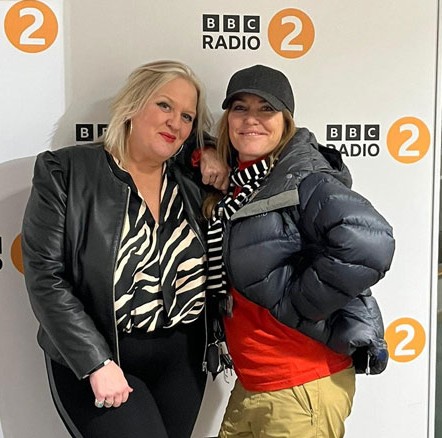
Emma at BBC Radio 2 with Cerys Mathews December 2023
Magazine front covers, BBC Radio 2, awards, tours, record releases – this past few year Emma has been prolific. In 2023 she released ‘Memphis Calling’ recorded in Sam Phillips studio in Memphis, USA, earlier this year she talked about her third album ‘A Spoonful of Willie Dixon’. Recently she got in touch about her latest single…
I’m stablemates with American band Chris Wyze and the Tellers. We’re both signed for distribution with ‘Select-O-Hits’ in Memphis. Chris found out I was in Tennessee for a few days in September so asked me to co-write and sing a duet with him. We recorded ‘Hearts Blue Christmas’ at Royal Studios in Memphis with the Hi Rhythm Section.
At the end of the recording session producer Boo Mitchell said ‘We have an hour left“. Chris turned to me and said ‘Do you want to do anything?’ I’ve previously recorded with pianist Charles Hodges (who is part of the Hi Rhythm Section) on my record ‘Memphis Calling’ and we have a good friendship and work well together.
I asked Charles if he knew the song “What are you doing New Years Eve”? The track was written by Frank Loesser in 1947. I think I must have first heard the Lena Horne’s 1966 version as my Mum played a lot of her music when I was little.
Charles strolled over and started playing it so beautifully on the grand piano. That piano has been in the same position at Royal studios for decades. Goodness knows how many iconic songs it has featured on!
Charles and I spent about ten minutes getting a key to suit and having a run through, then he called Steve Potts to play some lovely light drums and then we taped it.
L to R – Charles Hodges, Steve Potts, Hubbie Turner, Emma Wilson, BooMitchell, Lina Beach, Chris Wyze and Leroy Hodges at Royal Studio, Willie Mitchell Boulevard, Memphis on 25 September 2025.
Along with promoting the singlenowEmma is already looking forward to 2026…Recently I won the UK Blues Challenge at Marshall Studios which means I go to Memphis in January to represent the UK in the International Blues Challenge and for the European Blues Challenge I go to Poland.
‘What Are You Doing New Years Eve’ is out on 21st November 2025 as digital download and a very limited run of CDs which are available from the official website >>>
Follow up to debut album ‘All the Rage’, post punk three piece Heed Case release new album ‘Mongo’ on Friday 31st October 2025.
Heed Case are former Angelic Upstart guitarist on vocals Newts Newton, bass Si Cadelik and drums Mr Dusty. They squeeze between the bubbling volcanic crack where The Fall and Killing Joke lie.
And who doesn’t love a solid thunderous drum intro? Infectious album track ‘ADHD’ crunches and buzzes in yer ear…. ‘Impulsive can’t sit still, Destructive, too many pills, Can’t sit still for meditation, too much pressure and medication’.
The sheer anthemic guitar calls out…. ‘Cast adrift in a sea of challenges with a feeling of being left to drown. Frantically waving to be rescued. But all the lifeboats have run aground’.
Where did the album title come from?
‘The title ‘Mongo’ comes from a phrase the three of us use to describe our autism and adhd. Example, I have to everything in order. You open a cupboard in my kitchen and all the tins face forward and stacked alphabetically. Instead of saying “Oh that’s just a trait of autism, I’m neurodivergent don’t you know”. I’d simply say that’s just my mongo!’
‘However, it’s original source came from Si’s bass audition. I’d asked people to learn two tracks video themselves playing them and send it within 5 days. Si was the only one who followed the instructions to the letter – his mongo made sure of that.’
‘But when I watched the video he was concentrating so hard he was quite stiff and cumbersome. So much so that he reminded me of Mongo from the film ‘Blazing Saddles’. Hence Mongo became a word our traits and mannerisms associated with being neurodivergent.’
You are open about various medical conditions within the band….
’The broad theme of ‘All the Rage’ was about narcissism and entitlement in modern society. For ‘Mongo’ we chose to write about our experiences of living with autism and adhd whilst using different samples and FX to create soundscapes that reflected what the inside of our head often feels like – at times fecking scary!’
‘The song ‘Manic’ for example, is about how dealing with everyday tasks often feels like being hit with a tornado. A visual representation would be the swirl of colours you see when Henry the mild mannered janitors car, turns him into Hong Kong Phooey in the TV cartoon – and that’s what we tried to recreate with the audio.’
‘You may notice that the guitar isn’t as prominent through the tracks, its being used more as a texture rather than a traditional role in a guitar band. ‘All the Rage’ was a transitional album, ‘Mongo’ goes further down that road towards our aim of broadening our horizons beyond the punk genre.’
With the album in the bag are any live dates planned?
‘Yes, we’ve already played about 17 gigs thus far, including Rebellion Festival, Punk on the Peninsula, Punk & Disorderly Festivals and our last gig was at the Dublin Castle in Camden a few weeks ago. We’ve got a few more coming up and adding dates all the time as we want to keep busy’.
New 10 track album ‘Mongo’ release date Friday 31st October on all platforms, vinyl & CD format.
Sitting in the Littlehaven Hotel on a sunny autumn day in South Shields I’m listening to a familiar story which I’ve heard a lot since starting this site in 2017.
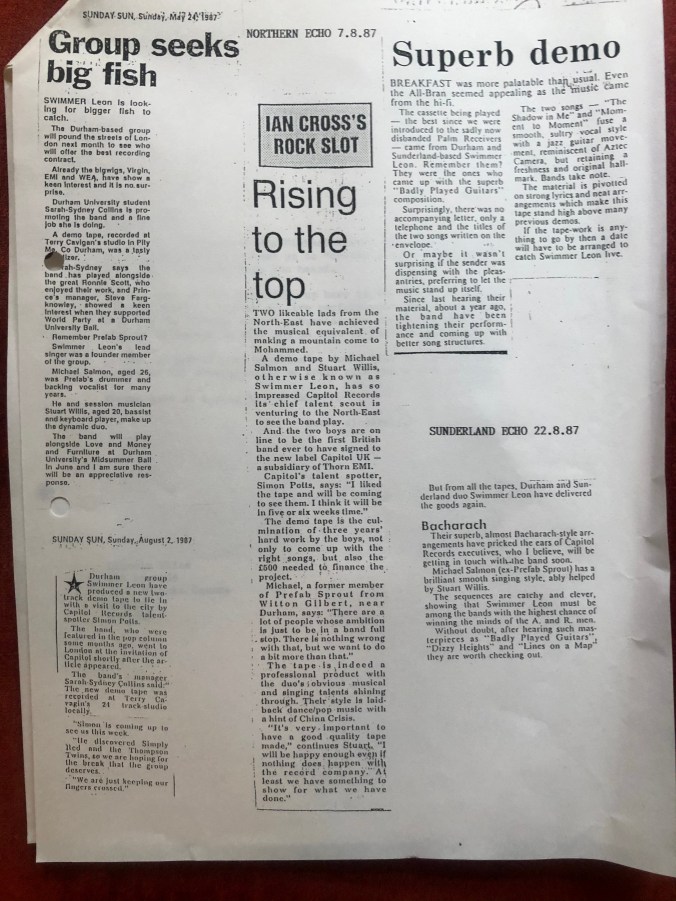
59 year old Durham musician Stuart Willis told me ‘I was in a band for a short space of time and got a taste of the music business. Although we weren’t a success commercially, we played gigs and got attention from record labels but didn’t quite get it over the line’. This is Stuart’s story.
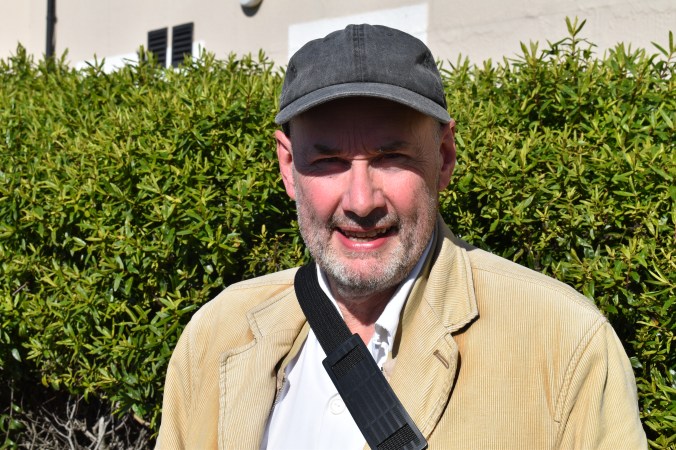
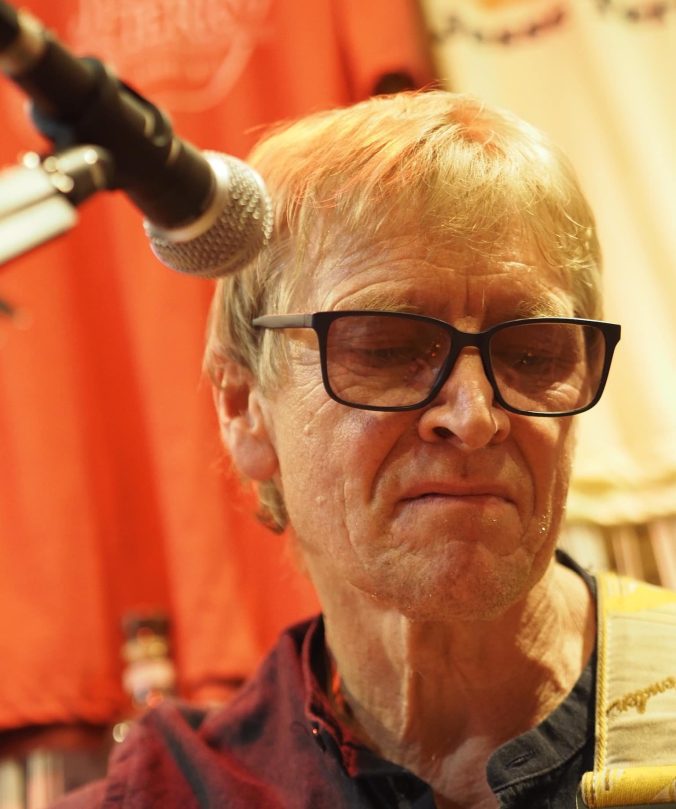
(Stuart Willis outside Littlehaven Hotel, South Shields September 2025. pic. Alikivi).
Older generations of the family originally came down from Scotland to the North East to work in chemical factories and the mines. My father was first in the family to go to grammar school and became an accountant. He was the one who bucked the trend.
I remember my mam brought a classical guitar record into the house. I absolutely loved it. I was around 11 year old when I got a cheap guitar and music book for Christmas. I picked it up very quickly. There wasn’t anyone else in the family who played and the school I went to didn’t even do music lessons.
My first influences were The Jam and Specials the whole Two-Tone and post punk scene with bands like Television, Magazine and Gang of Four who I saw at the Gateshead Festival in 1982(The Police headlined with U2, The Beat and Lords of the New Church on the bill).
On the North East music scene was a band I liked called Neon. Tim Jones was in them and he went on to play fascinating music. I first played in a punk band in the local community centre when I was 16. Then I met Michael Salmon in 1985.
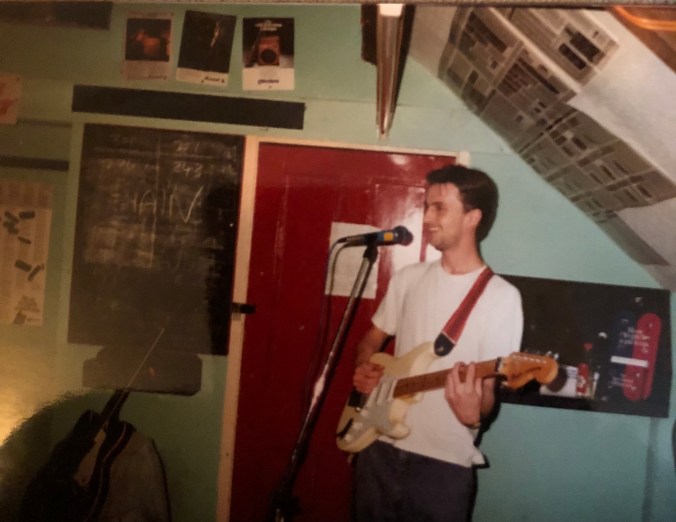
(Michael Salmon in rehearsal 1980s)
He was a drummer in Prefab Sprout with Paddy McAloon the main songwriter. When Michael left Prefab it was purely amicable. He wanted to realise his ambition of being a songwriter.
I was 18 playing in a duo in a pub in Witton Gilbert, County Durham. Michael was there that night. He liked what we were playing. I was playing classical guitar with Mark Wiles on bass.
Michael was a charismatic guy, excellent guitarist, singer and songwriter almost a teacher to me. Michael had a phenomenal record collection and I was introduced to all these amazing sounds.
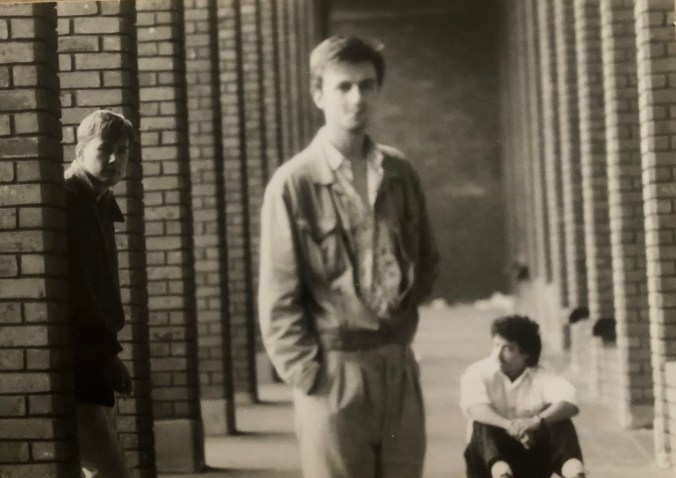
We got in a drummer who was playing on the Durham scene and we called ourselves Swimmer Leon. Rehearsals were in Fowler’s Yard in Durham a lot of bands rehearsed there. We practised in there every week. The room itself almost became another member of the band. The sound was born in that room. We had about three albums worth of great songs that Michael had written.
The first place we recorded in was Consett Music project. We were all nervous. We recorded three tracks live and added a few overdubs. We took the songs out to play a few gigs.
(Swimmer Leon 1985)
We were mainly playing live around 1985 we got on well and had a cracking time. We supported a few big bands mainly playing University gigs. One night we supported the Ronnie Scott Quartet, he had a jazz group who had the club in London. Then there was ex Waterboy Karl Wallinger and World Party.
There were loads of times we met different musicians at these gigs who knew Michael from his Prefab days. There was the drummer from The Ruts who gave us some insightful advice about the record industry. He told us not be in a band because you can get lumbered with huge debts. Best to play for other people and get paid. Wise words.
For me the quality of any live work or recording we done was so important. Sometimes playing smaller gigs is a cacophony of sound but when we played the Students Union in Durham that gig was recorded straight off the mixing desk and we loved that sound.
After gigs other guitar players want to speak to you. That’s really great we appreciated all the attention but we thought where’s the women! We didn’t play ordinary chords so a few times they’d ask ‘At the beginning of that song what’s that chord’? and ‘Can I look at yer Gretch’. We were a quirky band and got a lot of press.
(Swimmer Leon 1986)
We also recorded in the Cluny Warehouse in Newcastle with John Silvester. Michael’s songs had jazzy elements too them, complicated chord progressions with complicated lyrics – it was like post punk jazz. With all the obscure influences we weren’t your run of the mill band. We were an arty band. We thought yeah, we’re great we’ll get a record deal!
Did you know we ended up with a development deal with CBS? Thing was we never sent a tape to them, strangely Michael thought it should come to us! The only thing we did was send tapes with the band name and telephone number to the local press to get reviewed.
All the major labels had regional scouts who would pick up on the music section in the local papers then come to gigs and take it from there. This is what happened to us and led us to recording in Guardian studio in a little village called Pity Me in County Durham. It was a really good studio.
Guardian was two houses knocked together with a large console and a piano at the side. The owner Terry Gavaghan was very professional about the work and we got on well with him. He wanted to know the structure of the songs, so we played them through sitting near the console.
Michael played drums on that recording his first time since leaving the Sprouts. I played guitars, bass and all the keyboards. Terry recorded it separately with a guide vocal, guitar, drums, bass and put stuff on top. He produced both tracks which still sound good today.
I was working in Windows musical instruments and record shop in Newcastle so I put their telephone number on our demo tape. A local reporter wrote a review of the tape. At work I got a call telling me it was Simon Potts at Capital Records and he was phoning from L.A. Yes Los Angeles! He asked if we had many songs so I told him about three albums worth. ‘OK I’m sending someone up to see you.’
Research has found an interesting story about Simon. He was originally from Newcastle and lives in Hawaii now. With a great pedigree within the music industry he signed The Beat, Simply Red, Thompson Twins, Stray Cats, all selling in huge numbers having massive hits. Last band he reportedly signed were Radiohead.
This guy came up to Witton Gilbert from London and liked what he heard. We quickly arranged a showcase gig in Newcastle pub Slones. Actually, Brian Mawson, my manager at Windows music shop arranged the gig for us.
I loved working in Windows. It was a great place surrounded by people with aspirations to become musicians. There were new instruments on sale, latest records, local releases also a wall full of wanted musicians and bands advertising gigs – a great atmosphere. Darren Stewart who played bass for a few years in Swimmer Leon worked there. Dave Brewis also worked there he was in The Kane Gang.
The night of our gig London record label were having a promotion so a lot of artists were there and ended up at our gig. It was mad. Simon Potts from Capital flew in from L.A. We had Bananarama dancing down at the front, I think the Kane Gang were there. The head of A&R at Capital records told us ‘We’re giving you some money to record, just as long as you don’t go to Montserrat with George Martin!’ So, we went back to Pity Me and Terry Gavaghan!
We were in Guardian for three days and recorded three songs. By then GO Discs were interested in us, Warners were interested in us, Phonogram were interested in us. We were going up and down to London for meetings but we couldn’t get it over the line. It was just two kids really, me and Michael Salmon. The thing was we didn’t have a manager.
(Swimmer Leon promo shot 1987)
I remember going to CBS for a meeting. We were in a lift and there was Mick Jones from The Clash. I thought what’s going on here? From being a 16 year old punk playing gigs in Grindon Community Centre to meetings, gigs, studios and all this record label stuff without us really trying.
But life caught up with us. There was a time we thought is this gonna work? We didn’t want to move from Durham. I was from Sunderland so was Terence the drummer, Michael was from Witton Gilbert, Mark was living in Durham. The irony is when the band split up in 1989 we all moved.
I lived in London in the early 90s and worked in marketing for Virgin records. It wasn’t a glamorous lifestyle. I was living in a dingy flat in Blackheath. I saw the inner workings of the record business and couldn’t wait to leave. Richard Branson had sold the label by then to EMI and everybody was losing their jobs. I handed my car keys in went to Kings Cross train station and couldn’t wait to get back to Sunderland.
What am I doing now? My ambition was to study music properly so I done a music degree at Newcastle University from 1993-95 and ever since then I’ve been a teacher at Durham University in the music department, performer in classical guitar and specialise in historical music performance where I play the lute. I’ve also got a publishing deal for Schott, publishing guitar books.
Don’t want to come across like a moaning old bloke but young people today don’t understand what a band is. To get four or five like minded people trying to evolve a sound and make it into something special for you – that happened for us. We were lucky to be able to do what we done in the 80s. Today I still listen to all the bands I listened to back then. I’m still passionate about music.
Now living in Ulm southern Germany, Vinny Edwards (Back Where We Started From, Love Hit Me, I Can’t Turn Back Time) spends time watching the sunset over the river Danube while recalling his youth living in South Shields.
In the music video for his song Hands Off are photographs of Vinny and his mates heading home after a night out at local club The Majestic, South Shields.
“They were fun nights listening to great dance music. We’d also pop in for a couple of pints in The Marine pub on Ocean Road near to where I was born. Most of the lads in the picture were around 17 year old and worked in the shipyards.” recalls Vinny.
The single was recorded by Vinny and the Survivors however a previous band he was in called The Invictors are pictured in the video playing in La Strada club, South Shields in 1963.
“The Invictors played every Sunday lunchtime. The atmosphere was like a posh workingmen’s club”.
Hands Off is a change from Vinny Edwards usual output of pop and Northern soul.
“It was a sort of protest song – the Government, war, politics, the same rubbish news as people are protesting about today really. I wrote and recorded the song in the late 70s at PYE studios. The single was released in the UK on PYE records. It also got a European release on the Hans label and was in Germany, Belgium and Holland. Yeh happy days, loved that time. I’ve still got roots in South Shields. My brother has an allotment in Westoe. He sends me photos. They have great sunsets as well”.
South Shields born Vinny Edwards has featured on this site a few times. Type his name in the search bar for previous write ups about his time in the music biz including international chart hit Back Where We Started From which reached #2 in the USA and #8 in the UK. Recently he got in touch and told me another story about one of his songs.
I was living in a flat in Wandsworth in London when I wrote and recorded I Can’t Turn Back Time in 1967. It was my second solo single for United Artists after The Answers broke up. We recorded the A and B side The Lively One at Olympic studios within three hours can you believe!
The B side was used for a commercial for Texaco petrol in the UK and USA. I Can’t Turn Back Time was played mostly on the pirate radio stations London and Caroline. I believe it charted on both stations it also broke into some Northern Soul charts.
In America it was released under the name Tim Love on the Ascot label so I would not be confused with the American actor Vince Edwards who played Dr Ben Casey in the TV series. It was just after this I changed my name to J Vincent Edwards. The ‘J’ I took from Jarra or Jarrow if you were posh.
Later there were two more records on United Artists – County Durham Dream and Aquarius then along came the musical ‘Hair’ and a new record company CBS. They were crazy happy days for a 22year old lad from South Shields’ Ocean Road school.
Link to the American release on the Ascot record label of‘I Can’t Turn Back Time’
In previous posts Tony has talked about the influence Ginger Baker had on his drumming, and the many nights with friends going to watch bands like The Nice, Tina Turner, Jimi Hendrix and The Animals at Newcastle’s Club a’Gogo.
Before joining the Pirahna Brothers, Tony drummed for North East band Turm with Micky Balls (lead guitar), George Sturrock (guitar), Alf Passmore (bass) and the late John Lawton (vocals). He remembers the night they got a gig opening for Jethro Tull in a County Durham club.
‘It was an amazing experience to play on the same bill as the legendary Jethro Tull, unfortunately, the venue we were booked in was the Argus Butterfly in Peterlee. I say unfortunately because The Argus Butterfly was and still is a difficult venue for two bands to play as the stage and concert room are really small and there was an even smaller dressing room at the back of the stage’.
‘We arrived first and set our gear up and heard that Jethro Tull and all their equipment were travelling up from London in a small Thames van’.
Turm at the Cellar Club, South Shields
Before big names including Cream, Pink Floyd, Deep Purple, Jimi Hendrix and Led Zeppelin packed out halls around the UK, they built their reputation playing smaller venues including Bay Hotel in Sunderland, Club a’Gogo in Newcastle, Cellar Club in South Shields, Kirklevington Country Club in Yarm and Argus Butterfly in Peterlee.
‘When we got the booking I hadn’t heard of them as they were yet to hit the big time but when they entered the club, we were all fascinated by the lead singer. He was very thin, wore unusual hippy type clothes and had very long hair. This was becoming the fashion in London but was yet to be a fashion on Tyneside. Here was Micky and me wearing brightly coloured satin shirts in pale blue and fluorescent pink – so last year darling!’
‘All the guys were very friendly and were taken by our Geordie accents. They piled their equipment out of this small van, we wondered just how all their gear, four band members and a roadie got in the van – never mind drive 200 miles up the A1 dual carriageway. Note – there were no motorways yet’.
‘We were ready to play our set. Our fourth song in was a rousing number called Amen which had three or four sing along choruses with clapping to accompany it. This was a perfect song for John’s voice and the girls loved it’.
‘Each time the chorus started I would jump off the drums and go back stage clapping as I did. It sounds ridiculous, and it probably was, but it seemed to work well for the show’.
‘However, Mick Abrahams, the lead guitarist of Jethro Tull, was in the dressing room catching a well-deserved snooze on top of several amp covers. The first time I rushed in he jumped up in shock but then he saw the funny side when I ran back on stage for the opening riff after the sing along chorus. The next time I did it, Mick was laughing a lot as he had watched me returning just in time to start up after the chorus. The third time however he was ready. He grabbed me by the arms and didn’t let me return at the end of the chorus’.
‘The looks on the rest of my groups faces was a picture when they started with no drums. I can still see the vision in my mind today. Fortunately, he let go of me and it didn’t ruin the whole song, great guy, and a great laugh’.
‘After our opening set it was time for Jethro Tull to go on and they just couldn’t have been more different to us and were truly mesmerising. Their music was unlike anything I had heard before and their style was far away from anything I had seen before on the various stages in the North of England’.
‘Another first for me was that Ian Anderson, the main vocalist and front man, played a flute that was a huge surprise. He also played harmonicas which he kept in small leather pouches around his waist and there was a funny side to this. He also kept his cigarette tobacco in these pouches and this meant he had to knock the tobacco out of each harmonica each time he was about to play them which was really very funny to watch’.
‘The visuals of the band were like nothing I had seen before and Ian sang many of his songs on one leg. This became his trademark as time went on and still is today. The drummer and bass players were very solid, had a great sound and the band was well received’.
‘Turm and Tull had a great time together as fellow musicians even if we probably looked a bit out of the current fashions in London. After this meeting they released Living in the Past a song that started my romance with my wife Jane many years later’.
‘They became rock superstars filling massive stadiums all around the world to thousands of people. I wonder if they ever thought back to the good old Argus Butterfly in Peterlee, the Turm and the 200 plus audience – somehow, I doubt it’.
Words: Tony Hodge
Edited: Alikivi May 2025
More stories on the site from Tony Hodge including Jimi Hendrix, Cream, Tina Turnerand Club a’Gogo.
This second part of Tony’s memories feature his pilgrimage to Newcastle’s Club a’Gogo where he saw many bands who were on their way to a successful career in music. They included Amen Corner, The Nice and a young guitarist from the United States – Jimi Hendrix.
North East venues for the Hendrix tour in 1967 included dates at Kirklevington Country Club in North Yorkshire on January 15th. The Cellar Club, South Shields on February 1st and February 2nd at Imperial Hotel, Darlington with a gig at Club a’Gogo in Newcastle on March 10th.
‘We were right at the front and only a few feet away from the great man himself. He was tall and looked very young. His style of guitar playing was like no other I had ever seen – even playing with his teeth on some numbers. At one point Hendrix dropped a ten shilling note and the guy next to me rushed to pick it up and hand it back to him. He thanked him saying that was for the bands supper’.
‘He went on to finish the night with a long guitar solo and then thrust his guitar into the ceiling leaving it there with the feedback screaming as he left the stage. On many subsequent visits we saw the hole still in the ceiling. A great memory of a great night’.
‘Over the following months we saw many emerging London based bands play at the a’Gogo like ‘Amen Corner’ with Andy Fairweather Low, Jeff Beck with a very young Rod Stewart as his main vocalist wearing an extremely long college scarf and of course our very own local mega band ‘The Animals’
‘This club forged mine and many other local musicians’ tastes for the years to come and we got to see megastars playing only a few feet away from us’.
‘While I’m talking of being right up close to your idol musicians there are two more instances of things that could never happen today. On these occasions my brother Barry and I went to music events at the Sunderland University students Union’.
‘On one night ‘The Nice’ played and my brother was sitting on the edge on a two-foot-high stage only a foot or two from Keith Emerson and his famous Hammond Organ when he did the world renown stabbing of the keyboard. We also saw Tina Turner when she was still performing with Ike. She wore a one-piece lemon coloured jump suit and looked amazing. Once again, only feet away from us, wow!’
‘We didn’t know it at the time that only a few months after these events these bands would play in much bigger venues and stadiums so the days of being within a few feet of your idol were gone for ever’.
Plaque for Handyside Arcade and Club a’Gogo in Newcastle.
‘Sadly, the Club a’Gogo itself was only open for six years, it became a bingo hall as the game was becoming all the rage in the North East. Finally, the club and the surrounding buildings were demolished in the 1980’s making way for the Eldon Square shopping complex. The club was only open for a short time but the mark it left on the Newcastle music scene was amazing’.
‘These venues were where I started to love that different style of music, but it wasn’t until we formed bands that I got the chance to play it not just listen to it’.
Words: Tony Hodge
Edited: Alikivi May 2025.
Link to previous interview with Tony from February 2021 >>>